


South Korea attracts over 1.17 million foreign patients each year, with top-tier hospitals, short wait times, and affordable care. With the 2nd-best healthcare in the world, Korea leads in medical tech, from robotic surgery to 3D-customized plastic procedures.
Backed by Bookimed’s research and internal data analysis, this guide uncovers why Korean medical tourism is booming, which treatments are most in demand, how much they cost, and Korea’s top clinics. Hear from actual patients and get a step-by-step roadmap for planning your own treatment in Korea.
Key Takeaways
◉ Medical tourists save 40%–70% on treatments in Korea compared to the U.S., UK, or Germany.
◉ Top specialties include plastic surgery, cancer treatment, cardiac surgery, orthopedics, organ transplants, and health checkups.
◉ Korean clinics consistently rank in global listings such as Newsweek’s World’s Best Hospitals and Smart Hospitals. They are equipped with technologies like Da Vinci surgical robots, 7T MRI, PET-CT, and AI diagnostic tools.
◉ South Korea has some of the world’s highest survival rates for cancer, heart surgery, and organ transplants (73%–98%).
◉ Clinics provide all-in-one packages: surgery, tests, hotel, airport transfer, translator, and follow-up.
Table of Contents
- Why Is South Korean Medical Tourism so Popular?
- TOP 6 Specialties for Medical Tourism in Korea
- TOP 5 Korean Medical Institutions
- Cost of Healthcare in South Korea for Foreigners
- Patient Testimonials About Medical Tourism in Korea
- What to Know Before You Go to Korea
- How to Organize Korean Medical Tourism with Bookimed
- FAQ
Why Is South Korean Medical Tourism so Popular?

Cost savings. Patients receive world-class treatment in fields like plastic surgery, oncology, and orthopedics for 40%–70% less than in the US or the UK. South Korea’s government actively supports the medical tourism industry by subsidizing infrastructure, regulating fair pricing, and promoting bundled care. Doctors’ salaries, insurance, and operating costs are also lower than in Western countries.

Advanced treatment options. South Korea ranks 6th in the 2024 Global Innovation Index (GII)—and that leadership extends to healthcare. Medical institutions use robotic-assisted systems for surgeries to reduce scarring and speed up recovery. Diagnostic and treatment technologies like 7T MRI, SPECT/CT scanner, and RapidArc are also available.
In plastic surgery, 3D facial scanning and AI-based planning tools help create ultra-personalized results. Clinics also integrate stem cell therapy, laser-assisted procedures, and minimally invasive techniques.

Accreditations and awards. South Korean hospitals are held to some of the strictest quality standards in Asia. Korea runs its own Korean Accreditation Program for Hospitals serving Foreign patients (KAHF). It evaluates 149 quality indicators, including infection control, patient rights, and specialized medical services for international patients.

Built-in patient protection. All registered Korean clinics must carry malpractice insurance, financially protecting patients in cases of medical errors or complications. The government also regulates pricing and cracks down on illegal brokers to prevent overcharging and scams. These measures make Korea one of the safest countries for medical tourists.

Qualified doctors. Korean doctors have a strong educational base after 10–12 years of study. They complete fellowships or training abroad, especially in the US and Europe. Surgeons hold memberships in respected bodies like the International Society of Aesthetic Plastic Surgery (ISAPS).

International awards. South Korea has received global recognition for its medical tourism leadership, including:
- IMTJ’s Medical Tourism Destination of the Year
- Porter Prize for Excellence
- Healthcare Asia Medtech Award for Corporate Social Responsibility.

All-inclusive treatment packages. Korean medical institutions offer all-in-one medical tour packages that often include:
- medical services;
- medical tests;
- doctor consultations;
- airport transfers;
- hotel stay;
- translation services;
- follow-up care.
These tour packages make planning easier and help patients save time and money.

- Technique: Invisalign
- Jeongwon Youn is an Invisalign provider and adjunct professor at Yonsei University specializing in orthodontics.
- Yonsei JW Dental Clinic serves around 5,000 patients annually from Europe, Asia, the USA, and more.
- Included Services: 3D dental scan, consultation with a dentist
- Stay Info: Accommodation is not included in the price; no hotel stay required for this procedure.
- Yeom Jihye is a lifetime member of the Korean Society for Laser Dermatology and Hair Restoration.
- Forena Clinic offers the Signature Triple Toning and Signature Poretox (Xeomin) for advanced skin rejuvenation.
- Included Services: Signature Triple Toning, Signature Poretox (Xeomin), access to coffee zone.
- Stay Info: Accommodation is not included; no hotel stay required.
- Technique: Signature Triple Toning combined with Xeomin-based Poretox therapy for skin rejuvenation.
- Seung-hun Lee is an active member of the American Academy of Ophthalmology and the European Society of Ophthalmology.
- Gangnam Brand Eye Clinic specializes in advanced vision correction using cutting-edge diagnostic and laser technologies.
- Included Services: 1 PRP session.
- Stay Info: Accommodation and transfers are not included; no overnight stay required.
- Yun Chang Woon is Academic Chair of the Minimal Invasive Plastic Surgery Society and a recognized maxillofacial contouring expert.
- View Plastic Surgery Hospital is renowned for treating international patients from Europe, North America, and Oceania seeking facial contouring.
- Included Services: Post-operative care, hospitalization, hotel stay, airport-clinic-airport transfers.
- Stay Info: 1-day hospital room stay and 14-day hotel stay are included in the price.
- Technique: No implant applicable facial bone contouring surgery.
- Sangwon Hwang has performed over 6,000 spine surgeries, specializing in minimally invasive techniques for complex cases and is a renowned expert in minimally invasive spine surgery and complex spinal conditions.
- Included Services: 24-hour nurse services, 3 meals per day by a nutritionist, VIP patient room, transfer airport-clinic-airport.
- Stay Info: 4 days hospital stay included; hotel stay is not included.
- Technique: Minimally invasive spine surgery, no implant applicable.
TOP 6 Specialties for Medical Tourism in Korea
Plastic surgery
✦ South Korea is the plastic surgery capital of the world. Korean surgeons perform about 1 in every 4 cosmetic procedures globally.
✦ Over 2,700 board-certified plastic surgeons—the highest density worldwide.
✦ Around 114,000 international patients choose Korea for cosmetic surgeries every year.
✦ The most requested procedures include eyelid surgery, rhinoplasty, V-line surgery, facelift, breast augmentation, and liposuction.
Cancer treatment
✦ South Korea leads in cancer care, leaving the US and UK behind: the average 5‑year survival rate for cancer patients is 72.9% (compared to 69% in the US and 55.7% in the UK).
✦ It has high survival rates for the most common cancers:
- 94.3% for breast cancer;
- 74.6% for colorectal cancer;
- ~96% for prostate cancer;
- ~78% for stomach cancer and striking 100.1% for thyroid cancer—the highest survival rates for these cancers worldwide.
✦ The Republic of Korea is the place where electrocauterization was developed. It is a method of removing harmful tissues now applied all over the world. Local doctors apply robotic surgeries, tomo- and proton therapies.
✦ Korea’s major hospitals use AI-powered systems like IBM Watson, which analyze vast databases of cancer cases to suggest the most effective, personalized treatment plans. Centers like Samsung Hospital have developed in-house technologies to improve the precision and efficiency of cancer treatments.
GET A FREE CONSULTATION
Checkups
✦ Korea has the highest checkup participation rate worldwide. For Koreans, early detection is a top healthcare priority, driven by the belief that catching illness early saves lives. Therefore, hospitals offer smart, fast-track checkup packages that include screenings for cancer, heart disease, brain health, women’s and men’s health, and more.
✦ The 4–6-hour packages include MRI, CT, blood work, cardiac tests, and cancer markers, with same-day specialist reviews and translation support.
✦ Over 55,000 medical tourists undergo full-body screenings in Korea each year. Its checkup programs attract foreign patients who face long wait times, high costs, or outdated equipment in their home countries.
Cardiovascular disease treatment
✦ Korea has some of the highest success rates in cardiac surgery. The most common procedures, like valve replacement and coronary artery bypass (CABG), have a 1-year survival rate of over 90%.
✦ The country made history as the first in the world to perform a successful heart transplant. It has since pioneered new surgical techniques with outstanding success rates:
- 98% for ventricular septal defect repair;
- 97% for Tetralogy of Fallot surgery.
✦ Patients benefit from robot-assisted surgeries, advanced ICU care, and efficient recovery programs.
Orthopedics
✦ Korea performs over 1 million orthopedic procedures each year. Despite growing numbers, the success rate remains high, with 97%–98% of cases proceeding without complications like infection.
✦ Advanced care features robotic navigation, minimally invasive spine surgery, 3D-printed customized implants, and rapid rehabilitation for conditions like herniated discs, arthritis, and sports injuries.
✦ Korean orthopedic surgeons hold memberships in international organizations like:
- International Society of Orthopedic Surgery and Traumatology;
- Western Pacific Orthopedic Association;
- Japan Orthopedic Association.
These professional global ties ensure the adoption of the latest advances in orthopedics, trauma, and sports medicine.
Organ transplants
✦ South Korea is the world’s leader in living-donor liver transplants and kidney transplantations. Surgeons perform over 4,000 organ transplantations each year.
✦ It also has some of the highest 1-year success rates for organ transplants:
- 89.9% for liver transplant recipients (vs. 86% in the US);
- 97.1% for kidney transplants.
TOP 5 Korean Medical Institutions
The following list is based on Bookimed’s ranking, which considers patient reviews, medical outcomes, international accreditations, and innovation in care.
Asan Medical Center – Seoul
✦ Ranked #1 hospital in South Korea and 25th globally by Newsweek.
✦ Performs 45% of all heart transplants in the country.
✦ Achieves a 98% liver transplant success rate, one of the highest worldwide.
✦ Equipped with Da Vinci robotic systems, PET-CT, and GammaKnife for minimally invasive medical treatments.
✦ Certified by the ISO and the Korean Institute for Healthcare Accreditation.
Asan Medical Center is South Korea's largest multidisciplinary hospital, recognized by Newsweek's World's Best Hospitals list. It leads in organ transplant, oncology, cardiology, and cardiac surgery. ISO-certified and KOIHA-accredited, it has Korea's highest number of organ transplants per KONOS data.
- Performs 55,000+ surgeries yearly, with a 98% liver transplant success rate.
- First in South Korea for over a dozen pioneering transplant procedures since 1992.
- Equipped with da Vinci robotic systems, GammaKnife, and PET-CT for precision treatment.
- Free airport transfers and a personal coordinator assigned to each international patient.
Hospital certificates and accreditation of quality
Latest review
Samsung Medical Center – Seoul
✦ Ranked #2 in Korea and 18th among the World’s Best Smart Hospitals 2025 for AI, digital imaging, and telemedicine.
✦ Home to the largest cancer center in Asia, offering proton therapy, Novalis, and Da Vinci surgery.
✦ Performs 45,000+ surgeries annually and holds the status of “Hospital of presidential standards”.
✦ Certified by ISO and the Korean Institute for Healthcare Accreditation for excellence in medical care and safety.
Samsung Medical Center is a multidisciplinary hospital in Seoul with “hospital of presidential standards” status. Its top specialties are oncology, cardiology, vascular care, stroke, and organ transplantation. The hospital holds a partnership with the Mayo Clinic and earned Newsweek’s World’s Best Hospitals recognition.
- Houses Asia’s largest cancer center with 17 disease-specific departments and proton beam therapy.
- Ranks #1 in Korea’s Customer Satisfaction and Quality Indexes, named Top Medical Center 12 times in a row.
- Performs over 45,000 surgeries and treats 2 million outpatients each year.
- Uses an integrated digital system with real-time X-ray, CT, and MRI image sharing for faster care.
Hospital certificates and accreditation of quality
Latest review
Severance Hospital – Seoul
✦ Ranked #4 in Korea and 46th worldwide by Newsweek.
✦ Handles 1.6 million outpatients annually—around 4,300 per day.
✦ JCI-accredited, with global partnerships including MD Anderson and Johns Hopkins.
✦ Performs 40,000 surgeries each year, excelling in robotic cancer surgery, cardiology, and pediatric care.
Severance Hospital is a JCI-accredited multidisciplinary hospital affiliated with Yonsei University in Seoul. It specializes in radiosurgery, robotic surgery, cardiac surgery, and oncology.
- 1.6 million outpatients and 40,000 operations handled each year.
- Over 4,000 robotic surgeries performed using the Da Vinci system.
- Cancer center partners with MD Anderson Cancer Center and Johns Hopkins University.
- Pediatric clinic collaborates with Children's Hospital of Philadelphia.
- Accredited by JCI and KOIHA. Named among Newsweek's World's Best Hospitals.
Hospital certificates and accreditation of quality
Latest review
SAERO Plastic Surgery – Seoul (Gangnam)
✦ Single-specialty clinic focused on plastic surgery.
✦ Led by Dr. Park Young Kyu with 20+ years of experience, a member of the ISAPS, ASPS. The doctor is a Top Medical Resident of the Korean Society of Plastic and Reconstructive Surgeons.
✦ Uses advanced plastic surgery techniques like SMAS lifting with full HD endoscopic technology.
SAERO Plastic Surgery is a Gangnam-based clinic with over 24 years of experience. It focuses exclusively on plastic surgery for adults from five continents. The clinic is led by a single specialist overseeing every procedure.
- Offers rhinoplasty, blepharoplasty, face lifts, and abdominoplasty.
- Fat grafting is available for natural-looking volume restoration.
- Consults are offered in person and online, with full language support.
- Treats around 700 patients each year from Europe, Asia, the USA, and Australia.
Latest review
Wooridul Spine Hospital – Seoul (Gangnam)
✦ Ranked among Newsweek's Top 100 Smart Hospitals and named one of the Top 10 Hospitals for International Patients by MTQUA.
✦ Performs over 10,000 spine surgeries annually, using advanced techniques like endoscopic and laser spine surgery through incisions as small as 1 cm.
✦ Healthcare professionals have an average of 30+ years of experience and have published 320+ scientific articles and 25 medical textbooks internationally.
✦ Offers a five-step diagnostic system, which reaches over 90% accuracy in identifying spinal conditions.
Cost of Healthcare in South Korea for Foreigners
Medical tourists can save 40%–70% on treatments in South Korea compared to countries like the US, UK, or Germany.
The table below shows a cost comparison for common medical procedures across top specialties in Korea vs. other countries:
| Medical treatment | Korea | USA | UK | Germany | Average savings |
|---|---|---|---|---|---|
| Liposuction | $1,500–$5,000 | $8,500–$21,000 | $6,700–$14,000 | $2,700–$9,000 | ~65% |
| Breast cancer surgery | $8,500–$14,100 | $15,000–$55,000 | $9,500–$17,500 | $15,000–$19,000 | ~50% |
| Coronary artery bypass (CABG) | $59,000–$67,000 | $150,000–$200,000 | ~$100,000 | $65,000–$85,000 | ~50% |
| Medical check-up | $500–$900 | $2,000–$3,000 | ~$1,200 | $1,900–$3,000 | ~60% |
| Knee replacement | $13,500–$16,000 | $32,500–$49,000 | $16,000–$31,000 | $18,000–$22,500 | ~45% |
| Kidney transplant | $40,000–$70,000 | ~$446,800 | $70,000–$75,000 | From $58,000 | ~70% |
These costs are approximate and based on data from Bookimed’s partner clinics, as well as global market analysis.
GET A FREE QUOTE
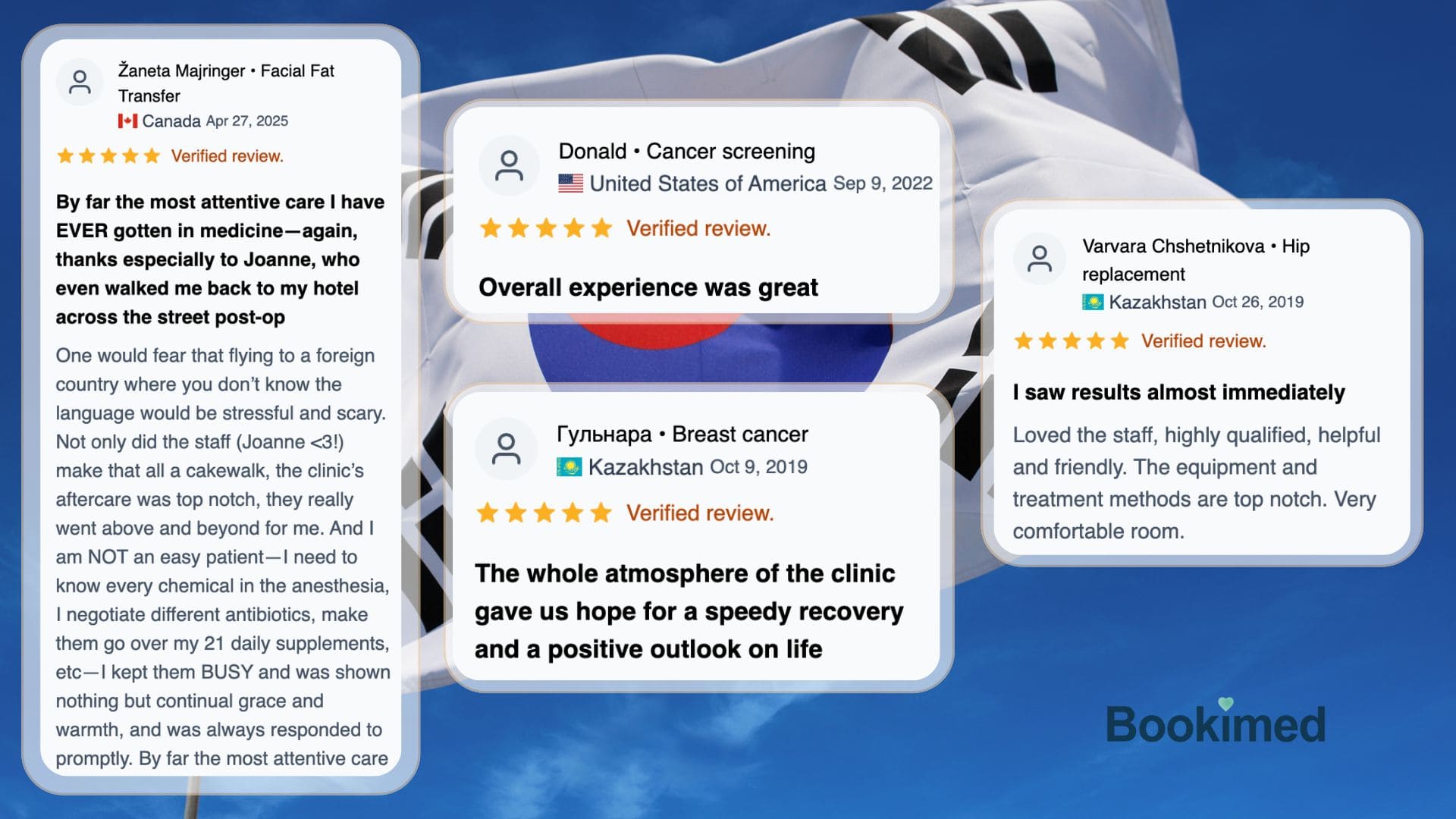
Patient Testimonials About Medical Tourism in Korea
Here's what Bookimed patients say about their medical tourism experience in Korea — in their own words:
What to Know Before You Go to Korea
Here's your up-to-date checklist for medical tourism in Seoul and beyond:
Medical visa & entry requirements
➤ US and most EU citizens can enter Korea visa-free for up to 90 days. K‑ETA is optional until the end of 2025, but starting Feb 24, 2025, all travelers must submit an e-Arrival Card upon entry.
➤ If your treatment requires over 90 days, apply for a medical tourism visa (C-3-3). Requirements include a passport valid for ≥6 months, a visa form, a photo, proof of accommodation, and a return flight.
➤ Always check with your local Korean embassy for the latest updates before booking.
Travel & accommodation
➤ Korean medical facilities often include a hotel stay and airport transfers, so be sure to check with your healthcare provider.
➤ For long-term stays, patients often book serviced apartments or medical guesthouses near clinics—prices range from $60–120/night or $1,500–2,500/month.
➤ Some hospitals provide on-site recovery suites with nursing care.
➤ Popular districts like Gangnam and Seocho in Seoul are well-equipped for medical travelers.
Payment & insurance
➤ Most medical institutions accept Visa and Mastercard; some also offer bank transfer or cash discounts. You’ll often pay a deposit upfront, with final billing upon discharge.
➤ Clinics usually require a deposit after treatment confirmation.
➤ International patients should confirm in advance if the clinic accepts payment in USD or KRW (local currency). Even if the quote is in USD, conversion may happen at checkout.
➤ Korea’s National Health Insurance (NHIS) doesn’t cover short-term visitors, so all medical tourists must pay out of pocket unless insured privately.
Health & vaccinations
➤ No vaccines are required for entry.
➤ Tap water is safe to drink in Seoul.
➤ Visit local pharmacies, open till late, for over-the-counter medications and equipment like ice packs, bandages, and throat lozenges.
How to Organize Korean Medical Tourism with Bookimed
Medical tourism in Korea is simple with Bookimed. Just follow these steps:
1. Browse clinics. Compare top-rated medical institutions and professionals in Korea on Bookimed’s website.
2. Leave a request. Fill out a quick form to help us know about your medical needs.
3. Consult with your personal coordinator. Bookimed’s dedicated medical expert will contact you to discuss your needs and help you choose the best match.
4. Choose a clinic & get a quote. Receive personalized treatment plans and price estimates from trusted clinics.
5. Prepare for your trip. Your coordinator will help you with documents, accommodation, and travel.
6. Receive specialized treatment. Enjoy 24/7 support and patient protection during your stay.
7. Return home. Your coordinator stays in touch even after your procedure, ready to help anytime.
GET EXPERT ADVICE
FAQ
Do Korean doctors speak English? Will I need a translator?
Yes, most medical institutions serving international patients have English-speaking medical staff. Still, ask for a free translator—it’s common and helps avoid misunderstandings.
How do I choose the right medical facility in Korea?
✔️ Check for medical certification. Look for JCI or Korean Accreditation for Foreign Patients (KAHF).
✔️ Review the doctor’s credentials. Ask about the medical professional’s experience, years of practice, and certifications (e.g., membership in ISAPS, KSPRS, or other global associations).
✔️ Read verified patient reviews. Focus on outcomes, communication, and aftercare.
✔️ Compare before/after photos. Especially relevant for plastic surgery, dentistry, and hair transplants.
✔️ Request a detailed quote. The quote should include consultation, treatment, anesthesia, hospital stay, and medications.
✔️ Check package inclusions. Ask whether the offer includes airport pickup, hotel stay, translator services, and post-op checkups.
✔️ Assess communication & transparency. Choose a clinic that responds quickly, explains procedures clearly, and is open about risks, downtime, and results.
Is it safe to travel to Korea alone for treatment?
Yes. Korea is one of the safest countries in the world. Plus, Bookimed patients receive 24/7 support and help with transport, check-ins, and medical visits.
Can I combine medical treatment with tourism?
Absolutely. Patients can schedule time to recover while visiting places like Bukchon Hanok Village or Jeju Island, especially after minor procedures or checkups.
Do I need to bring medical records?
Yes. Bring medical records (Bookimed will translate them for free), test results, and a list of medications you’re taking.
Related Articles
All medical content on this page is prepared by authors with specialized medical education and reviewed by certified physicians in the relevant field. Medical review by Fahad Mawlood, Medical Editor & Data Scientist.
Last updated: October, 2026.
- Statistics: Figures are based on Bookimed’s internal database October 2026, which includes analysis of 12,450 patient requests across 4 accredited clinics in Republic of Korea.
- Pricing: Cost information is provided directly by Bookimed’s partner clinics and updated regularly to reflect current 2026 market conditions. Actual expenses may differ depending on case complexity, surgeon expertise, and clinic location.
- Clinical Data: Treatment outcomes and patient satisfaction figures are collected from Bookimed’s verified clinic database and supported by data from peer-reviewed medical sources such as PubMed, The Lancet, JAMA, and NEJM (2023–2026).
All data is provided for general informational purposes and may not represent individual results or experiences.
- Ministry of Health and Welfare of South Korea. (2025). Korea Attracts 1.17 Million Foreign Patients in 2024.
- World Population Review. (2025). Best Healthcare in the World 2025.
- World Intellectual Property Organization. (2024). Global Innovation Index 2024 Results.
- Cancer Research & Treatment. (2025). Cancer Statistics in Korea: Incidence, Mortality, Survival, and Prevalence in 2022.
- Newsweek. (2025). World’s Best Hospitals 2025.
- Newsweek. (2025). World’s Best Smart Hospitals 2025.