To homepage
4.6/5
TrustPilot
820К+ patients have got assistance since 2014
50 countries
1,500 clinics
6K+ reviews
3K+ qualified doctors

How Much Does Denture Cost in Republic of Korea?

The average price of Denture in Republic of Korea is $3,050, the minimum price is $1,900, and the maximum price is $4,200.
Republic of KoreaTurkeyThe USA
Denturefrom $1,900from $250from $2,000
Full dentures installationfrom $3,200from $581from $4,000
Immediate dentures installation -from $800from $2,000
Hybrid All-on-6 implant denture-from $3,486from $35,000
Data verified by Bookimed as of March 2026, based on patient requests and official quotes from 313 clinics worldwide. Median costs are based on real invoices (2025–2026) and updated monthly. Actual prices may vary.

Your Benefits and Guarantees with Bookimed

Transparent Prices & Flexible Installments

No hidden fees – just official clinic prices. Pay at the clinic for Denture upon arrival and use a flexible installment plan if needed.

Verified Clinics & Doctors Only

Bookimed is committed to your safety. We only work with medical institutions that maintain high international standards in Denture and have the necessary licenses to serve international patients worldwide.

Free 24/7 Assistance

Bookimed offers free expert assistance. A personal medical coordinator supports you before, during, and after your treatment, solving any issues. You're never alone on your Denture journey.

Why we?

Your personal Bookimed medical coordinator

  • Supports you at every stage
  • Helps choose the right clinic and doctor
  • Ensures quick and convenient access to information

Denture Packages in Republic of Korea — March 2026

Procedure type
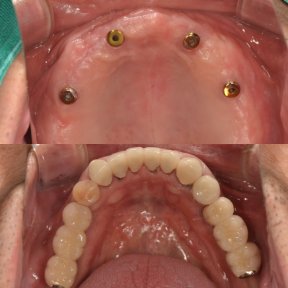
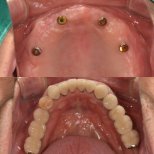
Before and after denture procedure results at Yonsei Uline Dental Clinic, improved smile
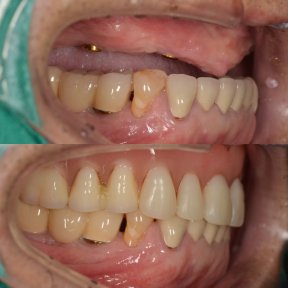
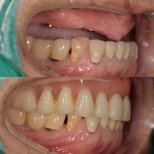
Before and after denture results at Yonsei Uline Dental Clinic, improved smile and function
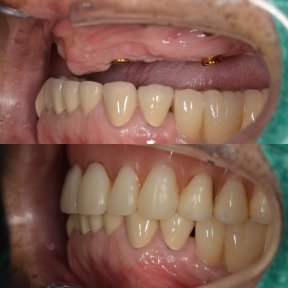
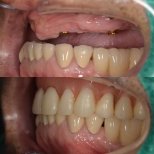
Before and after denture implant results at Yonsei Uline Dental Clinic, improved upper teeth
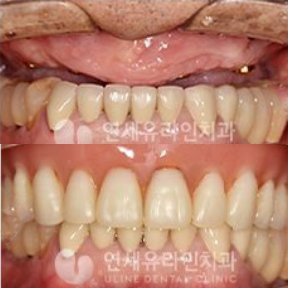
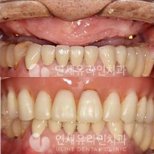
Before and after denture results at Yonsei Uline Dental Clinic, improved smile restoration
23 years of experience

Full-mouth Implant denture

This package features the Osstem full-mouth implant denture system for stable arch support. Dr. Jang Dong Kyu, a certified oral and maxillofacial surgeon with an excellence award, performs the procedure at the specialized Yonsei Uline Dental Clinic in Seoul. The cost is approximately $8,140 and covers comprehensive consultations with both a surgeon and a maxillofacial specialist to create a personalized treatment plan.

Discover the Best Denture Clinics in Republic of Korea: 8 Verified Options and Prices

The Bookimed clinic ranking is based on data science algorithms, providing a trusted, transparent, and objective comparison. It takes into account patient demand, review scores (both positive and negative), the frequency of updates to treatment options and prices, response speed, and clinic certifications.
S-plant Dental Hospital
Daegu Catholic University Medical Center
Inje University Ilsan Paik Hospital

Denture Overview in Republic of Korea

Takeaways
Related procedures & Costs
How it works
What to expect
Pros & Cons
Benefits
Payment
patients recommend -
85%
Surgery Time - 2 hours
Stay in the country - 7 days
Rehabilitation - 1 day
Anesthesia - Local anesthesia
Bookimed fees - $0

Our Doctors

View all Doctors
verified

Kang Dong-ho

23 years of experience

_doctor_9766_years_ specializing in prosthodontics – Dr. Kang is a Ph.D. holder from Yonsei University and former head of prosthodontics at Yonsei University Yongin Severance Dental Hospital.

  • Certified in Integrated Medical Treatment by the Ministry of Health and Welfare
  • Director of Yonsei University Gangnam Severance Implant Research Association
  • Full member of the Korean Academy of Prosthodontics
  • Certified Invisalign provider for clear aligner treatments
verified

Kang Inwon

21 years of experience • 80000+ treatments performed
verified

Jeong-Taek Lee

27 years of experience
Dr. Jeong-Taek Lee is a highly trained dentist with a specialty in implants and prosthodontics. He's a certified dentist from the Korean Academy of Prosthodontics and a member of Korean Academy of Oral & Maxillofacial Implantology. He holds a PhD from Seoul National University and has served in various prominent roles including Head of dental clinic at the ROK Army's Information Headquarter.

Video Stories from Bookimed Patients

Igor
It was great! Transfers, accommodation, treatment—all included.
Procedure: Dental Implant
David
Who knew getting your teeth fixed could be a mini vacation?
Procedure: Installation of a dental implant with crown
Pavel
I recommend Bookimed's services to everyone - they made my life much easier.
Procedure: Zirconia crown installation

Denture: Before & after photos

View all

Share this content

Updated: 05/27/2022
Authored by
Anna Leonova
Anna Leonova
Head of Content Marketing Team
A certified medical writer with 10+ years of experience, developed Bookimed’s trusted content, backed by a Master’s in Philology and medical expert interviews worldwide.
Fahad Mawlood
Medical Editor & Data Scientist
General practitioner. Winner of 4 scientific awards. Served in Western Asia. Former Team Leader of a medical team supporting Arabic-speaking patients. Now responsible for data processing and medical content accuracy.
Fahad Mawlood Linkedin
This page may feature information relating to various medical conditions, treatments, and healthcare services available in different countries. Please be advised that the content is provided for informational purposes only and should not be construed as medical advice or guidance. Please consult with your doctor or a qualified medical professional before starting or changing medical treatment.

Our Denture Techniques: What Suits You Best?

When considering Denture, it’s important to understand the different techniques and which is best suited for you. Here’s a concise comparison of popular options:

Full Dentures Installation

Full dentures installation involves fitting a complete set of artificial teeth to replace all missing teeth in the upper or lower jaw.

Pros: Suitable for patients with no remaining teeth. Offers a non-invasive solution compared to implant options. Usually completed in fewer appointments than hybrid solutions.
Cons: Less stability than implant-supported options. May require regular adjustments due to bone resorption. Can affect taste and oral sensations.
Effectiveness: 85-90% success rate in restoring oral function.
Duration: 2-3 weeks for complete fitting.
Recovery: 1-2 weeks for initial adjustment.
Best for: Patients missing all teeth in one arch. Provides a cost-effective tooth replacement solution.

Hybrid All-on-4 Implant Denture

This procedure involves securing a full arch of prosthetic teeth onto four strategically placed dental implants for a stable and permanent solution.

Pros: Provides a more stable and permanent solution compared to removable dentures. Allows for normal chewing and speaking functions with up to 98% success rate. Less invasive than full arch implant solutions.
Cons: Requires a surgical procedure, which may not be suitable for all patients. Longer healing time compared to immediate dentures.
Effectiveness: 98% success rate for implant integration.
Duration: 2-3 hours
Recovery: 3-6 months
Best for: Patients needing full arch tooth replacement with stable, non-removable dentures.

Immediate Dentures Installation

This procedure involves fitting false teeth immediately after tooth extraction to ensure no gap during healing.

Pros: Provides immediate tooth replacement, maintaining oral aesthetics. Reduces healing time by 50% compared to waiting for gum healing before denture fitting.
Cons: May require more adjustments than full dentures due to gum shrinkage. Less stable than hybrid All-on-4 implants, which are fixed.
Effectiveness: 85% success rate in maintaining oral function.
Duration: 1-2 hours
Recovery: 2-4 weeks
Best for: Individuals needing immediate tooth replacement post-extraction. Suitable for 1-4 missing teeth.

4-implant Overdenture Supported by a CAD/CAM Titanium Bar

This procedure involves using a computer-aided design and manufacturing process to create a titanium bar that supports an overdenture on four dental implants.

Pros: Provides enhanced stability compared to full dentures installation. Offers 90% success rate in improving oral function and comfort. Less invasive than hybrid All-on-4 implant denture.
Cons: Requires more surgical steps than immediate dentures installation. Higher maintenance for cleaning compared to traditional dentures.
Effectiveness: 95%
Duration: 3-5 hours
Recovery: 7-10 days
Best for: 4-implant support, superior stability, and improved chewing function.

FAQ about Denture in Republic of Korea

These FAQs come from real patients seeking medical assistance through Bookimed. Answers are given by experienced medical coordinators and trusted clinic representatives.

What denture options are available in Korea?

Korea provides diverse denture options including traditional removable sets, flexible partials, and advanced implant-supported systems like All-on-4 or All-on-6. Clinics in Seoul utilize 3D intraoral scanners and digital printing to ensure precise fit and same-day immediate load prosthetics for international patients.

  • Removable dentures: Traditional acrylic or flexible thermoplastic options for single or full arches.
  • Implant-supported systems: Fixed All-on-4 or All-on-6 arches using premium domestic Osstem implants.
  • Hybrid overdentures: Removable prosthetics that snap onto 2 to 4 titanium implants.
  • Digital workflow: Intraoral 3D scanning eliminates messy impressions for faster, more accurate fitting.

Bookimed Expert Insight: While many patients focus on private clinics, university-affiliated hospitals in Seoul often provide superior English-speaking support and extended warranties. S-plant Dental Hospital has performed over 23,000 implants, demonstrating the massive clinical volume that drives Korea's high success rates.

Patient Consensus: Patients highly praise the speed of immediate load dentures, though some advise coordinating with a local dentist at home for long-term maintenance. Most find the 50% savings compared to US prices worth the 1 to 2 week travel commitment.

Clinics in South Korea utilize high-grade materials like full zirconia, Ivoclar Vivadent teeth, and Osstem implants for durable reconstructions. Denture specialists typically hold PhDs in Prosthodontics and certifications from the Ministry of Health and Welfare, often practicing in KOIHA-accredited facilities using 3D modeling.

  • Specialist credentials: Surgeons like Dr. Kang Dong-ho hold a PhD in Prosthodontics from Yonsei University.
  • National accreditation: Validated facilities carry KOIHA accreditation, ensuring international safety and medical care standards.
  • Advanced materials: Options include full zirconia for strength or PMMA acrylic with Ivoclar Vivadent teeth.
  • Digital precision: Clinics use CAD/CAM milling and 3D modeling for highly accurate, same-day denture fittings.

Bookimed Expert Insight: While many countries focus on traditional acrylic, Korean clinics like DARUN Dental Clinic employ U.S. board-certified prosthodontists. These specialists use 3D CT imaging to minimize tooth damage. Data shows high-volume centers often perform over 80,000 procedures, blending extreme clinical experience with advanced material longevity.

Patient Consensus: Patients emphasize requesting material spec sheets because zirconia offers superior strength over acrylic. They recommend verifying national licenses from the Korean Dental Association for peace of mind.

What is the typical timeline for receiving dentures in Korea, from impressions to fitting?

Traditional dentures in Korea typically require 10 to 21 days from initial impressions to final fitting. Patients with healed gums may complete the process in 7 days. Implant-supported options usually involve two separate trips with a 2 to 4 month healing period between stages.

  • Conventional timeline: Most patients receive final prosthetics within 10 to 14 days of impressions.
  • Accelerated options: Clinics with on-site CAD/CAM laboratories can reduce laboratory turnaround to 3 days.
  • Try-in phase: Expect 1–2 visits for wax try-ins to verify bite alignment and aesthetics.
  • Immediate dentures: Same-day provisional sets are available immediately following extractions while permanent versions heal.

Bookimed Expert Insight: While many websites suggest 1-week turnarounds, our data from 1,425 patient requests shows 14 days is the safer buffer. Clinics like DARUN Dental Clinic use proprietary techniques to integrate prosthetics faster. However, rushing the bite alignment phase can lead to discomfort later. We recommend choosing clinics with U.S. board-certified prosthodontists to ensure the first fitting is accurate.

Patient Consensus: Patients emphasize budgeting at least 2 weeks in Seoul to allow for `sore spot` adjustments. Many travelers find that receiving provisional dentures on day 1 makes the waiting period much easier.

How long must international patients stay for dentures?

International patients typically stay 7 to 10 days for standard dentures in South Korea. This timeframe allows for initial consultations, digital impressions, laboratory fabrication, and final fitting adjustments. Specialized clinics in Seoul often offer expedited timelines of 2 to 5 days for immediate-load acrylic sets.

  • Standard dentures: Expect a 7–10 day stay for impressions, wax try-ins, and final fittings.
  • Immediate dentures: Temporary sets are often ready in 1–2 days following necessary tooth extractions.
  • Implant-supported dentures: Initial surgery requires 8–15 days, with a return trip months later.
  • Adjustments and repairs: Minor bite tweaks or base repairs usually take 2–5 days in-country.

Bookimed Expert Insight: While budget-focused clinics may suggest a 5-day trip, our data shows premium centers like DARUN Dental Clinic or Yonsei Uline Dental Clinic recommend 10–14 days. This extra time allows US board-certified prosthodontists to perform 3D CT imaging and manual bite acclimation. Rushing this process often leads to discomfort that is difficult to fix once you return home. Choosing a clinic with in-house labs, such as S-plant Dental Hospital, can significantly reduce laboratory wait times without sacrificing the final fit.

Patient Consensus: Most patients suggest planning for at least 11 days to account for jet lag and final bite settling. They warn against having final dentures shipped home, as professional in-person adjustments are essential for long-term comfort and clear speech.

How soon can I eat, speak normally, and resume sports after getting new dentures?

Most patients resume eating soft foods and speaking clearly within 14 days, though full adaptation typically takes 2 to 4 weeks. High-impact sports require waiting 4 to 6 weeks to ensure stability. Republic of Korea clinics often utilize 3D modeling to accelerate this recovery timeline.

  • Eating timeline: Consume soft foods for 14 days before introducing firmer items like rice.
  • Speech adaptation: Practice reading aloud to resolve lisps or whistling sounds within 1 to 4 weeks.
  • Physical activity: Resume light walking after 3 days; avoid high-impact sports for 4 to 6 weeks.
  • Implant-supported dentures: Wait at least 7 days before vigorous exercise if implants were surgically placed.

Bookimed Expert Insight: While standard dentures take weeks to settle, Korean clinics like S-plant Dental Hospital use proprietary 3D-modeling to customize the fit precisely. This digital precision often reduces the initial sore-spot period. Patients should still wait 3 weeks before attempting traditional Korean BBQ or sticky foods.

Patient Consensus: Many find eating rice tricky for the first 10 days, even with a great fit. Using adhesives after the fifth day helps significantly with confidence during social interactions and early exercise.

Does Korean National Health Insurance cover dentures?

Korean National Health Insurance (NHIS) covers both complete and partial dentures for individuals aged 65 and older. Eligible patients typically pay a 30% to 40% copayment. Coverage is generally limited to one procedure every 7 years per arch at participating dental hospitals and medical centers.

  • Age requirement: Patients must be at least 65 years old to qualify for insured benefits.
  • Standard copayment: Most patients pay approximately 30% to 40% of the total treatment cost.
  • Benefit frequency: Insurance usually covers new dentures once every 7 years for each jaw.
  • Facility type: Benefits primarily apply at designated dental hospitals rather than private cosmetic clinics.

Bookimed Expert Insight: While NHIS covers standard dentures, it rarely applies to modern alternatives like the Osstem full-mouth implant dentures offered at Yonsei Uline Dental Clinic. Patients often choose private clinics for these advanced procedures because they provide superior stability and long-term durability despite the higher out-of-pocket investment.

Patient Consensus: Many patients suggest getting a written pre-approval estimate first. They often find that insurance limits may not cover the full cost in major cities like Seoul.

What makes someone a good or poor candidate for dentures in Korea?

Good denture candidates in Korea typically have significant tooth loss or remaining teeth in poor condition. Ideal patients possess healthy gum tissue and a minimum jawbone ridge height of 10 to 15 millimeters. Successful outcomes require a disciplined hygiene routine to prevent plaque-related sores and inflammation.

  • Bone density: Adequate jawbone structure is required to hold traditional or implant-supported prosthetics securely.
  • Clinical health: Patients must be free from active gum infections or severe oral inflammation.
  • Bruxism concerns: Chronic teeth grinders are poor candidates because grinding can wear down materials within 6 months.
  • Medical history: Uncontrolled diabetes or high-sensitivity gag reflexes often complicate the fitting and healing process.

Bookimed Expert Insight: While many choose traditional dentures for cost, clinics like DARUN and Yonsei Uline utilize digital impression technology to significantly improve fit. Data shows that advanced Osstem full-mouth implant dentures, performed by specialists like Dr. Kang Dong-ho, offer superior stability compared to basic acrylic options. For those with marginal bone, testing with partial dentures first is a smart clinical strategy before committing to full sets.

Patient Consensus: Success hinges on long-term commitment,- specifically nightly cleanses and necessary relines during the first year. Smokers consistently report poorer results due to nicotine-related staining and accelerated bone resorption.

Do I need a pre-arrival consultation?

Pre-arrival consultations for dentures in the Republic of Korea are generally not mandatory, though clinics highly recommend them for complex cases. Most patients complete the entire process, from initial digital scans to final fitting, within 3 to 5 days of their first in-person appointment.

  • Virtual options: Many Seoul clinics offer free preliminary photo assessments via WhatsApp or KakaoTalk.
  • Clinical timeline: Same-day impressions are standard, often using advanced 3D-modeling for faster production.
  • Surgical requirements: Implant-supported dentures require a pre-arrival review of recent 3D CT scans.
  • Expert certifications: Top providers like Yonsei Uline Dental Clinic hold KOIHA international safety accreditations.

Bookimed Expert Insight: Data from 1,425 patient requests shows that specialized clinics like DARUN Dental Clinic use proprietary techniques to minimize tooth damage. While skipping a pre-consult is common for standard dentures, choosing a clinic with US board-certified prosthodontists ensures your bite alignment remains perfect despite the accelerated 5-day timeframe.

Patient Consensus: While most travelers report a smooth experience without prior meetings, some notice slight shade mismatches when rushing. Booking a video call helps align aesthetic expectations before you fly.

Where do most international patients go for dentures in Korea, and how long should I plan to stay?

Most international patients visit specialized dental centers in Seoul districts like Gangnam and Jongno. Popular clinics include Yonsei Uline Dental Clinic and S-plant Dental Hospital. Plan to stay 3 to 7 days for conventional dentures or 7 to 14 days for implant-supported full arches to ensure proper fit.

  • Primary locations: International patients favor Gangnam and Jongno districts for English-speaking dental specialists.
  • Stay duration: Conventional dentures require 3 to 7 days across 2 to 4 visits.
  • Complex cases: Implant-supported full arches typically require 7 to 10 days for temporary bridge fabrication.
  • Clinic credentials: Top facilities like DARUN Dental Clinic hold Korea Institute for Healthcare Accreditation (KOIHA) certification.

Bookimed Expert Insight: While many patients focus on speed, choosing a clinic with an in-house laboratory is the real time-saver. S-plant Dental Hospital uses 3D-modeling to streamline fabrication. This allows for immediate-load options and significantly reduces the 3-day buffer usually needed for final speech and bite adjustments.

Patient Consensus: Patients emphasize staying at least 10 days to avoid loose fits during travel. The emotional relief of immediate-load dentures is highly valued, provided you allow extra time for swelling to subside.

Are English-speaking dentists easy to find?

English-speaking dentists are highly accessible in Seoul, particularly within major medical hubs like Gangnam or university hospitals. Clinics such as DARUN Dental Clinic employ U.S. board-certified specialists, while many Korean practitioners hold advanced degrees from top-tier American or European dental schools.

  • Strategic locations: English speakers cluster in Gangnam, Itaewon, and central Seoul districts.
  • Specialist credentials: Many prosthodontists like Dr. Kang Dong-ho hold Ph.D. degrees.
  • University access: Institutions like Yonsei University provide high-level English communication for complex cases.
  • International departments: Specialized clinics dedicatedly market to and support patients from Western countries.

Bookimed Expert Insight: Data shows a clear trend where clinics serving the most international patients, like DARUN Dental Clinic, maintain in-house labs. This allows for same-day denture adjustments. This service is vital for travelers to avoid the discomfort of a poor-fitting prosthetic during their flight home.

Patient Consensus: Patients emphasize that while translation apps help, seeking clinics with English websites ensures clearer price transparency. They recommend booking appointments specifically for denture work to ensure the specialist has experience with international aesthetic preferences.

Patients visiting South Korea for dentures should bring their current dental sets for bite matching and fitting comparisons. Essential documentation includes a valid passport, printed medical history, and a list of active allergies, especially regarding latex or specific anesthetics used during Osstem implant procedures.

  • Dental records: Bring previous X-rays or 3D scans to assist specialists like Dr. Kang Dong-ho.
  • Current dentures: Existing sets help prosthodontists evaluate your natural bite and aesthetic preferences.
  • Language tools: Download Korean offline translation packs to facilitate communication with clinical staff.
  • Comfort items: Pack lip balm and soft-bristled toothbrushes for post-procedure sensitivity and care.

Bookimed Expert Insight: While many Seoul clinics like DARUN Dental Clinic feature U.S. board-certified doctors, the support staff might not be fluent. Using KakaoTalk for pre-arrival coordination is the most reliable way to confirm if your specific denture package includes translation services or requires an independent interpreter.

Patient Consensus: Travelers recommend bringing a small cash buffer in Korean Won for local pharmacy prescriptions and wearing loose, comfortable clothing for long sessions in the dental chair.

Get a free consultation

Select the best way to contact you