
Deep brain stimulation (DBS) costs $35,000 – $80,000 in the United States, a figure confirmed by peer-reviewed cost analyses. Yet the same surgery is available from $8,300 in Mexico and $12,000 – $35,000 in Turkey through accredited hospitals abroad. That gap puts a proven neurological treatment within reach for patients who would otherwise wait or go without.
Choosing an accredited center in Turkey, Thailand, Mexico, or Poland typically saves $25,000 – $50,000 versus US pricing, with no compromise on device brands or clinical standards. These hospitals hold Joint Commission International (JCI), ISO, or national health-authority accreditation and implant the same Medtronic, Abbott, and Boston Scientific systems used in American centers.
Awareness still lags: only about 31.9% of patients have heard of DBS. This guide breaks down what the surgery costs by country, what drives the price, and how to fund treatment safely.
Key takeaways
Deep brain stimulation costs $35,000 – $80,000 in the US, versus from $8,300 abroad – saving up to $40,000 – $50,000.
The quoted price covers the surgery, the implanted neurostimulator, and the hospital stay – not the device alone.
Hospitals abroad hold JCI or ISO accreditation. They implant the same Medtronic, Abbott, and Boston Scientific devices as US centers.
Table of Contents
- Deep Brain Stimulation: What Is It?
- How Much Does a DBS Cost?
- What Affects the Cost of Deep Brain Stimulation
- All-Inclusive DBS Treatment Packages
- Top Locations for DBS: Pros and Cons
- DBS Risks, Safety Rules, and Daily-Life Restrictions After Surgery
- Is Deep Brain Stimulation Covered by Insurance
- Tips for Minimizing DBS Costs Abroad
- Financing Options for DBS Abroad
- The bottom line
- Frequently Asked Questions
Deep Brain Stimulation: What Is It?
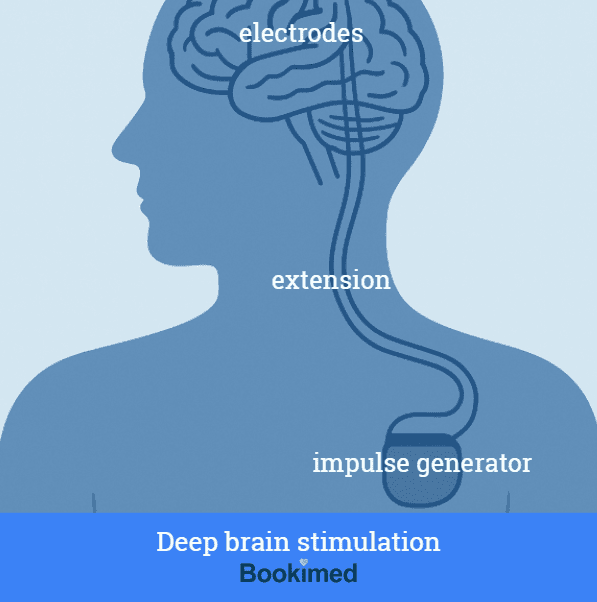
Deep Brain Stimulation (DBS) is a surgical treatment used to control symptoms of neurological and psychiatric conditions such as Parkinson’s disease, dystonia, essential tremor, epilepsy, and obsessive-compulsive disorder.
During the procedure, a neurosurgeon implants thin electrodes into specific areas of the brain. These connect to a small device called a neurostimulator, or brain pacemaker. It sits under the skin near the chest. The device sends mild electrical signals that help correct irregular brain activity.
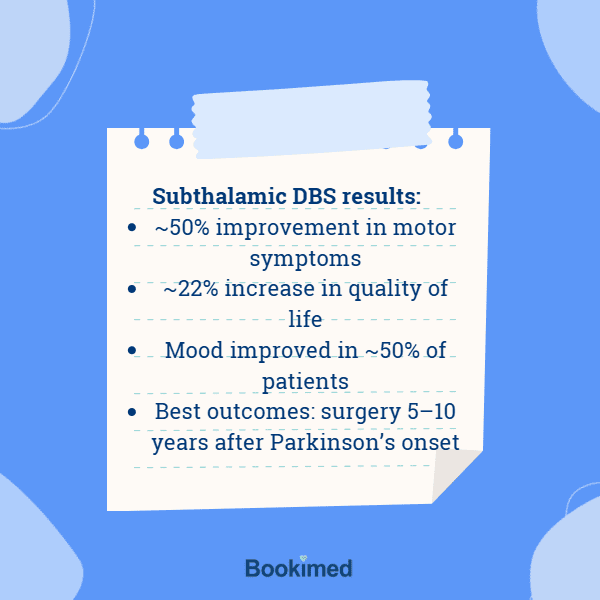
Patients who undergo subthalamic DBS can expect significant improvements. A study of over 1,700 patients showed that subthalamic DBS led to about a 50% improvement in motor symptoms and a 22% boost in quality of life. Around half also felt better mood-wise, with the best results seen when surgery was done 5 – 10 years after Parkinson’s began.
DBS works much like a tuner, helping the brain play in rhythm again. By adjusting these signals, doctors can reduce tremors, stiffness, or involuntary movements and improve daily functioning.
The treatment does not cure the underlying condition but helps manage its symptoms more effectively.
Because it involves complex surgery and advanced technology, cost of deep brain stimulation surgery can be high and vary depending on the hospital, surgeon, and device used.
How Much Does a DBS Cost?
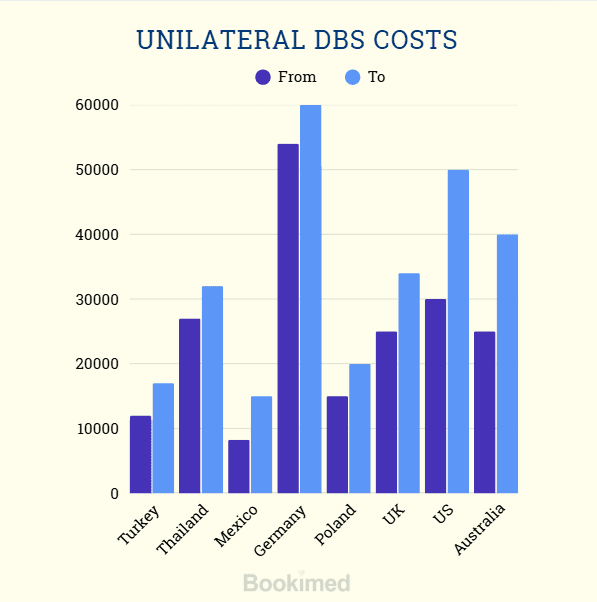
In the United States, deep brain stimulation averages $35,000 – $80,000 for the full procedure, while accredited hospitals abroad start from $8,300 in Mexico. The price covers the neurosurgery, the implanted brain pacemaker, and the hospital stay, so each figure reflects the complete treatment rather than the device alone.
Globally, most patients pay somewhere between $8,300 and $80,000, depending on the country, the device model, and whether one or both sides of the brain are treated. The table breaks Bookimed prices down by country and by unilateral or bilateral surgery, against the US figure.
| Country | Unilateral DBS (USD) | Bilateral DBS (USD) | Savings vs the US |
|---|---|---|---|
| Turkey | $12,000 – $17,000 | $21,000 – $35,000 | Up to $40,000 – $45,000 |
| Mexico | $8,300 – $15,000 | $17,000 – $27,500 | $40,000 – $50,000 |
| Thailand | $27,000 – $32,000 | $30,000 – $37,000 | $25,000 – $35,000 |
| Poland | $15,000 – $20,000 | $20,000 – $25,000 | $35,000 – $50,000 |
| Germany | $54,000 – $60,000 | $68,000 – $77,000 | $5,000 – $10,000 |
Clinical research backs the outcomes behind these prices. A study of 72 Parkinson’s patients with cognitive impairment used bilateral subthalamic nucleus DBS. Over two years, they showed gains in motor function, lower medication use, and better quality of life than controls.
Most-picked offers for Parkinson's disease treatment
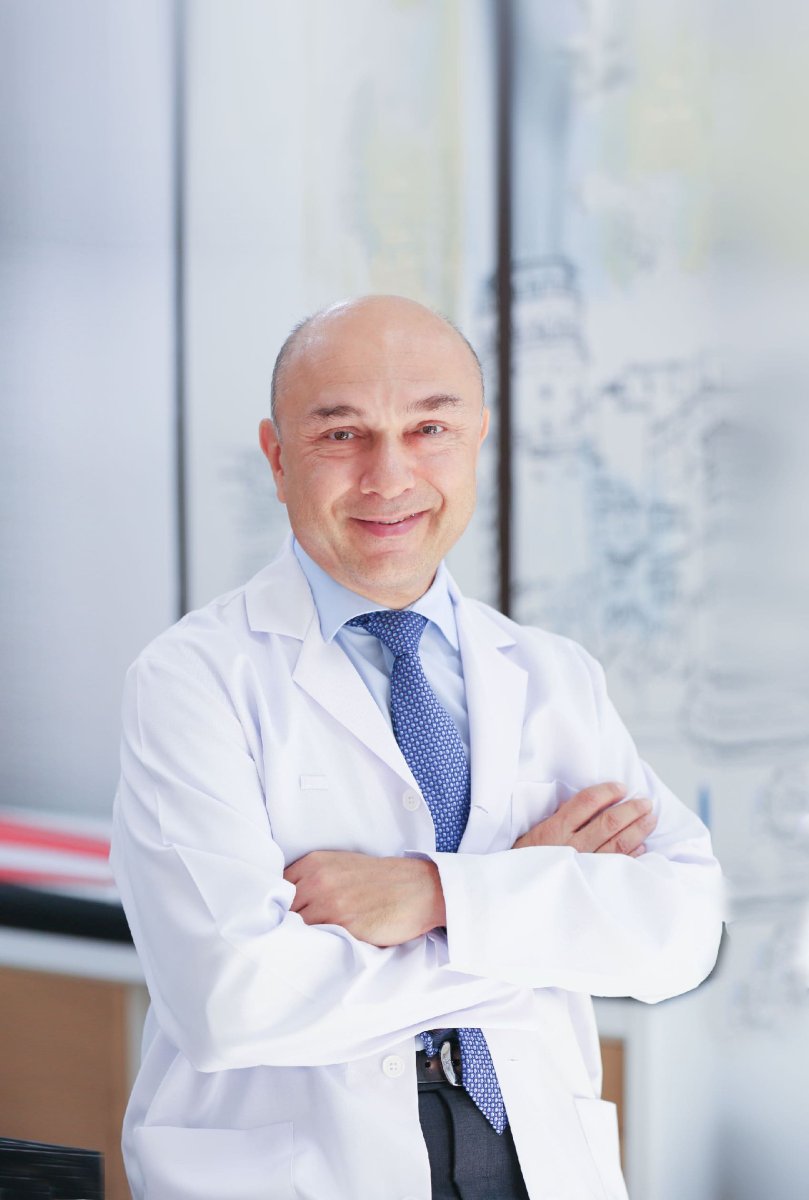
- Dr. Ali Zirh has performed over 1,400 successful Deep Brain Stimulation (DBS) surgeries.
- Medipol University Parkinson’s and Movement Disorders Center (PARMER) serves international patients from Europe, the Balkans, the USA, Canada, and Australia.
- Included Services: Consultation with a doctor, preoperative tests, consultation with an anesthesiologist, ultrasonography, echocardiography, brain pacemaker, hospitalization, transfer airport-hotel-clinic-airport.
- Stay Info: 4 days stay in the hospital, hotel stay not included in the price.
- Technique: Microelectrode Recording and Stimulation technique at the single cell level.
- Deep brain stimulation (DBS) surgery
- Consultation with a doctor
- Preoperative tests
- Consultation with an anesthesiologist
- Ultrasonography
- Echocardiography
- Brain pacemaker
- Hospitalization + afterward hotel stay
- Transfer airport-hotel-clinic-airport
- Dr. Strauss Ido received the 2009 award for outstanding research in neurosurgery.
- Sourasky Medical Center was ranked among the top 10 most popular clinics for medical tourists by Newsweek.
- Included Services: Shampoo, post-op medications, preoperative tests, general anesthesia, local anesthesia, consultation with a doctor, individual patient room, transfer to the hospital.
- Stay Info: Accommodations include a hotel stay, duration of stay in the country is included in the price.
- Technique: Intracranial implantation of a charged neurostimulator.
- Deep brain stimulation (DBS) surgery
- Surgical treatment of epilepsy
- Consultation with a doctor
- Local anesthesia
- General anesthesia
- Preoperative tests
- Post-op medications
- Individual chamber
- Transfer to the clinic
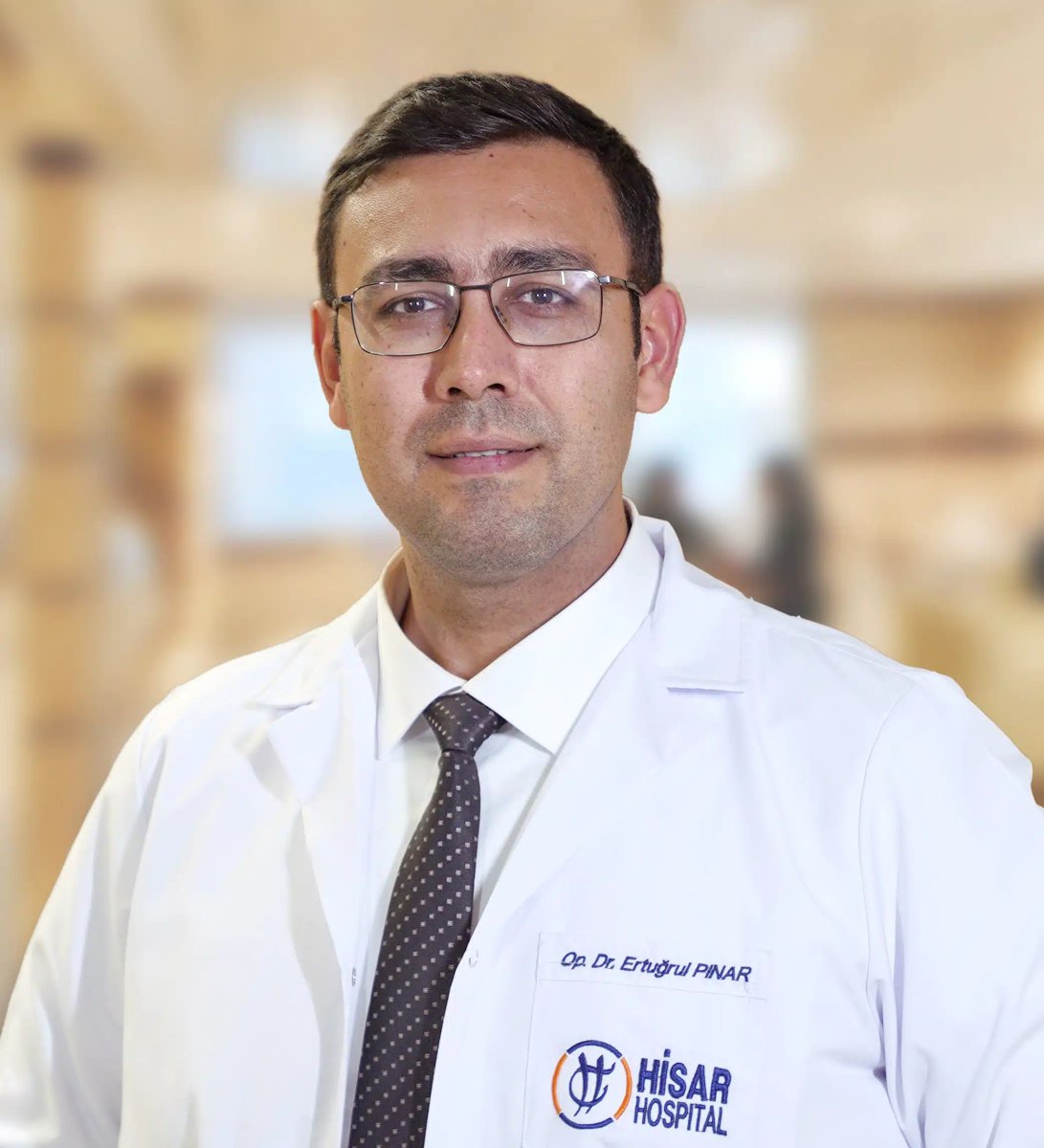
- Ertugrul Pinar is skilled in microsurgical techniques for complex brain and spine pathologies, including deep brain stimulation (DBS).
- Hisar Hospital Intercontinental treats 250,000 patients annually and features advanced 3 Tesla MRI for neurosurgical cases.
- Included Services: Consultation with a neurosurgeon, head MRI, blood tests, anesthesiology and neurology consultations, VIP airport-clinic transfers.
- Stay Info: 10 days hospital stay included; hotel accommodation is not included in the price.
- Technique: Deep brain stimulation (DBS) surgery using advanced imaging for precise electrode placement.
- Deep brain stimulation (DBS) surgery
- Consultation with a neurosurgeon
- Head MRI
- Blood tests
- Consultation with an anesthesiologist
- Consultation with a neurologist
- VIP transfer (premium vehicle service, all transfers between airport, hotel and clinic)
- Dr. Bartolome Oliver performs over 200 operations annually, specializing in microsurgical and non-invasive radiosurgery techniques.
- Centro Médico Teknon is the top choice for celebrities, sportsmen, and politicians for advanced medical care.
- Included Services: Electrocardiogram (ECG), Blood tests, Individual patient room.
- Stay Info: 5 days stay in the hospital, 5 days stay in the hotel, not included in the price.
- Method: Deep brain stimulation for Parkinson's disease.
- Consultation with a neurologist
- Brain MRI
- Complex diagnostics of Parkinson's disease
- Deep brain stimulation (DBS) surgery
- Electrocardiogram (ECG)
- Blood tests
- Individual chamber
- Deep brain stimulation (DBS) surgery
- Transfer airport-hotel-clinic-airport
What Affects the Cost of Deep Brain Stimulation
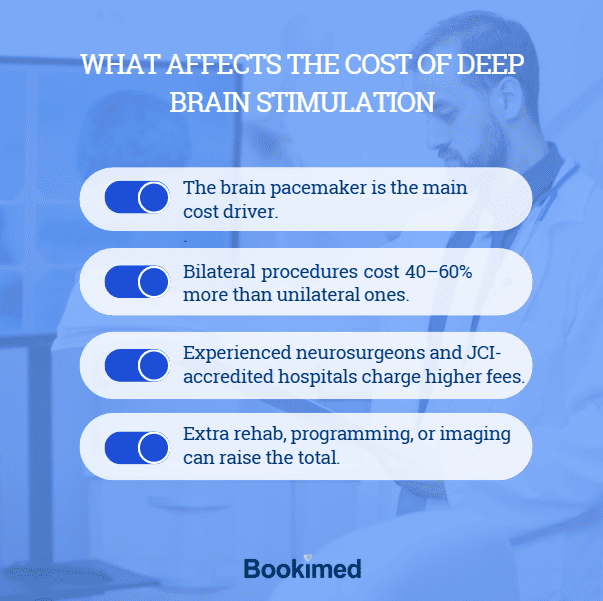
The deep brain stimulation cost depends on several medical and practical factors. Understanding them helps patients plan realistically and compare clinics with confidence.
Device type
The brain pacemaker is the main cost driver. On the US market it runs roughly $20,000 to $50,000. Abroad it is bundled into the lower total prices shown above. Rechargeable models last up to 15 years, while non-rechargeable models need replacement every 3 – 5 years, adding to future DBS battery costs.
Published cost analyses break that neurostimulator system into its individual parts, which helps explain the range:
Pulse generator, the implanted battery unit – about $10,900.
Electrode leads placed in the brain – about $4,300.
Extension wires connecting the leads to the generator – about $1,900.
Handheld patient controller – about $900.
Leading manufacturers include Medtronic, Boston Scientific, and Abbott.
Surgery scope
Bilateral procedures cost more than unilateral ones because they take longer and require additional electrodes and equipment.
Unilateral DBS is used when symptoms affect only one side of the body, while bilateral DBS is recommended for patients with more advanced or symmetrical conditions.
| Type | Description | Commonly used for | Average cost (USD) |
|---|---|---|---|
| Unilateral DBS | Stimulation on one side of the brain | Essential tremor in one hand, early-stage Parkinson’s, or mild dystonia limited to one side | roughly $8,300 – $60,000 abroad; $35,000 – $60,000 in the U.S. |
| Bilateral DBS | Stimulation on both sides of the brain | Advanced Parkinson’s disease, severe dystonia, OCD, or epilepsy with symptoms on both sides | $17,000 – $77,000 abroad; $60,000 – $80,000+ in the U.S. |
Surgeon and hospital
Experienced neurosurgeons and JCI-accredited hospitals charge higher fees but offer greater safety and precision. Despite that, accredited clinics in Turkey, Mexico, or Poland can still be 50 – 75% more affordable than in the U.S. or Western Europe.
*Bookimed evaluates clinics through a transparent Clinic Ranking Policy. The criteria include patient reviews, success rates, doctor expertise, and innovations.
Top specialists in Parkinson's disease treatment
- 4.8 • 45 reviews
- 38 years of experience
- 1500+ treatments performed
- accreditations:

- Turkey, Istanbul, Medipol University Parkinson’s and Movement Disorders Center (PARMER)
Prof. Dr. Ali Zirh is a stereotactic and functional neurosurgeon who has performed over 1,900 successful surgical interventions for movement disorders. He holds a Guinness World Record for gathering the largest group of deep brain stimulation patients in one place. Dr. Zirh also serves as a verified medical content expert and advisor for the Bookimed Medical Advisory Board.
Specialization and Surgical Expertise
The specialist focuses on treating Parkinson’s disease, dystonia, and essential tremor. He has performed more than 1,600 deep brain stimulation (DBS) procedures throughout his career. Dr. Zirh uses microelectrode recording and stimulation techniques at the single-cell level. This method allows for high precision while placing brain implants.
He also provides medication management and neurological rehabilitation for chronic movement disorders. Microelectrode recording involves using fine electrodes to listen to the activity of single neurons to identify surgical targets. These techniques help ensure the precise placement of electrodes to improve patient outcomes during movement disorder surgery.
Work Experience
- 2018–present — Neurosurgeon at Medipol University Parkinson’s and Movement Disorders Center (PARMER)
- 2015–2018 — Neurosurgeon at Medipol Bağcılar Hospital
- 2009–2015 — Neurosurgeon at Medicalpark Bahçelievler Hospital
- 1997–2009 — Neurosurgeon at VKV American Hospital
- 1983–1985 — State service physician in Gaziantep
Education and International Training
- 1983 — Hacettepe University Faculty of Medicine — Medical Degree
- 1994 — Marmara University Faculty of Medicine — Neurosurgery Residency
- 1994 — Marmara University Health Sciences Institute — Master’s in Neurophysiology
- 1994 — European Association of Neurosurgical Societies (EANS) — Diploma and Board Certification
- 1990 — Glasgow Institute of Neurological Sciences, UK — Clinical Study
- 1992 — University of Pittsburgh, University of Virginia, and University of Washington, USA — Clinical Study
- 1994 — Johns Hopkins Hospital and Toronto Western Hospital — Clinical Study
- 1994 — World Neurosurgery Association (WFNS) Training Courses — Antalya, Turkey
- 1994 — Stereotactic Target Calculation and Neurostimulation for Pain — Çeşme, Izmir
- 1994 — Stereotactic Neurosurgery Hands-On — New Orleans, USA
- 1995 — Augmentative Procedures for Pain — San Francisco, USA
- 1996 — Minneapolis and Washington, USA — DBS and Neurostimulation specialized workshops
- 1996 — Surgical Treatment for Movement Disorders and Chronic Pain Management — Montreal, Canada
- 2001 — Kiel, Germany — Expert Course in Deep Brain Stimulator Management
Research, Publications and Awards
Dr. Zirh has authored eight book chapters and over 150 congress papers. His research appears in Turkish Neurosurgery and the US Advances in Neurology Journal. He has received multiple honors for his clinical achievements:
- 2021 — Best Neurosurgeon of the Year — Global Health Awards, Baku
- 2018 — Guinness World Record for the largest DBS patient gathering
- 2017 — Golden Palm Award
- 1998 — Eczacıbaşı Scientific Research Medicine Encouragement Award
- 1997 — International Elekta Award for stereotactic and functional neurosurgery
- 1997 — Turkish Neurosurgical Society Award
- 1995 — Turkish Brain Research Foundation Award
- 1985 — Commendation by the Provincial Authority for state service in Gaziantep
Professional Memberships
Dr. Zirh is a member of the following organizations:
- World Society for Stereotactic and Functional Neurosurgery (WSSFN)
- American Association for the Advancement of Science (AAAS)
- International Parkinson and Movement Disorder Society
- European Society for Stereotactic and Functional Neurosurgery (ESSFN)
- American Academy of Neurological Surgeons (AANS)
- International Neuromodulation Society
- International Association for the Study of Pain (IASP)
- Turkish Neurosurgery Association
- Congress of Neurological Surgeons (CNS)
- American Neuromodulation Society
- American Pain Society
- American Society of Stereotactic and Functional Neurosurgery
- North American Cervicogenic Headache Society (HACHS)
- North American Neuromodulation Society
- Parkinson's Disease Association
- 4.7 • 492 reviews
- 41 years of experience
- accreditation:
- Spain, Barcelona, Centro Médico Teknon
- Dr. Gerardo Conesa Bertran directs the Institute of Neurosurgery and Neurobiology at Centro Médico Teknon. He specializes in surgeries for high-function brain areas and complex brain stem tumors. Furthermore, Dr. Conesa is a pioneer in augmented reality for surgical planning and deep brain stimulation.
Neurooncology and Functional Neurosurgery
The doctor treats complex tumors of the brain and spinal cord. He performs neurosurgery in consciousness, also known as awake craniotomy. This technique helps protect vital functions like speech and movement during tumor removal. His practice also involves:
- Vascular neurosurgery for aneurysms and arteriovenous malformations
- Deep brain stimulation for Parkinson's disease and mental disorders
- Surgical treatment for refractory epilepsy
- Pediatric neurosurgery for Arnold Chiari syndrome and hydrocephalus
- Treatments for pituitary adenomas using transnasal resection
Academic Research and Innovation
Dr. Conesa leads studies on the origin of speech in the human brain. He develops computer platforms that use augmented reality for precise brain operations. Additionally, the specialist researches deep brain stimulation (DBS) as a treatment for anorexia. His doctoral dissertation on treating neoplasms in highly functional zones received honors.
Clinical Leadership
The doctor has directed neurosurgery departments at several major hospitals in Barcelona since 2003.
- 2021–Present — Director, Institute of Neurosurgery and Neurobiology, Centro Médico Teknon
- 2018–2020 — Director of Neurosurgery, Hospital del Mar and Hospital de la Santa Creu i Sant Pau
- 2007–2020 — Director of the Department of Neurosurgery, Hospital del Mar
- 2003–2007 — Clinical Director of Neurosurgery, Hospital Clínic
- 1990–2003 — Specialist Neurosurgeon, Hospital de Bellvitge
- 1985–1990 — MIR Neurosurgery, Hospital de Bellvitge, Barcelona
Education and International Training
Dr. Conesa completed international residencies to master modern surgical techniques.
- 1982 — Degree in Medicine, University of Barcelona
- 1982 — Internship at Loyola University Medical Hospital, Chicago, USA
- 1989 — Internship at Massachusetts General Hospital, Boston, USA
- 1990 — Specialization in Neurosurgery, University Hospital de Bellvitge
- 1991 — Internship at CHR Pourpan de Toulouse, France
- 1993 — Internship at University of Minnesota Hospital, Minneapolis, USA
- 1996 — Internship at Washington University Hospital, Seattle, USA
Professional Memberships
The specialist holds the EANS certification after completing a full five-year educational cycle. He also serves as an ambassador for Spain for the Walter Dandy Society.
- European Association of Neurosurgical Societies (EANS)
- European Union Congress of Neurosurgeons (CNS)
- Spanish Society of Neurosurgery (SENEC)
- Walter Dandy Society (Ambassador 2013–2015)
- 4.7 • 492 reviews
- 50 years of experience
- 280+ treatments performed
- accreditations:
- Spain, Barcelona, Centro Médico Teknon
- 4.5 • 263 reviews
- 10 years of experience
- 4500+ treatments performed
- Turkey, Istanbul, Hisar Hospital Intercontinental
Dr. Ertuğrul Pınar is a Neurosurgeon who graduated from the English-language program of Marmara University Faculty of Medicine and completed his residency training in Neurosurgery at the Department of Neurosurgery, Marmara University Faculty of Medicine.
During his residency, Dr. Pınar trained at a high-volume tertiary referral center where advanced neurosurgical procedures were routinely performed. He gained extensive clinical and surgical experience in both adult and pediatric neurosurgery, participating actively in the management and surgical treatment of a large number of patients.
His clinical practice is particularly focused on complex and technically demanding neurosurgical conditions, with a strong emphasis on complex brain tumor surgery, skull base tumors, intracranial tumors, and advanced surgical management of deep-seated and anatomically challenging lesions.
Dr. Pınar also has a special clinical interest in Deep Brain Stimulation (DBS) surgery, including the surgical management of patients requiring advanced neuromodulation procedures.
He is experienced in modern minimally invasive and endoscopic neurosurgical techniques, particularly in selected intracranial pathologies where these approaches may provide reduced surgical trauma and facilitate postoperative recovery.
His practice covers a broad spectrum of adult and pediatric neurosurgery, including brain tumors, vascular neurosurgical diseases, intracranial hemorrhage, arteriovenous malformations, aneurysms, cavernous malformations, traumatic brain injuries, and congenital neurosurgical conditions.
Alongside his clinical practice, Dr. Pınar remains actively involved in academic education and scientific activities, contributing to the training of medical students and young physicians.
AREAS OF EXPERTISE
- Complex Brain Tumor Surgery
- Deep Brain Stimulation (DBS) Surgery
- Intracranial Tumor Surgery
- Gliomas and Glial Tumors
- Meningiomas
- Brain Metastases
- Skull Base Tumors
- Posterior Fossa Tumors
- Intraventricular Tumors and Lesions
- Pituitary Adenomas
- Complex and Deep-Seated Brain Lesions
- Cerebrovascular Neurosurgery
- Cerebral Aneurysms
- Arteriovenous Malformations (AVMs)
- Cavernous Malformations
- Intracranial Hemorrhage
- Brain Edema
- Head and Skull Tumors
- Traumatic Brain Injuries
- Endoscopic and Minimally Invasive Neurosurgery
EDUCATION
Medical Degree (MD)
Marmara University Faculty of Medicine – English ProgramResidency in Neurosurgery
Department of Neurosurgery, Marmara University Faculty of MedicineCLINICAL FOCUS
Primary Areas of Clinical Expertise:
- Complex Brain Tumor Surgery
- Deep Brain Stimulation (DBS)
- Advanced Intracranial and Skull Base Surgery
- Endoscopic and Minimally Invasive Neurosurgery
- Cerebrovascular Neurosurgery
ACADEMIC & PROFESSIONAL ACTIVITIES
- University-level medical education and training
- Training and supervision of medical students and young physicians
- Participation in scientific and academic activities
- Clinical practice in advanced adult and pediatric neurosurgery
- Management of complex and multidisciplinary neurosurgical cases
INSTITUTIONS
Marmara University Faculty of Medicine
Department of Neurosurgery
- 4.5 • 55 reviews
- 17 years of experience
- Turkey, Istanbul, Memorial Ataşehir Hospital
2022 - Currently, İstanbul/Turkey
MEMORIAL ATAŞEHIR HOSPITAL
Neurosurgeon
2018 - 2022, İstanbul/Turkey
VM MEDICAL PARK PENDİK HOSPITAL
Neurosurgeon
2012 - 2018, İstanbul/Turkey
BAHÇEŞEHİR UNIVERSITY MEDICAL PARK GÖZTEPE HOSPITAL
Neurosurgeon
2009 - 2011, Bitlis/Turkey
MINISTRY OF HEALTH TATVAN STATE HOSPITAL
Neurosurgeon
Hospital stay and aftercare
Patients usually stay in hospital for 3 – 10 days. Extra rehabilitation, device programming, or follow-up imaging can add $2,000 – $8,000 to the total.
All-inclusive DBS packages combine surgery, hospital care, and travel services into one fixed price, offering convenience but sometimes costing more due to added non-medical extras.
All-Inclusive DBS Treatment Packages
Hospitals abroad offer all-inclusive deep brain stimulation (DBS) packages for international patients. These programs simplify the treatment process and make expenses easier to plan. Instead of managing separate arrangements for surgery, accommodation, and travel, patients receive one coordinated program covering the entire journey.
Bookimed partner clinics worldwide offer all-inclusive medical packages with exclusive advantages. Patients booking via Bookimed get access to lower prices than those offered directly by clinics, along with special limited-time offers that make top-quality care more affordable.
What DBS packages usually include
| Commonly included | Should be confirmed before booking |
|---|---|
| Pre-operative diagnostics (MRI, CT, blood tests, consultations) | Type and brand of the brain pacemaker (e.g., Medtronic, Boston Scientific, Abbott) |
| DBS surgery and hospital stay (usually 5 – 10 days) | Whether post-surgery programming and follow-up visits are included |
| First device programming and medical supervision | If DBS battery replacement or reprogramming is covered later |
| Accommodation during recovery | Exact length of hospital stay and any extra-day charges |
| Airport transfers and interpreter services | Whether rehabilitation or physiotherapy is provided |
| 24/7 patient coordination and English-language documentation | Refund and rescheduling policies for international patients |
How packages differ between countries
The structure and focus of DBS packages vary by region.
Turkey – packages are usually the most complete, often covering pre-surgery diagnostics, DBS surgery, hospital stay, accommodation, airport transfers, and interpreter support. Many hospitals also include the first neurostimulator programming and follow-up checks.
Thailand – known for combining advanced medical care with a strong focus on patient comfort. Packages often include extended recovery stays, hotel accommodation for relatives, and personalized nursing or rehabilitation support.
Poland – offers streamlined medical-only packages within the European Union. These usually include diagnostics, surgery, hospital stay, and one follow-up visit, but accommodation and transfers are often optional.
Mexico – packages focus on accessibility for North American patients, including surgery, hospital stay, and bilingual coordination. Travel and hotel arrangements are usually left to the patient’s choice for flexibility.
Package pricing tracks these regional differences. Through Bookimed partner clinics, an all-inclusive DBS program bundles the surgery, device, and hospital stay into one quoted figure. Prices follow the same country bands shown above – lowest in Mexico and Turkey, higher in Thailand and Poland. That single figure lets patients compare like for like before they travel.
Top Locations for DBS: Pros and Cons
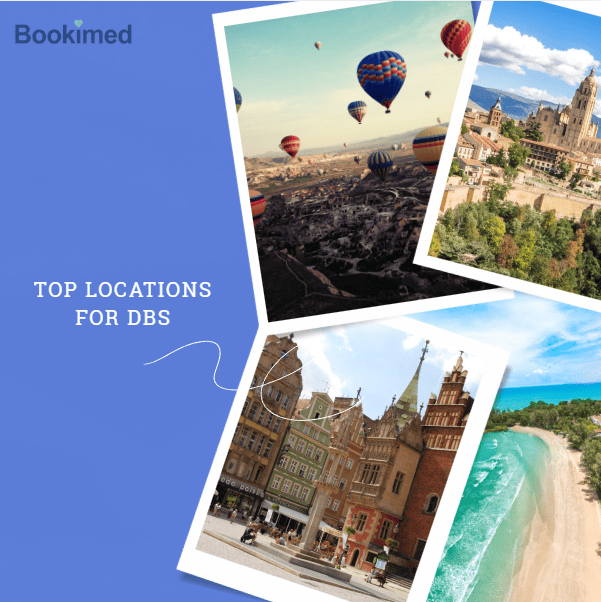
Below is an overview of how DBS treatment compares in Turkey, Thailand, Mexico, Germany, and Poland, highlighting medical standards, accreditations, and patient considerations to help patients make an informed decision.
Turkey
Turkey has become a leading hub for deep brain stimulation (DBS) in the Middle East and Europe. Major private hospitals are JCI-accredited and certified under ISO 9001 standards.
The average DBS cost ranges from $12,000 – $35,000, saving about $40,000 – $45,000 versus the U.S.
Pros
Hospitals often hold JCI or TEMOS accreditation.
Surgeons are members of the European Society for Stereotactic and Functional Neurosurgery (ESSFN).
All-inclusive DBS packages include diagnostics, transfers, and translation.
Short waiting times – usually 2 – 3 weeks.
Cons
Long-term follow-up or reprogramming may require returning to Turkey.
Communication can be challenging outside major hospitals.
Highest-rated clinics for Parkinson's disease treatment
Medipol University Parkinson’s and Movement Disorders Center (PARMER)
Dr. Ali Zirh has performed 1,500+ DBS procedures over 38 years, trained at Johns Hopkins and pioneering microelectrode recording in Turkey. The $28,000 package typically includes surgery, 3-day hospitalization, 3 weeks of neurostimulator programming, guesthouse stays, and transfers. Medipol University Parkinson’s Center offers complete DBS care with advanced electrophysiological mapping and 6-month follow-up.
| treatment | |
|---|---|
| Deep brain stimulation (DBS) surgery | $19,800 - $22,150 |
Memorial Göztepe Hospital
Prof. Dr. Mustafa Sakar has performed 900+ neurosurgical procedures over , specializing in DBS surgery. The procedure may cost around $25,000 – typically covering the surgery, consultations, MRI, and VIP transfers. Memorial Göztepe Hospital operates with 19 ORs and 55 ICUs, part of Memorial Health Group with experience. Prof. Sakar holds memberships in ISPN and EANS.
| treatment | |
|---|---|
| Deep brain stimulation (DBS) surgery | |
Memorial Ataşehir Hospital
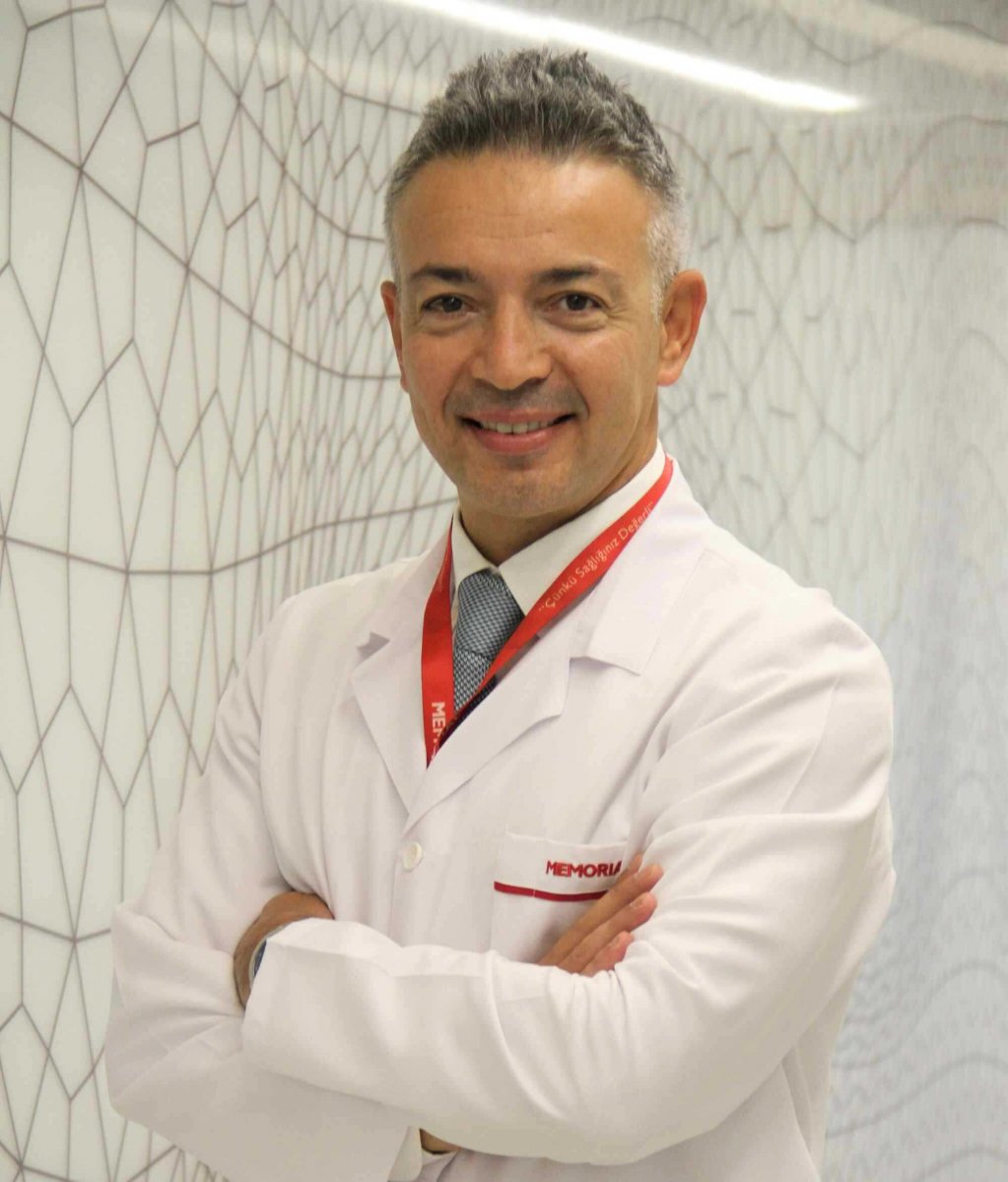
Prof. Dr. Zafer Orkun Toktaş has performed 900+ neurosurgical procedures over 17 years, specializing in deep brain stimulation. The procedure may cost around $26,500 – typically covering surgery, 4 nights hospitalization, brain MRI, transfers, and follow-up care. Memorial Ataşehir Hospital holds JCI accreditation, Turkey's first, with international safety standards. The package includes interpreter services and companion accommodation during the hospital stay.
| treatment | |
|---|---|
| Deep brain stimulation (DBS) surgery | |
Thailand
Leading hospitals are JCI-accredited and overseen by the Medical Council of Thailand.
Typical DBS costs are $27,000 – $37,000, saving about $25,000 – $35,000 versus the U.S.
Pros
Facilities certified under ISO 15189.
Full rehabilitation and physiotherapy after surgery.
English-speaking care teams and well-organized international patient support.
Cons
Long travel times for patients from Europe or North America.
Some packages include non-medical extras, increasing overall cost.
Highest-rated clinics for Parkinson's disease treatment
Bumrungrad International Hospital
Bumrungrad International Hospital performs Deep Brain Stimulation (DBS) surgery with costs ranging around $13,500–$18,400. The hospital serves over 1 million patients annually from 190+ countries and ranks among the top 10 hospitals worldwide. Assist. Prof. Dr. Peerapong Montriwiwatchai, a neurosurgeon with of experience, specializes in spine surgery and holds a fellowship from Temple University Hospital.
InterRehab Brain&Pain Total Office Syndrome Solution Asoke
Dr. Pheeravut Tantisuvanitchkul brings of experience with 900+ treatments, specializing in neurorehabilitation using FDA-approved Transcranial Magnetic Stimulation (TMS) for depression therapy. The clinic maintains a 91% client recommendation rate. The package typically includes MRI diagnostics and general ward accommodation. Dr. Pheeravut trained in magnetic stimulation techniques at international workshops in Taiwan, USA, and Italy.
The Demarest Clinic
The Demarest Clinic specializes in regenerative therapies with AABB-certified cell processing. Deep brain stimulation surgery may cost around $13,500–$18,400. Dr. Tatiana Zhelninova-Bosch, MD, PhD, brings of medical expertise, including cardiology and regenerative care leadership at prestigious institutions like Hadassah Medical Center.
Mexico
The General Health Council of Mexico accredits hospitals and many also hold JCI certification. Mexico is a practical, safe, and affordable DBS option for North American patients seeking care close to home.
Médica Sur in Mexico City, for example, is the first hospital outside the United States and the only one in Latin America to join the Mayo Clinic Care Network.
Mexico offers DBS surgery for $8,300 – $27,500, saving about $40,000 – $50,000 versus the U.S.
Pros
Meets the General Health Council of Mexico (Consejo de Salubridad General) certification standards.
Uses FDA-approved devices such as Medtronic and Abbott.
Bilingual (English – Spanish) care and coordination.
Short scheduling times – often within 4 weeks.
Cons
DBS specialization limited to large urban centers.
Rehabilitation programs may be shorter than in Europe.
Germany
Germany is renowned for surgical precision and advanced neurological rehabilitation. Hospitals are certified by the German Society of Neurosurgery (DGNC) and follow KTQ accreditation standards.
The average DBS cost is $54,000 – $77,000.
Pros
Surgeons affiliated with the ESSFN and World Society for Stereotactic and Functional Neurosurgery (WSSFN).
Strict adherence to DIN EN ISO 9001 quality management.
Long-term rehabilitation integrated with neurology and physiotherapy.
Thorough pre- and post-operative assessment.
Cons
Higher overall cost compared with other European destinations.
Lengthy pre-surgery evaluation extends hospital stay.
Highest-rated clinics for Parkinson's disease treatment
Medical Center in Solingen
Prof. Marcel Dihne has specialized in neurology since 2004, focusing on deep brain stimulation with academic backing from the University of Cologne. The complete DBS package may cost around $99,960 – typically covering surgery, 4-7 days hospitalization, MRI, EEG, and neurological consultations. The clinic holds multiple certifications from WHO, German Cancer Society, and TÜV RHEINLAND, ensuring adherence to international standards. Prof. Dihne received the Christian and Claudia Hempel Foundation Research Award for clinical stem cell research.
Helios Gesundheit
Helios Gesundheit is a multispecialty hospital network across Germany. Key departments include cardiology, gastroenterology, oncology, and orthopedics. The group also offers specialized pediatric care and maternity services. The network treats around 5.5 million people each year. About 78,000 employees support these clinical operations. Several locations are teaching hospitals for the University of Witten-Herdecke.
The network holds many certifications from the German Society of Cardiology. These include recognitions for Chest Pain Units and Heart Failure Units. Specialized centers are also certified for hernia surgery and trauma care. Oncology departments include DKG-certified centers for breast and skin cancer. Clinics use advanced technology like the Da Vinci robotic system. Specialized teams also perform custom-made shoulder joint replacements for complex cases.
Nordwest Clinic (Krankenhaus)
Nordwest Clinic is a German hospital that developed innovations like 3D ultrasound and anticancer vaccines. Its main specialties are oncology, orthopedics, cardiology, neurology, gynecology, urology, and surgery. Named a TOP German hospital by Focus and among the World's Best Hospitals by Newsweek.
- Oncology and Hematology Center is ESMO-certified – only 22 clinics worldwide hold this status.
- Only certified center in the region for focused ultrasound (FUS), recognized by Time magazine as a top invention.
- Comprises 5 research institutes, 11 specialized clinics, and 17 certified centers.
- Treats over 60,000 patients annually with 286 doctors across 28 departments.
- Single wards with WiFi, TV, and meals. Translation services provided for international patients.
Poland
Poland provides reliable deep brain stimulation at European Union standards for $15,000 – $25,000, well below Western European pricing.
Hospitals comply with ISO 9001 and EU regulations.
Warsaw's Bródnowski Hospital was the first center in Europe to operate with live, real-time MRI imaging in the theater. It was the second in the world to do so. Carolina Medical Center is a FIFA Medical Centre of Excellence and a UEFA medical partner.
Pros
Clear, itemized cost breakdowns for foreign patients.
Short preparation time – usually 2 – 3 weeks.
Convenient access for European and U.K. patients.
Cons
Limited rehabilitation or luxury accommodation.
Interpreter or transfer services may not be standard.
DBS Risks, Safety Rules, and Daily-Life Restrictions After Surgery
Surgical risks and who is a candidate
DBS has a strong safety record when patients are carefully screened. A systematic review of DBS for Parkinson’s disease found that about 92% of patients experienced a smooth perioperative course. Among the rest, the most common issues were wound infection (3.6%), pneumonia (2.3%), hemorrhage or hematoma (1.4%), and pulmonary embolism (0.6%). An experienced surgical team and careful screening keep these rates low.
DBS is not recommended for everyone. Candidates for Parkinson’s DBS should still respond to levodopa – generally a 30% or greater improvement in motor scores while on medication – because that response predicts benefit from stimulation. Patients with significant cognitive impairment or dementia, or untreated severe depression, should not proceed to surgery until those conditions are evaluated, since published selection criteria exclude preexisting dementia and severe mood disorders. A neuropsychological assessment before surgery confirms suitability and sets realistic expectations.
An implanted DBS system is safe for everyday life, but a few precautions protect both the device and the patient. Most centers, in line with FDA guidance on implanted neurostimulators, give patients a written list of activities to avoid or clear with their care team.
- Electrosurgery. Monopolar diathermy is prohibited because it can damage the device and cause serious injury; only bipolar electrocautery may be used, and only under specific precautions.
- Pressure and torque. Skydiving and high-torque amusement rides are off-limits, and scuba diving is limited to about 33 feet to keep pressure within a safe range.
- Swimming. Because stimulation can briefly affect coordination, patients should confirm their balance in a controlled setting before swimming unsupervised.
- Dental work. Tell the dentist about the implant; preventive antibiotics and extra care are advised before invasive dental procedures.
- Electromagnetic sources. Shield the pulse generator during radiation therapy, avoid strong magnets and arc welding, and do not carry a switched-on phone in a chest pocket over the device.
- Heat. Avoid prolonged heat above 100°F, such as saunas and hot tubs, which can affect the system.
Is Deep Brain Stimulation Covered by Insurance
When planning deep brain stimulation (DBS) abroad, understanding how insurance and reimbursement work is essential.
While most international procedures are paid privately, some patients can recover part of the cost through national health programs or private insurance after returning home.
In the United States, major insurers such as Medicare, Aetna, and Blue Cross Blue Shield cover DBS. They cover it for Parkinson’s disease, essential tremor, and dystonia. This applies only when the surgery is performed within the U.S. Typical patient co-payments are 10 – 20% of the total cost.
For surgeries abroad, direct coverage is rare, but some policies may reimburse parts of diagnostic testing, neurological evaluation, or follow-up programming – usually up to $1,000 – $3,000 total.
In Europe, reimbursement depends on the country and insurance system:
In Germany, DBS within the Gesetzliche Krankenversicherung (GKV) system is fully covered for eligible patients.
In the United Kingdom, DBS under the National Health Service (NHS) is also fully funded, though waiting times can exceed 12 – 18 months.
For private or international care, patients can apply for reimbursement under EU Directive 2011/24/EU on Cross-Border Healthcare, which typically covers 30 – 70% of the home-country reference cost, subject to pre-approval.
Even without insurance coverage, patients can choose all-inclusive deep brain stimulation (DBS) packages abroad and save up to 65% without sacrificing quality.
Before confirming DBS abroad, patients should verify:
Whether their insurance or national health fund allows partial reimbursement for international care.
Which expenses are included – surgery, neurostimulator, hospital stay, or follow-up programming.
The cost of DBS battery replacement (about $8,000 – $12,000 every 3 – 5 years for non-rechargeable systems).
Availability of installment plans or medical travel financing through hospital partners.
By checking these details in advance, patients can plan accurately, avoid hidden costs, and ensure a smoother financial experience.
Tips for Minimizing DBS Costs Abroad
Patients can lower deep brain stimulation (DBS) expenses overseas by planning ahead and comparing accredited providers.
Choose an all-inclusive package to bundle surgery, hospital, and travel into one fixed price and avoid surprise charges.
Choose certified hospitals (JCI, ISO 9001, TEMOS) to avoid hidden fees.
Select rechargeable systems. They cost more upfront than non-rechargeable models, but last up to 15 years and cut future replacements.
Request itemized quotes for surgery, device, and hospital stay before booking.
Travel off-peak, when some clinics may offer lower seasonal prices.
Confirm local follow-up care to avoid unnecessary trips costing $2,000 – $5,000 each year.
Financing Options for DBS Abroad
Even without insurance, patients can fund deep brain stimulation (DBS) abroad using structured payment and loan options. These plans help spread the cost of treatment while keeping expenses predictable.
| Option | What it covers | Typical terms |
|---|---|---|
| Installment plans | Full DBS package (surgery, device, hospital stay) paid over time | 20 – 30% deposit, balance in 3 – 6 monthly payments |
| Medical loans | DBS cost through partner banks or health lenders | $10,000 – $50,000, repayable over 12 – 60 months |
| Travel financing | All-inclusive DBS packages via Bookimed | Fixed monthly payments at agreed interest rate |
| Health Savings / Flexible Spending Accounts (HSA/FSA) | Pre-tax funds for DBS diagnostics and follow-up | Annual contribution limit up to ~$4,200 (2025) |
| Charitable support | Partial aid for travel, rehabilitation, or pacemaker cost | Based on medical need and financial eligibility |
The bottom line
- Save up to $40,000 – $50,000 abroad. DBS runs $35,000 – $80,000 in the US. Abroad: $12,000 – $35,000 in Turkey, $8,300 – $27,500 in Mexico, $27,000 – $37,000 in Thailand, $15,000 – $25,000 in Poland, and $54,000 – $77,000 in Germany.
- Deepest cut in Mexico. At $8,300 – $27,500, Mexican centers save about $40,000 – $50,000 versus the US. Germany sits closest to US pricing, in exchange for premier rehabilitation.
- Accredited quality. Partner hospitals hold JCI, ISO, or national accreditation and implant Medtronic, Abbott, and Boston Scientific devices.
- All-inclusive planning. Packages fold surgery, device, hospital stay, and transfers into one transparent price.
- Flexible funding. Installments, medical loans, and HSA/FSA funds make DBS affordable even without insurance.
Frequently Asked Questions
How much does DBS surgery cost?
Deep brain stimulation costs $35,000 – $80,000 in the United States and $8,300 – $37,000 across most accredited destinations abroad. That price covers the surgery, the implanted device, and the hospital stay – not the neurostimulator alone.
The main variables are the device model, whether treatment is unilateral or bilateral, and the surgeon and hospital. Rechargeable systems cost more upfront but last up to 15 years, while bilateral procedures sit at the top of each country's band. Turkey ($12,000 – $35,000) and Mexico ($8,300 – $27,500) fall at the affordable end, and Germany ($54,000 – $77,000) at the higher end among the popular options. A lower price does not mean lower quality when the hospital holds JCI or ISO accreditation and uses the same Medtronic, Abbott, or Boston Scientific hardware found in US centers. Ask for an itemized quote so you can compare exactly what each package includes before you decide.
What does Parkinson's DBS surgery cost abroad?
DBS for Parkinson's disease costs about $12,000 – $35,000 in Turkey and $27,000 – $37,000 in Thailand. In Poland it is $15,000 – $25,000, and in Mexico $8,300 – $27,500. That is well below the US average of $35,000 – $80,000.
Parkinson's is the most common reason for DBS and is usually treated with bilateral stimulation of the subthalamic nucleus. Bilateral cases fall at the upper end of each country's band because they need two electrodes and a longer operation. Abroad, the quoted price generally bundles pre-operative MRI and consultations, the surgery, the first device programming, and several days in hospital. What varies most is follow-up: some Turkish and Thai packages include reprogramming sessions, while others charge for them separately. Because Parkinson's patients need fine-tuning over the first months, confirm whether post-surgery programming and one or two follow-up visits are part of the price before you book.
Is DBS cheaper in the UK vs abroad?
No. DBS is more expensive privately in the UK, where prices reach $80,000 – $120,000, than in leading medical-travel destinations such as Turkey ($12,000 – $35,000) or Poland ($15,000 – $25,000).
On the NHS, DBS is fully funded for eligible patients, but waiting times can run 12 – 18 months, which pushes many self-funding patients to look elsewhere. Private UK treatment offers speed but sits at the top of the global price range. Accredited hospitals in Turkey, Poland, and Thailand deliver the same device brands and international standards for a fraction of the private UK cost, usually with 2 – 3 week scheduling. UK residents treated within Europe may also be able to claim partial reimbursement under EU cross-border rules, though eligibility and paperwork vary. Weigh the full picture: even with surgery, travel, and any follow-up trips, the total typically lands well below private UK pricing.
What is the cost of brain surgery for OCD?
DBS for obsessive-compulsive disorder costs about $12,000 – $35,000 in Turkey and up to $35,000 – $80,000 in the United States. That is similar to DBS for movement disorders, because the procedure and hardware are the same.
OCD is treated with DBS when severe symptoms resist medication and therapy, and it typically uses bilateral stimulation, which sits at the higher end of each country's band. The price covers the same steps as any DBS case, from imaging and implantation of the electrodes and pulse generator to initial programming, so the choice of country drives most of the difference. Because psychiatric DBS depends on careful patient selection and specialized programming, choose a center with a functional-neurosurgery team and confirm that psychiatric follow-up is part of the plan. Accreditation such as JCI or ISO and an experienced multidisciplinary team matter more here than a marginally lower price.
How long does recovery after DBS surgery take?
Most patients spend 4 – 10 days in hospital after DBS and return to everyday activities within 3 – 6 weeks, while device programming and fine-tuning continue for several months.
For some patients the surgery is staged, with electrode placement first and the pulse generator later, which can affect the length of the hospital stay. Early recovery centers on wound healing and rest, and strenuous activity is limited for the first few weeks. Programming usually begins 2 – 4 weeks after surgery once swelling settles, and the neurologist adjusts the settings over repeated sessions to balance symptom control against side effects. Abroad, many packages include the first programming session and, in Turkey and Thailand, one or more follow-up visits. Ask your coordinator how remote follow-up will work once you are home, since ongoing adjustment is a normal part of DBS care rather than a sign of a problem.
Can DBS be combined with a vacation or rehabilitation stay abroad?
Yes. Many hospitals, especially in Turkey and Thailand, build short rehabilitation or recovery stays into their DBS packages, so patients can recover comfortably before traveling home.
Medical-travel programs are designed around international patients, so recovery support is often part of the price rather than an add-on. Thai hospitals in particular are known for pairing clinical care with extended, comfortable recovery stays, sometimes including hotel accommodation for a relative and physiotherapy. That said, DBS is real neurosurgery: any leisure activity should wait until the surgical team clears it, and flying is usually restricted for 7 – 10 days after discharge. Treat a recovery-abroad plan as structured aftercare, with rest, wound checks, and initial programming first and sightseeing only once your surgeon signs off. Confirm exactly what the package covers so recovery days are not billed later as extras.
How soon can the device be programmed after surgery?
Initial DBS programming usually begins 2 – 4 weeks after surgery, once the surgical site has healed, and is then refined over several sessions in the following months.
The short delay lets post-operative swelling subside so the neurologist can read the true effect of stimulation. The first session maps which electrode contacts and settings give the best symptom control with the fewest side effects, and later visits fine-tune voltage, pulse width, and frequency. Some hospitals abroad include up to three follow-up programming sessions in the package price, which is valuable because early adjustments are frequent. If you travel for surgery, plan how later programming will happen, whether through return visits, a local neurologist trained on your device brand, or remote programming where it is available. Bring your device identification card and settings record to every appointment so any clinician can continue where the last one left off.
Are language barriers an issue?
Rarely at major international hospitals. Top DBS centers abroad provide multilingual staff and interpreters, and English-speaking patient coordinators are standard for medical-travel cases.
International departments handle everything from the first inquiry to discharge in English, and often other languages, including consent forms and discharge instructions. Bookimed partner clinics assign a coordinator who bridges communication with the surgical team, arranges appointments, and answers questions before and after surgery. In Mexico, bilingual English and Spanish care is routine, while in Turkey, Thailand, and Poland dedicated international offices manage foreign patients daily. The place to confirm details is outside the flagship hospitals, where day-to-day staff may speak less English. Ask in advance whether an interpreter is included for ward rounds and programming sessions. Also request written instructions you can reread at home. Clear communication matters most when you describe symptoms and side effects during programming.
Can family members stay with the patient?
Yes. Most hospitals abroad offer private rooms with space for one companion, and nearby accommodation for relatives is frequently included in DBS package deals.
Having a family member present supports recovery, and international patient programs plan for it. Private rooms commonly include a bed or recliner for one accompanying person, and coordinators can arrange hotel stays within walking distance when overnight space is limited. In Thailand, packages often extend accommodation for a relative as part of the recovery-stay model, while in Turkey and Poland transfers and lodging for a companion are frequently bundled or offered as an option. Because policies differ, confirm before booking how many visitors are allowed, whether a companion can stay overnight during the hospital phase, and whether their meals and transfers are covered. A companion also helps during programming visits, noting instructions and tracking how symptoms respond between sessions.
What should patients bring for DBS treatment abroad?
Bring your medical records, recent brain MRI results, a current medication list, insurance information, and a referral letter from your neurologist if one is available.
The surgical team needs your imaging and diagnostic history. It confirms you are a candidate and helps plan electrode placement. Gather these before you travel, and share digital copies with the coordinator in advance. Include a summary of your diagnosis and symptom history, previous treatments, and any earlier neurological reports. Practical items matter too: enough of your regular medication for the trip, identification and travel documents, and payment or financing details. If you already carry a neurostimulator from a previous procedure, bring its identification card. Sending records ahead lets the hospital verify suitability and give an accurate quote before departure, which avoids surprises and reduces the risk of a wasted trip. Confirm the exact document list with your coordinator, since requirements vary by country and condition.
How do patients ensure safe travel after DBS surgery?
Avoid flying for 7 – 10 days after discharge and get written clearance from the surgical team before traveling home; some centers also issue a fit-to-fly certificate.
The early days after surgery carry the highest risk of swelling and wound issues, so the team monitors healing before approving air travel. Ask for clearance in writing and keep it with your documents. Airport security is generally not a problem. But because the device is implanted, carry your device identification card. Request a hand search rather than passing through certain screening systems, following the manufacturer's advice. Plan the journey to limit strain, with direct routes where possible, assistance at the airport, and a companion if you can arrange one. Set up a first check with a local doctor or your referring neurologist soon after you return, and make sure you know how to reach the operating hospital if questions come up. Building in a few extra recovery days before flying is a small price for a smoother trip home.
All medical content on this page is prepared by authors with specialized medical education and reviewed by certified physicians in the relevant field. Medical review by Ali Zirh, Neurosurgeon.
Last updated: October, 2026.
- Statistics: Figures are based on Bookimed’s internal database October 2026, which includes analysis of 12,450 patient requests across accredited clinics in .
- Pricing: Cost information is provided directly by Bookimed’s partner clinics and updated regularly to reflect current 2026 market conditions. Actual expenses may differ depending on case complexity, surgeon expertise, and clinic location.
- Clinical Data: Treatment outcomes and patient satisfaction figures are collected from Bookimed’s verified clinic database and supported by data from peer-reviewed medical sources such as PubMed, The Lancet, JAMA, and NEJM (2023–2026).
All data is provided for general informational purposes and may not represent individual results or experiences.