To homepage
4.6/5
TrustPilot

How it works

We've transformed the clinic search process, making it simple, fast, and personal.
Answer a few questionsTake a short quiz to share your Root canal treatment goals.
Get personalized offers3 clinics, handpicked based on your answers, provide tailored treatment plans and quotes.
Choose the best optionCompare offers and choose the clinic that suits you best.
You can also browse all 100 clinics below.
820К+ patients have got assistance since 2014
50 countries
1,500 clinics
6K+ reviews
3K+ qualified doctors

How Much Does Root canal treatment Cost in Turkey?

Root canal treatment in Turkey typically costs from $46 to $200. Prices depend on the number of canals, tooth location, and the need for a crown. Patients save around 93% compared to the US, where this procedure costs $1,500 on average. Standard treatments in Istanbul, Antalya, or Izmir usually include X-rays, consultation, and local anesthesia.

  • Treatment of pulpitis: $300 to $400 for treating inflamed dental pulp.
  • Dental cyst removal: $100 to $300 when infection extends beyond the root.
  • Microscopic foreign body removal: $400 to $700 for extracting broken instruments or old filler.
  • Crown restoration: Typically adds $150 to $600 depending on materials like Zirconia or E-Max.
  • City hubs: Major centers include Istanbul, Antalya, Izmir, Ankara, and Marmaris.

Bookimed Expert Insight: High-volume clinics offer superior value by combining scale with international quality standards. WestDent Clinic in Izmir performs 15,000+ operations annually with a 99% success rate. For complex cases, seeking clinics with TEMOS or ISO certification ensures rigorous safety protocols. Some specialized packages, like those at My Nova, start around $1,150 and include professional whitening.
Key Benefits
  • Get root canal treatment in Turkey at 50-70% less than in the USA and UK.
  • Options include traditional root canal therapy, laser-assisted treatments, and rotary endodontics using brands like Dentsply®, VDW®, and Kerr®.
  • Free consultation with a specialist to evaluate the best treatment approach for your dental needs.
  • Warranty available on select offers.
  • Exclusive deals from top-rated Turkish clinics from $1,152.
TurkeyThe UKThe USA
Root canal treatmentfrom $46from $550from $1,000
Treatment of pulpitisfrom $250from $850from $1,000
Removal of the foreign body in the root canals using a microscopefrom $350from $800from $1,700
Dental cyst removalfrom $115from $1,500from $1,200
Data verified by Bookimed as of April 2026, based on patient requests and official quotes from 227 clinics worldwide. Median costs are based on real invoices (2025–2026) and updated monthly. Actual prices may vary.

Root canal treatment Packages in Turkey — April 2026

Procedure type
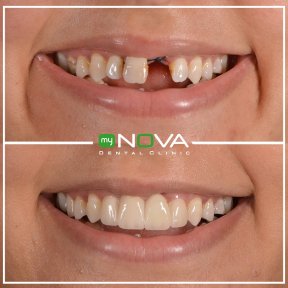
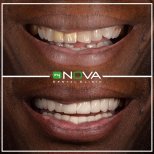
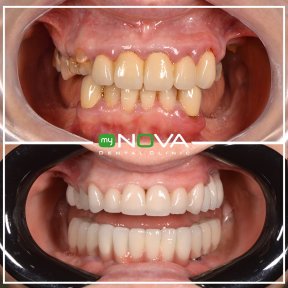
Before and after teeth cleaning results at My Nova Kusadasi Dental Clinic, improved smile
Before and after teeth cleaning (scaling) results at My Nova Kusadasi Dental Clinic
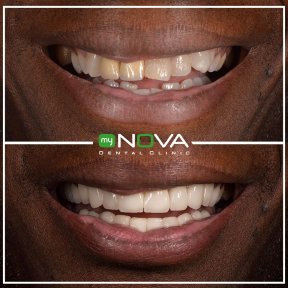
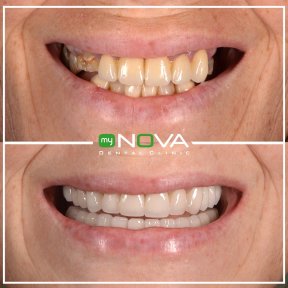
Before and after teeth cleaning results at My Nova Kusadasi Dental Clinic, improved smile
Before and after teeth cleaning (scaling) results at My Nova Kusadasi Dental Clinic, whiter smile
5.0
(3 reviews)
18 years of experience

Professional Teeth Cleaning with Whitening & 3 Fillings for Fresh Breath

Dr. Erisa Olkun, with 18 years of experience of dental experience and 900+ procedures performed, leads the team at My Nova Kusadasi Dental Clinic. The clinic specializes in comprehensive teeth cleaning packages that typically include scaling, x-ray examination, and personalized treatment plans. Multilingual services in English, Turkish, Albanian, and Italian available. The clinic maintains a 99% satisfaction rate among its international patients.

Discover the Best Root canal treatment Clinics in Turkey: 100 Verified Options and Prices

The Bookimed clinic ranking is based on data science algorithms, providing a trusted, transparent, and objective comparison. It takes into account patient demand, review scores (both positive and negative), the frequency of updates to treatment options and prices, response speed, and clinic certifications.
WestDent Clinic
SUAVE DENTAL CLINIC
Ad
Lokman Hekim Istanbul Hospital
Bahçeşehir University Dental Hospital
Dental Bosphorus
Good Look Clinic
You’ve viewed 5 of 100 clinics

Root canal treatment Overview in Turkey

Takeaways
Related procedures & Costs
How it works
What to expect
Pros & Cons
Benefits
Payment
patients recommend -
85%
Surgery Time - 2 hours
Stay in the country - 8 days
Rehabilitation - 4 days
Anesthesia - Local anesthesia
Bookimed fees - $0

Our Trusted Doctors

View all Doctors
verified

Imad Alboshe

10 years of experience

Dr. Alboshe specializes in Hollywood smiles and secure implant procedures, combining precision with patient education for a relaxed experience.

  • Trained at FUTURE University in Egypt and OKAN University in Turkey
  • Doctor of Dental Surgery (DDS) with a focus on modern techniques
  • Uses state-of-the-art technology for innovative dental care
  • Committed to patient education and personalized treatment plans
verified

Susana Akdash

17 years of experience

Specializes in high-tech dental treatments, including root canals, at WestDent Clinic. Combines aesthetic dentistry with functional solutions.

  • Graduated from Ege University with a focus on implantology
  • Extensive training in digital smile design and implant prosthetics
  • Attended multiple national and international dental congresses
  • Uses advanced techniques for precise and comfortable root canal treatments
verified

Ela Çabuk Renklibay

17 years of experience

Specializes in advanced periodontal and implant procedures with 17 years of experience of experience. Performs 500-1000 dental implant applications annually.

  • Expert in gingival aesthetics and smile design
  • Skilled in bone augmentation and sinus surgeries
  • Member of Turkish Periodontology Association
  • Focused on surgical treatment of gingival recession
verified

Ertan Etemoglu

32 years of experience

32 years of experience specializing in endodontics – Dr. Etemoglu brings extensive expertise to root canal treatments at Tower Dental Clinic.

  • Member of the American Dental Association
  • Fluent in English and Turkish with multilingual assistants
  • Works in a state-of-the-art clinic in central Istanbul
  • Specializes in complex dental procedures including endodontics

Video Stories from Bookimed Patients

Igor
It was great! Transfers, accommodation, treatment—all included.
Procedure: Dental Implant
David
Who knew getting your teeth fixed could be a mini vacation?
Procedure: Installation of a dental implant with crown
Pavel
I recommend Bookimed's services to everyone - they made my life much easier.
Procedure: Zirconia crown installation

Root canal treatment: Before & after photos

View all

Share this content

Updated: 09/11/2023
Authored by
Anna Leonova
Anna Leonova
Head of Content Marketing Team
A certified medical writer with 10+ years of experience, developed Bookimed’s trusted content, backed by a Master’s in Philology and medical expert interviews worldwide.
Fahad Mawlood
Medical Editor & Data Scientist
General practitioner. Winner of 4 scientific awards. Served in Western Asia. Former Team Leader of a medical team supporting Arabic-speaking patients. Now responsible for data processing and medical content accuracy.
Fahad Mawlood Linkedin
This page may feature information relating to various medical conditions, treatments, and healthcare services available in different countries. Please be advised that the content is provided for informational purposes only and should not be construed as medical advice or guidance. Please consult with your doctor or a qualified medical professional before starting or changing medical treatment.

FAQ about Root canal treatment in Turkey

These FAQs come from real patients seeking medical assistance through Bookimed. Answers are given by experienced medical coordinators and trusted clinic representatives.

Is it safe to have root canal treatment in Turkey?

Root canal treatment in Turkey is safe when performed at clinics accredited by the Turkish Ministry of Health and global bodies like JCI or ISO. Turkish endodontists frequently use advanced rotary systems and 3D CBCT imaging to ensure precision, maintaining success rates that align with international clinical safety standards.

  • Regulatory oversight: The Ministry of Health mandates Health Tourism Authorization Certificates for all international clinics.
  • Advanced diagnostics: Top centers utilize 3D CBCT scans for precise root anatomy mapping before treatment.
  • Specialist expertise: Many surgeons, like those at Tower Dental Clinic, hold Turkish Dental Association certifications.
  • Sterilization protocols: Accredited facilities follow strict ISO standards using Class B autoclaves for patient safety.

Bookimed Expert Insight: Clinical data shows a trend where university-affiliated centers, such as Bahceşehir University Dental Hospital, offer higher safety buffers for complex cases. These facilities provide 183 dental units and dedicated sedation departments that smaller private clinics may lack. For multi-root infections, choosing a university setting ensures access to academic-level diagnostic rigor and integrated emergency support.

Patient Consensus: Patients frequently praise the painless nature of the procedure and the transparency of post-op X-rays. Many emphasize the importance of choosing clinics with English-speaking staff to ensure every step of the nerve extraction is clearly explained.

How many days should I plan to be in Turkey for root canal treatment plus a crown?

Most patients should plan to stay in Turkey for 5 to 7 days for a complete root canal and crown procedure. This timeframe allows for the initial endodontic treatment, tooth settling, and the custom fabrication of a permanent crown in a specialized laboratory.

  • Treatment timeline: Day 1 involves the root canal and impressions for your custom dental crown.
  • Laboratory phase: Permanent crowns typically require 3 to 4 days for precise manufacturing and fitting.
  • Advanced technology: Clinics using CEREC CAD/CAM technology can often complete the crown in 24 hours.
  • Safety buffer: Staying 7 days ensures time for bite adjustments after the final crown bonding.

Bookimed Expert Insight: While many clinics like Hospitadent Dental Group use rapid CEREC technology to finish crowns quickly, we see higher long-term satisfaction when patients stay the full 7 days. This extra time allows any post-root-canal inflammation to subside before the final crown is permanently cemented, ensuring a much more comfortable and accurate bite alignment.

Patient Consensus: Patients emphasize that swelling often peaks around day 3, making an immediate flight home uncomfortable. Successful travelers recommend arrives with pre-trip X-rays to potentially save a day on the initial diagnostic phase.

Is the root canal procedure painful?

A root canal is typically no more painful than a routine cavity filling. Dentists in Turkey use advanced local anesthesia to ensure complete numbness before removing infected pulp. While patients may feel slight pressure or vibrations, the procedure actually eliminates the tooth pain caused by inflammation.

  • Anesthesia protocol: Local anesthesia ensures the tooth and gums remain completely numb throughout.
  • Modern technology: Specialists use rotary files and digital imaging to increase precision and comfort.
  • Procedure duration: Most treatments are completed in 45 minutes using minimally invasive techniques.
  • Recovery timeline: Mild sensitivity usually peaks within 24 hours and resolves within 2 days.

Bookimed Expert Insight: While a root canal is a standard procedure, selecting a clinic with high surgical volume often translates to smoother recovery. WestDent Clinic in İzmir, for instance, maintains a 99% success rate across 15,000 operations. This level of experience ensures that even complex cases involving dental cysts or foreign body removal are handled with minimal tissue trauma.

Patient Consensus: Patients report the experience is completely painless during the chair time, with some even finding it faster than expected. Practical advice often includes taking a pre-emptive mild painkiller immediately after the session to manage any minor tugging sensations as numbness wears off.

Do I always need a dental crown after root canal treatment?

You do not always need a dental crown after root canal treatment, though it is the clinical standard for back teeth. While front teeth with minor damage may only require composite fillings, molars and premolars usually need crowns to prevent fractures under heavy chewing pressure.

  • Back teeth: Molars endure 200 pounds of pressure, making crowns essential to prevent vertical fractures.
  • Structural loss: If decay or access holes remove 50% of the tooth, crowns provide necessary stability.
  • Survival rates: Root-filled teeth protected by crowns are 6 times more likely to last long-term.
  • Front teeth: Incisors often suffice with fillings if the natural structure remains mostly intact and healthy.

Bookimed Expert Insight: While a root canal in Turkey typically costs $46 to $200, skipping the follow-up crown is a high-risk gamble. Our data shows that clinics like WestDent and Good Look suggest crowning within 1 to 3 months. Delaying this often leads to fractures that turn a simple restoration into a $2,000+ implant procedure later.

Patient Consensus: Patients emphasize that root-treated teeth feel brittle and sensitive. Most advise getting a permanent crown quickly to avoid the pain and high costs associated with unexpected tooth extractions.

What advanced technology do Turkish clinics use for root canal therapy?

Turkish dental clinics utilize high-precision instruments like 3D Cone Beam Computed Tomography (CBCT) and dental operating microscopes to achieve success rates up to 99%. These facilities integrate rotary endodontic systems and electronic apex locators to ensure thorough canal cleaning and accurate root measurements during therapy.

  • Digital imaging: CBCT scans create 3D tooth maps to identify complex anatomy or hidden canals.
  • Microscopic endodontics: High-powered dental microscopes magnify the treatment area 25 times for superior precision.
  • Rotary systems: Flexible Nickel-Titanium (NiTi) files shape canals efficiently with minimal risk of breakage.
  • Laser disinfection: Technologies like PIPS use laser energy to deeply sterilize dentinal walls and tubules.
  • Bioceramic sealers: Advanced materials like Mineral Trioxide Aggregate (MTA) promote faster bone and tissue healing.

Bookimed Expert Insight: While most clinics offer standard root canal therapy, high-volume centers like Hospitadent Dental Group process 150,000 patients annually using integrated CEREC systems. This technology allows surgeons to perform a root canal and fit a permanent, custom-milled crown in a single visit, significantly reducing the typical two-day treatment window.

Patient Consensus: Patients frequently highlight the efficiency of rotary systems like ProTaper, noting that procedures are faster than expected. Coordination in English is common, especially at clinics where surgeons hold international fellowships from the US or Germany.

How long does full recovery take after a root canal in Turkey?

Full recovery after a root canal in Turkey typically takes 7 to 14 days. While initial tenderness and sensitivity usually subside within 1 to 3 days, surrounding tissues require up to 2 weeks to heal completely. Most patients return to work within 24 hours.

  • Initial healing: Primary sensitivity and swelling generally fade within 1 to 3 days post-procedure.
  • Functional recovery: Teeth typically regain full biting force and comfort within 1 to 2 weeks.
  • Crown placement: Permanent restorations are often fitted within the same week to protect the tooth.
  • Long-term healing: Internal bone regeneration around the root tip continues silently for several months.

Bookimed Expert Insight: Data from high-volume centers like WestDent Clinic and Dental Bosphorus shows a 99% success rate using rotary endodontics. This technology allows for single-visit treatments that significantly reduce post-operative inflammation compared to traditional manual filing. Patients often report that travel fatigue or jet lag feels more significant than the dental recovery itself.

Patient Consensus: Most travelers find they can enjoy local cuisine using the opposite side of their mouth within 48 hours. Many suggest packing ibuprofen and focusing on soft foods during the first few days to ensure a smooth transition.

Can I fly home immediately after root canal treatment?

Most dental experts recommend waiting 24 to 48 hours before flying home after a root canal. While you can fly once anesthesia wears off, cabin pressure changes during takeoff and landing may cause trapped air to expand, resulting in sharp pain or tooth squeeze.

  • Pressure sensitivity: Barodontalgia occurs when air trapped in the tooth expands during rapid altitude changes.
  • Anesthesia recovery: Wait 1 to 4 hours for numbness to fade before eating or flying.
  • Sedation safety: Avoid traveling for 24 hours if you received oral or IV sedation.
  • Temporary fillings: These remains stable during flight but require avoiding hard foods on that side.

Bookimed Expert Insight: Our data shows that while root canal prices in Turkey range from $46 to $200, many high-volume clinics like WestDent Clinic maintain 99% success rates. Some patients overlook that complex cases involving pulpitis or cyst removal may require a 3 to 5 day buffer. Always confirm if your clinic, such as Dental Bosphorus, provides a follow-up check before your flight to ensure the temporary seal is perfectly secure.

Patient Consensus: Patients often suggest building a 2-day buffer into travel plans to monitor for potential infection or throbbing pain. Many travelers recommend keeping over-the-counter pain relief in carry-on bags specifically for the descent when pressure changes are most intense.

Get a free consultation

Select the best way to contact you