
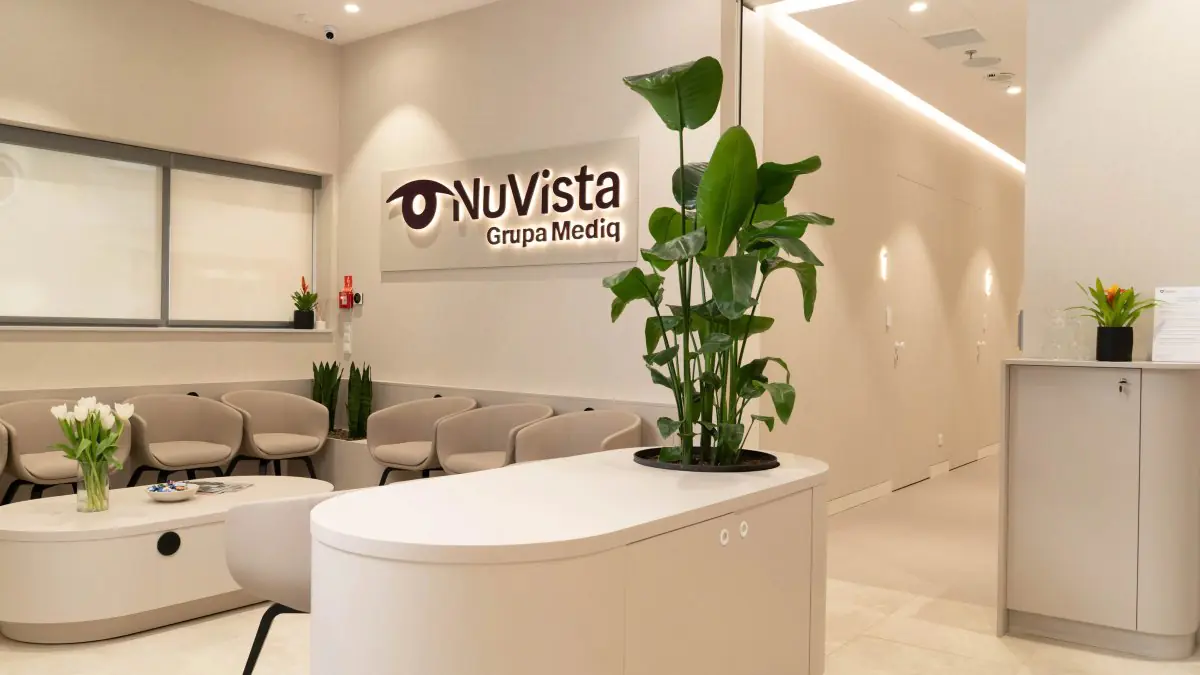
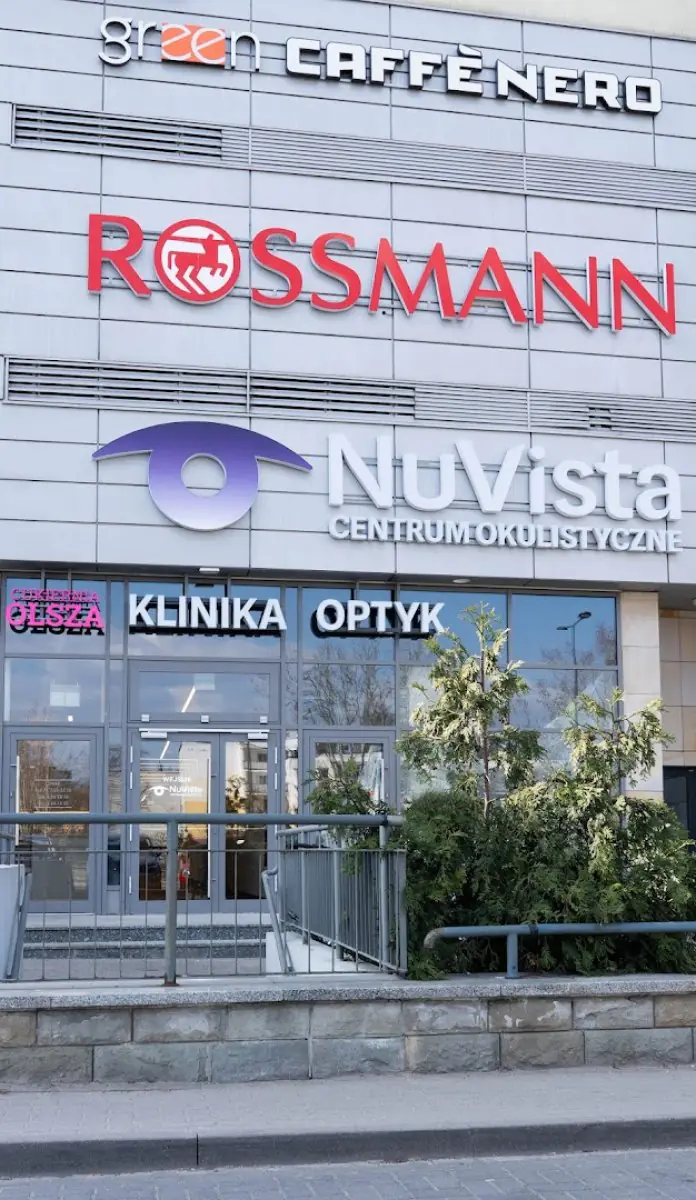
Poland, Warsaw
Corneal pachymetry in NuVista Centrum Okulistyczne (Klinika NuVista)
About the clinic
Corneal pachymetry at NuVista Centrum Okulistyczne in Warsaw, Poland, measures corneal thickness to assess eye health and surgical readiness. The clinic uses the high-resolution AS-OCT MS-39 swept-source device to identify subtle thinning and irregularities. This diagnostic is a mandatory step in the clinic’s qualification process for laser vision correction to screen for ectasia risks.
Diagnostic Technology and Benefits
The clinic performs this examination using a non-contact method that combines OCT imaging with corneal tomography. This approach provides a detailed pachymetric map showing the thickness at every point of the cornea. Because it is a non-contact exam, it eliminates the need for physical probes touching the eye surface. The swept-source technology helps specialists detect early signs of keratoconus and other corneal conditions.
- Detailed pachymetric mapping. Measures corneal thickness across the entire surface rather than a single point.
- AS-OCT MS-39 equipment. Uses high-resolution swept-source imaging for precise anatomical data.
- Ectasia risk assessment. Screens for corneal instability before refractive procedures.
- Keratoconus monitoring. Helps in diagnosing and staging progressive corneal thinning.
- Post-operative tracking. Used to monitor changes in the cornea following eye surgery.
- Immediate analysis. The device provides integrated maps and data analysis as soon as the scan finishes.
Examination Process at NuVista
The procedure is quick and occurs during a standard corneal tomography session. It does not use radiation and is entirely non-invasive for the patient. Results are ready immediately, allowing the medical team to review the corneal maps during the same visit. This data helps determine if a patient is a safe candidate for laser eye surgery.
Patients interested in checking their corneal health or qualifying for vision correction can request a consultation through Bookimed.
Highlights
2 doctors
Get a free consultation

NuVista Centrum Okulistyczne (Klinika NuVista)

 The clinic is not accepting new requests
Submit your request to get the best option in Poland
 Average answering time – 5 minutes
Treatments prices in the clinic
Last price update — 29.03.2025. Prices can be changed depending on the medical case and doctor's recommendations.
Ophthalmology
| treatment | Price | |
|---|---|---|
| Cataract surgery with IOL replacement | Price on request | |
| Cataract surgery (one eye) | Price on request | |
| Cataract surgery (both eyes) | Price on request | |
| Phacoemulsification with IOL implantation | Price on request | |
| IOLs implantation | Price on request | |
| Corneal Cross Linking (CCL) (One eye) | Price on request | |
| Laser iridotomy | Price on request | |
| Photocoagulation | Price on request | |
| Femtosecond laser | Price on request |
Clinic Doctors
How are we doing?
1 of
3
Information about this clinic is full and clear
1
2
3
4
5
Strongly disagree
Strongly agree
NuVista Centrum Okulistyczne (Klinika NuVista): more details about the clinic
Poland, Warsaw
NuVista Centrum Okulistyczne is a specialized ophthalmology clinic in Warsaw's Ursynów district. The facility focuses on refractive surgery and medical eye care. Dr. Łukasz Kołodziejski and Dr. Aleksandra Opala lead the medical team. Both bring over 12 years of experience.
Clinical Achievements and Standards
The clinic's specialists have performed over 20,000 eye procedures throughout their careers. Dr. Aleksandra Opala holds the title of Fellow of the European Board of Ophthalmology (FEBO). This certification confirms she meets high European standards for ophthalmic practice.
Patient safety relies on structured care and continuous monitoring. Surgeons use systems that track eye position in real time during laser procedures. Every treatment plan is tailored to pre-operative testing and unique eye anatomy.
Refractive Surgery and Laser Vision Correction
The clinic treats myopia, hyperopia, and astigmatism using various laser platforms. Vision often clears within 24 hours after deep tissue laser procedures. The surgical team performs several correction methods:
- SMILE – a minimally invasive flapless technique
- FemtoLASIK – uses a femtosecond laser to create a corneal flap
- PRK and EBK – surface-based methods for specific corneal types
- Refractive Lens Exchange (RLE) – replaces the natural lens with an implant
Patients over 50 who don't qualify for laser treatment can consider RLE instead. The clinic uses toric intraocular lenses during these procedures to correct astigmatism.
Cataract Treatment and Lens Replacement
Cataract surgery at NuVista uses ultrasound phacoemulsification to remove the cloudy lens. The procedure takes 15–20 minutes under local topical anesthesia. Specialists adapt the technique based on disease progression.
Diagnostics for cataract patients involve several steps to ensure accurate lens selection:
- Visual acuity assessment and intraocular pressure measurement
- Fundoscopy to examine the back of the eye
- Biometry to calculate the required power of the artificial lens
- Implantation of aspheric monofocal or toric intraocular lenses
Vision may improve within a few hours after surgery. Full stabilization typically occurs within a few weeks.
Advanced Care for Keratoconus and Glaucoma
The clinic treats progressive keratoconus with corneal cross-linking (CXL). This procedure uses riboflavin and UV-A light to strengthen the cornea. Clinic data shows CXL stops disease progression in over 90% of cases.
For patients at risk of glaucoma, the clinic provides targeted laser therapies. These include laser iridotomy for narrow-angle or angle-closure glaucoma. Specialists also perform retinal photocoagulation to stabilize chronic retinal conditions.
Technology and Diagnostics
NuVista uses the ZEISS VisuMax + MEL 90 laser system. This platform combines femtosecond and excimer technologies for precise corneal reshaping. The center also has the AS-OCT MS-39 for high-resolution imaging of the front of the eye.
Diagnostic tools include corneal tomography and pachymetry to assess corneal thickness. The team uses these to identify ectasia risk before any surgical intervention. Aberrometry and corneal biomechanics evaluation are available for complex cases.
Services for International Patients
NuVista offers a dedicated pathway for patients traveling from abroad. A Patient Care Coordinator guides individuals from initial consultation through follow-up. The clinic supports patients in both English and Polish.
Standard follow-up includes multiple visits to ensure proper healing. For major procedures, visits are scheduled for the next day, one week, and one month after surgery. These sessions let physicians monitor stabilization and adjust medication as needed.
Additional services
Language assistance
Available
free
Accommodation
Hotel (apartments) near the clinic, billed daily
Aleja Komisji Edukacji Narodowej 85/lokal U05, 02-722 Warszawa, Poland

updated 10/20/2026
Get a free consultation
NuVista Centrum Okulistyczne (Klinika NuVista)
The clinic is not accepting new requests
Submit your request to get the best option in Poland
Average answering time – 5 minutes
How it works:
- We find a medical coordinator familiar with the matter
- You get a personal offer with a step-by-step guide and the cost estimate
- We arrange your travel including appointment scheduling and flights booking
- You arrive at the hospital, we support you 24/7