
Show all photos
Spain, Madrid
Somnological Check-Up in Publio Cordón Memorial Hospital
4
accreditations
hospital certificates of quality
About the clinic
The somnological check-up at Publio Cordón Memorial Hospital in Pozuelo de Alarcón, Madrid, provides a detailed analysis of sleep patterns and respiratory functions. This diagnostic screening identifies underlying causes of fatigue and restlessness through objective testing. The hospital holds JCI and ESHRE accreditations, confirming its adherence to international medical safety protocols.
Diagnostic methods and equipment
The Neurological Sleep Disorders Unit uses various monitoring techniques to evaluate sleep quality and brain activity. Specialists use these tools to identify conditions like chronic insomnia and circadian rhythm disorders. The examination typically includes the following methods:
- Overnight video-polysomnography. Records brain waves, oxygen levels, heart rate, and breathing during sleep.
- Actigraphy. Uses a wearable sensor to track long-term activity and rest cycles.
- Multiple sleep latency test. Measures how quickly a patient falls asleep during the day in a quiet environment.
- CPAP titration. Monitors breathing with a device to determine the correct air pressure for apnea management.
- Suggested immobilisation test. Evaluates movement disorders that occur during rest periods.
Expertise at Publio Cordón Memorial Hospital
Dr. Alejandro Melcón Villalibre leads the clinical neurophysiology assessments for sleep-related issues. He is an active member of the Spanish Sleep Society (SES) and the Spanish Society of Clinical Neurophysiology (SENFC). His focus involves distinguishing between obstructive and central sleep apnoea through precise neurological data. The clinic evaluates movement disorders and hypersomnia to create a documented baseline for further medical care.
Diagnostic setting and results
Testing takes place within a specialized unit designed for overnight observation. The medical team analyzes the data to provide a specialized clinical assessment. Patients receive a diagnostic report and a suggested plan which the medical team reviews periodically. This structured approach helps manage complex cases like central sleep apnoea and sleep-related movement disorders. You may request a consultation to learn more about the screening process at this Madrid facility through the Bookimed platform.
Highlights
2005
Year of foundation
114 doctors
Get a free consultation

Publio Cordón Memorial Hospital
 The clinic is not accepting new requests
Submit your request to get the best option in Spain
 Average answering time – 5 minutes
Clinic Doctors
Pulmonologist
How are we doing?
1 of
3
Information about this clinic is full and clear
1
2
3
4
5
Strongly disagree
Strongly agree
hospital accreditations of quality
European Society of Human Reproduction and Embryology
BE,
European Society of Human Reproduction and Embryology certificate for Publio Cordón Memorial Hospital
Fellow, American College of Surgeons
US,
Fellow, American College of Surgeons certificate for Publio Cordón Memorial Hospital
American Society of Plastic Surgeons
US,
American Society of Plastic Surgeons certificate for Publio Cordón Memorial Hospital
Joint Commission International
US,
Joint Commission International certificate for Publio Cordón Memorial Hospital
Publio Cordón Memorial Hospital: more details about the clinic
Spain, Madrid
Publio Cordón Memorial Hospital is a private multi-specialty hospital in Pozuelo de Alarcón, Madrid. It opened in 2005 and operates from a single building with six specialized departments. The facility combines high-precision care with advanced technology and a patient-centered approach. Its infrastructure represents an investment of over 100 million euros.
Accreditations and Achievements
The hospital holds several international certifications for safety and quality. These include Joint Commission International (JCI) accreditation and Leading Hospitals recognition. The clinical team also maintains affiliations with specialized bodies:
- ESHRE – European Society of Human Reproduction and Embryology
- FACS – American College of Surgeons
- ASPS – American Society of Plastic Surgeons
In May 2026, the hospital celebrated its official inauguration presided over by Her Royal Highness the Infanta Doña Elena. A dedicated ward was named in her honor. The facility also reached key milestones – its first robotic knee prosthesis surgery and first percutaneous left atrial appendage closure.
Specialties and Specialized Units
The hospital provides advanced care through units for cardiology, neurosurgery, neurology, oncology, and orthopedics. Each department has sub-specialized teams for complex chronic and acute conditions. Specialists focus on minimally invasive methods and real-time monitoring.
Cardiovascular Care
The cardiovascular department includes the Hemodynamics and Interventional Cardiology Unit and the Electrophysiology and Arrhythmias Unit. Dr. Felipe Hernández Hernández focuses on complex coronary and structural heart diseases. The team performs advanced procedures:
- TAVI – replacing a heart valve via catheter
- Percutaneous closure of the left atrial appendage
- Stent implantation for coronary artery disease
- Catheter-based ablation for arrhythmias
The hospital uses a hybrid operating room, so surgeons can perform both interventional and open-heart procedures in one space. This setup increases safety during complex structural heart repairs.
Neurosurgery and Neurology
The neurosurgery department treats conditions of the brain, spinal cord, and peripheral nervous system. Dr. Fernando Ruiz Juretschke and Dr. Roberto García Leal specialize in skull base microsurgery and neurovascular procedures. The department runs specialized sub-units:
- Comprehensive Spine Care Unit – treats disc herniation and spinal stenosis
- Skull Base Microsurgery Unit – uses 3D planning for deep brain lesions
- Functional Onco-Surgery Unit – performs awake brain surgery
When tumors sit in sensitive brain areas, surgeons use cortical mapping and neurophysiological monitoring. This lets them remove maximum tumor tissue while preserving speech and mobility.
Oncology and Specialized Surgery
Oncology services split between Medical Oncology for systemic therapies and the Oncological Surgery Department. Dr. François Quenet leads the surgical oncology team, which handles high-complexity cancer cases. Treatment options include:
- HIPEC – heated chemotherapy delivered directly to the abdomen
- Targeted therapies using PARP inhibitors for ovarian cancer
- Image-guided interventional oncology
- Radiosurgery for brain tumors
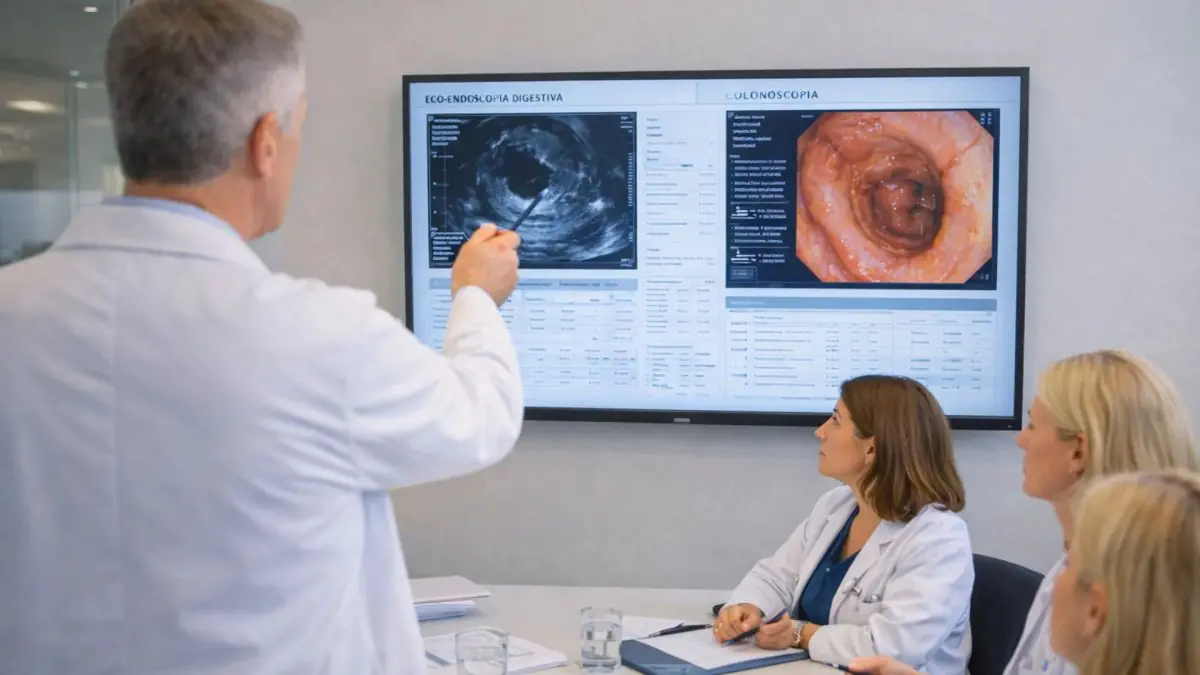
The Digestive Tumors Unit uses a multidisciplinary approach to sequence treatments for stomach and esophageal cancers. Surgeons also provide maxillofacial oncology with 3D planning for reconstruction.
Orthopedics and Traumatology
The orthopedics department features a Knee Unit and a hip program focused on rapid recovery. Dr. Carlos Encinas leads the Knee Unit, where surgeons performed the hospital's first robot-assisted prosthesis surgery.
The hip program uses a minimally invasive anterior approach for replacements. This technique confirms implant position with intraoperative X-rays – without cutting major muscles.
Medical Equipment and Diagnostic Technology
The hospital's infrastructure includes the Da Vinci 5 surgical robot. This system enables high-precision operations in urology, gynecology, and general surgery. A full imaging suite supports diagnostic accuracy:
- PET-CT with Gallium 68 – for precise neuroendocrine tumor imaging
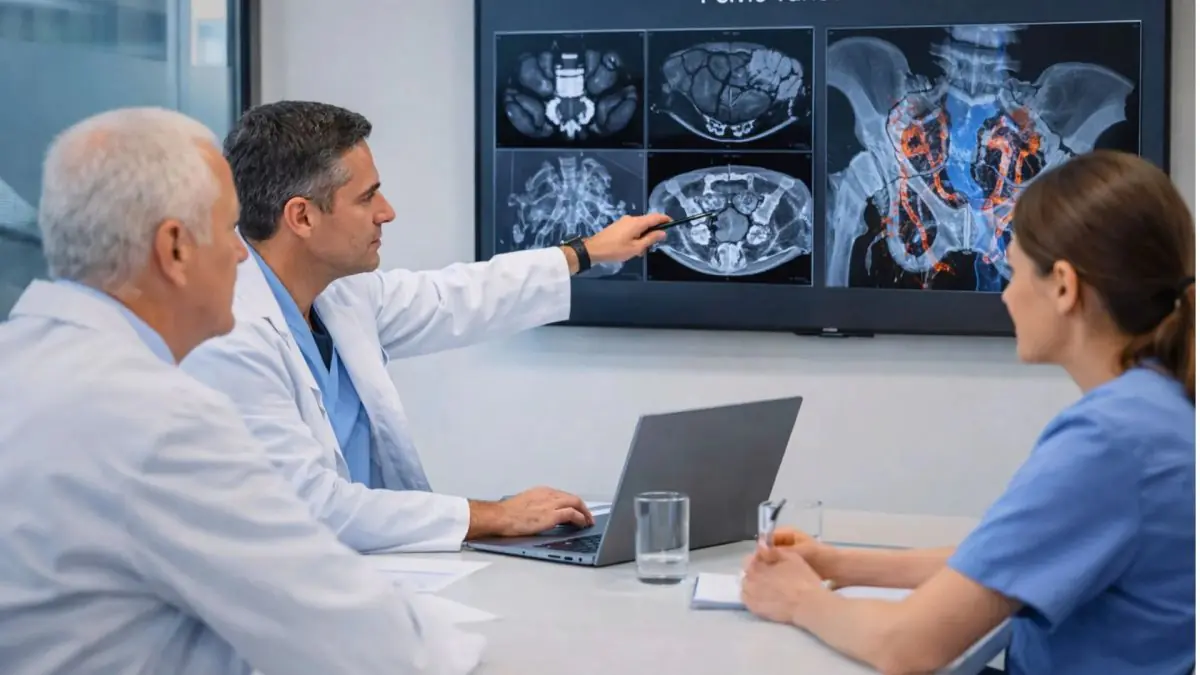
- High-definition MRI and CT scanners
- Digital mammography and scintigraphy
- Polysomnography for sleep disorder diagnosis
Services for International Patients
Publio Cordón Memorial Hospital has a dedicated international patient team to coordinate care for travelers. Staff assist from the first remote consultation through post-treatment follow-up. Support services include:
- Guidance for medical visas and accommodation
- Airport and hotel transfers
- Interpreter services in Spanish and English
- Online follow-up consultations and recovery monitoring
The hospital requires a review of medical records before arrival, so patients must submit reports in English or Spanish. After returning home, patients receive structured recommendations and ongoing support through digital channels.
Additional services
Language assistance
Available
free
Accommodation
Hotel (apartments) near the clinic, billed daily
Patient reviews
10 Google
reviews
Henar Martínez
Sep 15, 2026
An experience of 10. The stay and the rooms convey the comfort of a hotel, and the services are incredible. The best of all is the human team: super professional, attentive, affectionate, and very close and caring. Thank you so much for taking such good care of me.
Infinite thanks to Dr. Jesús Vilá and his team; they’re treating me wonderfully.
Without a doubt, it was a total success to have chosen this hospital!
Maria Luz
Sep 15, 2026
I want to thank from the bottom of my heart, among so many other positive attentions, the excellent care, human quality, detail-oriented, welcoming approach, and the personal concern for the patient shown by ALL the staff. I congratulate you and I recommend you to everyone I deal with. The attractive facilities, the notable standard of healthcare, and the good taste in their décor and the location in the area make it much easier to get there and to feel a pleasant, comforting sense of peace.
I also want to recognize and highlight the effort, vocation, quality, medical excellence, and such human treatment by Dr. Carmen Navarro Muros. Thank you for your interest in the well-being of your patients. The availability, professionalism, empathy, and how she has accompanied me over the years—thank you for wanting to care for my health, including remotely, with remarkable dedication and unwavering commitment to health. She is genuinely an exceptional professional!
As part of my SQM treatment at the Hospital, I receive infusion therapy, so I also want to recognize Susana, the nurse in charge. Her professionalism, her sincere smile, her concern for the patient’s condition, health, and well-being, her respectful closeness, her perfect command and dexterity, and her unique warmth in her manner all contribute greatly to staying in trust and serenity.
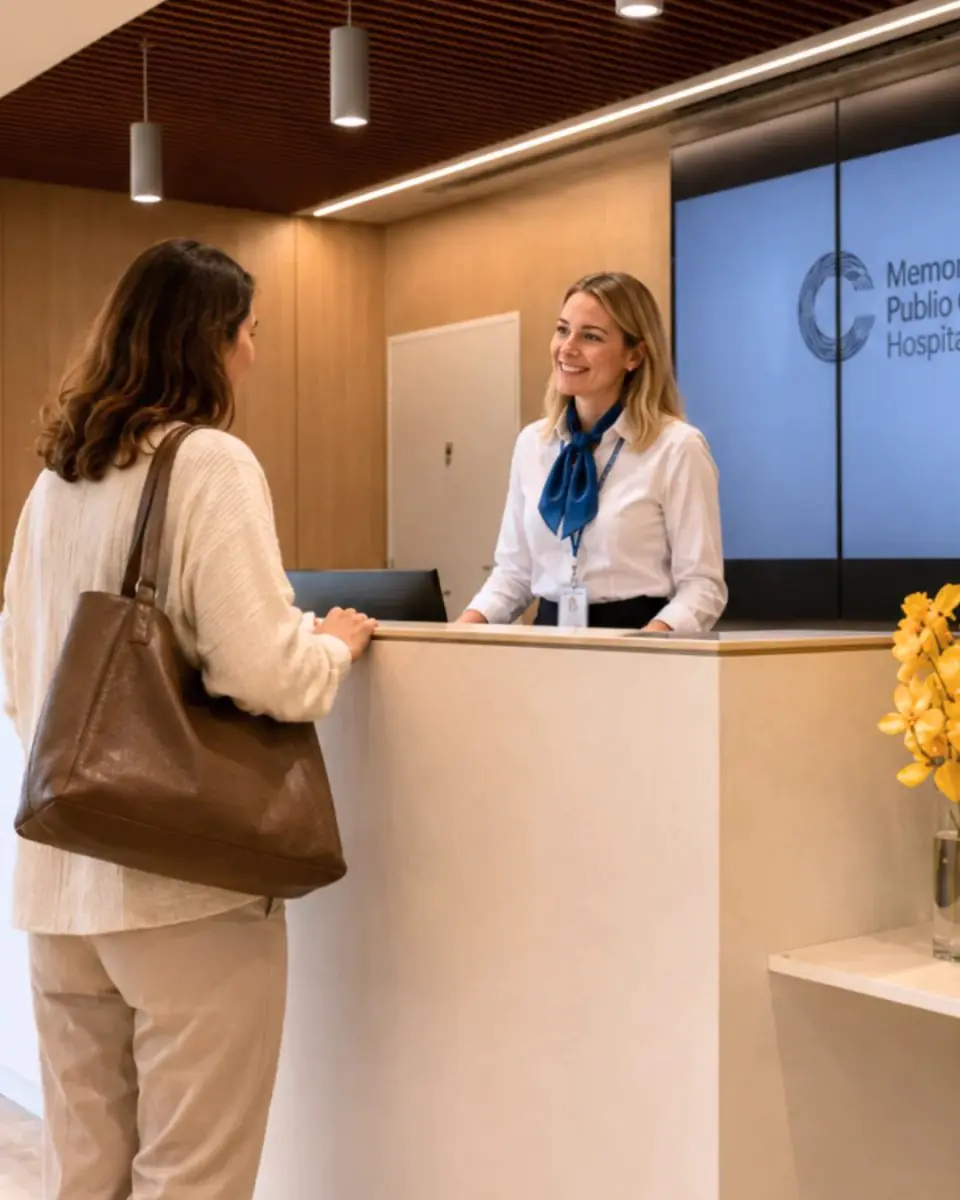
I also want to highlight and thank the excellent care provided by the receptionists Maribel and Elena. They receive you with a sincere smile and always show themselves to be very kind. When handling the data, they do it in such a way that they make the patient feel comfortable from the very first moment. Despite being very busy, they attend with patience, care, and great human warmth. They are efficient with paperwork and explain everything clearly, while at all times supporting the patient’s privacy—demonstrating professional excellence and efficient management.
They manage appointments perfectly and always have a kind word for patients.
And not least, and of no less importance,
I CAN’T HELP THANKING AND CONGRATULATING THE DIRECTIVE FOR DOING AN EXCELLENT JOB!!
A 10 IN SERVICE FOR EVERYONE!!!
THANK YOU FOR EVERYTHING, FOR EVERYTHING! GO AHEAD! We need you...!!
Att. María Luz López Nieves
JORGE ANDRES PENA SALAZAR
Sep 8, 2026
I have never had an experience like this in a hospital, from the facilities to the patient care—I felt very comfortable and at ease, the way you’re supposed to feel in a hospital. Great!
María Cordon
Sep 7, 2026
Fantastic team, both medical and support staff and administrative. Never before has so much professional excellence been combined with so much human quality… the result is extraordinary.
Ana Pires
Aug 21, 2026
I’ve just been treated by Dr. Javier Pedraz, a dermatologist, and I couldn’t be more grateful. He is an excellent professional—close, attentive, and with truly exquisite care.
I would like to highlight and thank his dedication and professionalism. I feel very proud of the great professionals who are part of Hospital Memorial Públio Cordón.
Thank you very much, Dr. Pedraz, for your excellent care!
Carlos De Vicente
Aug 9, 2026
Flew in from Almeria to Madrid with a great deal of pain in my stomach and came straight to el memorial and straight away got attended and within the hour í was good to go. 10/10 service
Eduardo Merino Delgado
Jul 30, 2026
For the past few months I’ve been going to the nutrition service with Dr. Esther Segorbe and I couldn’t be happier.
Esther is warm, attentive, and she answers my questions without rushing me. She always replies to my emails. The truth is, I’m extremely, extremely happy to have found her.
ivan martin mantero
Jul 28, 2026
My father has undergone a fairly delicate lung operation in this hospital.
All I have left are words of gratitude for every single professional there, from Dr. González Rivas, the nurses, the cleaning staff, the assistants…
This hospital is a 10 in every sense: the facilities, the comfort of the rooms, the care and the treatment, the food…
In my father’s words: “In my best dreams, I never would have imagined the exceptional treatment received from the staff, from the Managing Director all the way to the last person who works in the center. And since I’m a classic, knowing this hospital, I’ve ended up hitting the jackpot without even playing it.”
Nacho Perez
Jul 27, 2026
Excellent service. No waiting time. What usually takes months we managed to resolve in just a few hours.
Isabel C
Jul 16, 2026
We only have words of gratitude for INMOA. As patients, the experience is being nothing short of excellent. The team perfectly combines excellence with a close, human and very comforting approach, especially Rachel, Elsa, Paloma, and Pablo. They make you feel safe and supported at every step of the way. We recommend them 100% both for their professional level and for their great human quality.
Also, we would like to highlight the kindness and friendliness of the staff in the main lobby.
P.º de la Casa de Campo, 5 28223 Pozuelo de Alarcón, Madrid, Spain

updated 10/21/2026
Get a free consultation
Publio Cordón Memorial Hospital
The clinic is not accepting new requests
Submit your request to get the best option in Spain
Average answering time – 5 minutes
How it works:
- We find a medical coordinator familiar with the matter
- You get a personal offer with a step-by-step guide and the cost estimate
- We arrange your travel including appointment scheduling and flights booking
- You arrive at the hospital, we support you 24/7