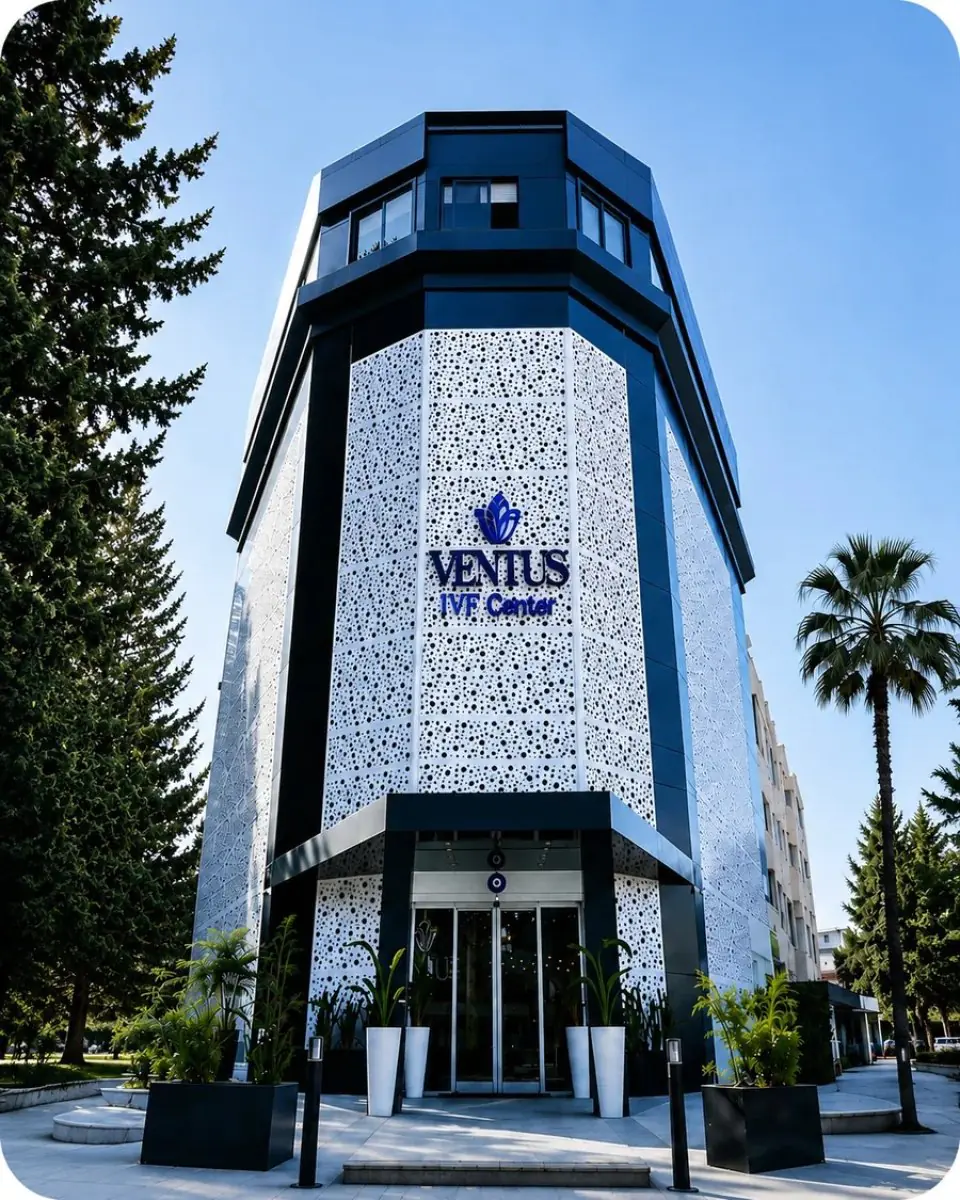

Urine analysis in Ventus IVF Center
About the clinic
Ventus IVF Center is a specialized fertility clinic in Nicosia, North Cyprus. Founded in 2009, it focuses on reproductology and urology. The embryology lab is CAP-accredited, covering patient identification and specimen safety. AI-assisted tools help the team select oocytes and embryos. The lab uses chip-based identification and electronic witnessing. EmbryoScope+ time-lapse imaging records embryo development around the clock. Air quality is managed with VOC control and HEPA filtration.
Egg donation reaches a 91% cumulative pregnancy rate. Sperm donation reports 93%. Standard IVF has a 60% cumulative live birth rate. The center holds several ISO certifications and ESHRE recognition. Most international patients come from Turkey, the UK, and Europe. Remote initial assessments and travel coordination are available. Treatment plans are tailored through multidisciplinary reviews.
Highlights
Get a free consultation


 The clinic is not accepting new requests
 Average answering time – 5 minutes
Treatments prices in the clinic
| treatment | Price | |
|---|---|---|
| Testicular sperm aspiration (TESA) | $2244.25 | |
| Embryo Donation | $8976.99 | |
| Testicular sperm extraction (TESE) | $3366.37 | |
| Embryo Transfer | $2244.25 | |
| Cryopreservation of sperm | $561.06 | |
| Transthoracic flexible URS with laparoscopic pyelolitotomy | Price on request |
How are we doing?
hospital accreditations of quality
Ventus IVF Center: more details about the clinic
Ventus IVF Center is a private fertility clinic established in 2009 in Nicosia, Northern Cyprus. The center focuses on assisted reproductive medicine with a primary emphasis on laboratory quality and specimen safety. It serves patients from the United Kingdom, Turkey, and across Europe.
Accreditations and Clinical Safety Standards
The facility maintains a CAP-accredited embryology laboratory through the College of American Pathologists. This accreditation covers patient identification, specimen labeling, and cryopreservation. The laboratory also adheres to several international standards:
- ISO 9001 for quality management
- ISO 15189 for medical laboratory standards
- ESHRE certification for reproductive medicine
- ISO 14001 for environmental management
- ISO 45001 for occupational health and safety
To protect identity safety, the center uses electronic witnessing and chip-based identification. These systems track gametes and embryos from the culture dish to the transfer catheter. This adds verification at every step to prevent errors.
Reproductive Medicine and IVF Success Rates
The reproductology department creates personalized protocols for IVF, ICSI, and various donation programs. Assoc. Prof. Dr. Beril Yüksel oversees treatment plans. She specializes in reproductive endocrinology and PGT applications. The center reports high success outcomes:
- IVF Treatment: 70% cumulative pregnancy rate and 60% live birth rate
- Egg Donation: 91% cumulative pregnancy rate and 80% live birth rate
- Sperm Donation: 93% cumulative pregnancy rate and 76% live birth rate
- Embryo Donation: 92% cumulative pregnancy rate and 82% live birth rate
Scientific Director Dr. Munevver Serdarogullari co-authored research for ESHRE. Dr. Zafer Atayurt manages laboratory quality and traceability. The team also participates in next-generation research using transcriptomic and genomic data for embryo assessment.
Advanced Laboratory Technologies
The center uses EmbryoScope+ time-lapse imaging for continuous embryo monitoring around the clock. This lets the team record development without removing embryos from the stable incubator. HEPA filtration and strict VOC control systems protect the laboratory environment further.
Specialists use AI-assisted assessment to evaluate oocytes, sperm, and embryos. The AI ranks imaging data, but the physician and embryology team make all final transfer decisions. For sperm preparation, the lab offers microfluidic techniques to select motile sperm when appropriate.
Urology and Male Infertility Services
The urology department addresses complex male factor infertility, including azoospermia (absence of sperm). Diagnostics involve hormone tests, genetic screening for Y-chromosome microdeletions, and scrotal ultrasound. When sperm production is impaired, the center offers several surgical retrieval methods:
- Micro-TESE – microscopic testicular sperm extraction
- TESE – standard testicular sperm extraction
- PESA – percutaneous epididymal sperm aspiration
- MESA – microsurgical epididymal sperm aspiration
Retrieved sperm can be used for ICSI or frozen for future cycles. The team also assesses modifiable factors such as varicocele (enlarged scrotal veins) and hormonal abnormalities. These findings help determine whether reconstruction or assisted reproduction is the best next step.
Services for International Patients
Ventus IVF Center provides dedicated support for patients traveling to Cyprus for treatment. The international department offers online consultations for preliminary assessments and medical record reviews. Staff coordinate the following logistics:
- Coordination of flights to Ercan International Airport
- Travel and accommodation planning
- Remote monitoring of local ultrasound and blood test results
- Interpretation services in English, Turkish, and Russian
Patients can submit embryo reports or uterine ultrasound results digitally before their trip. After returning home, the clinic continues support through remote follow-up and result reviews. All documentation can be translated into the patient's language upon request.
Additional services
96 Bedrettin Demirel Avenue, Nicosia 99010, North Cyprus

Get a free consultation
The clinic is not accepting new requests
Average answering time – 5 minutes
How it works:
- We find a medical coordinator familiar with the matter
- You get a personal offer with a step-by-step guide and the cost estimate
- We arrange your travel including appointment scheduling and flights booking
- You arrive at the hospital, we support you 24/7