To homepage

How it works

We've transformed the clinic search process, making it simple, fast, and personal.
Answer a few questionsTake a short quiz to share your Lower Eyelid Blepharoplasty goals.
Get personalized offers3 clinics, handpicked based on your answers, provide tailored treatment plans and quotes.
Choose the best optionCompare offers and choose the clinic that suits you best.
You can also browse all 21 clinics below.
820К+ patients have got assistance since 2014
50 countries
1,500 clinics
6K+ reviews
3K+ qualified doctors

How Much Does Lower Eyelid Blepharoplasty Cost in Republic of Korea?

Lower eyelid blepharoplasty in the Republic of Korea typically costs from $1,600 to $2,600. The final price depends on the chosen surgical technique, such as fat repositioning or skin excision, and the surgeon's experience level. Patients save around 60% compared to the US, where the average cost is $5,300. These prices generally include the procedure, anesthesia, post-operative medications, and initial follow-up care.

  • Transconjunctival fat repositioning: Often considered a premium technique that helps eliminate bags without external scars.
  • Combined techniques: Procedures involving both fat repositioning and skin removal typically increase the total cost.
  • District variations: Facilities in Seoul districts like Gangnam or Apgujeong may charge approximately 20% more.
  • Specialist premiums: Surgeons with over 20 years of experience often command higher fees for their expertise.

Bookimed Expert Insight: Choosing a clinic in Seoul offers incredible value due to high specialization. For example, HERSHE Plastic Surgery Korea offers packages around $1,850. This includes a specialist with 36 years of experience. Many top-tier clinics are accredited by KOIHA or JCI. They often include specialized deswelling laser treatments. Look for surgeons like Dr. Paik Hye-won, who has 23 years of experience.
Data verified by Bookimed as of April 2026, based on patient requests and official quotes from 179 clinics worldwide. Median costs are based on real invoices (2025–2026) and updated monthly. Actual prices may vary.

Lower Eyelid Blepharoplasty Packages in Republic of Korea — April 2026

Procedure type
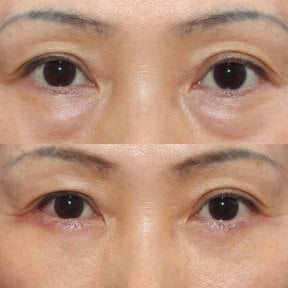
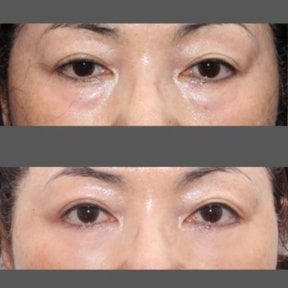
Lower eyelid blepharoplasty before and after results at HERSHE Plastic Surgery Korea
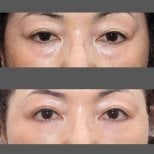
Before and after lower eyelid blepharoplasty results at HERSHE Plastic Surgery Korea
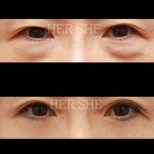
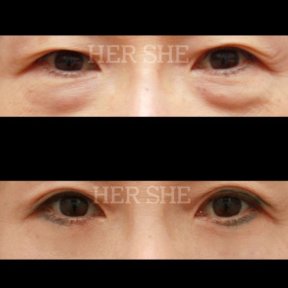
Lower eyelid blepharoplasty before and after results at HERSHE Plastic Surgery Korea
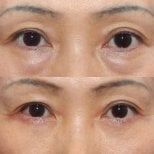
Before and after lower eyelid blepharoplasty results at HERSHE Plastic Surgery Korea
37 years of experience

Lower Blepharoplasty by 36-Year Specialist for Refreshed Eyes

Dr. Kim Joo Bong specializes exclusively in blepharoplasty with 37 years of experience' experience and 900+ procedures performed. Lower eyelid blepharoplasty with fat correction may cost around $1,910 – typically covering the surgery, pre-op evaluation, transfers, and 7-day hospital stay. The ASPS-member clinic maintains a 94.3% success rate for this procedure. Dr. Kim offers both transcutaneous and transconjunctival approaches for customized results.

Discover the Best Lower Eyelid Blepharoplasty Clinics in Republic of Korea: 21 Verified Options and Prices

The Bookimed clinic ranking is based on data science algorithms, providing a trusted, transparent, and objective comparison. It takes into account patient demand, review scores (both positive and negative), the frequency of updates to treatment options and prices, response speed, and clinic certifications.
SAERO Plastic Surgery
VG Plastic Surgery
Returning Plastic Surgery
JK Plastic Surgery Center
RNWOOD Plastic Surgery
You’ve viewed 5 of 21 clinics

Lower Eyelid Blepharoplasty in Republic of Korea: Your Travel Plan

Day 1: Arrival in Republic of Korea
  • Upon landing, you should have all necessary documents, including your passport, for the tax refund program.
  • Check into your hotel or accommodation. Rest and adjust to the local time zone.
  • Review your scheduled appointments and confirm your consultation time with the clinic.
  • Prepare any questions or concerns for your initial consultation.
Day 2: Initial Consultation
  • You need to attend your in-person consultation at the clinic. This is crucial for confirming the specifics of your lower eyelid blepharoplasty.
  • The doctor may suggest additional procedures, such as ptosis correction, if necessary.
  • Discuss the incision method, typically along the eyelash line or inside the eyelid, for minimal scarring.
  • Confirm the date and time of your surgery and any pre-operative instructions.
  • Make a deposit if required to secure your surgery slot.
Day 3: Pre-Operative Preparation
  • Undergo preoperative laboratory tests as part of the surgical package.
  • Ensure you follow any dietary or medication restrictions advised by the clinic.
  • Arrange for an overnight caregiver if your procedure requires general anesthesia or hospitalization.
  • Discuss any concerns about anesthesia or the surgery process with the anesthesiologist.
Day 4: Surgery Day
  • Arrive at the clinic at the scheduled time for your lower eyelid blepharoplasty.
  • The procedure involves making incisions to manipulate fat and lift loose skin for a smoother eyelid surface.
  • Additional procedures like canthal fixation or fat redistribution may be performed based on your consultation.
  • Post-surgery, the nursing team will monitor you and provide postoperative care instructions.
  • Expect some swelling and bruising; these are normal parts of recovery.
Day 5-7: Post-Operative Care
  • Attend follow-up appointments for check-ups and stitch removal, typically 7 days post-surgery.
  • Utilize clinic services such as regenerating laser or oxygen treatment to aid recovery and reduce swelling.
  • Avoid strenuous activities and follow any specific care instructions provided by the clinic.
  • Communicate with the clinic if you experience any unusual symptoms or have concerns.
Day 8: Final Check-Up and Preparation for Departure
  • Attend a final check-up to ensure proper healing and address any remaining concerns.
  • Discuss any long-term care instructions or restrictions with your doctor.
  • Collect prescriptions for medications, which are not included in the surgery package.
  • Request documentation for the tax refund program, ensuring you have your passport available.
Day 9: Departure from Republic of Korea
  • Prepare for your journey home, ensuring you have all necessary documents and postoperative care instructions.
  • Continue to follow recovery guidelines as instructed by your doctor.
  • Stay in contact with the clinic for any follow-up consultations or if you have questions during your recovery.

Our Trusted Doctors

View all Doctors
verified

Park Young Kyu

25 years of experience

Dr. Park is a board-certified plastic surgeon specializing in lower eyelid blepharoplasty, recognized for his precision and academic excellence.

  • Awarded Top Resident by the Korean Society of Plastic and Reconstructive Surgeons
  • Full Member of the Korean Eyelid Surgery Research Society
  • Adjunct professor at Gangnam Sacred Heart Hospital
  • Published research on high-resolution ultrasonography in aesthetic plastic surgery
verified

Yong Woo Kim

15 years of experience • 1000+ treatments performed

Dr. Kim achieved the highest score on the residency exam by the Korean Society of Plastic and Reconstructive Surgeons, specializing in lower eyelid blepharoplasty.

  • Board-certified plastic surgeon with extensive training in reconstructive microsurgery
  • Recipient of multiple awards including Best Paper from Korean Wound Management Society
  • Graduated from Hanyang University's prestigious medical program
  • Member of leading Korean plastic surgery associations
  • Experienced at top Seoul clinics including BK and VG Plastic Surgery
verified

Im Young Min

20 years of experience

Dr. Im Young Min is a board-certified plastic surgeon specializing in facial procedures, with a Ph.D. in Plastic Surgery from The Catholic University of Korea.

  • CEO of VG Plastic Surgery in Seoul
  • Associate Professor at St. Mary’s Hospital
  • Recognized as one of Korea's 100 Good Doctors in 2022
  • Active member of the Korean Association of Plastic Surgeons
  • Specializes in facelift surgery and revision rhinoplasty
verified

Kim Jung Hue

8 years of experience

Dr. Kim Jung Hue specializes in lower eyelid blepharoplasty with training from St. Mary's Hospital in Seoul.

  • Graduate of Catholic University with a focus on plastic surgery
  • Director at Pop Plastic Surgery Clinic
  • Full member of multiple Korean plastic surgery societies

Video Stories from Bookimed Patients

Karen
I traveled from Chile to Korea for plastic surgery and I'm already in love with my new look.
Procedure: Facelift
Véronique
If you're considering a change, definitely look into Bookimed. They made the whole process a breeze.
Procedure: Blepharoplasty (Eyelid correction)

Lower Eyelid Blepharoplasty: Before & after photos

View all

Share this content

Updated: 08/05/2025
Authored by
Anna Leonova
Anna Leonova
Head of Content Marketing Team
A certified medical writer with 10+ years of experience, developed Bookimed’s trusted content, backed by a Master’s in Philology and medical expert interviews worldwide.
Fahad Mawlood
Medical Editor & Data Scientist
General practitioner. Winner of 4 scientific awards. Served in Western Asia. Former Team Leader of a medical team supporting Arabic-speaking patients. Now responsible for data processing and medical content accuracy.
Fahad Mawlood Linkedin
This page may feature information relating to various medical conditions, treatments, and healthcare services available in different countries. Please be advised that the content is provided for informational purposes only and should not be construed as medical advice or guidance. Please consult with your doctor or a qualified medical professional before starting or changing medical treatment.

Fast Facts about Lower Eyelid Blepharoplasty

Lower Eyelid Surgery

Lower eyelid surgery, also known as eyelid reshaping, is a procedure to improve under-eye appearance by removing excess skin and fat.

Pros: Targets under-eye bags and dark circles effectively. Suitable for age-related changes, with a success rate of 85% in rejuvenating appearance.
Cons: May result in temporary swelling and bruising. Not suitable for vision correction or addressing droopy eyelids.
Effectiveness: 85% success rate in enhancing under-eye aesthetics.
Duration: 1-2 hours
Recovery: 7-14 days
Best for: Under-eye bags, dark circles, excess skin. Enhances facial aesthetics for individuals over 30.
Prices: View costs of other techniques

FAQ about Lower Eyelid Blepharoplasty in Republic of Korea

These FAQs come from real patients seeking medical assistance through Bookimed. Answers are given by experienced medical coordinators and trusted clinic representatives.

What are the different surgical techniques used in lower eyelid blepharoplasty?

Lower eyelid blepharoplasty techniques in Republic of Korea focus on fat repositioning rather than removal to avoid a hollowed appearance. Surgeons primary approaches include the scarless transconjunctival method for under-eye bags and the subciliary approach for addressing significant skin laxity and wrinkles.

  • Transconjunctival approach: Internal incisions leave no visible scars and suit patients with minimal skin excess.
  • Fat repositioning: Shifting fat into tear troughs prevents hollowing and ensures a smooth cheek transition.
  • Subciliary approach: External incisions below lashes address sagging skin and muscle laxity in older patients.
  • Skin pinch hybrid: A 30-minute add-on removes narrow skin strips without disturbing deeper muscle layers.
  • Laser-assisted refinement: CO2 or fractional lasers tighten crepey skin without requiring additional surgical incisions.

Bookimed Expert Insight: Korean clinics like HERSHE show a 94.3% success rate by prioritizing fat repositioning over traditional excision. While US averages reach $5,300, Seoul packages ranging from $2,700 to $3,900 often include advanced skin-pinch techniques that minimize donor-site trauma.

Patient Consensus: Patients emphasize requesting fat repositioning specifically to maintain natural volume. Most suggest planning a 3–7 day stay in Seoul to manage initial swelling and attend essential follow-up appointments.

Are results from lower eyelid blepharoplasty permanent?

Lower eyelid blepharoplasty results are generally permanent because surgically removed or repositioned orbital fat does not regenerate. While fat transposition techniques in Seoul clinics effectively eliminate under-eye bags for decades, the procedure cannot stop natural aging, skin laxity, or collagen loss over time.

  • Fat repositioning: Surgeons move fat to hollow areas rather than just removing it for longevity.
  • Success rates: HERSHE Plastic Surgery Korea reports a 94.3% success rate for eye rejuvenation surgeries.
  • Long-term benefit: Most patients only require one lower eyelid correction in their entire lifetime.
  • Aging factors: New wrinkles or skin sagging may appear 8 to 10 years post-surgery.

Bookimed Expert Insight: Data from top Seoul clinics like JK Plastic Surgery Center highlights that fat transposition holds up significantly better than simple excision. Transitioning from `fat removal` to `fat repositioning` prevents the hollowed-out look that often requires revision surgery a decade later. For the most durable results, look for surgeons like Dr. Kim Joo Bong who specialize in intricate repositioning rather than just cutting tissue away.

Patient Consensus: Patients report that while under-eye bags never return, skin crepiness often reappears around year 8. Many emphasize that starting aggressive sun protection and retinoids immediately after surgery is essential to delay the return of fine lines.

How long is the recovery period after lower eyelid blepharoplasty?

Recovery from lower eyelid blepharoplasty typically requires 7 to 14 days for visible swelling and bruising to subside. While major healing occurs within 2 weeks, internal tissues and final contouring often take 4 to 8 weeks to settle completely.

  • Initial downtime: Most patients return to light work or social activities within 7 days.
  • Suture removal: Surgeons typically remove non-dissolvable stitches between day 5 and day 7 post-op.
  • Activity restrictions: Avoid heavy lifting and strenuous exercise for 3 to 4 weeks.
  • Full results: Residual micro-swelling Cogntive resolves as incision lines fade over 3 to 6 months.

Bookimed Expert Insight: South Korean clinics frequently utilize transconjunctival approaches which significantly accelerate visible recovery. While some centers claim patients are public-ready in 5 days, our data suggests 10 days is more realistic. Leading surgeons like Dr. Kim Joo Bong at HERSHE Plastic Surgery maintain specialized protocols that achieve a 94.3% success rate.

Patient Consensus: Many patients report that swelling peaks on day 3 but warn about chemosis or eye redness. They recommend keeping the head elevated and avoiding salty foods to prevent morning puffiness during the first month.

Will any scars be visible after surgery?

Visible scarring is extremely rare in South Korean clinics due to advanced placement techniques. Surgeons typically use a transconjunctival approach where incisions are hidden inside the lower eyelid, leaving zero external marks. For external surgery, subciliary incisions placed directly beneath the eyelashes usually become imperceptible within 6 to 12 months.

  • Internal approach: Transconjunctival incisions remain completely hidden inside the eyelid with no outer scars.
  • External approach: Subciliary incisions align with the lash line to ensure natural concealment.
  • Recovery timeline: Most surgical scars reach 80% maturation within 1 year for healthy patients.
  • Asian skin care: Surgeons emphasize SPF 50+ to prevent hyperpigmentation, which is common in Asian skin.

Bookimed Expert Insight: Leading Seoul centers like HERSHE Plastic Surgery maintain a 94.3% success rate specifically for blepharoplasty. This high precision is rooted in volume; JK Plastic Surgery alone has performed over 85,000 total procedures. This massive experience allows Korean surgeons to use much finer sutures than the global average, which significantly reduces `ghost lines` and textural irregularities in the delicate under-eye area.

Patient Consensus: While internal incisions leave no marks, those with external stitches should anticipate thin lines that fade to near-invisibility. Most patients confirm that using silicone gel starting at week 4 is vital for the best cosmetic outcome.

What should I expect during the procedure itself?

Lower eyelid blepharoplasty in South Korea typically lasts 45 to 90 minutes under local anesthesia with IV sedation. Surgeons often use a transconjunctival approach, making incisions inside the eyelid to remove or reposition fat without leaving visible external scars or requiring an overnight stay.

  • Anesthesia method: Local injections with IV sedation ensure you remain relaxed and pain-free.
  • Surgical approach: Transconjunctival techniques allow for fat repositioning through internal incisions for scar-free results.
  • Monitoring process: Medical teams track heart rate and oxygen levels throughout the 30–60 minute procedure.
  • Immediate aftercare: Cold compresses are applied instantly to manage mild swelling before same-day discharge.

Bookimed Expert Insight: While many global clinics focus primarily on fat removal, leading Seoul centers like HERSHE and JK Plastic Surgery prioritize fat repositioning. This technique fills the `tear trough` hollows using your own tissue. Data from these clinics shows this approach achieves a more natural, youthful contour than simple excision alone.

Patient Consensus: Patients describe the initial numbing injection as a brief sting, followed by a sensation of gentle tugging and pressure. Most remain drowsy but functional, often walking out of the clinic shortly after the final safety checks.

How long should I plan to stay in Korea for lower eyelid blepharoplasty as a medical tourist?

Plan to stay in Republic of Korea for 7 to 10 days for lower eyelid blepharoplasty. This duration covers your pre-operative consultation, the 1-hour surgical procedure, and essential follow-up care. Most surgeons require 5 to 7 days before removing non-dissolvable sutures.

  • Ideal stay: Residents traveling long-haul should consider 14 days for optimal swelling management before flying.
  • Suture removal: Surgeons typically remove stitches between day 5 and day 7 post-operatively in Seoul.
  • Technique variance: Incisional procedures require 10 days, while scarless repositioning may allow 3 to 5 days.
  • Activity timeline: Most patients return to light activities and public appearance within 10 to 12 days.

Bookimed Expert Insight: While many clinics like Hivom advertise rapid recovery, our data shows a major distinction in stay requirements between standard blepharoplasty and fat repositioning. Packages at HERSHE Plastic Surgery specifically suggest a 6-day hotel stay for fat repositioning. This aligns with the 94.3% success rate reported by their specialists, emphasizing that the extra 48 hours in-country ensures the delicate fat grafts settle properly before cabin pressure changes during your flight home.

Patient Consensus: Expect significant bruising and swelling to persist until day 10, making high-quality sunglasses essential for public outings. Many patients recommend booking accommodations for at least 14 days to avoid the discomfort of head-elevation restrictions during early international flights.

Get a free consultation

Select the best way to contact you