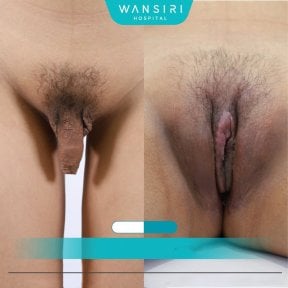
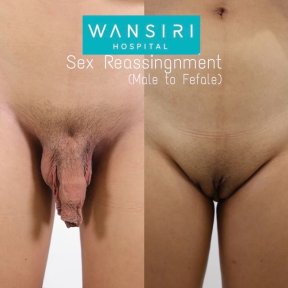
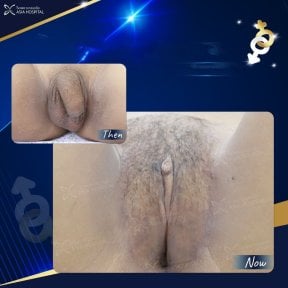
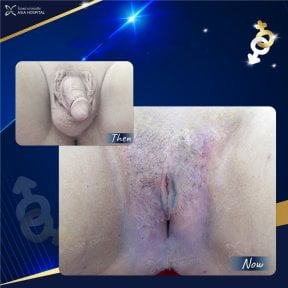
Choosing where to have sex reassignment surgery (SRS) is about trust as much as money. The unknowns can feel heavier than the cost itself. Thailand has quietly become one of the world's leading destinations for this care, with most clinics in Bangkok. According to Bookimed data, MTF surgery here runs $13,700–$15,000. That is 53%–77% less than the $32,000–$60,000 you would pay in the US. A cost-by-country comparison shows how those savings stack up.
Which Vaginoplasty Technique Fits Your Anatomy and Depth Goals
If you are circumcised, have a shorter penis, or have spent years on hormones, depth is the honest question. The answer depends on your anatomy and your surgeon's technique. Penile-inversion vaginoplasty is the most common approach. Its surgical results are documented across a 20-year case series.
Depth by technique
| Technique | Typical depth | Best fit for | Self-lubricating? |
|---|
| Penile inversion | 5–6 in | Typical anatomy | No |
| Inversion + skin graft | 6–7 in | Circumcised or short anatomy | No |
| Sigmoid colon | 7–9 in | Maximum depth needed | Yes |
Best fit for your starting anatomy
Standard penile inversion gives an average 5–6 inches of depth. That suits most patients. If you are circumcised or have a penis under 4 inches, there may not be enough skin. Surgeons then add a scrotal-skin or groin-skin graft to make up the difference.
Some Thai protocols target 6–7 inches even for shorter anatomy. They use scrotal skin plus an optional groin-skin graft, a documented surcharge of about $900. Using non-penile tissue to reconstruct the canal and inner labia is a recognized surgical approach, supported by published research. Sigmoid-colon vaginoplasty reaches the greatest depth, 7–9 inches, because a segment of intestine forms the canal.
Your hormone history matters too. Long-term anti-androgen use can shrink available genital tissue. The best aesthetic results and maximum depth tend to go to patients off those medications for years.
Confirm Your Clinic's Hair-Removal Protocol Before Booking Electrolysis
Many patients assume they need months of electrolysis before they fly. The truth is that hair-removal rules are clinic-specific. So the right answer depends entirely on which surgeon you choose. Confirming this first can save you real money.
| Clinics that require electrolysis first | Clinics that handle hair removal in surgery |
|---|
| Intensive electrolysis 6–12 months before penile-inversion surgery, because laser is considered insufficient on genital skin | Hair follicles removed manually during the operation, with a hair-free canal reported as part of the method |
The contrast is real. One protocol asks for months of electrolysis up front. Another advises against prior genital electrolysis entirely, calling it unnecessary and uncomfortable for its method. There is also a practical reason to check. Prior electrolysis can thicken or scar scrotal skin, which reduces its elasticity and the depth you can achieve.
Bottom line: get your clinic's hair-removal protocol in writing before committing to electrolysis. A coordinator can confirm the exact requirement with your chosen clinic before you pay for a single session.
How Surgeons Preserve Sensation and Orgasm in Modern Vaginoplasty
The question patients most want answered, and least like to ask, is whether they will still feel pleasure. The reassuring part is that surgeons engineer sensation deliberately. Modern techniques map specific nerve-rich tissue to specific new structures. The 20-year surgical review documents exactly how clitoral sensation is preserved.
- The neo-clitoris is built from the head of the penis, the most nerve-dense erogenous tissue, with roughly 8,000 nerve endings.
- Nerve endings are relocated to the inner labia and along the new urethral plate to spread sensation.
- Small glands that produce pre-ejaculate can sit near the urethra to add natural moisture during arousal.
- Some surgeons build the canal close to the prostate surface to recreate a deeper, G-spot-like zone.
The Cleveland Clinic confirms vaginoplasty retains sexual sensation and the capacity for orgasm. Full erotic feeling usually develops over 6–12 months as nerves regenerate. Early numbness is expected and temporary. Across Bookimed's verified reviews, patients rate their results 4.78/5 and describe solid surgical foundations early on.
What Self-Lubrication Really Means With the Colon Technique
The lubrication benefit
The colon technique appeals to patients who want to skip daily upkeep. A sigmoid-colon graft produces natural mucus. So many patients need little or no added lubricant during intercourse. That is the main reason to consider it over other methods.
Call it low-maintenance. It is not maintenance-free.
The maintenance routine
- Mucus output varies and can cause dampness or odor, so clinics provide a simple cleaning routine.
- That routine is usually a daily rinse that clears excess mucus and keeps the canal free of odor.
- Thorough bowel preparation (clear liquids plus laxatives before surgery) lowers the risk of intestinal complications.
This technique has the longest recovery of the options. It is reserved for patients who need maximum depth or self-lubrication. Knowing the real routine up front lets you decide whether the trade-off fits your life. For reference, a 21-night all-inclusive sigmoid-colon package at Wansiri Hospital costs around $13,700.
A gentler alternative: peritoneal pull-through
If you want natural lubrication without the heaviest recovery, peritoneal pull-through is worth knowing about. Instead of moving part of your colon, the surgeon lines the new canal with peritoneum. That is the thin membrane covering the organs inside your abdomen. It makes its own light, natural moisture, much like the colon method. The real difference is how the operation is done. It is keyhole surgery, done through a few small cuts. No segment of bowel is removed, so there is no intestinal join to heal. That makes recovery easier and lowers the risk of bowel problems. A peritoneal pull-through stay at Wansiri Hospital runs about $21,300.
Medical Criteria That Determine Your Eligibility
Strict eligibility checks are a quality signal. Good clinics confirm you are a safe candidate before they operate, not after you pay for flights. JCI-accredited hospitals, in particular, follow standardized pre-operative screening. These thresholds map to the medical-readiness criteria in WPATH standards, the framework reputable surgeons apply.
BMI and weight limits
Weight limits vary by technique because they protect your healing. Typical cut-offs are a BMI under 30 for peritoneal pull-through and under 26 for open sigmoid colon. Some open-colon protocols set the bar as low as 23.5. A higher BMI raises the risk of slow wound healing, infection, and clotting. Surgeons set the threshold there for that reason.
Age and legal requirements
Some clinics do not accept patients aged 55 and over. Under Thai law the minimum age is 18 with parental consent and 20 to proceed independently. Current WPATH standards no longer require a fixed period of hormone therapy or living in a gender role before surgery. However, some clinics continue to use these criteria.
Health conditions to disclose
- HIV-positive patients may not be offered colon or sigmoid vaginoplasty, though many clinics accept them for skin-inversion.
- Skin-inversion for HIV-positive patients often carries a 30%–50% surcharge for single-use instruments.
- A history of chronic colitis, Crohn's disease, or major abdominal surgery rules out the colon and pull-through techniques.
Check these criteria against your own profile early. A quick coordinator review can confirm your eligibility before you book any travel.
Planning Your Stay: Hormone Timing, Smoking, and the 23-30 Day Minimum
Three things shape your trip: when you stop hormones, when you stop nicotine, and how long you stay. Getting the timing right protects both your safety and your result. Here is the countdown most clinics follow.
Before you fly out
- 4–6 weeks before: Stop smoking and nicotine completely. Nicotine narrows blood vessels and can make the new tissue heal poorly. The Cleveland Clinic lists smoking as a factor in vaginoplasty healing.
- 2–4 weeks before: Stop estrogen to lower clot risk, about 2 weeks for oral forms and 4 weeks for injectables. Resume 1–4 weeks after surgery on your endocrinologist's advice.
Cutting down on smoking two weeks ahead is not enough for this surgery. Complete cessation is the safe standard.
How long to stay
Clinics require a minimum stay of about 23–30 days before they issue fit-to-fly clearance. Plan your medical leave around the full window, not the surgery date. Packages reflect this. A 21-night sigmoid-colon stay at Wansiri Hospital is around $13,700. A 14-night package with an American board-certified surgeon at Asia Cosmetic Hospital is approximately $12,400.
Why early flights are risky
After major pelvic surgery, limited mobility plus a long flight home raises the risk of deep vein thrombosis. That is a blood clot in the leg. Flying before clearance also worsens swelling because of cabin pressure. The literature on urinary and wound healing after penile-inversion vaginoplasty is exactly why clinics enforce a recovery window. Waiting protects your result, not just your safety. Use the window to plan leave and arrange follow-up before you travel.
Approval Letters and Lining Up Care for When You Get Home
Two practical things derail more plans than the surgery itself: the wrong paperwork, and no care lined up at home. Both are easy to solve before you fly. The WPATH Standards of Care define the assessments insurers map onto coverage.
The letters insurers actually want
- SOC 8 lowered the clinic requirement to a single mental-health letter, while many insurers still follow SOC 7, which asks for two.
- Prepare two referral letters from two licensed mental-health professionals, ideally one at doctorate level, to avoid a last-minute denial.
- Insurers may still ask for proof of 12 months of hormone therapy, regardless of what your clinic requires.
These are two separate requirements: one set by the clinic, one by the insurer. The gap between SOC 7 and SOC 8 is the most common cause of paperwork denials. Confirm which standard your clinic and insurer apply before you travel.
Care to arrange before you travel
A consistent dilation routine matters throughout recovery, as Mayo Clinic Press explains. Patients gently insert a dilator on a set schedule to keep the new canal open while it heals.
- Line up a pelvic-floor physical therapist at home, since early dilation can trigger involuntary muscle tightening that a therapist eases. Research on predictors of dilation difficulty supports this step.
- Before you leave Thailand, get your full operative notes and dilation protocol in writing.
- Arrange a clinician at home to monitor your healing, so your care does not stop at the airport.
End-to-end coordination is where Bookimed patients see the most value. Reviewers rate coordination 5/5 for handling transfers, scheduling, and documents from first question to follow-up.