Patient case · personal details changed or removed

DBS surgery instead of stem cells for Parkinson's with fast medication wear-off and new involuntary movements – Medipol PARMER, Istanbul

A woman aged 65–70 with Parkinson's, fast medication wear-off, and new involuntary movements first asked Bookimed about stem cells. After Dr. Ali Zirh reviewed her case, she chose deep brain stimulation at Medipol PARMER, Istanbul, on a clinic offer of $500–$28,500. Surgery took place on day 43. By day 54 the stitches were out and she felt much better.

12 min read

Written by Anna Leonova

Head of Content Marketing Team

The offer this case is based on

PackageDeep brain stimulation (DBS) surgery with Dr. Ali Zirh at Medipol University Parkinson's and Movement Disorders Center (PARMER) – the clinic's offer
ProceduresConsultation, MRI, and neurologist assessment; robot-assisted electrode placement; neurostimulator implanted under the skin of the chest; about 3 weeks of stimulation programming; check-up after 6 months
Price$500–$28,500 (the clinic's offer)
IncludedHospitalization, a hotel stay after discharge, and airport–hotel–clinic–airport transfers
Time in the countryThe offer assumed a stay of about four weeks. In this case the clinic consultation took place on day 37 and the return home on day 60. The stay after surgery ran longer than first planned, so return flights were rebooked.
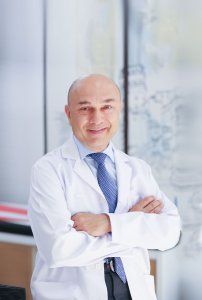
DoctorDr. Ali Zirh, neurosurgeon, 38 years of experience

Why Medipol University Parkinson’s and Movement Disorders Center (PARMER) was the right clinic for this patient

  • PARMER is Medipol University's Parkinson's and Movement Disorders Center. All her care, from the first assessment through surgery and stimulation programming, took place in one unit that treats her condition.
  • Rating 4.8/5 from 39 patient reviews on Bookimed. She had first ruled out Turkey, so reviews from earlier patients gave her something concrete to weigh before she changed her mind.
  • The offer included hospitalization, a hotel stay afterwards, and airport–hotel–clinic–airport transfers. That mattered for a trip of several weeks far from home, and her stay after surgery ran longer than planned.
  • The plan included about 3 weeks of stimulation programming and a check-up after 6 months. The device could be adjusted for her stiffness and involuntary movements before she flew home, and a later check was already planned.

There are no paid placements on this page.

Why Ali Zirh was the right doctor for this patient

  • Dr. Ali Zirh has performed over 1,400 deep brain stimulation procedures and specializes in Parkinson's disease and complex movement disorders. Her mix of fast medication wear-off and new involuntary movements is within his main field.
  • He uses microelectrode recording to ensure high precision during brain surgery. Accurate electrode placement is what DBS depends on to ease her movement symptoms.
  • He trained at Johns Hopkins, the University of Virginia, and Toronto Western Hospital, won the Elekta Award for stereotactic and functional neurosurgery, and is a member of the World Society for Stereotactic and Functional Neurosurgery. She had asked for an experienced neurosurgeon, and these credentials matched that request.
  • He has 38 years of experience and more than 1,900 surgical interventions for movement disorders. She was moving from an experimental idea to an established operation and wanted a surgeon with a long track record.

Ali Zirh

ali-zirh
  • 4.8 Excellent • 45 reviews
  • 38 years of experience
  • 1500+ treatments performed
  • accreditations:
    American Parkinson Disease Association
    American Association for the Advancement of Science
    World Society for Stereotactic and Functional Neurosurgery
  • Turkey, Istanbul, Medipol University Parkinson’s and Movement Disorders Center (PARMER)
  • Dr. Ali Zirh has performed over 1,400 deep brain stimulation (DBS) procedures in Turkey. He specializes in treating Parkinson’s disease and complex movement disorders. Dr. Zirh holds a Guinness World Record for the largest gathering of DBS patients. He uses microelectrode recording to ensure high precision during brain surgery.

    • Completed training at Johns Hopkins, the University of Virginia, and Toronto Western Hospital.
    • Winner of the Elekta Award for stereotactic and functional neurosurgery.
    • Performed more than 1,900 surgical interventions for movement disorders.
    • Member of the World Society for Stereotactic and Functional Neurosurgery.
  • Read more
Doctor's visit
Price on request
Info

There are no paid placements on this page.

The patient's situation

WhoWoman, 65–70, from Central Asia
Medical backgroundParkinson's disease, which she described as stage 2. She had brain imaging taken several years apart. She took two types of Parkinson's medication several times a day, but each dose wore off quickly, so she walked and exercised more to compensate. Her symptoms had recently become worse: it was hard to start moving and to get out of bed after sleep, and new involuntary movements of the arms and legs had appeared.
GoalTo regain mobility and control over her body. Her first request was for stem-cell treatment, which she had heard was offered in South Korea.
RequirementsA treatment that really helps with stiffness and involuntary movements; at first stem-cell therapy, then an evidence-based alternative (DBS); an experienced neurosurgeon; clear dates and length of stay.
SpecificsAt first she did not want to consider Turkey. Dates and trip length had to be agreed, and the decision was discussed with a family member. Return flights had to be rebooked because the stay after surgery was longer than planned.

What the program included

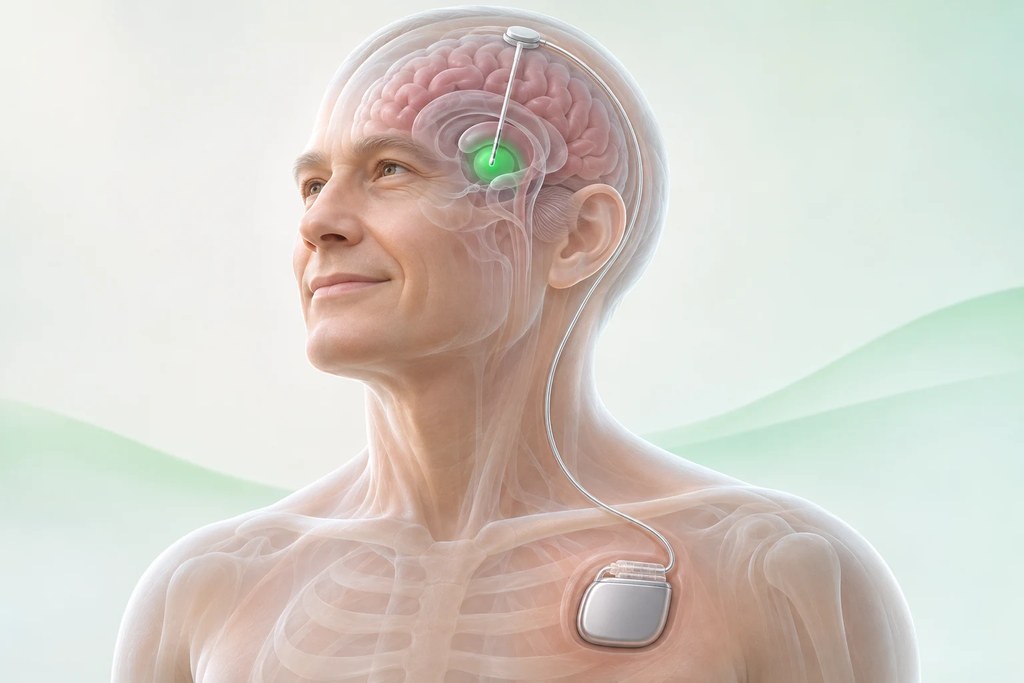
The PARMER program with Dr. Ali Zirh included a consultation, MRI, and neurologist assessment, then robot-assisted electrode placement and a neurostimulator implanted under the skin of the chest. About 3 weeks of stimulation programming followed, with a check-up after 6 months. The offer covered hospitalization, a hotel stay after discharge, and airport-hotel-clinic-airport transfers.

Diagram: how deep brain stimulation surgery works

Options Bookimed compared

ClinicProposed planPrice in the offerStay includedResult
Medipol University Parkinson's and Movement Disorders Center (PARMER), IstanbulDBS with Dr. Ali Zirh: consultation, MRI, and neurologist assessment; robot-assisted electrode placement; chest neurostimulator; about 3 weeks of programming; 6-month check-up$500–$28,500Hospitalization, then hotel; transfers included✓ Chosen
Medipol Mega University Hospital, Istanbul$2,800–$3,000Accommodation and transfers not includedNot chosen
Memorial Şişli Hospital, IstanbulDeep brain stimulation (DBS) surgery$28,000VIP transfers included; accommodation not includedNot chosen

How the plan and the price were agreed

  • Day 2: Medipol Mega University Hospital sent an offer of $2,800–$3,000, without accommodation or transfers.
  • Day 2: Stem-cell therapy was set aside as experimental, and the case and imaging were sent to Dr. Ali Zirh for review.
  • Day 3: PARMER's personal offer arrived: $500–$28,500 for DBS with Dr. Ali Zirh, including hospitalization, a hotel stay afterwards, and transfers.
  • Day 4: Dr. Zirh's personal reply recommended DBS. Dates and length of stay were then discussed, and the date was left to the patient.
  • Day 16: Memorial Şişli Hospital sent a DBS offer of $28,000 with VIP transfers and no accommodation, as a point of comparison.

Day by day

Day 0First request about stem-cell treatment in South Korea. Symptoms, medication, and medical documents were shared.
Day 1Brain imaging was sent and a call with the coordinator was arranged.
Day 2Turkey was ruled out at first. The reasons for preferring DBS over stem cells and information about the surgeon were shared. More materials were sent, and the case went to Dr. Zirh.
Day 3PARMER's personal offer for DBS with Dr. Zirh arrived.
Day 4Dr. Zirh replied personally, recommending DBS. After talking it over with a family member, she asked about dates and length of stay.
Day 16A second DBS offer came from another Istanbul hospital.
Day 37Consultation at the clinic. Surgery was recommended, and pre-operative tests were scheduled for the next day. Head shaving before surgery came as an unwelcome surprise.
Day 41The remaining tests, including a psychological assessment, were completed. Admission was set for the next day.
Day 42Admitted to the hospital for preparation, including head shaving and MRI.
Day 43DBS surgery was performed.
Day 46She reported that the operation went well. Device adjustment was ongoing.
Day 50The stay after surgery turned out longer than planned, and return flights were rebooked.
Day 54Stitches were removed and she felt much better. A free follow-up consultation was offered for about 3 months later.
Day 60Return home.

Result

DBS surgery was done at PARMER on day 43, and she reported that it went well. Stimulation programming was ongoing on day 46. On day 54 the stitches were removed and she felt much better. She went home around day 60 with a free follow-up consultation offered for about three months later.

Side effects, recovery and who deep brain stimulation surgery may not suit

General information about the procedure from the medical sources listed in Sources below, not about this patient.

Possible side effects

  • Infection can develop at the incisions or around the implanted parts. Ask how to care for the wounds at the hotel and which changes to report.
  • Bleeding in the brain, including stroke, is possible. The estimated risk is about 1%. Ask your surgeon how this is checked for after the operation.
  • The leads can shift or come loose, the device can fail, and the area around the pulse generator can feel sore. Ask how the device is checked at follow-up visits.
  • Temporary tingling in the face, arms, or legs, dizziness, shock-like sensations, or changes in balance, speech, or vision can occur. Mention any of these at your programming visits.
  • Fluid around the brain can leak, which may cause headache. Ask what kind of headache is expected and when to call.
  • DBS may not help some symptoms, and mood or mental state can change. Ask which symptoms are likely to improve in your case, and involve a family member in watching for changes.

Recovery

  • Recovery usually takes several weeks.
  • Avoid moderate- or high-intensity activity, including exercise and physical work, for at least four to six weeks. Most people can return to work or their usual routine after that.
  • With a DBS device, some procedures may be off-limits, including MRI scans, transcranial magnetic stimulation, and diathermy. Tell every doctor and dentist about the implant.

Who it may not suit

  • DBS is usually considered when symptoms greatly reduce quality of life and stay uncontrolled on a suitable medication dose, or when medication side effects cannot be tolerated. It may not suit people whose symptoms are still well controlled by medication.
  • Surgery carries more risk for people over 70 and for people with high blood pressure or diseases that affect blood vessels in the brain.
  • When to contact your surgeon promptly

    • A severe headache that starts suddenly or does not go away
    • Bleeding from the incisions
    • Redness, swelling, or unusual warmth around the incisions
    • Sudden vision changes, such as double or blurred vision
    • Fever of 101°F (38.3°C) or higher
    • Numbness or tingling on one side of the body
    • Trouble speaking or new muscle weakness
    • Nausea and vomiting, itching, or hives

How typical is this case

This is not a one-off case for the center. Bookimed has 20 confirmed deep brain stimulation treatments at Medipol PARMER over the last 24 months and 99 personal offers for this procedure there over the last 6 months. Every offer is personal and depends on the patient's medical documents, so individual cases differ.

Questions this patient asked – and the answers

Can I have stem-cell treatment for Parkinson's instead of DBS?

Stem-cell therapy for Parkinson's is still experimental, so it was not offered as an alternative in this case. Its safety and long-term effects remain uncertain, while DBS has years of clinical evidence behind it. After Dr. Ali Zirh, who has performed over 1,400 DBS procedures, reviewed her imaging and history, he recommended DBS. Medical societies describe DBS as an option when symptoms stay uncontrolled despite a suitable medication dose, or when medication side effects can no longer be tolerated.

How long do I need to stay in Istanbul for DBS surgery?

Plan for about a month and keep your return date flexible. The PARMER offer assumed a stay of about four weeks, which includes about 3 weeks of stimulation programming after surgery. In this case the consultation was on day 37, surgery on day 43, and the return home on day 60. The stay after surgery ran longer than first planned, and return flights had to be rebooked, so changeable tickets make this easier.

Can I choose my own date for DBS surgery in Turkey?

Yes, the patient chose the travel date herself. After Dr. Zirh recommended DBS on day 4, dates and length of stay were agreed around her plans and her family's. Before surgery, the clinic arranged a consultation, pre-operative tests, and a psychological assessment over several days. In this case 43 days passed between the first message and the operation.

What tests are done in Istanbul before DBS surgery?

Several days of assessment come before the operation. In this case the consultation on day 37 confirmed that surgery was recommended. Pre-operative tests started the next day, a psychological assessment was done by day 41, and on admission day the head was shaved and an MRI taken. The PARMER plan also lists a neurologist assessment and MRI before robot-assisted electrode placement. Head shaving is part of preparation, so it helps to expect it.

How much does deep brain stimulation cost at Medipol PARMER in Istanbul?

In this case the clinic's offer was $500 to $28,500, and the final amount depended on the medical review. It covered hospitalization, a hotel stay after discharge, and airport-hotel-clinic-airport transfers. For comparison, another Istanbul hospital offered DBS for $28,000 with VIP transfers but without accommodation.

Is DBS an option if my Parkinson's medication wears off quickly and I have new involuntary movements?

It can be, and a surgeon decides after reviewing your case. Medical societies consider DBS when symptoms significantly reduce quality of life and stay uncontrolled despite a suitable medication dose, or when medication side effects cannot be tolerated. In this case fast wear-off and new involuntary movements led Dr. Ali Zirh to recommend DBS. DBS may not help every symptom equally, so ask which of your symptoms are expected to improve.

What does the PARMER DBS program include?

The program lists a consultation, MRI, and neurologist assessment, followed by robot-assisted electrode placement. A neurostimulator is implanted under the skin of the chest, and about 3 weeks of stimulation programming follow. A check-up is planned after 6 months. Hospitalization, a hotel stay after discharge, and airport-hotel-clinic-airport transfers are included.

How quickly can a surgeon review my case before I travel?

In this case the process was fast. The first message was sent on day 0 with symptoms, medication, and documents, and brain imaging was sent on day 1. On day 2 the case went to Dr. Zirh, PARMER's personal offer arrived on day 3, and Dr. Zirh replied personally on day 4 recommending DBS.

Is it worth comparing offers from several Istanbul hospitals?

It can help you understand what each price covers. In this case Medipol Mega University Hospital sent an offer of $2,800 to $3,000 without accommodation or transfers on day 2. PARMER's offer on day 3 was $500 to $28,500 with hospitalization, a hotel stay, and transfers. On day 16 Memorial Şişli Hospital offered DBS for $28,000 with VIP transfers and no accommodation. Check what is and is not included before comparing totals.

What happens after DBS surgery and what follow-up is offered?

In this case she reported on day 46 that the operation went well, and device adjustment was ongoing. The stay after surgery turned out longer than planned. On day 54 the stitches were removed and she felt much better, and she returned home on day 60. A free follow-up consultation was offered for about 3 months later, and the PARMER plan lists a check-up after 6 months.

Sources

Who wrote and reviewed this case

Anna Leonova, Head of Content Marketing Team. A certified medical writer with 10+ years of experience, developed Bookimed's trusted content, backed by a Master's in Philology and medical expert interviews worldwide.

The case is told by Bookimed from the patient's coordination records. Personal details are changed or removed to protect the patient's privacy.

Get a personal plan for deep brain stimulation surgery in Turkey

What matters most to you about this surgery?

  • Direct prices from clinics
  • Free evaluation of your medical case
  • Free personal assistance 24/7