Medical disclaimer
Bone Marrow Cells vs Peripheral Blood Stem Cells After Haploidentical Transplant
11 min read
Prepared by Bookimed editorial team
Facts checked by the Bookimed editorial team based on scientific sources

Share with AI


The named clinic is an author affiliation. The study patients were not established as patients treated at that clinic.
Key takeaways
- The study compared bone marrow cells (2914 patients) with peripheral blood stem cells (5940 patients) in adults with blood cancers.
- Peripheral blood stem cells were associated with more acute and chronic graft-versus-host disease (GVHD) and higher non-relapse mortality.
- Relapse risk was similar between the two groups, while overall survival, progression-free survival and GVHD-relapse free survival were lower with peripheral blood stem cells.
- Neutrophil engraftment was seen in 92.4% of the bone marrow group and 93.7% of the peripheral blood stem cell group.
- These are group results from a registry. They do not predict the outcome for any one patient.
The question this study addresses
This retrospective registry analysis from the CTIWP-EBMT (a working party of the European transplant registry) looked at adults with malignant disorders who had a first haploidentical transplant with post-transplant cyclophosphamide. The authors compared those who received bone marrow cells with those who received peripheral blood stem cells, adjusting for differences between the groups. They concluded that bone marrow cells were associated with better outcomes. Anadolu Medical Center appears only through an author affiliation, and the abstract does not state where the patients were treated. Bookimed did not run the study.
- The situation
- Adults with blood cancers (malignant disorders) who needed a first half-matched (haploidentical) stem cell transplant.
- The treatment
- Haploidentical transplant with post-transplant cyclophosphamide, using either bone marrow cells or peripheral blood stem cells as the graft.
What this evidence cannot establish
- Anadolu Medical Center is listed only as an author affiliation. The abstract does not say that any patients were treated there.
- This is a retrospective registry comparison, so it shows associations and cannot prove that the graft type caused the differences.
- The abstract gives hazard ratios but not absolute survival, GVHD or relapse rates per group, and it does not break down the mix of diagnoses.
Patient groups in the published study
2914 patients · Published study group
Bone marrow cells as the graft
- Indication
- Malignant disorders (blood cancers)
- Treatment
- Haploidentical transplant with post-transplant cyclophosphamide using bone marrow cells
2914 adults
Adults with blood cancer who had a first half-matched transplant and received bone marrow cells.
Haploidentical transplant with post-transplant cyclophosphamide using bone marrow cells. Neutrophil engraftment was seen in 92.4% of this group, and median follow-up for survivors was 48 months.
Neutrophil engraftment
92.4%
2914 patients · Study group
not stated
Reported risks
- Study-wide: compared with bone marrow cells, peripheral blood stem cells were associated with more GVHD and higher non-relapse mortality. This is a comparison between groups, not a risk figure for this group alone.
Limits of this evidence
- The abstract does not give absolute survival, GVHD or relapse rates for this group, only hazard ratios.
- The mix of diagnoses in this group is not stated.
For a clinic assessment
- Current diagnosis and disease status report from the treating hematologist
- Donor typing and matching results, if available
5940 patients · Published study group
Peripheral blood stem cells as the graft
- Indication
- Malignant disorders (blood cancers)
- Treatment
- Haploidentical transplant with post-transplant cyclophosphamide using peripheral blood stem cells
5940 adults
Adults with blood cancer who had a first half-matched transplant and received peripheral blood stem cells.
Haploidentical transplant with post-transplant cyclophosphamide using peripheral blood stem cells. Neutrophil engraftment was seen in 93.7% of this group, and median follow-up for survivors was 30 months.
Neutrophil engraftment
93.7%
5940 patients · Study group
not stated
Reported risks
- Study-wide: peripheral blood stem cells were associated with higher acute and chronic GVHD and higher non-relapse mortality than bone marrow cells, with similar relapse risk.
Limits of this evidence
- The abstract gives only hazard ratios, not absolute rates, for GVHD, relapse and survival in this group.
- Follow-up was shorter in this group than in the bone marrow group, and the mix of diagnoses is not stated.
For a clinic assessment
- Recent transplant-related medical summary and treatment history
- Any prior GVHD or infection history relevant to transplant planning
Results and limits of the study
After adjustment, peripheral blood stem cells compared with bone marrow cells were associated with more acute and chronic GVHD, higher non-relapse mortality, similar relapse risk, and lower overall survival, progression-free survival and GVHD-relapse free survival. Neutrophil engraftment was 92.4% with bone marrow cells and 93.7% with peripheral blood stem cells. The authors conclude that bone marrow cells are associated with better outcomes. They also suggest future work on better GVHD prevention with peripheral blood stem cells.
Bone marrow cells as the graft: Neutrophil engraftment
92.4%
2914 patients · Study group
not stated
Peripheral blood stem cells as the graft: Neutrophil engraftment
93.7%
5940 patients · Study group
not stated
Risks reported by the source
- Peripheral blood stem cells were associated with more acute and chronic graft-versus-host disease than bone marrow cells.
- Non-relapse mortality was higher with peripheral blood stem cells.
- Relapse risk was similar in the two groups.
Limitations and unknowns
- Absolute survival, GVHD and relapse rates in each group are not stated.
- The mix of blood cancer diagnoses in each group is not stated.
- Where the patients were treated is not stated, and the study years are not given in the material.
- How the results apply to an individual patient is unknown.
What to clarify in your treatment plan
Before booking, ask the clinic whether it performs haploidentical transplants, and which graft sources and GVHD prevention approaches it uses. Ask which doctor would plan your care, what donor and disease information it needs to review, and what follow-up it offers. Your own hematologist should decide whether any of this study's findings are relevant to you.
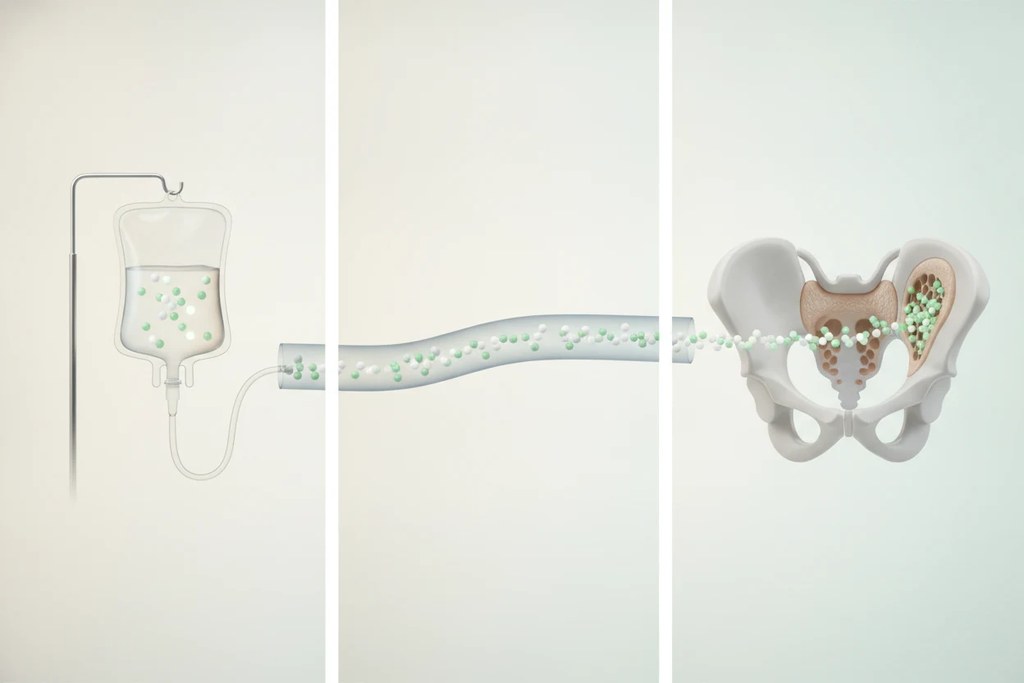
Anadolu Medical Center: clinic profile
- Anadolu Medical Center appears in this study as an author affiliation. The abstract does not say where the patients were treated, and it does not show that they were treated at the clinic.
- The Anadolu Medical Center profile is available on Bookimed, where you can ask about haploidentical stem cell transplantation.
Zafer Gulbas: doctor profile
- Zafer Gulbas is an author of the study, with the affiliation Anadolu Medical Center Hospital, Kocaeli, Turkey, listed in the paper.
- His role in the study is as a co-author of the registry analysis. The abstract does not describe any treatment he gave to the patients.
Safety and recovery: general information
General patient guidance, provided separately from the case evidence. Follow your treating team's instructions.
Possible side effects
- The transplant may not take, because the donor stem cells can die or be destroyed by the body before settling in the bone marrow.
Ask the transplant team how engraftment is monitored and what happens if the graft does not take.
- Graft-versus-host disease can occur when donor immune cells attack healthy tissue, and it can range from mild to life-threatening.
Ask which GVHD prevention and treatment the team uses.
- Infections you had before the transplant can become active again after an allogeneic transplant.
Share your full infection history with the transplant team.
When to contact the clinic
- You think the donor cells may be attacking your body, which can be a sign of GVHD.
Contact your transplant team promptly rather than waiting.
- An infection you had before the transplant may be coming back.
Tell your transplant team so they can assess it.
How treatment at the clinic usually goes
| 1 | Send your records to the coordinatorYou share your diagnosis and disease status report, donor typing and matching results if you have them, and your transplant and treatment history. Bookimed's coordinator passes them to Anadolu Medical Center. |
|---|---|
| 2 | The clinic reviews your caseThe transplant team checks whether a haploidentical transplant with a partially-compatible donor fits your situation. It then sends you its plan, including the graft source and how it prevents GVHD. |
| 3 | Review the plan with your own hematologistYou go through the clinic's proposal with your home doctor. You also ask what the study findings on bone marrow cells and peripheral blood stem cells mean for you, if anything. |
| 4 | Transplant at the clinicIf you and the team agree, the haploidentical transplant is carried out under the doctor named in the program. The coordinator helps with arrangements. |
| 5 | Hospital stay and monitoringThe team watches for engraftment, graft-versus-host disease and infections during your stay. Ask the clinic to explain what it checks and when. |
| 6 | Follow-up at homeAfter you return, your home hematologist and the clinic share results. You agree in advance whom to contact if you notice signs of GVHD or an infection coming back. |
Price in the clinic's Bookimed offers
Historical quotation
$67,500
Based on 1 documented case. This is not a current clinic quotation.
Package prices from the clinic's offers in the Bookimed catalog for this procedure. Your own price depends on the clinic's review of your medical records.
Included
- Haploidentical Stem Cell Transplant Program (Partially-Compatible Donor)
Not confirmed
- The final price for your plan is confirmed in the clinic's written quotation.
What to ask Anadolu Medical Center
- Does Anadolu Medical Center use bone marrow cells, peripheral blood stem cells, or both for haploidentical transplants, and how do you choose between them for a patient like me?
- How do you prevent and treat acute and chronic graft-versus-host disease in your haploidentical program?
- How do you monitor engraftment, and what happens if the graft does not take?
- Which doctor would plan and lead my care, and will Zafer Gulbas be involved in my case?
- What donor typing, disease status and infection history records do you need to review before giving me a plan?
- What does the Haploidentical Stem Cell Transplant Program include, and what is not included?
- What follow-up do you offer after I go home, and how can my own hematologist reach your team?
- How do the findings of the registry study apply to your own patients, given that the abstract does not say where its patients were treated?
Request a personal plan from the clinic
Ask Anadolu Medical Center about haploidentical stem cell transplant evaluation and graft source options
Bookimed's coordinator can pass your medical records to the clinic and ask whether it offers haploidentical transplantation. They can also help you prepare questions about graft source and GVHD prevention.
Ask the clinic for a current, itemized quotation. Published evidence does not establish package inclusions or a current price.
Frequently asked questions
Who ran this study and where were the patients treated?
The study was run by the CTIWP-EBMT, a working party of the European transplant registry, as a multicentre analysis. The abstract does not say where the patients were treated. Anadolu Medical Center appears only because one author lists Anadolu Medical Center Hospital, Kocaeli, Turkey, as an affiliation. This does not show that any patients were treated at the clinic. Bookimed did not run the study.
Is bone marrow better than peripheral blood stem cells after a haploidentical transplant?
In this study, bone marrow cells were associated with better outcomes. Peripheral blood stem cells were linked to more acute and chronic GVHD, higher non-relapse mortality, and lower overall survival, progression-free survival and GVHD-relapse free survival. Relapse risk was similar. This is a retrospective comparison of groups, so it cannot show cause and does not predict your own result.
How many patients were in the study?
The study included 8854 adults with malignant disorders who had a first haploidentical transplant with post-transplant cyclophosphamide. Of these, 2914 received bone marrow cells and 5940 received peripheral blood stem cells. Median follow-up for survivors was 48 months in the bone marrow group and 30 months in the peripheral blood stem cell group.
What risks should I discuss with a transplant team?
Discuss graft-versus-host disease, the chance that the graft does not take, and old infections becoming active again. The American Cancer Society describes these as risks of allogeneic transplant, and GVHD can range from mild to life-threatening. In this study, peripheral blood stem cells were associated with more GVHD than bone marrow cells. Ask the team how they prevent and manage these problems.
How often did the donor cells engraft in the study?
Neutrophil engraftment was seen in 92.4% of the bone marrow group (2914 patients) and 93.7% of the peripheral blood stem cell group (5940 patients). The abstract reports this difference as p = 0.01. It does not say what happened to patients whose counts did not recover. Ask Anadolu Medical Center how it monitors engraftment and what it does if the graft does not take.
Did the type of graft change the risk of relapse?
No clear difference was found. After adjustment, peripheral blood stem cells and bone marrow cells had a similar risk of relapse (HR 1.02; p = 0.79). The differences the study reported were in GVHD, non-relapse mortality and survival measures. Ask Anadolu Medical Center how your own relapse risk would be assessed, since group results do not predict one person's outcome.
What does Anadolu Medical Center offer for this kind of transplant?
The clinic's catalog lists a Haploidentical Stem Cell Transplant Program for a partially-compatible donor, with Zafer Gulbas as the doctor. The listing does not say which graft source the program uses. Ask the Bookimed coordinator what the program includes and what it costs. The study abstract does not show that its patients were treated at Anadolu Medical Center.
Which documents should I prepare before contacting Anadolu Medical Center?
Prepare a current diagnosis and disease status report from your hematologist, and donor typing and matching results if you have them. Add a recent transplant-related summary with your treatment history, and any history of GVHD or infections. Bookimed's coordinator sends these records to Anadolu Medical Center so the team can review them and tell you whether it offers a haploidentical transplant for your case.
Can this study tell me which graft source I should get?
No. It is a retrospective registry comparison of 8854 adults, so it shows associations and cannot prove that the graft type caused the differences. The abstract gives hazard ratios, not absolute rates, and does not describe the mix of diagnoses. Your hematologist and the transplant team at Anadolu Medical Center should decide what fits your situation.
What did the authors suggest for future research?
The authors suggested that future studies should look at better GVHD prevention when peripheral blood stem cells are used in a haploidentical transplant with post-transplant cyclophosphamide. They also proposed looking at the T-cell content of the graft, or other lymphocyte subgroups. Ask Anadolu Medical Center which GVHD prevention approaches it uses today and why.
Sources and scope
This page was prepared from the published abstract of the study and its structured summary of group sizes and outcomes. Safety points paraphrase cited American Cancer Society material and are not drawn from the study.
- 1. Rocha et al. – Use of bone marrow cells is associated with improved outcomes when compared to peripheral blood stem cell after haplo-identical transplants with post transplant cyclophosphamide, a study from of the CTIWP-EBMT.
Retrospective multicentre registry comparison (CTIWP-EBMT) · 2026
8854 adults with malignant disorders receiving a first haploidentical transplant with post-transplant cyclophosphamide
Follow-up: Median 48 months (bone marrow) and 30 months (peripheral blood stem cells) for survivors
Only the abstract was used, so it lacks absolute rates, diagnosis mix, treatment setting and study years.
- 2. American Cancer Society
- 3. Anadolu Medical Center on Bookimed
- 4. Zafer Gulbas on Bookimed
Scope and limitations
- A research summary is not an individual medical recommendation.
- Group results describe the study participants, not a forecast for any one patient.
About the editorial team
Prepared by
Bookimed editorial teamFacts checked by the Bookimed editorial team based on scientific sources
Bookimed prepares evidence summaries from published medical sources and anonymized care records. The clinic and any doctors named on this page are identified separately in their own sections.