Medical disclaimer
Intravenous Steroids With or Without Add-on Therapy in Active Graves' Eye Disease
10 min read
Prepared by Bookimed editorial team
Facts checked by the Bookimed editorial team based on scientific sources

Share with AI


The named clinic is an author affiliation. The study patients were not established as patients treated at that clinic.
Key takeaways
- The authors conclude that intravenous steroids effectively reduce disease activity in active moderate-to-severe Graves' orbitopathy.
- A reduction of at least 2 points in the Clinical Activity Score (CAS) was seen in 91.7% of the 24 patients who had steroids alone.
- All 8 patients who had steroids plus orbital radiotherapy had proptosis (eye bulging) reduced by at least 2 mm.
- The authors say combination treatment looked numerically better in some outcomes, but the study cannot show which strategy works better.
- The abstract does not say where patients were treated, so the study does not describe care at Dunyagoz Eye Hospital Istanbul Etiler.
The question this study addresses
This retrospective comparative series covers patients treated between 2015 and 2023 and was published in 2025 in Acta endocrinologica. It compared three groups: intravenous glucocorticoids (IVGC, steroids given through a vein) alone in 24 patients, IVGC plus orbital radiotherapy (RT) in 8 patients, and IVGC plus mycophenolate mofetil (MMF, an immune-suppressing medicine) in 8 patients. Outcomes were measured at baseline and at 6 months. Samuray Tuncer is an author affiliated with Dunyagoz Eye Hospital in Istanbul. The other authors are at Istanbul University and other hospitals, and the abstract does not state where patients were treated.
- The situation
- Adults with active moderate-to-severe Graves' orbitopathy, an autoimmune inflammatory eye disease marked by proptosis, double vision (diplopia) and restricted eye movement.
- The treatment
- Intravenous glucocorticoids alone, or combined with orbital radiotherapy or with mycophenolate mofetil.
What this evidence cannot establish
- The authors say the findings should be interpreted cautiously because of the limited sample size and unequal group distribution.
- The design is retrospective and treatment allocation was unequal, so the abstract cannot support firm comparisons between the three strategies.
- Dunyagoz Eye Hospital Istanbul Etiler appears only through an author affiliation; the abstract does not say where patients were treated.
Patient groups in the published study
24 patients · Published study group
Intravenous steroids alone
- Indication
- Active moderate-to-severe Graves' orbitopathy
- Treatment
- Intravenous glucocorticoid monotherapy
24 patients with active disease
Patients with active moderate-to-severe Graves' eye disease who received intravenous steroids without an added therapy.
Intravenous glucocorticoids alone, assessed at 6 months.
CAS reduction of at least 2 points
91.7%
24 patients · Study group
6 months
Reported risks
- The abstract reports no adverse events for any group in this study.
Limits of this evidence
- Only the 6-month assessment point is stated, and the abstract gives no per-group diplopia or motility figures.
For a clinic assessment
- Current eye and thyroid reports, if available
- List of earlier Graves' eye disease treatments
8 patients · Published study group
Intravenous steroids plus orbital radiotherapy
- Indication
- Active moderate-to-severe Graves' orbitopathy
- Treatment
- Intravenous glucocorticoid plus orbital radiotherapy
8 patients with active disease
Patients with active moderate-to-severe Graves' eye disease who received orbital radiotherapy in addition to intravenous steroids.
Intravenous glucocorticoids combined with orbital radiotherapy, assessed at 6 months.
Proptosis reduction of at least 2 mm
100%
8 patients · Study group
6 months
Reported risks
- The abstract reports no adverse events for any group in this study.
Limits of this evidence
- The group is small, and the abstract gives no separate CAS percentage, diplopia or motility figures for it.
For a clinic assessment
- Current eye and thyroid reports, if available
- Records of any earlier radiotherapy or steroid treatment
Results and limits of the study
CAS decreased significantly in all three groups. A CAS reduction of at least 2 points was seen in 91.7% of the steroid-alone group and in all patients in both combination groups. All 8 patients in the radiotherapy group had proptosis reduced by at least 2 mm. The abstract reports no statistically significant differences between groups in diplopia or eye movement. The authors call the combination results numerically favorable in some outcomes but not conclusive. These are group results and not a forecast for any individual.
Intravenous steroids alone: CAS reduction of at least 2 points
91.7%
24 patients · Study group
6 months
Intravenous steroids plus orbital radiotherapy: Proptosis reduction of at least 2 mm
100%
8 patients · Study group
6 months
Risks reported by the source
- The abstract reports no adverse events for any group in this study.
Limitations and unknowns
- Where the patients were treated is not stated in the abstract.
- Whether any side effects occurred is not stated in the abstract.
- Per-group diplopia and eye movement figures are not given.
- Results beyond the 6-month assessment point are not stated.
What to clarify in your treatment plan
Before booking, ask the clinic whether it offers the kind of care discussed in this study and which specialist would assess you. Ask what records and imaging it needs, and how it would explain the options, including their limits, given that this study cannot show which approach works better. Ask who would coordinate care with your endocrinologist.
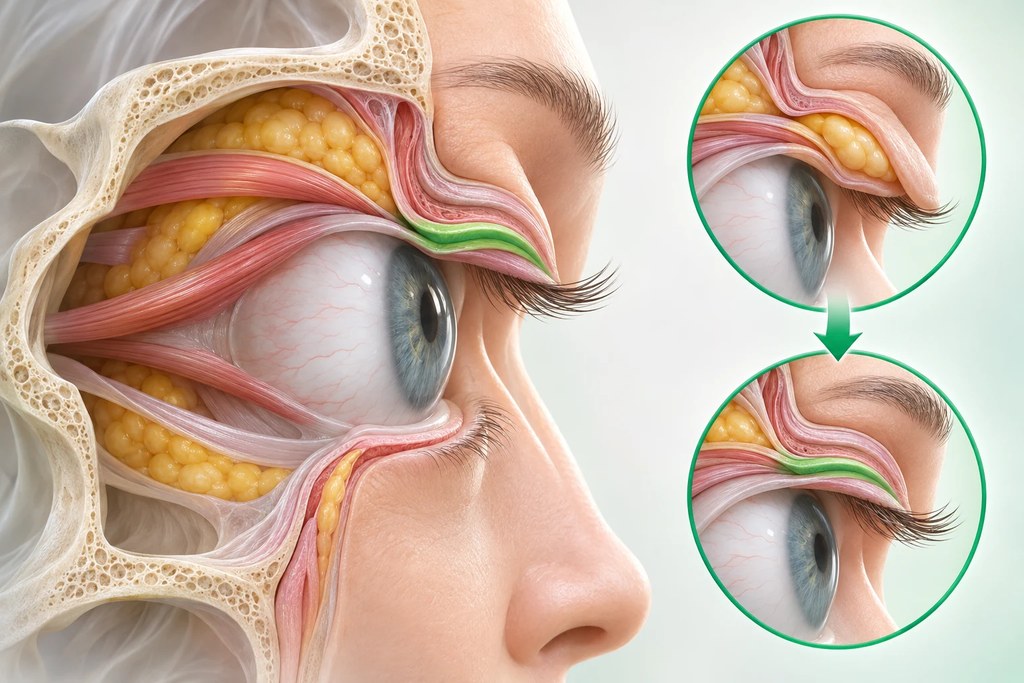
Dunyagoz Eye Hospital Istanbul Etiler: clinic profile
- Dunyagoz Eye Hospital Istanbul Etiler appears in this study as an author affiliation only; the abstract does not say where patients were treated.
- The clinic profile is available on Bookimed.
Dunyagoz Eye Hospital Istanbul Etiler
Istanbul, Turkey
4.7/5 · 55 Bookimed reviews (current clinic profile)
Samuray Tuncer: doctor profile
- Samuray Tuncer is listed as an author of this study, in the eleventh author position, with an affiliation to Dunyagoz Eye Hospital, Department of Ophthalmology, Istanbul.

Safety and recovery: general information
General patient guidance, provided separately from the case evidence. Follow your treating team's instructions.
Possible side effects
- The medical sources given for this page note that any surgery, including eyelid surgery, can carry risks and complications.
If surgery is ever discussed, ask your ophthalmologist to explain the possible risks, as they say they will.
When to contact the clinic
- You take aspirin, aspirin-containing drugs or blood thinners, or have a bleeding problem, and any eye surgery is being considered.
Tell your eye surgeon early, because they need this information.
How treatment at the clinic usually goes
| 1 | Send your recordsYou share your eye and thyroid reports, imaging and a list of earlier Graves' eye disease treatments with the Bookimed coordinator, who passes them to Dunyagoz Eye Hospital Istanbul Etiler. |
|---|---|
| 2 | Clinic reviewThe clinic coordinator asks which specialist should review your records and may request more documents or imaging before it gives an opinion. |
| 3 | The clinic's planThe clinic explains which options it considers for your case, such as intravenous steroids alone or with an added therapy, and the limits of the evidence for each. The clinic decides what applies to you. |
| 4 | TreatmentIf you go ahead, you receive the treatment the clinic has agreed with you. Studies like this one describe group results and do not promise an outcome for one patient. |
| 5 | Hospital stay and visitsAsk the clinic how many visits or days at the hospital your plan needs and where each part of the treatment takes place. |
| 6 | Follow-up at homeYou and the clinic agree how your endocrinologist and local doctor will receive your reports and monitor your eyes and thyroid after you return. |
What to ask Dunyagoz Eye Hospital Istanbul Etiler
- Does Dunyagoz Eye Hospital Istanbul Etiler treat active moderate-to-severe Graves' eye disease, and which specialist would assess me?
- Which records and imaging do you need from me before you can suggest a plan?
- Would you consider intravenous steroids alone for me, or with orbital radiotherapy or mycophenolate, and why?
- How do you measure disease activity and proptosis, and how often would you repeat those checks?
- What side effects and risks does each option carry for me, and how would you monitor them?
- How would you coordinate with my endocrinologist about my thyroid care during and after treatment?
- What follow-up do you advise after I return home, and how can I reach the clinic if my symptoms change?
- Were the patients in the published study treated at your hospital, and what results does your own team have with this treatment?
Ask Dunyagoz Eye Hospital Istanbul Etiler about assessment and treatment options for Graves' eye disease
Bookimed has no published package for this treatment at this clinic yet. A Bookimed coordinator can request a personal treatment plan and price from the clinic.
Bookimed can pass your eye and thyroid records to the clinic coordinator and ask which specialist would review them. The clinic decides what applies to you.
Ask the clinic for a current, itemized quotation. Published evidence does not establish package inclusions or a current price.
Frequently asked questions
Who ran this study and where were the patients treated?
The abstract does not say where the patients were treated. The study was written by a group of authors, mostly at Istanbul University and other hospitals. One author, Samuray Tuncer, is affiliated with Dunyagoz Eye Hospital in Istanbul. Bookimed did not run the study, and the study should not be read as describing care at Dunyagoz Eye Hospital Istanbul Etiler.
Did intravenous steroids help in active Graves' eye disease?
Yes, in this study disease activity went down. CAS decreased significantly in all groups, and a CAS reduction of at least 2 points was seen in 91.7% of the 24 patients who had steroids alone. The authors conclude that intravenous steroids effectively reduce disease activity. These are group results from a small retrospective study and not a promise for any one patient.
Was adding radiotherapy or mycophenolate better than steroids alone?
The study cannot say. All 8 patients in the radiotherapy group had proptosis reduced by at least 2 mm, and the authors describe numerically favorable trends for combinations in some outcomes. They also say the retrospective design, unequal groups and small sample prevent definitive conclusions about comparative efficacy. Larger prospective studies are needed.
How long were patients followed in this study?
Outcomes were measured at baseline and at 6 months, and the abstract states no longer follow-up. The patients were treated between 2015 and 2023. Because the abstract gives no results beyond 6 months, it does not show how long the effects last. Ask a specialist what follow-up would apply to your own situation.
What is the Clinical Activity Score in this study?
The Clinical Activity Score (CAS) is a scale of eye inflammation activity. In this study, patients had a CAS of 3 or more at the start, which defined active disease. CAS was measured at baseline and at 6 months, and it decreased significantly in all groups. Dunyagoz Eye Hospital Istanbul Etiler is linked to the study only through one author, so ask the clinic how it tracks activity.
What proptosis results were seen in each group?
Proptosis (eye bulging) was measured with Hertel exophthalmometry. A reduction of at least 2 mm occurred in 57.1% of the steroid-alone group, 100% of the steroids plus radiotherapy group and 71.4% of the steroids plus mycophenolate group. The difference was not statistically significant, and the groups were small. Dunyagoz Eye Hospital Istanbul Etiler is not described as the treatment site, so these figures are not clinic results.
Did the study find differences in double vision or eye movement?
The abstract says no statistically significant differences were detected in diplopia or motility outcomes between the treatment groups. It gives no per-group figures for them. The authors add that the limited sample size and unequal group distribution call for caution. Ask Dunyagoz Eye Hospital Istanbul Etiler how it would assess double vision and eye movement in your case.
Did the study report side effects?
The abstract does not state whether any side effects occurred, so this page cannot give side effect rates for steroids, radiotherapy or mycophenolate. Do not read the absence of a report as proof of safety. Before treatment, ask a specialist at Dunyagoz Eye Hospital Istanbul Etiler to explain the possible risks of each option and how they would be monitored.
Who was included in the study?
The study included adults with active moderate-to-severe Graves' orbitopathy, defined by a CAS of 3 or more, treated between 2015 and 2023. Patients were grouped as steroids alone (24), steroids plus radiotherapy (8) and steroids plus mycophenolate (8). The abstract gives no other selection details. Dunyagoz Eye Hospital Istanbul Etiler would decide what applies to you after reviewing your records.
How can Bookimed help me contact Dunyagoz Eye Hospital Istanbul Etiler?
Bookimed can send your eye and thyroid records to the coordinator of Dunyagoz Eye Hospital Istanbul Etiler and ask which specialist would review them. The clinic then gives its own plan, and the clinic decides what applies to you. Partner clinics pay Bookimed for coordination, and patients do not pay a coordination fee. The study itself does not promise any result.
Sources and scope
This page was prepared from the published abstract of the study and its structured results, without access to the full paper. Only figures stated in the abstract are shown, and figures that could not be checked were left out.
- 1. Yalçin et al. – CLINICAL OUTCOMES OF INTRAVENOUS GLUCOCORTICOID THERAPY WITH OR WITHOUT ORBITAL RADIOTHERAPY OR MYCOPHENOLATE MOFETIL IN ACTIVE GRAVES' ORBITOPATHY.
Retrospective comparative series, three treatment groups · 2025
Adults with active moderate-to-severe Graves' orbitopathy treated between 2015 and 2023
Follow-up: 6 months
Only the abstract was used, so details about patient selection, treatment setting, dosing and side effects are not available.
- 2. American Academy of Ophthalmology
- 3. Dunyagoz Eye Hospital Istanbul Etiler on Bookimed
- 4. Samuray Tuncer on Bookimed
Scope and limitations
- A research summary is not an individual medical recommendation.
- Group results describe the study participants, not a forecast for any one patient.
About the editorial team
Prepared by
Bookimed editorial teamFacts checked by the Bookimed editorial team based on scientific sources
Bookimed prepares evidence summaries from published medical sources and anonymized care records. The clinic and any doctors named on this page are identified separately in their own sections.