Medical disclaimer
Type 4 Tympanoplasty for Chronic Otitis Media: Study by a Lokman Hekim Doctor
8 min read
Prepared by Bookimed editorial team
Medical content and care coordination

Share with AI


The named clinic is an author affiliation. The study patients were not established as patients treated at that clinic.
Key takeaways
- The study compared three type 4 tympanoplasty techniques (middle ear reconstruction with a total ossicular prosthesis) in patients with chronic otitis media.
- Group 1 (cartilage-supported cortical bone prosthesis) had 12 patients, Group 2 (cortical bone prosthesis) had 14, and Group 3 (titanium prosthesis) had 18.
- Air conduction threshold and air-bone gap improved in all three groups (p < 0.01).
- The authors concluded that the cartilage-supported cortical bone prosthesis had better hearing outcomes, yet the difference among groups in air-bone gap change was not significant (p = 0.057).
- These are group results and do not predict an individual outcome; the abstract does not report complications.
The question this study addresses
This study, published in 2025, compared hearing results after three types of type 4 tympanoplasty in patients with chronic otitis media. Hearing was tested before surgery and at least 1 year after. The authors list Sancaktepe Sehit Prof. Dr. Ilhan Varank Training and Research Hospital in Istanbul as their affiliation; the abstract does not say where the patients were treated. The patients were not treated at Lokman Hekim Istanbul Hospital. Ibrahim Erdim, an ear, nose and throat (ENT) surgeon and the first author, now practices at the clinic according to his Bookimed profile.
- The situation
- Adults and children are not specified; the patients had chronic otitis media (long-lasting middle ear infection) with hearing loss and underwent middle ear reconstruction.
- The treatment
- Type 4 tympanoplasty with one of three total ossicular prostheses: cortical bone supported with crescent-shaped cartilage, cortical bone alone, or titanium.
What this evidence cannot establish
- The patients were treated outside Lokman Hekim Istanbul Hospital; the clinic is linked to the study only through a doctor who now practices there.
- The abstract does not state the study design details, the exact follow-up length, complications or graft extrusion.
- Group sizes were small, and results are group averages, not a forecast for any one patient.
Patient groups in the published study
12 patients · Published study group
Cortical bone prosthesis supported by crescent-shaped cartilage
- Indication
- Chronic otitis media with hearing loss
- Treatment
- Type 4 tympanoplasty with a cortical bone total ossicular prosthesis supported with crescent-shaped cartilage (Group 1)
12 patients (6 males and 6 females)
Patients with chronic otitis media who needed middle ear sound-chain reconstruction.
The prosthesis made of cortical bone was supported with a crescent-shaped piece of cartilage.
Air conduction threshold before surgery (mean, dB)
56.83 ± 13.63 dB
12 patients · Study group
Plus/minus as reported by the source
before surgery
Air conduction threshold after surgery (mean, dB)
32.25 ± 13.55 dB
12 patients · Study group
Plus/minus as reported by the source
at least 1 year
Air-bone gap before surgery (mean, dB)
37.58 ± 9.56 dB
12 patients · Study group
Plus/minus as reported by the source
before surgery
Air-bone gap after surgery (mean, dB)
15.08 ± 9.58 dB
12 patients · Study group
Plus/minus as reported by the source
at least 1 year
Reported risks
- Study-wide: the abstract does not report complications or graft extrusion for any group.
Limits of this evidence
- The number of patients who closed the air-bone gap to a given level is not stated.
- The exact follow-up length is not stated beyond at least 1 year.
For a clinic assessment
- Recent audiogram (hearing test) results
- ENT reports and any previous ear surgery records
14 patients · Published study group
Cortical bone prosthesis alone
- Indication
- Chronic otitis media with hearing loss
- Treatment
- Type 4 tympanoplasty with a cortical bone total ossicular prosthesis (Group 2)
14 patients (6 males and 8 females)
Patients with chronic otitis media who needed middle ear sound-chain reconstruction.
A cortical bone prosthesis was used without the added cartilage support.
Air conduction threshold before surgery (mean, dB)
57.43 ± 15.3 dB
14 patients · Study group
Plus/minus as reported by the source
before surgery
Air conduction threshold after surgery (mean, dB)
40.07 ± 18.8 dB
14 patients · Study group
Plus/minus as reported by the source
at least 1 year
Air-bone gap before surgery (mean, dB)
36.71 ± 10.84 dB
14 patients · Study group
Plus/minus as reported by the source
before surgery
Air-bone gap after surgery (mean, dB)
21.07 ± 11.16 dB
14 patients · Study group
Plus/minus as reported by the source
at least 1 year
Reported risks
- Study-wide: the abstract does not report complications or graft extrusion for any group.
Limits of this evidence
- The proportion with a good hearing result is not stated.
- The exact follow-up length is not stated beyond at least 1 year.
For a clinic assessment
- Recent audiogram (hearing test) results
- Imaging reports and ENT notes, if available
18 patients · Published study group
Titanium prosthesis
- Indication
- Chronic otitis media with hearing loss
- Treatment
- Type 4 tympanoplasty with a titanium total ossicular prosthesis (Group 3)
18 patients (10 males and 8 females)
Patients with chronic otitis media who needed middle ear sound-chain reconstruction.
A titanium prosthesis was used in place of cortical bone.
Air conduction threshold before surgery (mean, dB)
55.39 ± 15.59 dB
18 patients · Study group
Plus/minus as reported by the source
before surgery
Air conduction threshold after surgery (mean, dB)
42.22 ± 17.32 dB
18 patients · Study group
Plus/minus as reported by the source
at least 1 year
Air-bone gap before surgery (mean, dB)
34.5 ± 11.72 dB
18 patients · Study group
Plus/minus as reported by the source
before surgery
Air-bone gap after surgery (mean, dB)
22.28 ± 10.13 dB
18 patients · Study group
Plus/minus as reported by the source
at least 1 year
Reported risks
- Study-wide: the abstract does not report complications or graft extrusion for any group.
Limits of this evidence
- The proportion with a good hearing result is not stated.
- The exact follow-up length is not stated beyond at least 1 year.
For a clinic assessment
- Recent audiogram (hearing test) results
- ENT reports and records of earlier ear treatment
Results and limits of the study
Mean air conduction threshold went from 56.83 to 32.25 dB in Group 1, from 57.43 to 40.07 dB in Group 2 and from 55.39 to 42.22 dB in Group 3. Mean air-bone gap went from 37.58 to 15.08 dB in Group 1, from 36.71 to 21.07 dB in Group 2 and from 34.5 to 22.28 dB in Group 3. Before-and-after changes were significant in all groups (p < 0.01), and the change in air conduction threshold differed significantly among groups (p = 0.037). The change in air-bone gap did not differ significantly among groups (p = 0.057). The authors concluded that Group 1 had better hearing outcomes than the other groups.
Limitations and unknowns
- Complications and graft extrusion are not stated in the abstract.
- The exact follow-up length is not stated beyond at least 1 year.
- The abstract does not say where the patients were treated or how they were chosen for each group.
- The share of patients who reached a good hearing result is not stated.
What to clarify in your treatment plan
Before booking, ask Lokman Hekim Istanbul Hospital whether Dr. Erdim or another ENT surgeon there performs type 4 tympanoplasty, and which prosthesis types they use. Clarify which tests and records they need from you, and how follow-up hearing checks are arranged. Ask who will be responsible for your care after you return home.
Lokman Hekim Istanbul Hospital: clinic profile
- The study patients were not treated at Lokman Hekim Istanbul Hospital; the authors are affiliated with Sancaktepe Sehit Prof. Dr. Ilhan Varank Training and Research Hospital in Istanbul.
- Ibrahim Erdim, first author of the study, now practices at Lokman Hekim Istanbul Hospital according to his Bookimed profile.
- The clinic profile is available on Bookimed.
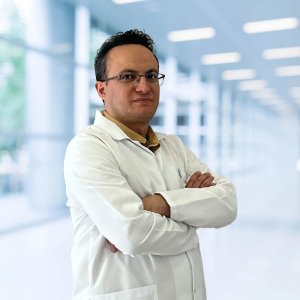
Ibrahim Erdim: doctor profile
- Ibrahim Erdim is listed as the first author of the study and is an ENT surgeon in Istanbul.
- At the time of the study, his affiliation was Sancaktepe Training and Research Hospital; his Bookimed profile now places him at Lokman Hekim Istanbul Hospital.
Safety and recovery: general information
General patient guidance, provided separately from the case evidence. Follow your treating team's instructions.
Recovery and aftercare
- After surgery to repair a perforated eardrum, NHS advice says not to fly until you are told it is safe; this advice is for eardrum repair and may differ for ossicular reconstruction.
Ask your surgeon when air travel may be safe after your operation, before you plan your return trip.
When to contact the clinic
- NHS advice says to seek urgent medical help if you have sudden hearing loss, hearing that has been getting worse over days or weeks, or hearing loss with earache or discharge from the ear.
Contact a doctor or the clinic promptly if you notice these symptoms.
Request a personal plan from the clinic
Ask Lokman Hekim Istanbul Hospital for a tympanoplasty consultation and a review of your hearing tests
Send your hearing test results and ENT reports through the Bookimed coordinator, who passes them to the clinic. The clinic's doctor decides whether surgery fits your case.
Ask the clinic for a current, itemized quotation. Published evidence does not establish package inclusions or a current price.
Frequently asked questions
Who ran this study and where were the patients treated?
The study was written by authors affiliated with Sancaktepe Sehit Prof. Dr. Ilhan Varank Training and Research Hospital in Istanbul. The abstract does not say where the patients were treated, and they were not treated at Lokman Hekim Istanbul Hospital. Ibrahim Erdim, the first author, now practices at Lokman Hekim according to his Bookimed profile. Bookimed did not run or fund the study.
Which technique had the better hearing result?
The authors concluded that the cortical bone prosthesis supported with crescent-shaped cartilage (Group 1) had better hearing outcomes than the other two groups. Its mean air conduction threshold went from 56.83 to 32.25 dB. However, the difference among groups in air-bone gap change was not significant (p = 0.057), so the finding should be read with caution.
How long were patients followed?
Hearing was tested before surgery and at least 1 year after surgery. The abstract does not give the exact follow-up length. It also does not say how many patients had complications or graft extrusion, so this page cannot describe long-term safety of the three prostheses.
Will I get the same hearing result as the study groups?
No one can promise that. The numbers are group averages from 12, 14 and 18 patients, and individual results vary. Your outcome depends on your ear, your condition and the surgeon's judgment. Ask the clinic to review your own hearing tests and explain which technique, if any, may suit your situation.
Sources and scope
This page was prepared from the published abstract of the study, its title and the author affiliations. Numbers come only from the abstract, and safety notes paraphrase NHS guidance.
- 1. Erdim et al. – Cortical bone total ossicular graft supported with crescent-shaped cartilage.
Comparison of three type 4 tympanoplasty techniques · 2025
Patients with chronic otitis media and hearing loss: 12, 14 and 18 in three groups
Follow-up: At least 1 year after surgery
Only the abstract was used, so study design details, complications and exact follow-up are not available.
- 2. NHS
- 3. Lokman Hekim Istanbul Hospital on Bookimed
- 4. Ibrahim Erdim on Bookimed
Scope and limitations
- A research summary is not an individual medical recommendation.
- Group results describe the study participants, not a forecast for any one patient.
Related procedures
About the editorial team
Prepared by
Bookimed editorial teamMedical content and care coordination
Bookimed prepares evidence summaries from published medical sources and anonymized care records. The clinic and any doctors named on this page are identified separately in their own sections.