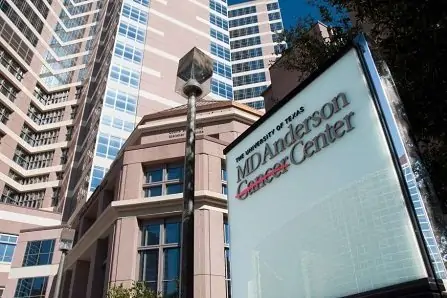
University of Texas MD Anderson Cancer Center was established in 1941. Today it includes 15 academic oncology departments and 10 treatment cancer centers. MD Anderson has investigated original in own Cancer Medicine faculty. Among the areas of study are immunology, genetics, cancer biology, cytotechnology, molecular genetic technology, etc.
MD Anderson oncology hospital is located in the center of Houston at a distance of 15 km from Airport Blvd.
Texas Anderson Hospital in figures:
- 130,000 patients annually
- 19,500 of medical staff
- 25 specialized medical cancer centers
- 6 scientific-research centers
- 507 hospital beds.
Awards of MD Anderson Cancer Center in Houston
No.1 Cancer Hospital
 MD Anderson is ranked as No.1 hospital for cancer care by U.S. News & World Report’s “Best Hospital” Survey.
JCI accreditation
 MD Anderson Hospital has received JCI certification (Joint Commission International). It approves compliance of a hospital with “gold standard” of quality and safety of medical services.
Nelly B. Connally Breast Center
The Breast Center of MD Anderson is one of the largest in the USA. Annually specialists of the Center treat over 40,000 patients annually. The Center includes departments for diagnostic, treatment and reconstruction of the breast. Doctors apply such treatment options according to the stage of disease:
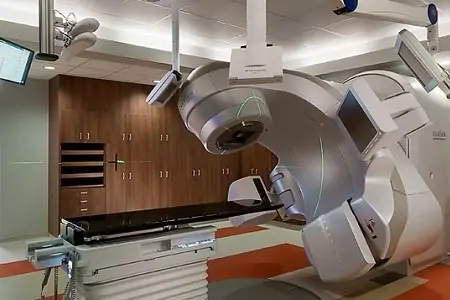
- radiation therapy: intensity-modulated radiation therapy (IMRT), accelerated partial breast irradiation (APBI), stereotaxic radiosurgery
- chemotherapy: MD Anderson apply chemotherapy safe even for pregnant women
- hormone therapy
- targeted therapy.
Anne C. Brooks Brain and Spine Center
The Brain and Spine Center accepts thousands of patients annually. The Center has over 75 years of experience in diagnosing and treating tumors of the brain, spine and base of skull. Doctors prefer applying less invasive methods for treatment to minimize side effects and complications. Among them are proton therapy, GammaKnife and BrainSuite radiosurgery, targeted therapy.

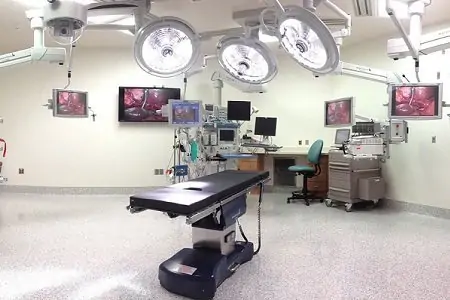
Doctors perform surgery
The Brain and Spine Center is among few ones in the USA that has got Specialized Program of Research Excellence (SPORE). It allows studying new ways of treatment.
Colorectal Center
Doctors of MD Anderson’s Colorectal Center use minimally invasive laparoscopic and invasive surgeries for treatment. They are less traumatic and do not cause severe postoperative complications. Specialists perform sphincter-sparing surgery which preserves physical functions and allows avoiding a permanent colostomy.

Hall at Colorectal Center
The following treatment options are also used: proton therapy, targeted chemotherapy, radiation therapy. For preventing colorectal cancer, specialists provide genetic testing.
Gastrointestinal Cancer Center
Specialists of Gastrointestinal Center provide treatment of liver, pancreas, gallbladder, stomach, bowel cancers, etc. MD Anderson Cancer Center gives an opportunity to take part in the clinical trials. Doctor apply new chemotherapy before surgery which increases chances for recovery.
Leukemia Center
The Leukemia Center of MD Anderson in Houston is one the most advanced centers for blood cancer treatment in the world. The 25 world-recognized specialists of the Center have provided over 100 clinical trials for the newest vaccines, targeted therapies, immunotherapies, etc. Doctors have developed such drugs for leukemia: dasatinib, decitabine, nilotinib, clofarabine, imatinib mesylate.

Hall at Leukemia Center
The specialists have distinguished a wide range of leukemia types. It is a critical criterion for choosing the most appropriate treatment plan for each patient..
Sarcoma Center
Texas MD Anderson’s Sarcoma Center provides treatment for over than 30 types of bone and soft tissue sarcomas. The doctors have achieved 5-year survival rate in 80% of cases.

Hall at Sarcoma Center
A team of specialists from different areas perform the treatment. They apply embolization, limb-preserving surgeries, proton therapy, chemotherapy with fewer side effects.
Service
MD Anderson Cancer Center provides patients with the following services:
- Free interpreter services. If a patient does not speak English, the Hospital provides an interpreters speaking Spanish, Arabic, Vietnamese, Chinese, Korean, German, French, Russian, Hindi, Japanese.
- Assistance in receiving a visa.
- Preparing of medical records.
- Dining services.
- Access to TV, WiFi, and telephones.




 The clinic is not accepting new requests
 Average answering time – 5 minutes





