
Maria Jose Martin
Jun 12, 2026
I want to congratulate the good treatment received in the Urology Department from Gloria Espínola.<br>Signed María José Martín Moreno

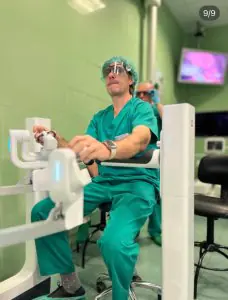
Sacral nerve stimulation (SNS), also called sacral neuromodulation, is a minimally invasive option for bladder symptoms at APL clinic de Urología in Madrid, Spain. The clinic’s functional urology team assesses whether it may suit people with overactive bladder, neurogenic bladder, or urgency-related urinary incontinence.
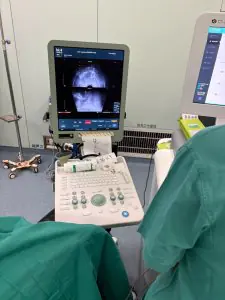
Urodynamic tests and specialized ultrasound help assess bladder and urethral function before treatment. These checks help specialists decide whether sacral neuromodulation is appropriate.
The clinic places this treatment later in a stepwise care pathway. Options may include pelvic floor rehabilitation, medicines, and stimulation of the posterior tibial nerve before sacral neuromodulation. Botulinum toxin injections into the bladder may also be considered. Bladder augmentation or replacement surgery is another option in the treatment ladder.
Pelvic floor physiotherapy is available for men and women. It can form part of care for urinary symptoms.
Dr. Laura Martínez Blázquez is a urologist with over 5 years of experience in functional and female urology. Her training includes urodynamics and rehabilitation, and she specializes in urinary incontinence and pelvic floor surgery.
Dr. Eduardo Useros Rodríguez is a urologist and Fellow of the European Board of Urology. He teaches advanced incontinence and pelvic floor surgery at Complutense University of Madrid.
The clinic has 18 doctors across 10 specialized medical units and treats adults and children. Patients can request a consultation through Bookimed to discuss assessment and treatment options.


 The clinic is not accepting new requests
 Average answering time – 5 minutes


APL clinic de Urología is a specialized urology clinic. It opened in Madrid, Spain, in 2026. The clinic works across two buildings and has 10 super-specialized medical units. Each unit covers one area of urological health, from oncology and stone disease to men's health and genetics. Its 18 doctors treat both adults and children.
The clinic has international recognition for its cancer care. It is accredited by the American Society of Clinical Oncology (ASCO) and the European Society for Medical Oncology (ESMO). This means it follows global protocols for treating urological cancers.
The medical team takes part in international training and academic exchange. Several specialists teach at the University of Valencia and the Complutense University of Madrid. One team member, Dr. David Díaz, received the Peter Alken Stone Research Award. The clinic hosts the Course of Excellence in Urolithiasis, where other surgeons learn endoscopic techniques.
The Uro-Oncology Unit treats cancers of the prostate, kidney, bladder, and ureter. Surgeons aim to preserve healthy tissue and sexual function. They use robotic surgery for both tumor removal and complex reconstructive cases. Its millimetric precision helps patients recover faster and improves surgical outcomes.
For prostate cancer, several focal therapy options are available as alternatives to radical surgery:
Kidney tumors can be removed robotically as well. Options include radical nephrectomy, partial nephrectomy, and lymphadenectomy. After these robotic procedures, most patients are back to daily activities in about two weeks.
The Renal Stone Unit treats kidney stones (urolithiasis) through the natural urinary pathways whenever possible. For stones inside the kidney or ureter, specialists use flexible endoscopic instruments and advanced laser technology. This lets surgeons break up stones without any skin incisions.
Large or complex stones may need a different surgical or non-surgical approach:
The clinic offers complete care for Benign Prostatic Hyperplasia (BPH), or prostate enlargement. One option is robotic AquaBeam surgery. It uses a high-pressure water jet to remove the tissue blocking urine flow. Another is laser enucleation, such as HoLEP, done through the urethra.
The Functional Urology Unit treats problems that affect daily life, such as urinary incontinence and overactive bladder. For women with stress incontinence, the clinic offers adjustable suburethral slings (Remeex®) and artificial sphincters. Both men and women can get integrated pelvic floor physiotherapy to support recovery.
The Andrology and Infertility Units focus on male reproductive health and sexual function. For erectile dysfunction, specialists provide hormone replacement therapy and psychological support. If patients need assisted reproduction, advanced techniques like ICSI and IVF are available within the same pathway. A separate Genetic Diagnosis Unit checks for inherited risks of urological conditions.
APL clinic de Urología uses the Da Vinci robotic system for high-precision surgery. It gives surgeons 3D vision and better dexterity during prostatectomies and nephrectomies. For prostate enucleation and kidney stone fragmentation, the facility relies on several laser platforms.
Patients traveling from abroad get a dedicated support system. Staff help with administrative steps and with managing medical insurance coverage. Consultations and coordination take place mainly in English and Spanish.
Services for international visitors include:
Family members and companions traveling with the patient receive specialized support too. Because care paths are integrated, diagnostic and treatment steps stay well coordinated throughout the visit.
Patients choose APL clinic de Urología most frequently to treat the following conditions: Urology.
The most common procedures in the hospital are: Sacral Nerve Stimulation (SNS) (Sacral Neuromodulation (SNM)).
Maria Jose Martin
Mari Jose Lopez
Cristiane Garcia
Soft Iluminação
MCarla TG
Juan Carlos
Javier Sainz Cebolla
Ronald Guillén Ramírez
Alfredo Tirado
Ana Soler
 The clinic is not accepting new requests Average answering time – 5 minutes



