Nora Quriashy
Oct 17, 2026
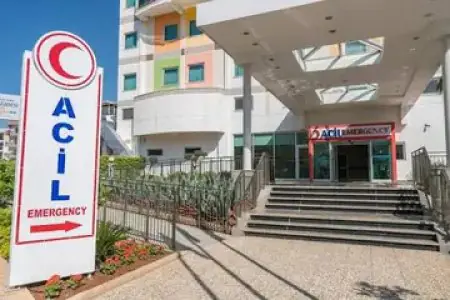
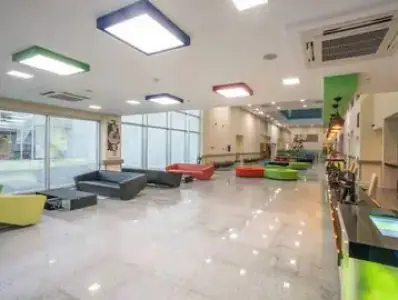
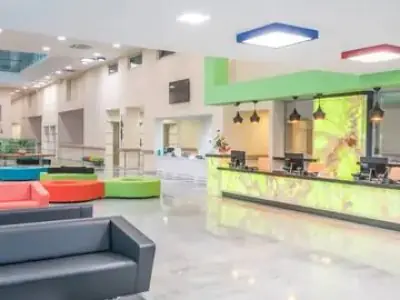
I was a patient on the second floor north and I had a great experience. All the nurses were so sweet and kind. Hospital was so clean and service was excellent, I just wish at night they checked on me more.
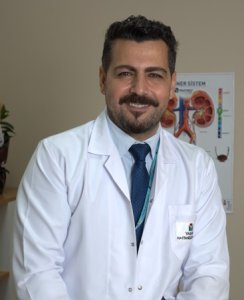
Urethral stricture treatment at the Assoc. Prof. Dr. Şahin Kılıç Urology Clinic in Antalya, Turkey, focuses on reconstructive surgery and minimally invasive techniques. The clinic is led by Assoc. Prof. Dr. Şahin Kılıç, a European Board Certified Urologist (FEBU) who ranked first in Turkey for his certification. Patients benefit from a center that follows EAU and AUA international guidelines and uses advanced tools like the da Vinci robotic system and holmium lasers.
The clinic uses precise imaging and functional tests to map the location and length of the stricture. This helps Assoc. Prof. Dr. Şahin Kılıç decide between endoscopic or open surgical methods. Diagnostic options include:
For short or first-time narrowings, the clinic offers minimally invasive endoscopic procedures. These methods do not require external incisions and often result in faster recovery.
When the stricture is long or recurs after endoscopic attempts, Assoc. Prof. Dr. Şahin Kılıç performs urethroplasty. These surgeries offer a higher success rate for complex cases.
The clinic holds ESMO and ASCO memberships, reflecting a commitment to academic-level medical standards. Patients receive care from a surgeon who has authored several urology book chapters and specializes in minimally invasive reconstruction. You can request a consultation for a personalized treatment plan on Bookimed.


 The clinic is not accepting new requests
 Average answering time – 5 minutes


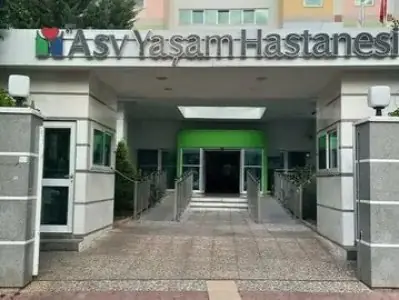
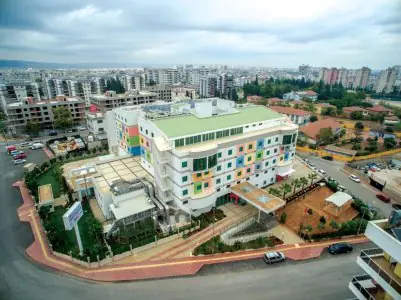
Assoc. Prof. Dr. Şahin Kılıç leads a specialized urology practice in Antalya. The clinic focuses on urological oncology and minimally invasive surgery. Consultations take place at Akdeniz Sağlık Vakfı Yaşam Hastanesi. The facility provides dedicated pathways for prostate, kidney, and bladder conditions. Dr. Kılıç brings academic research into clinical care plans for international patients.
Dr. Şahin Kılıç is a European Board Certified Urologist (FEBU). He achieved the highest rank among Turkish candidates in the European Board of Urology examination. The clinic also holds recognitions from major oncology organizations, including the European Society for Medical Oncology (ESMO) and the American Society of Clinical Oncology (ASCO).
The clinic maintains a strong research profile in medical technology:
This academic foundation means patients receive treatments based on international evidence. Dr. Kılıç also serves as a senior clinical educator for urology specialists.
The practice specializes in robotic-assisted surgery for malignant conditions. Surgeons use these methods to improve precision in confined anatomical spaces. The robotic system provides a three-dimensional view and wristed instrument tips. These tools filter natural tremors during complex maneuvers.
Key oncology procedures include:
For complex cases, the clinic supports cross-disciplinary reviews. Urology, medical oncology, radiology, and pathology teams discuss each case together. This helps determine if patients need additional systemic treatments after surgery.
The clinic uses advanced diagnostic tools to guide treatment decisions. For prostate cancer workup, specialists use MRI-targeted fusion biopsy. This technique matches multiparametric MRI targets with real-time ultrasound, so it can identify suspicious areas that standard biopsies might miss.
Diagnostic and surgical equipment includes:
Stone treatments are tailored to the patient's anatomy and stone density. Options include percutaneous nephrolithotomy (PCNL) for large stones. The clinic also offers flexible ureterorenoscopy (RIRS) as a needle-free alternative. Specialists break up stones using laser energy and remove fragments with tiny baskets.
The clinic prepares procedure-specific guides for international patients. These detail the expected benefits and specific risks of each intervention. Dr. Şahin Kılıç conducts consultations in Turkish, English, Russian, Arabic, and German.
Post-operative follow-up focuses on long-term functional outcomes. For prostate surgery, the team monitors PSA levels to detect recurrence. They also provide guidance on recovering urinary and sexual function. Kidney cancer patients receive long-term monitoring of the remaining kidney. This includes tracking blood pressure and protein levels in the urine.
Patients choose Assoc. Prof. Dr. Şahin Kılıç most frequently to treat the following conditions: Oncology, Urology, Surgery.
The most common procedures in the hospital are: Testicular prosthesis, Bladder removal, Removal of testicle tumor, Bladder removal with reconstruction, Laparoscopic prostatectomy, Transurethral resection of the bladder, Circumcision, Kidney-sparing surgery.
Nora Quriashy
Castilia Cava
C Holst
Florian Mueller
E Kara
 The clinic is not accepting new requests Average answering time – 5 minutes



