
jaegu kang
Nov 26, 2025
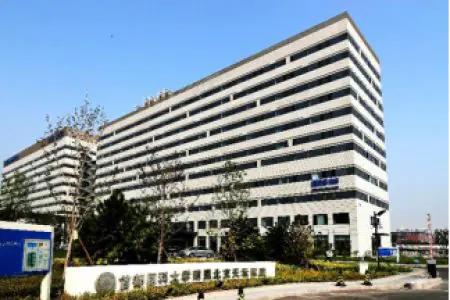


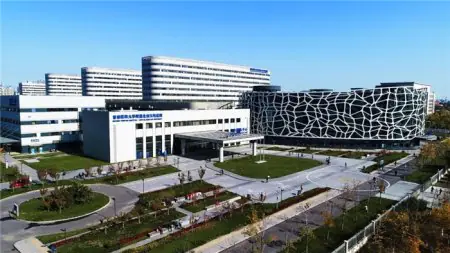
CyberKnife treatment at Beijing Tiantan Hospital in Beijing, China, provides a non-invasive option for treating brain tumors and vascular malformations. This robotic radiosurgery system allows for high-precision radiation delivery without the need for traditional surgery. The hospital is a Tertiary Class A facility and serves as the National Clinical Research Center for Neurological Diseases.
The hospital uses the CyberKnife robotic system to treat complex conditions. This method targets brain tumors, cerebral vascular malformations, and trigeminal neuralgia with high accuracy. Unlike traditional surgery, this approach does not require incisions. The medical team also uses Gamma Knife technology when it is more suitable for a patient's specific case. This variety allows doctors to choose the best tool for each medical need.
Success in radiosurgery depends on clear imaging for treatment planning. Beijing Tiantan Hospital houses a massive diagnostic suite to support these procedures. The facility includes:
These tools help the medical team map the exact location of the target area. This prevents damage to healthy brain tissue nearby.
The Stereotactic Radiosurgery Department is led by Chief Physician Sun Shibin. Dr. Sun Shibin serves as the department chief and specializes in treating intracranial tumors and trigeminal neuralgia. The team also includes Chief Physician Liu A Li, who focuses on Gamma Knife treatments for arteriovenous malformations. These specialists work within a national-level research center dedicated to neurological health. Their work combines clinical care with advanced medical research for better patient outcomes.
If you are looking for non-invasive treatment for neurological conditions, you can request a consultation through Bookimed to learn about your options.


 The clinic is not accepting new requests
 Average answering time – 5 minutes

Beijing Tiantan Hospital is a tertiary medical center in Beijing. Founded in 1956, it serves as a major hub for clinical neuroscience and diagnostic imaging. The hospital is a teaching institution affiliated with Capital Medical University, supporting doctoral and master's level training.
The hospital focuses on clinical neuroscience through its Neurosurgery and Neurology Centers. These departments combine specialized care with research-driven diagnostics. The Radiology department holds national clinical key specialty status, with a primary focus on neuroimaging. It also serves as a clinical drug trial base and training site for residents in complex neurological diagnostics.
Specialists provide advanced treatments for neurological conditions:
Dr. Sun Shibin leads the Stereotactic Radiosurgery department. He oversees Gamma Knife procedures for patients with brain tumors and functional disorders.
The facility has extensive equipment to support its neuroscience focus. The imaging department maintains high hardware volume, so patients get prompt diagnostic access. Nuclear medicine capabilities include early adoption of PET/MR and PET/CT systems. These tools allow precise metabolic and structural brain analysis.
Diagnostic resources include:
The intraoperative MRI lets surgeons view real-time images during brain surgery. This helps ensure complete tumor removal while protecting healthy tissue.
The International Department provides one-stop health management for patients traveling from abroad. It has a 24-bed inpatient ward with single and double rooms. Each room includes an emergency call system. The unit has its own X-ray and ultrasound equipment, so patients don't need to leave the department for basic imaging.
International and special-needs patients have access to specific care pathways:
Over 1,000 nurses support clinical operations. About 43% hold bachelor's degrees or higher, enabling them to manage complex inpatient care.
jaegu kang
 The clinic is not accepting new requests Average answering time – 5 minutes



