
Baldo Fernández
Oct 14, 2026
I had a polysomnography at CNA and all I can say is that the service and professionalism were excellent. Personalized care, very attentive staff, the standout was Lucia’s kindness and great work. Thank you very much.
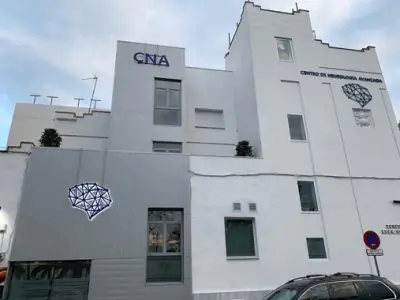
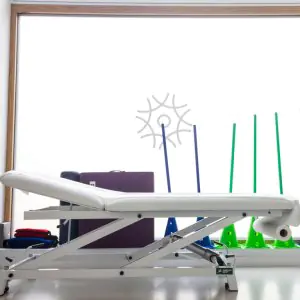
Centro de Neurología Avanzada (CNA) offers video-EEG monitoring in Seville, Spain, at Hospital Viamed Santa Ángela de la Cruz. The test records brain electrical activity alongside video, and the unit reviews recordings independently while monitoring continues.
Video-EEG with telemetry links changes in cortical electrical activity to episodes involving consciousness, behavior, or movement. It can help assess seizure frequency, identify subtle seizures, classify epilepsy, and investigate episodic neurological events. The unit has performed video-EEG monitoring for 19 years and conducts more than 400 studies each year.
Some conditions may need only 24 hours of monitoring. Prolonged studies require hospital admission, with a nurse or video-EEG technician trained in epilepsy present around the clock. An epilepsy neurologist and a clinical neurophysiologist are permanently on call.
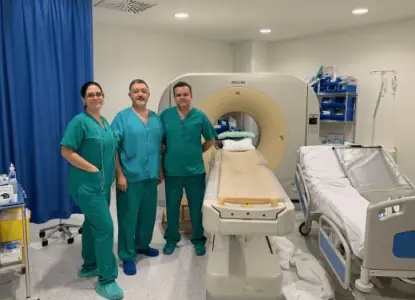
The unit has four telemetry video-EEG systems, including one designed for children. Its equipment includes a 128-channel unit for prolonged studies, as well as recording systems with 32 or 64 amplifiers. Two remote-controlled infrared cameras can record the patient in darkness.
Patients should wash their hair and avoid lacquer or hairspray before the test. They can keep their usual meal times and should continue regular medication unless their doctor advises otherwise. For multi-day monitoring, comfortable clothes, sleepwear, toiletries, and activities are useful to bring.
During monitoring, antiepileptic medication may be reduced or stopped to capture seizures and locate the epileptogenic zone. This is done as part of the monitoring plan. Results are assessed in an independent review unit without interrupting the recording.
Dr. Iratxe Maestro Saiz is a clinical neurophysiologist specializing in epilepsy and video-EEG. She coordinates CNA’s video-EEG unit and trained in video-EEG with invasive electrodes at the Cleveland Clinic Foundation in Ohio.
Patients can request a consultation to discuss which monitoring format may suit their diagnostic needs.


 The clinic is not accepting new requests
 Average answering time – 5 minutes

Centro de Neurología Avanzada (CNA) is a private neurology center in Sevilla, Spain. The clinic operates across multiple sites and provides multidisciplinary care for adults and children. Its medical team includes 20 doctors who specialize in neurology, neurosurgery, and psychiatry. The Sevilla facility has nine consultation rooms and four waiting areas.
The clinic treats roughly 35,000 patients every year. Within the dedicated Sleep Unit, specialists perform over 350 videopolysomnographic studies annually. CNA holds Top Doctors recognition for its high standard of private healthcare in Spain.
Several physicians have earned individual professional awards:
CNA hosts epilepsy specialist rotations from Central America. The medical team also presents research at major events like the International Congress of Parkinson's Disease.
The clinic manages complex neurological conditions through specialized diagnostic and treatment pathways. The Epilepsy Unit uses prolonged video-EEG monitoring – up to 15 days – to identify seizure origins. This unit reports high surgical success rates:
For neurodegenerative diseases, CNA offers an integrated cognitive decline assessment pathway. The team uses blood biomarkers and PET amyloid imaging to diagnose early-stage Alzheimer's disease. Selected patients may receive advanced anti-amyloid therapies like Donanemab or Lecanemab.
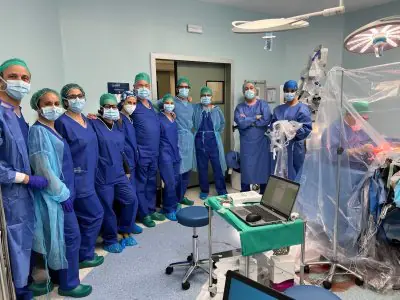
The neurosurgery department focuses on vascular pathologies and tumor removal. Surgeons perform wide craniotomies to treat giant meningiomas measuring up to 8 cm. They use intraoperative neurophysiological mapping to protect brain function during these procedures.
The Spine Unit specializes in minimally invasive techniques for degenerative disc lesions. Dr. Pablo Clavel leads the Artificial Disc Replacement (ADR) program with 25 years of experience. The clinic has performed over 2,500 spine operations. More than 90% of patients report pain reduction.
The Psychiatry department treats adult conditions including depression, anxiety, and personality disorders. Specialists use transcranial magnetic stimulation to treat medication-resistant depression. This non-invasive method uses magnetic pulses delivered through a coil on the head to adjust neural circuits.
Pediatric care comes from the Neurodevelopment and Learning Disorders Unit. The team includes neuropediatricians, psychologists, and speech therapists who treat emotional and behavioral disorders. This unit integrates family and school settings into each child's treatment plan.
CNA provides a full range of neurological testing tools. Specialists use high-resolution Doppler sonography to assess vascular risks in stroke patients. The facility also offers electromyography (EMG) and visual evoked potentials to test nerve and brain function.
The Sleep Unit features specialized equipment for sleep disorder check-ups. Spine surgeons use microsurgical vision systems and radioscopic guidance for precise implant placement. For complex epilepsy cases, the clinic uses Sentiva devices for vagus nerve stimulation.
International patients can access videoconsultations to review medical results and plan treatment. These online sessions allow initial assessments without travel. Physical attendance is only needed for imaging or instrumental studies. CNA partners with Hospital Universitario San Rafael for specialized care needs.
Patients choose Centro de Neurología Avanzada (CNA) most frequently to treat the following conditions: Diagnostics, Neurology.
The most common procedures in the hospital are: Stereotaxic surgeries, Transcranial alternating current stimulation (tACS), Spinal cord stimulator (SCS).
Baldo Fernández
manuel
Rosa Maria Cuervas Castrillo
Es 88
pepa garcia
paco Gomez
Susana muñoz
Marina Núñez
Rafael Dodero Sanchez
Sandra Rodriguez Garcia
 The clinic is not accepting new requests Average answering time – 5 minutes



