Anonymous


Last updated: Dec 17, 2019
Atrial fibrillation Treatment in Charité - Universitätsmedizin Berlin
About the clinic
Atrial fibrillation care at Charité – Universitätsmedizin Berlin in Berlin, Germany, includes rhythm testing, catheter ablation, and heart devices. Dedicated Rhythmology units provide cryoballoon ablation, and Prof. Dr. Philipp Attanasio leads Rhythmology at Campus Benjamin Franklin.
Diagnosis and rhythm monitoring
Testing can help assess the heart’s electrical signals and guide treatment planning.
- Electrophysiology study (EPU): Tests the heart’s electrical activity.
- Cardiovascular imaging: Provides images of the heart and blood vessels.
- Telemonitoring: Supports remote monitoring of heart rhythm.
Ablation and rhythm treatment
Catheter ablation treats abnormal heart rhythms through a minimally invasive procedure. The team offers cryoballoon and radiofrequency techniques for atrial arrhythmias.
- Cryoballoon catheter ablation: Uses a balloon-based technique to treat atrial fibrillation.
- Catheter ablation of atrial arrhythmias: Uses radiofrequency energy or cryoablation to target abnormal electrical signals.
- Same-day discharge ablation: Offers discharge on the day of the procedure for eligible patients.
Prof. Dr. Attanasio is board certified in Internal Medicine and Cardiology. His qualifications include DGK training in invasive electrophysiology and active cardiac rhythm implants. He also holds EHRA certifications in cardiac devices and electrophysiology.
Heart devices and stroke risk care
Device therapy is available for heart-rate support, rhythm control, and selected heart failure needs.
- Pacemaker implantation: Helps regulate heart rate.
- ICD implantation: A defibrillator option intended to prevent sudden cardiac death.
- CRT system implantation: May improve heart failure symptoms.
- Subcutaneous ICD: A less invasive defibrillator option.
- Leadless pacemaker: Works without leads, which may reduce related complications.
- Stroke risk management: Preventive care for reducing stroke risk linked to atrial fibrillation.
Charité’s rhythmology services are part of Deutsches Herzzentrum der Charité. Patients can request a consultation through Bookimed to discuss suitable diagnostic and treatment options.
Highlights
Get a free consultation
Treatments prices in the clinic
How are we doing?

hospital accreditations of quality


Charité - Universitätsmedizin Berlin: more details about the clinic
Berlin Charite hospital is the most famous university hospital in Europe, which is of great historical and practical importance to Berlin in particular and Brandenburg on the whole. Kaiser Friedrich Wilhelm I who founded it in 1710 (for treatment of plague) had no idea that in 2010 the clinic will celebrate its 300th anniversary adding two universities. This merger promotes synthesis of professional skills of specialists of the two best German universities. The results of cooperation can be seen not only as an example of high quality service and medical care, but also in the results of research and experimentation held in Clinic because more than half of German scholars of the Nobel Prize in medicine are working for Charite.
Today the clinic continues to impress with numbers:
- More than 100 clinics and institutes;
- 17 centers in 4 different areas of the city;
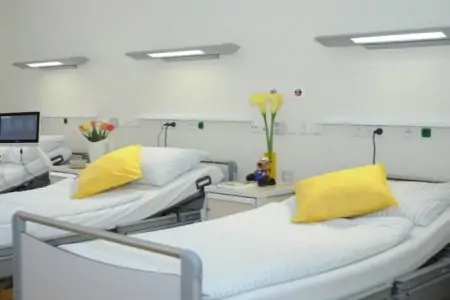
- 3,500 beds for admission of inpatients;
- 13,000 employees;
- 4,000 researchers and physicians;
- 28,000 inpatients annually, 100,0000 outpatients
- 7,000 operations per month;
- 5,400 newborn babies per year;
- 7,000 students trained at the Medical Faculty Hospital;
- 1,2 billion euro as annual turnover.
Main divisions of the Hospital:
- Oncology: a comprehensive cancer treatment center, radiotherapy clinic, hematology, tumor immunology, pulmonology;
- Neurology: Hospital scientists are engaged in research of stroke, diagnosis of brain by means of imaging technique. 900 patients with problems of intracerebral hemorrhage to ischemic stroke or cerebral thrombosis are treated here annually;
- Surgery: weight problems (obesity), visceral and transplantation, musculoskeletal, maxillofacial, plastic, reconstructive.
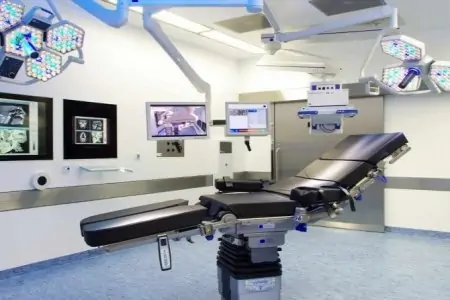
The research work of Charite specialists means a lot to the development of modern medicine in a global sense. First class results in preclinical studies, clinical studies and research in the field of health care products and pharmaceuticals are achieved in laboratories. This once again confirms the positive indices of the universities merger - incredible medical technologies are developed here. For example, six months ago, a robot operator started to work. It is designed for minimal interference in the internal organs, which is under high risk of damage during traditional operations. Now it can provide a unique precision and control up to three instruments at the same time, which allows to perform the operation at a level never possible before.
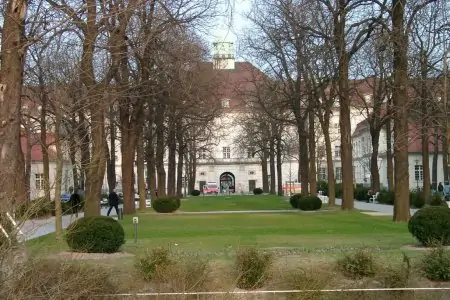
In addition to traditional treatment and rehabilitation, special attention is paid to palliative care. This allows patients with chronic diseases and with minimal chance of full recovery to enjoy their life. Doctors are working to minimize pain during the remaining period. The Clinic by itself with its beautiful architecture, friendly staff and qualitative treatment contribute to successful recovery.
FAQ
What treatments do patients most often ask for?
Patients choose Charité - Universitätsmedizin Berlin most frequently to treat the following conditions: Neurosurgery, Otorhinolaryngology/Ear, Nose and Throat(ENT), Rheumatology.
What procedures do patients have most often?
The most common procedures in the hospital are: Brain tumor removal, Cochlear implant placement.
Patient reviews
Anonymous
Ботагоз
Charitéplatz 1, 10117 Berlin, Germany

Get a free consultation
How it works:
- We find a medical coordinator familiar with the matter
- You get a personal offer with a step-by-step guide and the cost estimate
- We arrange your travel including appointment scheduling and flights booking
- You arrive at the hospital, we support you 24/7