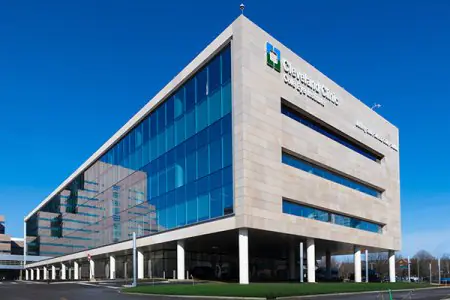
Cleveland Clinic is a nonprofit, multispecialty academic healthcare system founded in 1921. Headquartered in Cleveland, Ohio, the organization integrates clinical care with research and education. The system operates through a network of regional hospitals in Ohio and Florida. It also maintains a global presence with locations in Abu Dhabi, Canada, and London. With over 50,000 employees, the clinic manages 6,496 beds across its facilities.
Key Achievements and Quality Standards
The clinic holds the Magnet designation for nursing excellence from the American Nurses Credentialing Center. Its cancer program is accredited by the American College of Surgeons Commission on Cancer. The facility is a member of the Case Comprehensive Cancer Center, an NCCN and NCI-designated partnership. The Bariatric and Metabolic Institute is accredited through MBSAQIP for surgical quality. It also holds Center of Excellence recognitions from Anthem Blue Cross Blue Shield and Aetna.
Neurological and Neurosurgical Care
The Neurological Institute has more than 300 specialists treating adult and pediatric disorders. The team sees over 140,000 patients every year. They use the Knowledge Program to track and analyze outcomes. Specialists manage complex conditions through several dedicated sub-specialties:
- Brain Tumor and Neuro-Oncology
- Cerebrovascular care and stroke management
- Epilepsy diagnosis and surgical treatment
- Lou Ruvo Center for Brain Health
- Mellen Center for Multiple Sclerosis
Surgeons perform advanced procedures such as Vagus nerve stimulation and multiple subpial transections for epilepsy. The institute also runs the Cleveland Clinic Brain Study. This first-of-its-kind research project tracks patients for 20 years to identify new treatment targets.
Heart, Vascular, and Thoracic Services
The Heart, Vascular & Thoracic Institute records over 900,000 cardiovascular patient visits annually. Surgeons perform more than 7,800 cardiothoracic and vascular operations each year. The program tracks mortality data and Society of Thoracic Surgeons ratings to maintain quality. Integrated teams handle both medical management and complex surgical interventions.
Endocrinology and Metabolic Care
The Endocrinology & Metabolism Institute includes over 300 physicians and researchers. The team provides integrated care for thyroid disease, diabetes, and obesity. Specialists use radio-frequency ablation for liver tumors and advanced surgical methods for parathyroid conditions. The institute runs phase 2 and phase 3 clinical trials for primary aldosteronism and polycystic ovary syndrome (PCOS).
Cancer and Women's Health
The Cancer Institute provides treatment through a global network of affiliates and family health centers. Specialists perform procedures such as omentectomy using laparoscopic, robotic, or open surgical methods. For gynecological care, the clinic reports more than 469,000 annual visits and over 15,800 deliveries. Surgeons perform cervix conization and other oncological procedures within integrated clinical workflows.
Diagnostic Equipment
The clinic uses a full suite of diagnostic tools to support treatment planning:
- Advanced CT and MRI scanning
- Electroencephalography (EEG) and Electroneurography
- Laryngoscopy for throat and vocal cord evaluation
- Audiometry and hearing check-ups
- Ultrasound and chest X-ray imaging
These tools help specialists diagnose ear, nose, and throat disorders in both adults and children.
International Patient Services
Global Patient Services has over 70 specialists who coordinate care for international travelers. The clinic offers Virtual Second Opinions and virtual visits for remote consultations. Patients can manage their medical records and appointments through the MyChart digital platform. The DrConnect system allows physician-to-physician communication. This helps maintain continuity of care across borders. Secure access to imaging and reports is available through the eRadiology service.


 The clinic is not accepting new requests
 Average answering time – 5 minutes