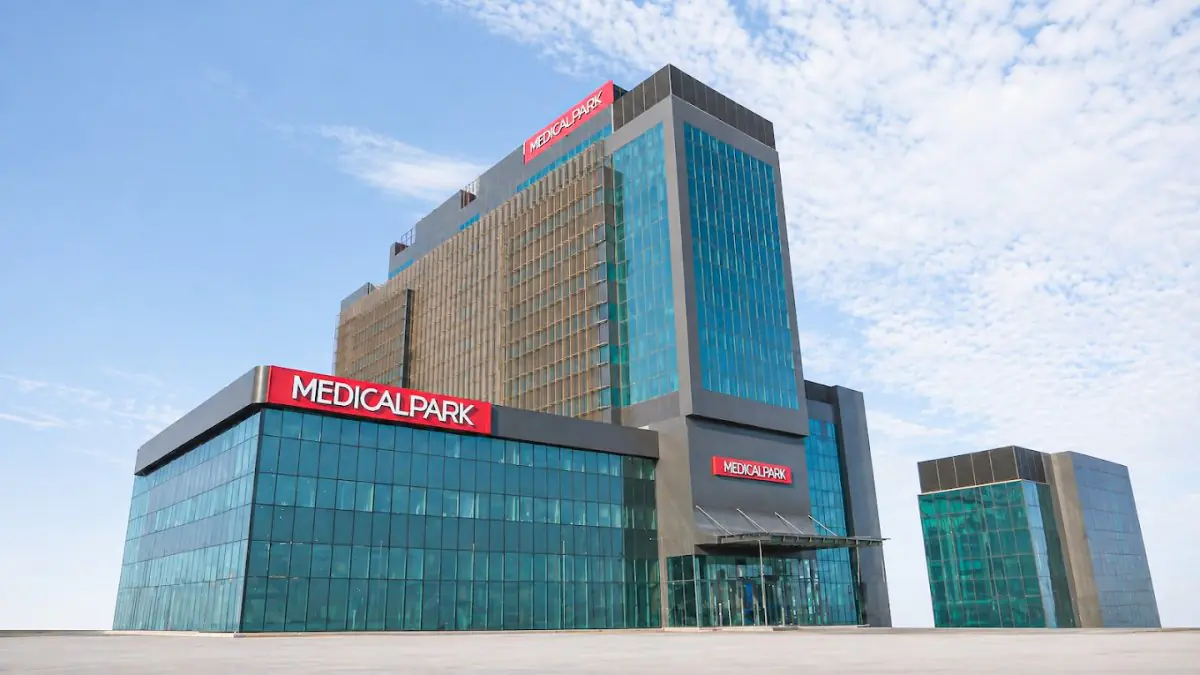
Turkey, Istanbul
Aortic aneurysm Treatment in Bahçeşehir Üniversite Hastanesi Medical Park Göztepe
1
accreditation
hospital certificates of quality
About the clinic
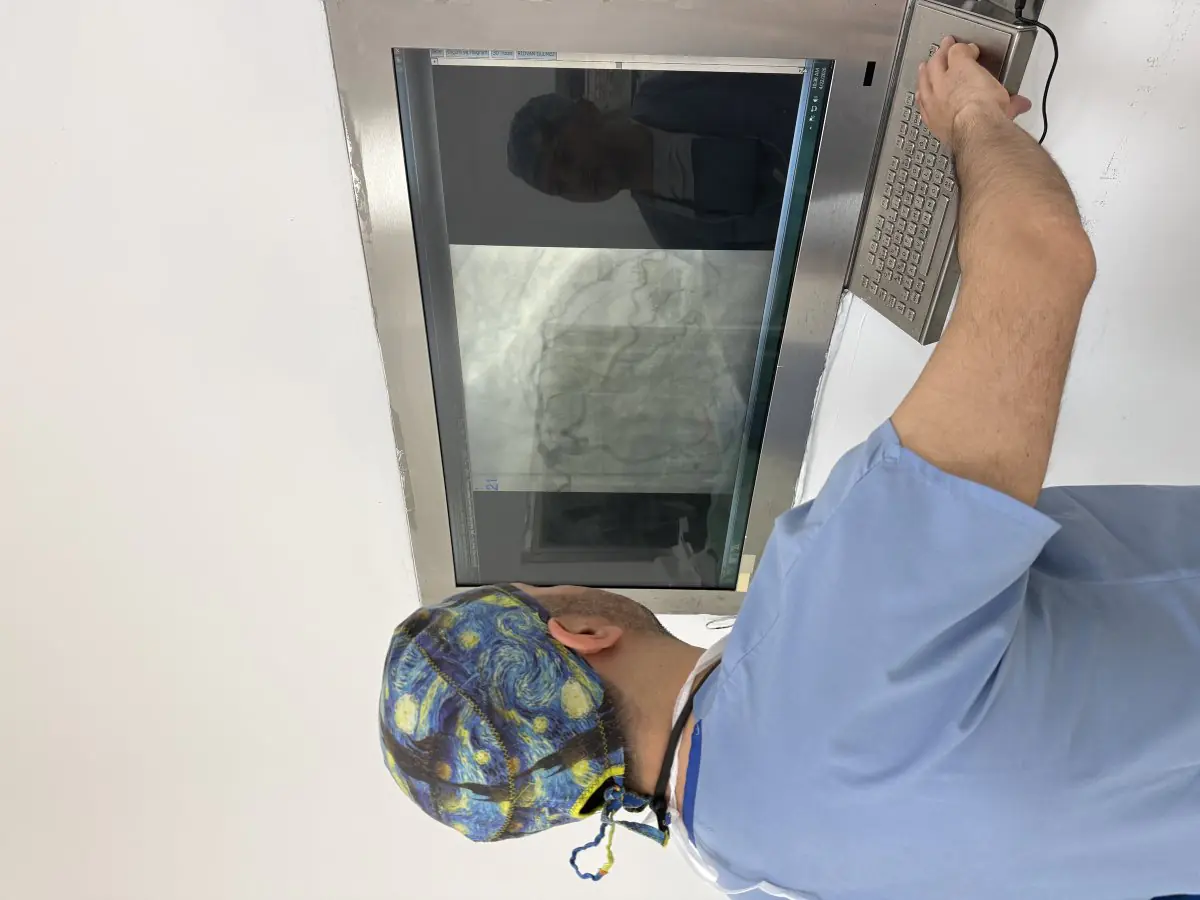
Aortic aneurysm care at Bahçeşehir University Hospital Medical Park Göztepe in Istanbul, Turkey includes diagnostic testing and repair. Its cardiovascular surgery department offers open, endovascular, and hybrid procedures in a hybrid angiography operating room.
Assoc. Prof. Dr. Mehmet Ali Yeşiltaş is a cardiac and vascular surgeon with over 10 years of experience. His research includes EVAR in octogenarians, and he has published 50+ articles in international journals.
Diagnostic tests for aortic aneurysm
CT angiography is the primary imaging test for aortic aneurysm assessment. Doppler ultrasound can provide an initial vascular assessment.
- CT angiography: Primary evaluation for an aortic aneurysm.
- Doppler ultrasound: Initial assessment of blood flow in the vessels.
- MR angiography and classical angiography: Additional imaging options.
- Echocardiography: Heart imaging available as part of the diagnostic workup.
- Vascular exam: Physical evaluation that includes checking the pulse.
Listed repair thresholds are about 5–5.5 cm for abdominal aneurysms and 5.5–6 cm for thoracic aneurysms. Growth of at least 0.5 cm per year is also a listed threshold.
Endovascular repair with 1–2-hour procedures
- EVAR (endovascular aneurysm repair): Used for abdominal aortic aneurysms. A stent-graft passes through the femoral arteries and sits inside the aorta, excluding the aneurysm sac. The procedure takes 1–2 hours and often uses local anesthesia with small groin incisions. Most patients return to daily activities the same day. Follow-up uses CT angiography and Doppler ultrasound at 1, 6, and 12 months, then yearly.
- TEVAR (thoracic endovascular aneurysm repair): Used for thoracic aneurysms, Type B dissection, and traumatic aortic injury. A stent-graft enters through femoral access and redirects blood flow inside the thoracic aorta. The 1–2-hour procedure often uses local anesthesia. Follow-up imaging takes place at 1, 6, and 12 months, then yearly.
Open and hybrid aortic surgery
- Open aortic surgery: The surgeon removes the diseased aortic section and replaces it with a synthetic graft. It may suit aneurysms, dissections, or anatomy unsuitable for endovascular repair. The operation uses general anesthesia, with cardiopulmonary bypass or organ protection when needed. Hospital stay is 5–10 days, including 24–48 hours in intensive care. Full recovery takes several weeks.
- Hybrid aortic procedures: Combine open surgery and endovascular methods, tailored to the aortic anatomy. They are offered for complex aortic disease.
Patients can request a consultation through Bookimed to discuss the diagnostic and treatment options.
Highlights
1 doctors
Get a free consultation

Bahçeşehir Üniversite Hastanesi Medical Park Göztepe

 The clinic is not accepting new requests
Submit your request to get the best option in Turkey
 Average answering time – 5 minutes
Treatments prices in the clinic
{{date}}. Prices may change depending on the medical case and the doctor's recommendations.
Phlebology
| treatment | Price | |
|---|---|---|
| EVLA (endovenous laser ablation) | Price on request | |
| Laser treatment for varicose veins | Price on request | |
| Sclerotherapy of varicose veins | Price on request | |
| Varicose veins removal | Price on request | |
| Radiofrequency ablation | Price on request | |
| Femoral popliteal bypass surgery | Price on request | |
| Varicose Vein Stripping | Price on request | |
| Aortic Stent Grafting | Price on request |
Clinic Doctors
How are we doing?
1 of
3
Information about this clinic is full and clear
1
2
3
4
5
Strongly disagree
Strongly agree
hospital accreditation of quality
Joint Commission International
US,
Joint Commission International certificate for Bahçeşehir Üniversite Hastanesi Medical Park Göztepe
Bahçeşehir Üniversite Hastanesi Medical Park Göztepe: more details about the clinic
Turkey, Istanbul
Bahçeşehir University Hospital Medical Park Göztepe is a university-affiliated hospital in Istanbul's Şişli district. Its Cardiovascular Surgery Department provides specialized heart and vascular care. Patients come here for both heart surgery and minimally invasive vascular procedures.
Medical Team and Academic Achievements
Dr. Mehmet Ali Yeşiltaş leads the department. He is an Associate Professor and Cardiac and Vascular Surgeon with over 13 years of clinical and surgical experience. His work combines academic research with hands-on surgery for artery and vein conditions.
The department's leadership has a strong academic record, with notable contributions to international medical literature. Achievements include:
- Over 50 scientific articles published in international medical journals
- More than 30 presentations at national and international congresses
- Published research on endovascular aortic aneurysm repair in octogenarian patients (people in their 80s)
- Research on coronary artery bypass grafting after iatrogenic artery dissection (a tear caused during a medical procedure)
Dr. Yeşiltaş shares his expertise as a speaker at specialized training events. At the Modern Phlebology Days, he presented on diagnostic strategies for pelvic venous diseases.
Cardiac Surgery and Arterial Care
The heart surgery program covers both open and minimally invasive cardiac surgery. Surgeons perform coronary bypass surgery and heart valve procedures, including treatment for mitral valve disease. Each approach is chosen with safety and recovery in mind.
For arteries, the focus is on blockages and aneurysms. Specialists treat these with advanced endovascular methods. Abdominal and thoracic aortic aneurysms are repaired with EVAR and TEVAR. These closed procedures need only small incisions, so they are often done under local anesthesia.
To lower stroke risk, specialists treat carotid artery disease. Options include carotid endarterectomy (surgical removal of plaque) and carotid stenting. For peripheral arterial occlusions, the team restores blood flow with balloon, stent, and drug-coated systems.
Venous Diseases and Specialized Interventions
The phlebology service treats varicose veins and complex vein conditions. Each treatment plan depends on the disease stage and Doppler ultrasound results. Most vein procedures are minimally invasive. This means patients can walk right away and return to daily life the same day.
Available venous treatments include:
- Endovenous Laser Treatment (EVLT), which seals veins with laser energy
- Radiofrequency Ablation (RFA), which delivers heat through a thin catheter
- Foam Sclerotherapy for superficial and medium-diameter veins
- Treatment for Deep Vein Thrombosis (DVT) and pelvic venous diseases
The clinic treats lymphostasis and lipedema as well. Since both are chronic conditions, treatment relies on complex decongestive therapy. It combines manual lymph drainage, compression bandages, exercise, and skin care.
Diagnostic Technology and Patient Services
A full vascular assessment starts with a clinical exam and non-invasive imaging. Initial checks use Doppler sonography and echocardiography. When doctors need more detail about the vessels, they turn to advanced tools:
- CT Angiography
- MR Angiography
- Classical Angiography
- Carotid Ultrasound
After treatment, care centers on long-term monitoring. Regular Doppler ultrasound checks look for restenosis (re-narrowing of the vessels). This matters because early detection helps endovascular repairs and bypass surgeries stay successful over time.
For patients on hemodialysis, the team creates access through AV fistula surgery. Varicocele is treated with embolization, a non-surgical option that avoids traditional incisions.
Additional services
Language assistance
Available
free
Accommodation
Hotel (apartments) near the clinic, billed daily
Patient reviews
10 Google
reviews
Zeynep Temur
Sep 18, 2026
I went to see my doctor Mehmet ali Hoca for nutcracker syndrome. He explained in detail everything we were curious about regarding the process and answered all our questions with every detail. Thank you very much, Hoca, for your interest and patience. I’m so glad our paths crossed. 🙏🏻
Leyla Uysal
Aug 5, 2026
I went to see for swelling and varicose veins in my lower leg. He was very attentive and friendly, and he understands a patient’s psychology at first meeting. Our very valuable teacher. I’m so glad you’re here, teacher 🙏
Dilek Karakum
Aug 4, 2026
I contacted them regarding my father’s condition, and they examined the results very thoroughly and got back to us in a short time. We were very satisfied 🙏
Melike Perveroğlu
Jul 23, 2026
I had a laser varicose vein surgery with Hocam Mehmet, and from the beginning to the end of the process he was very attentive. In the Cardiology and Vascular Department, there’s definitely a doctor who does his job properly. Thank you.
Gökhan Duruk
Jul 23, 2026
I went to 6 doctors for high blood pressure. As a result of my research, I found Mehmet hocam. With Mehmet Hocam’s knowledge, he pinpointed my problem and determined my treatment. For now, after the first time in 3 years, my blood pressure has been balanced. I hope Allah doesn’t let anything happen to me, but if I ever have any heart or vascular problem, my doctor is clear.
fatma uzunhasan kuleci
Jun 23, 2026
I’m very pleased. I had a laser operation without any pain or aches, and the next day I got up and walked.
Gunay Taskent
Jun 20, 2026
I sincerely thank Dr. Mehmet Ali and Mr. İlker for their hard work at Anjiyom and for helping me regain my health.
Reyhan AYDIN
Jun 13, 2026
The varicose vein surgery process was managed very well. They provided detailed information throughout. Thank you for everything—your attentiveness and experience mean a lot.
Ayk Baklacıoğlu
Jun 4, 2026
On 19 May, in the critical closed bypass surgery I underwent, I want to sincerely thank Professor Mehmet Âli for his selfless dedication from start to finish. Both before the operation, during it, and after it, with the accurate instructions he gave me to help me heal quickly, today I have started my second life again. Thank you very much, Mehmet Ali Hocam, from the bottom of my heart.
Yunus ÇAKIR
May 23, 2026
I’ve known Doç.Dr. Mehmet Ali Yeşiltaş for years. Not because I know him or because he might read this, but I’m genuinely saying this from the heart. He is truly very successful in his field and a highly high-quality person. Once you get to know him, you’ll understand what I mean. Despite the position he has reached, every day he develops new techniques, and he keeps adding more to his achievements while trying to contribute to science. We closely follow your successes, hocam—congratulations, and thank you for your work 🙏😊
Merkez Mah. Darülaceze Cad. No:14, Okmeydanı – Şişli / İstanbul, Turkey

Get a free consultation
Bahçeşehir Üniversite Hastanesi Medical Park Göztepe
The clinic is not accepting new requests
Submit your request to get the best option in Turkey
Average answering time – 5 minutes
How it works:
- We find a medical coordinator familiar with the matter
- You get a personal offer with a step-by-step guide and the cost estimate
- We arrange your travel including appointment scheduling and flights booking
- You arrive at the hospital, we support you 24/7