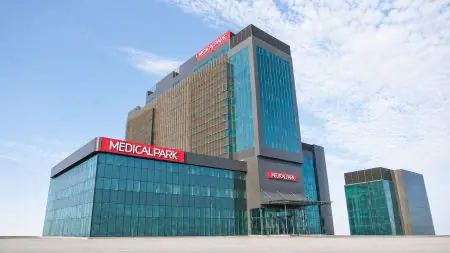
Bahçeşehir University Hospital Medical Park Göztepe is a university-affiliated hospital in Istanbul's Şişli district. Its Cardiovascular Surgery Department provides specialized heart and vascular care. Patients come here for both heart surgery and minimally invasive vascular procedures.
Medical Team and Academic Achievements
Dr. Mehmet Ali Yeşiltaş leads the department. He is an Associate Professor and Cardiac and Vascular Surgeon with over 13 years of clinical and surgical experience. His work combines academic research with hands-on surgery for artery and vein conditions.
The department's leadership has a strong academic record, with notable contributions to international medical literature. Achievements include:
- Over 50 scientific articles published in international medical journals
- More than 30 presentations at national and international congresses
- Published research on endovascular aortic aneurysm repair in octogenarian patients (people in their 80s)
- Research on coronary artery bypass grafting after iatrogenic artery dissection (a tear caused during a medical procedure)
Dr. Yeşiltaş shares his expertise as a speaker at specialized training events. At the Modern Phlebology Days, he presented on diagnostic strategies for pelvic venous diseases.
Cardiac Surgery and Arterial Care
The heart surgery program covers both open and minimally invasive cardiac surgery. Surgeons perform coronary bypass surgery and heart valve procedures, including treatment for mitral valve disease. Each approach is chosen with safety and recovery in mind.
For arteries, the focus is on blockages and aneurysms. Specialists treat these with advanced endovascular methods. Abdominal and thoracic aortic aneurysms are repaired with EVAR and TEVAR. These closed procedures need only small incisions, so they are often done under local anesthesia.
To lower stroke risk, specialists treat carotid artery disease. Options include carotid endarterectomy (surgical removal of plaque) and carotid stenting. For peripheral arterial occlusions, the team restores blood flow with balloon, stent, and drug-coated systems.
Venous Diseases and Specialized Interventions
The phlebology service treats varicose veins and complex vein conditions. Each treatment plan depends on the disease stage and Doppler ultrasound results. Most vein procedures are minimally invasive. This means patients can walk right away and return to daily life the same day.
Available venous treatments include:
- Endovenous Laser Treatment (EVLT), which seals veins with laser energy
- Radiofrequency Ablation (RFA), which delivers heat through a thin catheter
- Foam Sclerotherapy for superficial and medium-diameter veins
- Treatment for Deep Vein Thrombosis (DVT) and pelvic venous diseases
The clinic treats lymphostasis and lipedema as well. Since both are chronic conditions, treatment relies on complex decongestive therapy. It combines manual lymph drainage, compression bandages, exercise, and skin care.
Diagnostic Technology and Patient Services
A full vascular assessment starts with a clinical exam and non-invasive imaging. Initial checks use Doppler sonography and echocardiography. When doctors need more detail about the vessels, they turn to advanced tools:
- CT Angiography
- MR Angiography
- Classical Angiography
- Carotid Ultrasound
After treatment, care centers on long-term monitoring. Regular Doppler ultrasound checks look for restenosis (re-narrowing of the vessels). This matters because early detection helps endovascular repairs and bypass surgeries stay successful over time.
For patients on hemodialysis, the team creates access through AV fistula surgery. Varicocele is treated with embolization, a non-surgical option that avoids traditional incisions.


 The clinic is not accepting new requests
 Average answering time – 5 minutes






