CR365 Fitness
May 14, 2025
We are Gaby Dajer and Chema Ruiz, and we’re delighted! Doctor Antonio and his right-hand woman Flor are wonderful—thank you so much ❤️❤️❤️
Urolithiasis care at Dr. Antonio Esqueda Mendoza’s clinic in Mérida, Mexico, includes stone imaging, evaluation, and surgical options. Laser lithotripsy may cost around $4,500. Dr. Antonio Esqueda Mendoza is a board-certified urologist with postgraduate training in Bordeaux and advanced endourology training.
Evaluation can help locate stones and assess their type and complexity. Available diagnostic services include:
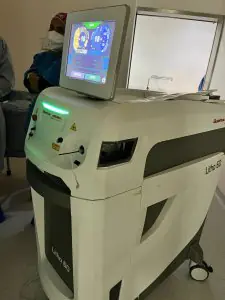
Laser lithotripsy treats kidney or ureteral stones through the urinary tract, without an external incision. A rigid or flexible ureteroscope with an HD camera passes through the urethra to reach the stone. A holmium:YAG or thulium fiber laser breaks it into pieces or dust. Stone baskets remove fragments. The procedure may use general, spinal, or intravenous anesthesia; local anesthesia is also possible. Most patients leave the hospital the day after surgery. Ureteroscopy guidance notes a stay of about two days. Blood in the urine may last a couple of days.
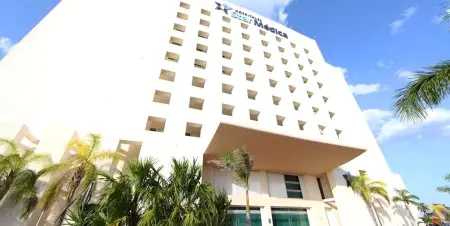
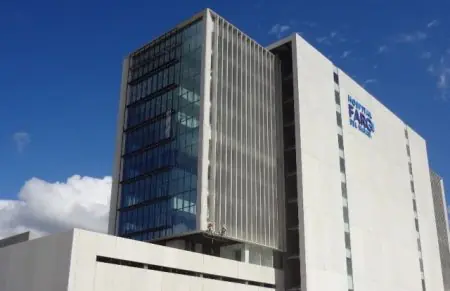
The clinic’s three-doctor urology team works at Hospital Star Médica and Hospital Faro del Mayab. Patients can request a consultation or second opinion through Bookimed.


 The clinic is not accepting new requests
 Average answering time – 5 minutes

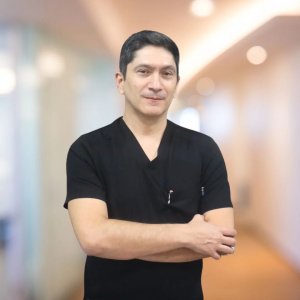
Dr. Antonio Esqueda Mendoza is a certified urologist based in Mérida, Mexico. He works out of two modern hospitals: Hospital Star Médica and Hospital Faro del Mayab. This single-specialty practice focuses on minimally invasive urologic care for men and women. Dr. Esqueda Mendoza leads a team of three specialists.
Dr. Antonio Esqueda Mendoza completed postgraduate training in Bordeaux, France. He holds the official title of Urólogo Certificado, so he is a board-certified urologist in Mexico. Another team member, Dr. Gómez Sancha, specializes in laser-based prostate surgery. Together, the physicians treat a wide range of urologic conditions:
Specialists use endoscopic techniques to treat problems anywhere from the urethra to the kidney. Since these methods avoid open surgery, they aim to shorten recovery time.
The clinic is a center for HoLEP (Holmium Laser Enucleation of the Prostate). This procedure relieves blocked urine flow by removing all of the obstructing prostate tissue. Unlike traditional "scraping" methods, HoLEP uses laser energy to separate the tissue without open incisions. It offers a lasting solution when medications no longer control symptoms.
Stone treatment depends on the size and location of each stone. Laser lithotripsy uses a thin ureteroscope to reach stones in the kidney or ureter. Once the stone is found, a laser breaks it into smaller pieces. These are then removed or passed naturally. Larger or more complex stones need a different approach, so the clinic offers several percutaneous and combined options:
During endoscopy, surgeons use special "baskets" to catch and remove stone fragments safely. Most patients go home the day after surgery, with limited, controlled pain.
For selected kidney tumors, the clinic offers percutaneous cryoablation. This technique uses extreme cold to destroy cancer cells while sparing healthy kidney tissue. The procedure takes place in a specialized imaging suite with CT or MRI guidance. Dr. Esqueda Mendoza works with an interventional radiologist, so each probe goes exactly where it should.
Cryoablation suits patients with small kidney masses. It is especially helpful for people with only one kidney or several lesions. Before treatment, patients get a detailed consultation comparing the benefits of surgery and ablation. Most people return to regular activities within several weeks.
The clinic uses advanced imaging to plan surgeries and monitor patient health. MRI and CT scans help locate tumors and guide percutaneous instruments. Diagnostic services include PSA testing for prostate health. Detailed urine analysis identifies the exact type of infection. Specialists examine the urinary tract with rigid and flexible ureteroscopes fitted with high-definition cameras.
The clinic supports patients who travel to Mérida for specialized urologic care. Online consultations are available for second opinions, so patients can discuss their cases remotely. Staff speak both Spanish and English. Before arrival, the clinic coordinates a review of prior biopsies, MRI reports, and laboratory studies.
Patients choose Dr. Antonio Esqueda Mendoza (Urologist) most frequently to treat the following conditions: Urology.
The most common procedures in the hospital are: Ureteroscopy with laser lithotripsy (kidney stone removal), Laser Lithotripsy, Holmium Laser Enucleation of the Prostate.
CR365 Fitness
rosy ps
Jose Manuel Vazquez
nutrición by Beka JIménez Be Nutre Program
Felipe Silveira
Karla Marissa Molina Ceballos
menegaldo dovilio
Jorge Cano
Marisol Del Carmen Ordaz Tamayo
Luis Alberto Martin cocom
 The clinic is not accepting new requests Average answering time – 5 minutes



