Мария • Endometriosis


Last updated: Sep 20, 2026
Istanbul Florence Nightingale Hospital in Turkey provides expert diagnostics for polycystic ovaries. Services include consultations for around $250, ultrasounds for $150–$300, and comprehensive hormonal blood analysis, which may cost around $1,500–$2,000. The clinic is led by Prof. Cem İyibozkurt, a gynecologic oncologist with _doctor_6820_years_ of experience and specialist training from Oxford and Florida Hospital.
Prof. Cem İyibozkurt oversees the diagnostic process. He is a Professor and Gynecologic Oncologist with three decades of expertise. His qualifications include a PhD in Molecular Medicine and a robotic surgery certification from Florida Hospital. He is also a member of the European Society of Gynaecological Oncology (ESGO). This ensures a highly detailed and expert-led evaluation for each patient.
The diagnostic package identifies the condition and its related hormonal imbalances. It typically requires a recommended 3-day stay. The tests provide a complete picture of a patient's gynecological and metabolic health.
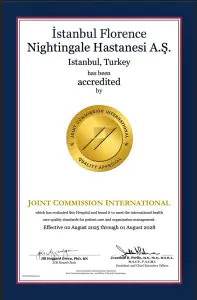
The Istanbul Florence Nightingale Hospital holds JCI accreditation. It is recognized as Turkey's first Smart-and-Green hospital. Key medical technology includes an EOS imaging device. This system reduces radiation exposure during scans. The clinic is affiliated with Johns Hopkins Medicine. For international patients, the hospital provides complimentary airport transfers and interpreter services. This support helps ease the process of traveling for care. If you are seeking a detailed diagnosis for PCOS from a leading specialist, contact the clinic to discuss your diagnostic plan.


Istanbul Florence Nightingale Hospital, part of the Florence Nightingale Group, is located in Şişli, Istanbul. This state-of-the-art facility spans 50,254 sqm across 18 stories and features a heliport for air ambulance helicopters. It is Turkey's first Smart-and-Green hospital, designed to meet the strict criteria of the TÜV Hessen Green Building Certificate.
The hospital includes 251 patient beds, 51 intensive care beds, and 11 surgery rooms, all equipped with laminar airflow systems to ensure a sterile environment. It also has 2 specialized delivery rooms and a 300-seat conference room connected to all surgery rooms, enabling interactive medical education and scientific activities via advanced audio-visual connections.
Equipped with cutting-edge technologies, the hospital features the EOS device, the first of its kind in Turkey. This device minimizes radiation exposure in orthopedic imaging by using low-dosage 2D/3D X-ray radiation, producing both frontal and lateral images as well as 3D views of skeletal anatomy.
Istanbul Florence Nightingale Hospital holds JCI and ISO accreditations, ensuring high standards of care. It has been recognized internationally with the "Gold Seal" from an American-based non-profit for its outstanding inpatient care and safety. The hospital also received the Sign of the City award in 2014 and British QHA accreditation in 2015.
Part of the Florence Nightingale Group, established in 1989, the hospital reflects the group's dedication to excellence in healthcare. The group operates 4 general hospitals, 2 medical centers, and Demiroglu Bilim University, which includes a medical faculty, nursing school, and vocational school of healthcare.
Patients choose Istanbul Florence Nightingale Hospital most frequently to treat the following conditions: Urology, Cardiology, Oncology, Plastic Surgery, Neurosurgery, Transplantology, Pediatric Cardiac Surgery, Surgery.
The most common procedures in the hospital are: Operation Marmara (microsurgical subinguinal varicocelectomy), Internal Urethrotomy (DVIU), Ureteral Stenting, Carotid Angioplasty and Stenting, Bone marrow transplantation, Radiotherapy, Removal of spinal cord tumor, Brain tumor removal.
Мария • Endometriosis


Iryna Gumenchuk • Brain tumor removal

Шахноза • Hand surgery

Anonymous • Chronic Kidney Disease
Anonymous • Chronic pain
Anonymized care journeys with documented treatment plans and historical costs.
All patient case studies →Published research with its context and limitations.
All research summaries →