Cen Tanady
Jan 5, 2025
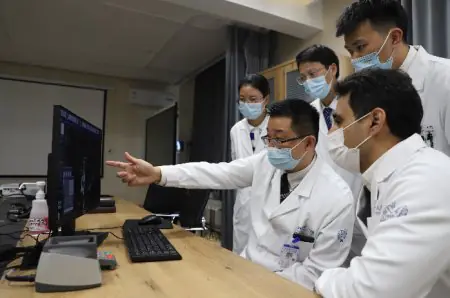
Hangzhou First People’s Hospital is a university-affiliated multispecialty hospital in China. It offers advanced care in ear, nose, and throat (ENT) medicine. Other key specialties include cardiology, gastroenterology, and pediatrics. The hospital treats children through a dedicated NICU and asthma center. It was established in 1923 and operates across 10 campuses with over 6,000 beds.
The ENT department manages more than 200,000 outpatients every year. Surgeons there perform over 3,000 operations annually. Its team has 20 years of experience in cochlear implants. They have helped over 1,000 children with hearing loss. The hospital holds Triple-A accreditation and FACS recognition. Its gastroenterology unit is a World Endoscopy Organization training base.
Specialists use 3D image navigation and Zeiss surgical microscopes. The hybrid operating room has advanced Siemens angiography equipment. Surgeons also use STORZ and XION high-definition surgical systems. The cardiothoracic department has completed nearly 10,000 difficult thoracic cases.


 The clinic is not accepting new requests
 Average answering time – 5 minutes


Hangzhou First People’s Hospital (HZFPH) is a university-affiliated hospital established in 1923. The institution is in Hangzhou, China, and is affiliated with the Westlake University School of Medicine. The hospital has 10 campuses and holds a Triple-A accreditation, the highest hospital classification in China.
HZFPH is a major medical hub with over 6,000 open beds. It treats about 200,000 outpatients every year. It is a national training base for residents in several medical specialties. Through its university ties, the hospital combines patient care with medical education and scientific research.
The ENT department is the flagship specialty of the hospital in Hangzhou. It has 53 dedicated inpatient beds and handles over 3,000 operations annually. The program has four sub-disciplines: otology, rhinology, laryngopharynx, and head and neck surgery.
Specialists focus on radical and small-incision surgery for complex conditions. The department has over 20 years of experience with cochlear implants. This program has helped rehabilitate more than 1,000 children with hearing loss. Several clinical centers in the department treat the following:
Nasal endoscopic surgery is one of the department’s main strengths. Surgeons use 3D image navigation to improve precision and safety. Surgeons often perform ear microsurgeries, such as tympanoplasty and mastoidectomy, to treat chronic ear disease.
The cardiovascular medicine department is a recognized training base for coronary intervention and pacing electrophysiology. It runs the Hangzhou ECG Consultation Center and partners with the Sino-US Joint Cardiovascular Specialty Remote Training Center. The hospital is an American Heart Association Professional Demonstration Center.
The cardiothoracic surgery service handles high-volume cases with 41 dedicated beds. The team has performed nearly 10,000 difficult thoracic surgeries. It runs specialized programs, including:
These centers focus on ERAS protocols, which help patients recover faster after major chest surgery. The cardiology team trains primary physicians across China.
The Gastroenterology Department is the Zhejiang Branch Center of the National Digestive Disease Research Center. Its endoscopy center is recognized as a World Endoscopy Organization ERCP training base. Specialists treat chronic gastritis, peptic ulcers, and early gastrointestinal cancers.
The department focuses on advanced endoscopic diagnosis and treatment. This includes ERCP, a technique used to treat bile and pancreatic duct problems. The center trains digestive endoscopists under the Chinese Medical Association.
The hospital uses advanced imaging and surgical platforms to support complex procedures. These tools help surgeons manage delicate anatomy and improve patient outcomes. The facility includes the following equipment:
The hospital has specialized diagnostic tools, such as neuroelectric monitors. These devices track nerve activity during surgery to help prevent accidental damage.
HZFPH offers specialized care for children through its Pediatrics Department. This unit has a dedicated emergency room and a neonatal intensive care unit (NICU). The child development and behavior clinic monitors growth over the long term. The children’s asthma and allergic disease center offers targeted diagnostics for respiratory health.
Cen Tanady
Victor Wu
 The clinic is not accepting new requests Average answering time – 5 minutes



