Doppler sonography (ultrasonography, duplex angioscanning) vessels in Herzquartier Mülheim (Kardiologische Gemeinschaftspraxis)
About the clinic
Doppler sonography at Herzquartier Mülheim in Mülheim an der Ruhr, Germany, evaluates blood flow velocity and vessel wall structure to identify stenosis and plaque buildup. This non-invasive diagnostic helps doctors assess arteriosclerosis risk and prevent cardiovascular events like strokes. The practice uses color-coded duplex angioscanning technology to provide precise, high-resolution vascular imaging.
Diagnostic Details and Technology
The clinic utilizes high-end ultrasound devices to perform these examinations during a standard outpatient cardiology visit. This method combines traditional ultrasound with Doppler technology to visualize blood flow and measure its speed through the arteries. The specialists at this facility are members of the German Society for Ultrasound in Medicine (DEGUM) and the European Society of Cardiology (ESC).
- Carotid Doppler ultrasound. This scan examines the neck arteries to detect plaques and assess stroke risk.
- Renal artery Doppler ultrasound. Doctors use this to evaluate narrowing in the renal arteries, which can cause high blood pressure.
- Abdominal aorta ultrasound. The examination checks for an abdominal aortic aneurysm by measuring the width of the main artery.
- Blood flow measurement. Color-coded technology identifies arterial narrowing at an early stage.
About the Clinic
Herzquartier Mülheim maintains formal partnerships with regional hospitals, including St. Marien Hospital Mülheim and Evangelisches Krankenhaus Mülheim. The practice also operates a dedicated telemedicine center for the remote monitoring of cardiac implants. In addition to the Mülheim location, the group has branches in Düsseldorf and Mönchengladbach. The medical team follows standards established by the German Society of Cardiology (DGK).
Patients can receive a comprehensive vascular risk assessment by combining these targeted Doppler exams in a single visit. To arrange a diagnostic appointment at this German cardiology center, you may leave a request on Bookimed.
Highlights
Get a free consultation


 The clinic is not accepting new requests
 Average answering time – 5 minutes
Clinic Doctors
How are we doing?
Herzquartier Mülheim (Kardiologische Gemeinschaftspraxis): more details about the clinic
Herzquartier is a private cardiology practice network in North Rhine–Westphalia, Germany. It operates branches in Mülheim an der Ruhr, Düsseldorf, and Mönchengladbach. The network is a specialized outpatient center for heart disease prevention and rhythm disorder diagnostics. The medical team includes board-certified specialists in internal medicine, cardiology, and emergency medicine.
Collaborations and Clinical Network
The practice maintains active cooperation with regional hospitals to ensure continuity of care. These partnerships connect outpatient diagnostics with hospital treatment when inpatient care is needed.
- St. Marien Hospital Mülheim an der Ruhr
- Evangelisches Krankenhaus Mülheim an der Ruhr
- Elisabeth-Krankenhaus Essen
- Städtische Kliniken Mönchengladbach
- Florence-Nightingale-Krankenhaus Düsseldorf
- Allgemeines Krankenhaus Viersen
Patient data is stored with encryption at a controlled external facility. Team members belong to the European Society of Cardiology and the Heart Failure Association.
Specialties and Cardiac Procedures
The clinic specializes in interventional cardiology and rhythm management. Specialists perform stent implantations to open blocked arteries. Around 99% of these procedures use wrist artery access. This reduces bleeding risk compared to traditional groin access.
The rhythm disorder unit treats conditions such as atrial fibrillation. Specialists use the following diagnostic and treatment methods:
- Electrical cardioversion to restore normal heart rhythm
- Electrophysiological investigations (EPU) to map electrical activity
- 3D-mapping for precise localization of rhythm disturbances
- Mobile ECG technologies including My Diagnostik and Zenicor systems
A dedicated telemedicine center in Mülheim monitors patients with cardiac implants. A device with a global SIM card lets doctors check pacemakers and defibrillators remotely from anywhere. The telemedical team reviews transmitted data every working day.
Cardiac Device Implantation
Herzquartier performs on-site implantations of devices for heart rate regulation and monitoring. This includes Cardiac Resynchronization Therapy (CRT) biventricular systems. The technology adds an electrode to stimulate the left ventricle, restoring heart synchronization in patients with chronic heart failure.
The surgical team also implants the following devices:
- Pacemakers for heart rate regulation
- Implantable cardioverter-defibrillators (ICD) for life-threatening arrhythmias
- Event recorders for long-term monitoring lasting up to 3 years
Preventive Cardiology and Lipidology
The network offers structured Herz-Check-up programs for early detection of heart disease. These programs combine physiological testing with vascular risk assessment. Specialized consultation hours cover lipidology, treating disorders like familial hypercholesterolemia and Lp(a) elevation.
Preventive screenings include programs for different patient needs:
- Cardio-check for general heart health
- Stroke-check for brain health and vascular risk
- Marathon-check for athletes and high-intensity trainers
- Vascular-check for peripheral artery health
Diagnostic Equipment and Technologies
The catheter laboratory uses FFR (pressure wire measurement). This determines if a vessel narrowing restricts blood flow to the heart muscle. For detailed imaging inside the coronary arteries, specialists use IVUS (intravascular ultrasound). This technology shows high-resolution views of vessel walls that standard X-rays might miss.
Advanced imaging and screening tools at the clinic include:
- Cardio-CT with contrast medium to visualize coronary anatomy
- Cardio-MRI to diagnose myocarditis and cardiomyopathies (heart muscle diseases)
- Stress echocardiography to detect blood-flow problems during physical exertion
- Spiroergometry to measure oxygen uptake and metabolic consumption
- SAS Polygraphy for home-based sleep apnea screening
Vascular assessments use carotid ultrasound to check for plaque buildup in neck arteries. The clinic also uses 12-channel rest and exercise ECG systems for standard cardiac evaluations.
International Patient Services
Herzquartier provides consultations in English and German. The telemedicine service is especially useful for international patients with implants. It offers worldwide connectivity, so remote follow-up care continues after patients return home. The team responds to inquiries and manages secure data transmission for patients traveling from abroad.
Additional services
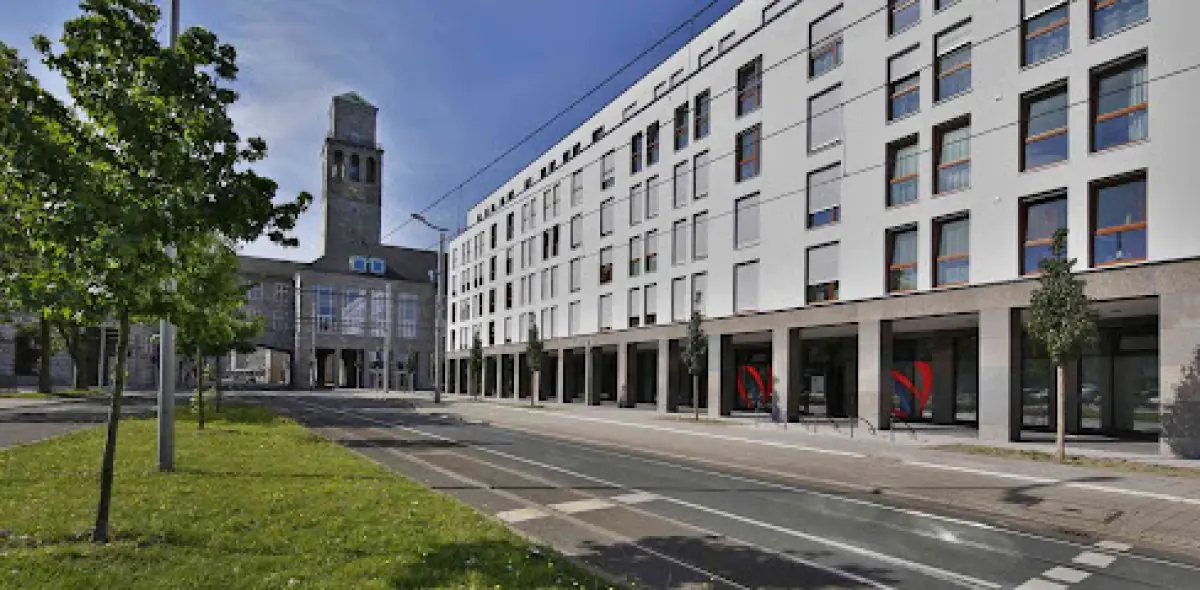
Friedrich-Ebert-Straße 57, 45468 Mülheim an der Ruhr

Get a free consultation
The clinic is not accepting new requests
Average answering time – 5 minutes
How it works:
- We find a medical coordinator familiar with the matter
- You get a personal offer with a step-by-step guide and the cost estimate
- We arrange your travel including appointment scheduling and flights booking
- You arrive at the hospital, we support you 24/7