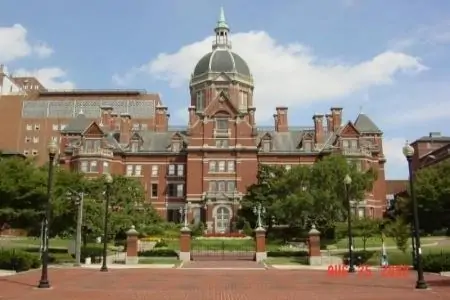
Johns Hopkins Medical Center (JHM) was founded in 1889. In 4 years after the foundation, the Hospital included the Johns Hopkins University School of Medicine. The Medical Center was named after the most powerful financier and philanthropist in Victorian Baltimore. His name was Johns Hopkins. The Hospital was the 1st medical school in the USA to admit women, rubber gloves during the surgery, and develop renal dialysis and CPR (cardiopulmonary resuscitation).
Johns Hopkins Hospital in Baltimore is considered as one of the most innovative centers in the USA due to providing new medical discoveries. The Hospital was the 1st one to discover restrictions of enzymes giving the birth to the genetic engineering industry and won the Nobel Prize for this contribution.
Johns Hopkins heart surgeons developed 3 poliovirus types and were the 1st to perform “blue baby” procedure, which affects the new heart surgical methods and techniques.
Johns Hopkins Medical Center is the place of neurosurgery, urology, endocrinology, pediatrics origin.
John Hopkins Hospital in Baltimore: statistics
|
over 125 years of healthcare providing
|
|
20 Nobel laureates
|
2.8 million outpatient visits annually
|
|
40,000 medical staff
|
360,000 emergency patients visits
|
Heart and Vascular Division
Heart and Vascular Institute consists of such centers:
- Cardiology
- Heart Surgery
- Vascular and Interventional Radiology
- Pediatric Cardiology
- Vascular Medicine
- Vascular Surgery and Endovascular Therapy.
Pediatric Cardiology and Heart Surgery Center provides comprehensive treatment for children of any age. The Center is a leader in advanced pediatric heart care in the world.
Johns Hopkins Department of Heart Transplantation was founded in 1983. Johns Hopkins Hospital is one of the top medical centers for heart care according to U.S. News and World Report ranking. Surgeons carry out over 20 heart transplantation procedures annually.
The Center cooperates with the United Network of Organ Sharing. Persons who need heart transplantation are on the UNOS waiting list. The waiting time for an organ depends on blood type, body size, length of time in the list and so on.
Heart surgeons at Johns Hopkins Medical Center prefer minimally invasive surgeries. This technique reduces the pain, shortens hospitals stay, fastens the recovery period.
Cardiologists provide treatment for children and adults. Heart surgeons perform:
- coronary artery bypass graft surgery
- valve replacements
- congenital cardiac repairs
- surgical ablation for atrial fibrillation
- minimally invasive robotic-assisted cardiac surgeries.
Surgeons providing vascular and endovascular therapies are famous all over the world. The Center for Vascular Surgery includes the Johns Hopkins Noninvasive Vascular Laboratory. It is the best lab in the USA according to the Intersocietal Commission accreditation. Specialists of the lab apply the accurate venous and arterial tests.
Johns Hopkins Gastroenterology and Hepatology Division
Gastroenterology and Hepatology Institute of Johns Hopkins Medical Center is #3 medical institution in the USA due to gastrointestinal surgery performing.
The Institute consists of 7 centers for bariatric, intestine, and pancreatic surgeries.
Digestive Weight Loss
Johns Hopkins gastroenterologists conduct balloon weight loss program for patients with nutrition problems. The gastric balloon procedure helps to reduce the amount of the eaten food and increase the sense of fullness for a longer time. Weight loss after the operation is rapid.
Patients have up to 15% of weight loss during the 6 months after the surgery. Persons who undergo the gastric balloon operation along with behavioral therapy have 29% of the weight loss. In comparison, patients who receive only behavioral treatment have 14% of balloon surgery results.
Specialists of the Center also offer gastric injection weight loss program, endoscopic sleeve gastroplasty, transoral gastric outlet reduction. Surgeons perform painless weight procedures injecting botulinum toxin (Botox®) into the stomach muscle. Patients keep the weight off during 3-6 month after the surgery.
Massage therapists, acupuncturists, psychotherapists, and nutritionists work in the Integrative Medicine Center. They develop individual treatment programs for patients with the chronic gastric diseases.
Charlotte R. Bloomberg Children’s Center
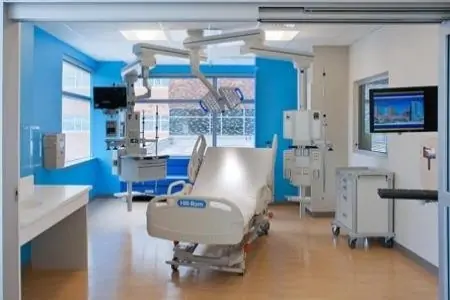
Johns Hopkins Hospital Medical Center includes the Charlotte R. Bloomberg Children’s Center for pediatric treatment. The Center was founded in 2012. Specialists treat cancer, heart, orthopedic diseases, neurologic conditions, visual impairments in the Center. Pediatric oncology treatment is one of the best in the USA due to effective therapies plans developing in the Center.
John Hopkins Children’s Center in figures
- 120 acute care rooms
- 85 intensive care rooms
- Top class pediatric trauma service
- Pediatric burn services
- 40,000 patients annually.



 The clinic is not accepting new requests
 Average answering time – 5 minutes





