
Last updated: Aug 21, 2026
Thailand, Bangkok
Knee Osteoarthritis Treatment in Mali Interdisciplinary Hospital
19
patients
chose clinic for Orthopedics Treatment
98% Patients
recommended this clinic
About the clinic
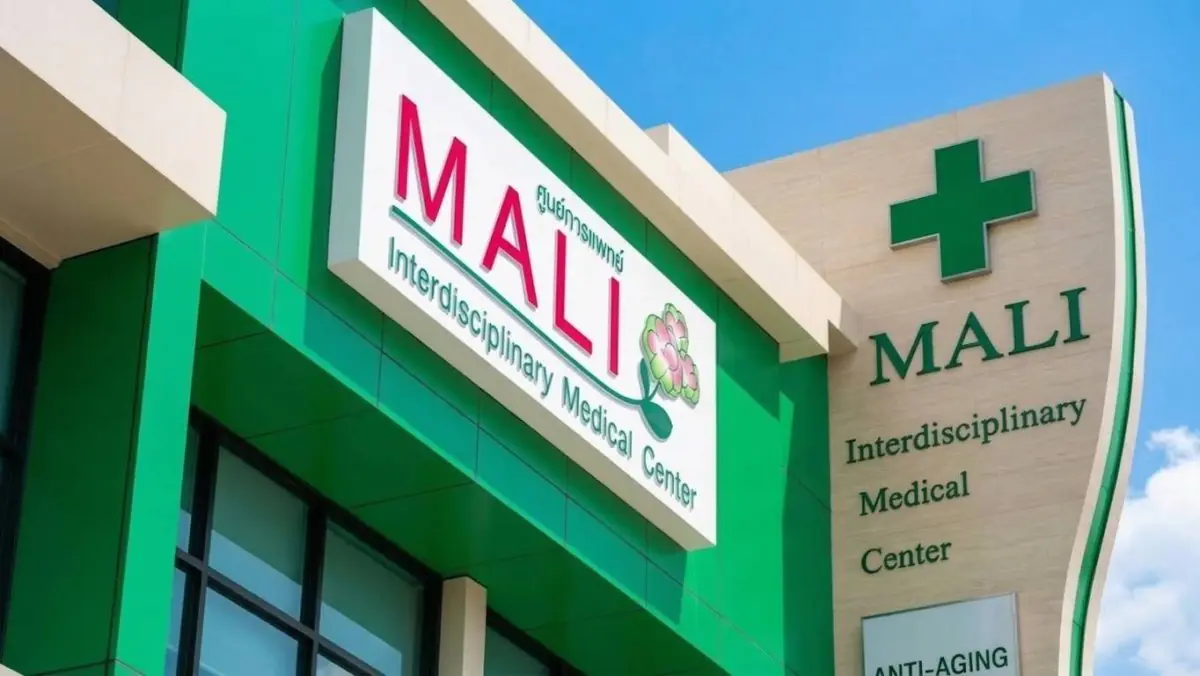
Knee osteoarthritis treatment at Mali Interdisciplinary Hospital in Bangkok, Thailand, combines regenerative medicine with precision surgical techniques. Diagnostics for evaluating joint health may cost around $30 for an X-ray, while a detailed MRI of one area typically runs $1,100. The hospital holds GHA and AACI accreditations and uses an integrative interdisciplinary approach to manage chronic joint pain.
Diagnostics for knee pain
The medical team uses specific imaging and laboratory screenings to determine the stage of osteoarthritis. These tests help identify bone marrow lesions or cartilage loss before choosing between regenerative therapy and surgery.
- Chest X-ray. Used for general health screening before procedures, costing around $30.
- Lab tests. Essential blood work for inflammation and health markers is around $130.
- MRI of one area. A detailed scan to view soft tissue and cartilage is around $1,100.
Regenerative and minimally invasive treatments
Mali Interdisciplinary Hospital focuses on biological repair to delay or avoid major surgery. These options use the body's own cells or specialized agents to support joint structure.
- MSC cell therapy. This involves an injection of 20 million mesenchymal stem cells directly into the joint to promote cartilage regeneration.
- Platelet-rich plasma (PRP) therapy. This treatment uses a specialized tube to concentrate platelets that stimulate tissue repair. It is available as a single injection, a bilateral session, or a course of three sessions.
- Subchondroplasty. A bone-forming agent is injected into subchondral bone marrow lesions to support the joint and reduce pain.
- Arthroscopic knee debridement. A minimally invasive washout procedure that removes loose bodies and debris to relieve mechanical symptoms.
Total knee replacement package
For advanced cases, the hospital provides a surgical joint arthroplasty. This procedure replaces the damaged joint with a prosthetic implant to restore mobility. The package at Mali Interdisciplinary Hospital is designed to cover the clinical needs for a safe recovery.
- Hospital stay. Includes 4 nights and 5 days in the hospital.
- Surgical fees. Covers the operating room, surgeon fees, and medical equipment.
- Physical therapy. Includes 5 physiotherapy sessions to start the rehabilitation process.
- Medications. Covers drugs used during the stay and medications to take home.
To learn more about joint restoration or to plan your visit, you may request a consultation through Bookimed.
Highlights
1994
Year of foundation
19 doctors
50000 patients per year
Get a free consultation

Mali Interdisciplinary Hospital

 Individual treatment program and cost estimate
 Average answering time – 5 minutes
Treatments prices in the clinic
Last price update – {{date}}. Prices may change depending on the medical case and the doctor's recommendations.
Orthopedics
| diagnostics | Price | |
|---|---|---|
| Lab tests | $130 | |
| 25-Hydroxy Vitamin D Test | $20 | |
| MRI of one area | $1060 | |
| Chest X-Ray | $30 |
| treatment | Price | |
|---|---|---|
| Total Knee Replacement (Arthroplasty) | $7930 | |
| Knee replacement | Price on request | |
| Knee Arthroscopy | Price on request | |
| Arthroplastic of Achilles tendons | Price on request | |
| Unilateral knee arthroplasty | Price on request | |
| Arthroscopic meniscus repair | Price on request |
Clinic Doctors
How are we doing?
1 of
3
Information about this clinic is full and clear
1
2
3
4
5
Strongly disagree
Strongly agree
Licences
hospital accreditations of quality
Global Healthcare Accreditation Program
US,
Global Healthcare Accreditation Program certificate for Mali Interdisciplinary Hospital
American Accreditation Commission International
US,
American Accreditation Commission International certificate for Mali Interdisciplinary Hospital
Mali Interdisciplinary Hospital: more details about the clinic
Thailand, Bangkok
Mali Interdisciplinary Hospital is a private medical center in Bangkok. It opened in 1994 and provides care across 14 specialized departments. The facility blends conventional medicine with regenerative and precision medicine to manage chronic conditions.
Key Facts and Achievements
The hospital treats 50,000 patients every year. It holds AACI accreditation, which confirms adherence to international standards for clinical excellence and safety. The center also follows Global Health Accreditation (GHA) guidelines.
The clinical team includes 19 doctors working in a 33-bed facility. The hospital has two emergency rooms and a gastro-colonoscopic unit. Care is delivered in a restorative environment designed for physical and mental comfort.
Regenerative and Precision Medicine
The hospital uses regenerative medicine to support tissue repair without surgery. This approach restores function through biological means. Precision medicine is also used to prevent and manage chronic non-communicable diseases.
Autologous stem cell therapy is a core service. Stem cells are extracted from the patient's own adipose (fat) tissue. These cells are cultured in the hospital's on-site laboratory for 30 days before use.
Safety protocols include screening stem cells for the following infections:
- HIV and Syphilis (VDRL)
- Hepatitis B and Hepatitis C
- Cytomegalovirus (CMV)
- Herpes Simplex Virus (HSV) types 1 and 2
The medical team provides ongoing monitoring after every stem cell treatment.
Orthopedic and Spinal Care
The orthopedic department treats joint and tendon conditions using both surgical and biological methods. Specialists provide Platelet-Rich Plasma (PRP) injections for joint treatment. They also offer Subchondroplasty – injecting bone-forming agents into damaged areas.
For Achilles tendon issues, surgeons perform Haglund's deformity correction. They use endoscopic techniques through small incisions to reduce pain. If damage is extensive, they perform open bone removal with tendon reattachment.
Spinal procedures include Nucleoplasty, which uses sound waves to repair intervertebral discs. This can be performed with or without general anesthesia. The hospital also provides Vertebroplasty to treat bone collapses caused by osteoporosis.
Specialized Surgical Procedures
General and plastic surgery departments perform minimally invasive and corrective operations. The surgical team uses laparoscopic (small-incision) techniques for conditions listed below:
- Laparoscopic hernia repair (two-night hospital stay)
- Laparoscopic gallbladder removal (cholecystectomy)
- Laparoscopic hysterectomy and ovarian cyst removal
- Gender reassignment surgery using intestinal reconstruction or graft techniques
- Rhinoplasty and breast augmentation
Recovery after hernia surgery typically lasts 1–2 weeks, depending on the patient's condition.
Diagnostic Technologies
The hospital uses Low Dose CT scans for lung cancer screening. This technology reduces radiation exposure while maintaining high image quality. Bone health is assessed using DEXA scans to measure density in individual spinal joints.
Other diagnostic capabilities include:
- Carotid artery (CIMT) examinations to assess stroke risk
- MRI and ultrasound for detailed soft tissue imaging
- Gastrointestinal endoscopy and colonoscopy
- Telomere length analysis to determine biological body age
Patients must provide MRI or ultrasound reports before their initial specialist consultation. CT examinations include the delivery of results on a CD.
International Patient Services
The hospital provides online consultations with neurosurgeons and orthopedic surgeons by appointment. Medical files can be sent digitally in JPG or ZIP formats. The center accepts international patients and offers airport transfer services and local transportation.
Support staff assist in English, Arabic, and Chinese. For patients requiring extended recovery, the hospital offers specialized rehabilitation packages. These often include physical therapy sessions and multi-night stays in private rooms.
Additional services
Language assistance
Available
free
Accommodation
Hotel (apartments) near the clinic, billed daily
Patient reviews
1 star
0%
2 stars
0%
3 stars
0%
4 stars
0%
5 stars
100%
Mali Interdisciplinary Hospital overall rate includes
Doctor
Staff
Facilities
Language assistance
Anonymous • Inguinal hernia surgery United Kingdom
Aug 21, 2026
Verified review.
From the very first contact to the complimentary transport after my treatment, the service was first class
If you are thinking about this surgery, my main piece of advice is to bring someone with you. The staff were all busy, and while having a private room was good, it could have become very lonely if I hadn’t brought my friend to stay. The hospital staff made her very welcome and the accommodation provided for her was comfortable. My surgeon was thorough. He clearly explained the mesh options for the laparoscopic repair and also personally checked on me after the procedure. I'm still in early recovery, but I'm feeling better than expected. It was also good that there were no additional expenses on top of the price I paid.
QG42+GPJ, Wat Bowon Niwet, Phra Nakhon, Bangkok 10200, Thailand

Get a free consultation
Mali Interdisciplinary Hospital
Individual treatment program and cost estimate
Average answering time – 5 minutes
How it works:
- We find a medical coordinator familiar with the matter
- You get a personal offer with a step-by-step guide and the cost estimate
- We arrange your travel including appointment scheduling and flights booking
- You arrive at the hospital, we support you 24/7