Tatiana Kovaleva • Female check-up


Last updated: Aug 26, 2019
Cataract Treatment in Medical Diagnostic and Treatment Center
About the clinic
Cataract care at Medical Diagnostic and Treatment Center (Hila) in Vilnius, Lithuania, includes eye tests, surgery, and laser aftercare. The JCI-accredited center focuses on one-day procedures, including phacoemulsification, which takes about 15 minutes. Dr. Paulius Rudalevičius has over 20 years of experience and 12,000+ eye surgeries.
Eye tests for cataract assessment
The ophthalmology team can assess vision, the lens, and eye health using these tests:
- Complex eye examination: A full clinical assessment of the eyes.
- Eye fundus examination: A check of the back of the eye.
- Visual acuity test: Measures how clearly a person sees.
- Intraocular pressure measurement: Checks pressure inside the eye.
- OCT: Optical coherence tomography creates detailed images of eye structures.
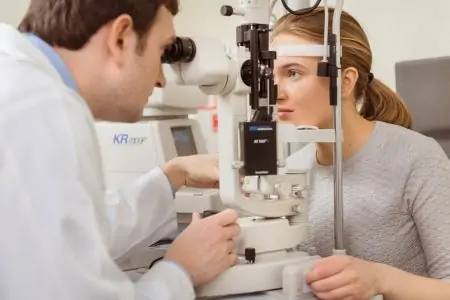
- Biomicroscopy: Examines the eye using a special microscope.
- Refraction exam: Measures how the eye focuses light.
Cataract surgery and lens options
- Phacoemulsification: An ultrasound probe breaks up the cloudy lens through a small incision. The surgeon replaces it with an intraocular lens. The procedure takes about 15 minutes and is offered as one-day surgery.
- Intraocular lens implantation: Options include monofocal, bifocal, toric, and premium multifocal lenses. Toric lenses can correct astigmatism, while lens choice can address distance or near vision.
- Manual small incision surgery: Dr. Rudalevičius also performs this cataract surgery, including in children.
- Paediatric cataract surgery: The ophthalmology team treats congenital cataracts in children.
- YAG laser capsulotomy: A YAG laser clears clouding of the capsule that may develop after cataract surgery.
Dr. Rudalevičius holds a PhD on multifocal lens implantation and the FEBO degree from the European Board of Ophthalmology. He trained at Massachusetts Eye and Ear Infirmary, part of Harvard’s ophthalmology department.
Dr. Aidas Kirtiklis helped introduce phacoemulsification in Lithuania and performs 1,000+ cataract surgeries yearly. Dr. Vaidas Kilius performs cataract surgery with single-focus, multifocal, and toric lenses. Dr. Ausrine Misevice treats cataracts in adults and children.
One-day care at the JCI-accredited center
The center performs 2,500+ surgeries per year and reports 0% post-surgical infections over the last 5 years. After surgery, patients may stay in a single or double family ward. Patients can leave a request on Bookimed to ask about a cataract consultation.
Highlights
Get a free consultation
Accepted payment methods
View more information
Treatments prices in the clinic
How are we doing?

hospital accreditations of quality


Medical Diagnostic and Treatment Center: more details about the clinic
180 doctors
53 medical specialties
22 years of practice
48,000 patients per year
The Center cooperates with 200 international and Lithuanian medical institutions. Medical Diagnostic and Treatment Center works with one of laboratories in Germany. If some tests for the patients are not affordable in Lithuania, they do it in Germany.
The Center has accreditations that approve the quality and safety of medical services. Among them are JCI (Joint Commission International, the USA) and Treatment Abroad Code of Practice (the United Kingdom).
The Center provides:
Diagnostics
300,000 examinations
600 types of tests
5 laboratories
over 250,000 laboratory examinations every year
Specialists provide health check-ups to forecast a disease in the early stages. It helps to prevent spreading and complicating of a disease. Health examinations at the Medical Diagnostics and Treatment Center last for 1 day. Specialists perform tests in several hours.
Health check-up divides into examination programs:
- Minimum check-up includes therapeutic consultation, blood analysis, urinalysis, glucose and cholesterol tests.
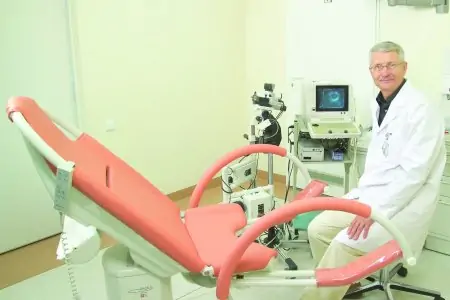
- Medium general health check-up consists of therapeutic, ophthalmological and gynecologic (for women) tests. The medium general diagnostic program differs according to the age of a patient.
- Extensive general health examination program;
- Preventive examination programs of particular organs or organ systems.
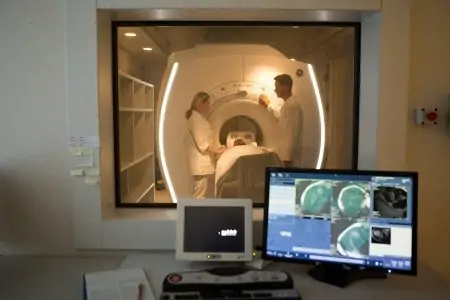
Doctors at Medical Diagnostics and Treatment Center offer instrumental diagnostics. Among them mammography, endoscopy, magnetic resonance imaging (MRT) and so on. Specialists use this type of examination to define specific kind of diseases.
Experts of the Center provide lab tests in 5 laboratories. It helps to get the most accurate results in the shortest time. Laboratories work under the control of LABQUALITY (Finland) — one of the best external and internal quality systems in Europe.
Surgery
2,500 surgeries per year
0% of infections after the surgeries for last 5 years
100 types of surgeries
Surgeons of Medical Diagnostics and Treatment Center perform:
- traditional open operations;
- conservative;
- minimally invasive surgeries.
Getting the results of diagnostics, a physician develops operating and rehabilitation plans.
Doctors specialize in 1-day operations. They focus on endoscopic, laparoscopic, arthroscopic (for joints treatment) and laser surgeries. These types of surgical interventions help a patient to avoid risks and complications.
After the surgery, a patient has hospitalization in single or double family wards.
Rehabilitation
Physiotherapists apply therapy with natural and simultaneous nature factors. They use light, water, warmth, and other components. This kind of treatment has no adverse effects. During physiotherapy, a patient feels relaxed and in comfort.
Specialists provide treatment for patients of different ages. Rehabilitation programs help patients:
- to recover from trauma and disease;
- to improve the activity of internal organ systems (cardiovascular, muscles, etc.);
- to reinstate their health.
Additional services
Requirements for admission
FAQ
What treatments do patients most often ask for?
Patients choose Medical Diagnostic and Treatment Center most frequently to treat the following conditions: Ophthalmology, Gastroenterology, Oncology, Orthopedics, Neurosurgery, Cardiology, Obstetrics and Gynecology.
What procedures do patients have most often?
The most common procedures in the hospital are: LASIK eye surgery, Laser eye surgery.
Patient reviews
View 26 reviewsNattaliia Ianenko • Consultation immunologist
Татьяна • Parkinson's disease
Anonymous • Epilepsy
Галина • Scoliosis
V. Grybo g. 32a, Vilnius 10318, Lietuva

Get a free consultation
How it works:
- We find a medical coordinator familiar with the matter
- You get a personal offer with a step-by-step guide and the cost estimate
- We arrange your travel including appointment scheduling and flights booking
- You arrive at the hospital, we support you 24/7