Turkey, Adana
Lung cancer Treatment in Prof. Dr. Alper Fındıkçıoğlu
About the clinic
Lung cancer treatment at the Prof. Dr. Alper Fındıkçıoğlu Thoracic Surgery Practice in Adana, Turkey, focuses on advanced surgical techniques and precise diagnostics. Prof. Dr. Alper Fındıkçıoğlu leads the department with over 20 years of experience in thoracic surgery and holds a professorship attained in 2022. The clinic operates within Acıbadem Adana Hospital, providing patients with access to modern imaging and specialized care for complex pulmonary cases.
Advanced diagnostics for lung cancer
The clinic uses precise staging methods to determine the exact spread of the disease. These tools help the surgical team plan the most effective intervention. Diagnostic options include:
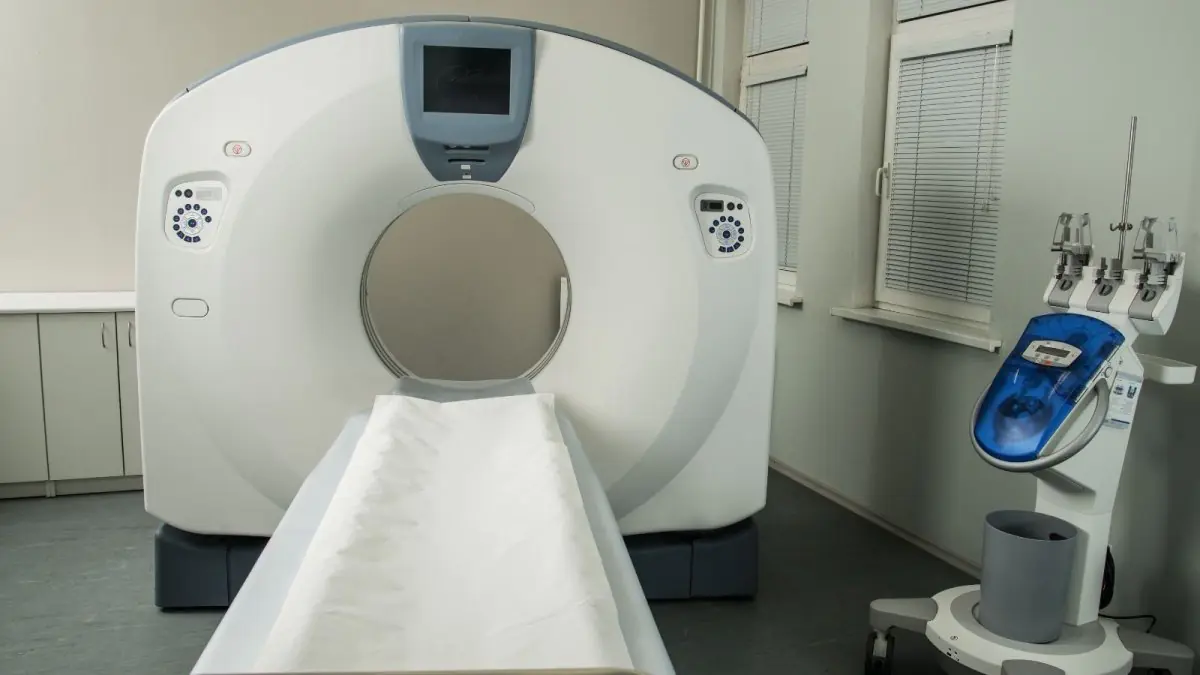
- Low-dose CT scan. This imaging tool helps detect small nodules while reducing radiation exposure.
- PET-CT scan. This scan identifies active tumor cells and checks for metastasis.
- Bronchoscopy. A camera is used to look inside the airways to find abnormalities.
- EBUS-guided biopsy. This outpatient procedure uses ultrasound to guide a needle for tissue sampling.
Surgical treatment options
Prof. Dr. Alper Fındıkçıoğlu specializes in both traditional and minimally invasive lung resections. The choice of surgery depends on the tumor location and the patient's lung function. The surgical team performs the following procedures:
- Video-assisted thoracoscopic surgery (VATS). This minimally invasive method uses a camera and small incisions. It reduces pain and typically requires 3 to 5 days in the hospital.
- Single-port thoracoscopic surgery. This technique uses only one incision, making it even less invasive than standard VATS.
- Lobectomy. The surgeon removes the specific lung lobe where the tumor is located. This procedure usually involves a 3 to 6-day hospital stay.
- Pneumonectomy. This surgery removes an entire lung and is reserved for centrally located tumors.
- Segmentectomy and wedge resection. These procedures remove smaller portions of the lung to preserve as much healthy tissue as possible.
Expertise of Prof. Dr. Alper Fındıkçıoğlu
Prof. Dr. Alper Fındıkçıoğlu graduated from the Istanbul University Faculty of Medicine and has dedicated over 20 years to thoracic surgery. He is known for his work in minimally invasive techniques, such as VATS, which help patients recover faster. The practice supports international patients by providing medical services in English, German, Arabic, and Russian. Patients receive care at Acıbadem Adana Hospital, which provides a high-standard clinical environment for recovery. To learn more about your treatment options, you can request a consultation through Bookimed.
Highlights
2024
Year of foundation
3 doctors
Get a free consultation

Prof. Dr. Alper Fındıkçıoğlu

 The clinic is not accepting new requests
Submit your request to get the best option in Turkey
 Average answering time – 5 minutes
Clinic Doctors
How are we doing?
1 of
3
Information about this clinic is full and clear
1
2
3
4
5
Strongly disagree
Strongly agree
Prof. Dr. Alper Fındıkçıoğlu: more details about the clinic
Turkey, Adana
Prof. Dr. Alper Fındıkçıoğlu is a private thoracic surgery practice established in 2024. The clinic is located within Acibadem Adana Hospital in the Seyhan district of Adana, Türkiye. It operates as a single-department facility focused on surgical care for chest and lung diseases.
Academic Background and Expertise
The practice is led by Prof. Dr. Alper Fındıkçıoğlu, a thoracic surgery specialist. He earned his medical degree at Istanbul University Faculty of Medicine. He then completed his residency at the Istanbul Dr. Siyami Ersek Thoracic and Cardiovascular Surgery Clinic.
Dr. Fındıkçıoğlu has participated in numerous scientific projects. His research covers several key areas of thoracic care:
- Malignant pleural effusions (fluid buildup around the lungs)
- Video-assisted thoracic surgery (VATS) techniques
- Patient comfort and pain management after thoracotomy
- Cost-effectiveness analyses in thoracic procedures
- Immunological markers in non-small cell lung carcinomas
He became an Associate Professor in 2014 and a full Professor in 2022. The medical team includes three specialized doctors.
Thoracic Surgery and Lung Cancer Care
The clinic focuses on diagnosing and surgically treating diseases of the lungs, pleura, and chest wall. Treatment plans are tailored to the disease stage and the patient's health. The surgical team performs several types of lung resections:
- Lobectomy – removing the lung lobe containing the tumor and surrounding lymph nodes.
- Pneumonectomy – surgical removal of an entire lung, often needed for centrally located tumors.
- Wedge Resection – removing a small, wedge-shaped portion of diseased lung tissue.
- Segmentectomy – removal of a specific anatomical segment of a lung lobe.
For esophageal cancer, the clinic performs esophagectomy to remove the cancerous segment. Surgeons then restore digestive continuity by creating a gastric tube from the stomach using special stapling devices.
Minimally Invasive Techniques
Specialists prioritize minimally invasive methods to reduce pain and speed recovery. They use Video-Assisted Thoracic Surgery (VATS) and robot-assisted techniques for lung and mediastinal operations. VATS uses a camera with angled lenses and small incisions instead of a large chest opening.
The clinic also treats non-cancerous conditions. Endoscopic Thoracic Sympathectomy (ETS) addresses excessive sweating (hyperhidrosis). This procedure is done through a small underarm incision under general anesthesia. Most ETS patients go home the evening of surgery.
Zenker's diverticulum (a pouch in the esophagus) is treated using two approaches:
- Endoscopic Diverticulostomy – a mouth-based procedure using lasers or staplers with no neck incision.
- Transcervical Approach – open surgery through the neck that includes a cricopharyngeal myotomy.
The endoscopic approach typically allows for shorter recovery and discharge the next day.
Diagnostic and Rehabilitation Technologies
The clinic uses advanced diagnostic tools to map diseases and plan surgeries. PET-CT and contrast-enhanced CT scans show tumor size and spread. Pulmonary function tests help predict if a patient can safely live with one lung. Tissue sampling is done through EBUS (endobronchial ultrasound-guided biopsy) and bronchoscopy.
Postoperative recovery follows a structured rehabilitation pathway. Patients use Triflow (blowing balls) devices for breathing exercises to help the lung re-expand properly. After minimally invasive thoracic surgery, the average hospital stay is 3 to 5 days. Patients spend one night in a close monitoring room before moving to the ward.
Services for International Patients
International patients receive clinical information in English to help them understand their options. The clinic offers a WhatsApp contact channel for quick coordination of medical inquiries. Prof. Dr. Alper Fındıkçıoğlu communicates in English, German, Arabic, and Russian. Rapid coordination services help international patients manage their diagnosis and surgical timelines.
Additional services
Language assistance
Available
free
Accommodation
Hotel (apartments) near the clinic, billed daily
Patient reviews
10 Google
reviews
Faruk gamlı
Sep 10, 2026
The service quality is very good, and the doctor’s care and experience are spot on. I would also like to thank Professor Dr. Selçuk Sizmaz in particular... Associate Professor Dr. Ömer Faruk Gamlı.
gülay daş
Sep 5, 2026
We left to meet again based on the information and recommendations our doctor provided, thanks to the staff’s friendly welcome, their guiding us to the relevant department, the ease of the registration process, our transition to the examination, and the way the admitting staff explained things to our patient about the treatment. I cannot ignore the hospital’s cleanliness and I wish that the continuity and its services continue in the same way.
Demet Erdoğan
Sep 5, 2026
From the very first day; the staff’s attention, their careful approach, their polite attitude toward the patient, the timing of well-trained staff, and the follow-up process were all very good.
The doctors’ experience and the confidence they gave the patient were exceptionally good.
Aydın Sönmez
Sep 5, 2026
First of all, I would like to thank my very kind doctors, Dr. UMUT Dişel, Ms. Neslihan, Ms. Gülşah, Ms. Bihter, and the other nurse staff whose name I can’t remember right now, from the bottom of my heart.
Mehmet Tiryaki
Sep 5, 2026
It was truly a great chance for us that our paths crossed with Assoc. Prof. Dr. Ertuğrul Emre Güntürk during my father’s treatment process.
In a situation that the physicians we had consulted previously evaluated as quite difficult and negative, Ertuğrul Hocamız gave us confidence both with his knowledge and experience and with his self-assured approach. Intervening successfully and opening the vein that was said to be difficult increased the respect we have for his professional experience and medical practice even more.
However, what makes him different in our eyes is not only his professional success. He is a highly valuable physician who understands the psychology of patients and their relatives extremely well, who reassures the person in front of him even in the hardest moments, and who explains the process in a clear and calm manner. As a patient relative, I know how difficult it is to wait in uncertainty. In such moments, the physician’s few words, his approach, and the confidence he gives carry enormous meaning. Ertuğrul Hocamız made us feel this far beyond enough.
For the effort, dedication, and successful intervention he demonstrated in helping my father regain his health, there are never enough words of thanks we can offer him on behalf of our family.
Being a good doctor requires great knowledge and experience; combining that with an approach that understands people, instills trust, and is conscientious is far more valuable. Assoc. Prof. Dr. Ertuğrul Emre Güntürk is, for us, a physician who carries all of these qualities.
Our country always needs doctors as valuable as him. We would like to offer our infinite thanks and our respect to him once again.
müge köstem
Sep 1, 2026
I was very pleased with all the services I received at Acıbadem Adana Hospital, from Radiology to Radiotherapy and even General Surgery. They quickly identified my problem and took me to a solution.
gözde boyacı
Sep 1, 2026
I would like to express my infinite gratitude to the price and authorization officer, Ms. Nilay Akcıl, who understood the anxiety and fear I experienced before my appendicitis surgery and persuaded me to undergo the operation, and who made the process easier with her patience, sincerity, and friendly smile. I offer my thanks to her and your institution not only for administrative matters, but also because, with her human approach, she was there for me and made it possible for me to regain my health.
bayram aydın
Sep 1, 2026
We took my mother to Dr. Selçuk Sızmaz, the eye doctor at ADANA Acıbadem Hospital. I would like to thank him very much for his professionalism and humanity.
Kadriye Dündar
Sep 13, 2026
Serpil ateş
Sep 12, 2026
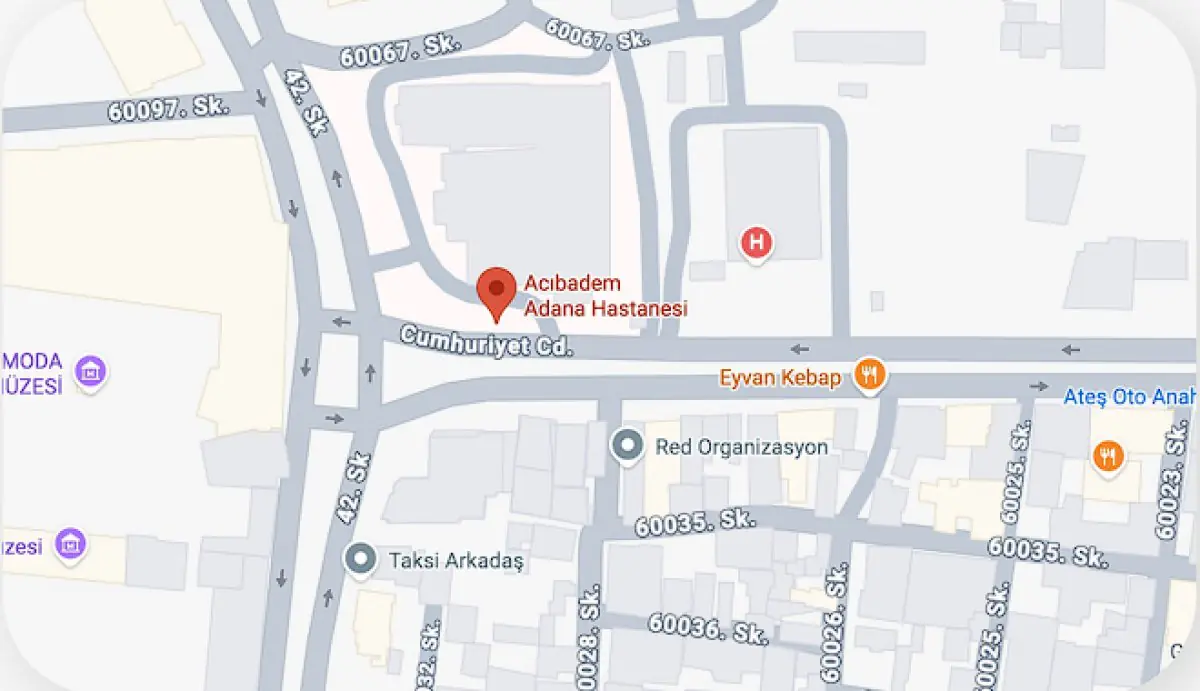
Acibadem Adana Hospital Döşeme, Cumhuriyet Cd. No:66, Seyhan/Adana, Türkiye

updated 10/3/2026
Get a free consultation
Prof. Dr. Alper Fındıkçıoğlu
The clinic is not accepting new requests
Submit your request to get the best option in Turkey
Average answering time – 5 minutes
How it works:
- We find a medical coordinator familiar with the matter
- You get a personal offer with a step-by-step guide and the cost estimate
- We arrange your travel including appointment scheduling and flights booking
- You arrive at the hospital, we support you 24/7