Elaph Ahmed


Endometriosis Treatment in Riyadh Fertility Center
About the clinic
Endometriosis care at Riyadh Fertility Center in Giza, Egypt, includes imaging, medication, surgery, and fertility treatment. Prof. Dr. Hesham Al-Shaer, a fertility and assisted reproduction specialist, has over 20 years of experience.
The clinic has a dedicated laparoscopic surgery unit for endometriosis and pelvic adhesions. Its listed accreditations include ESHRE and three ISO standards: quality management, public safety, and environmental management. The center also reports 30,000+ successful ICSI procedures.
Endometriosis tests, including laparoscopy
Tests help assess endometriosis, pelvic structures, hormones, and fertility factors. Diagnostic options include:
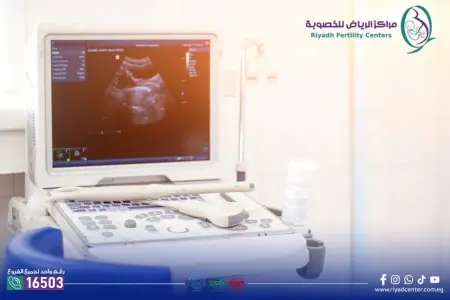
- Pelvic ultrasound: Imaging to assess pelvic organs.
- CT scan of the pelvis: Imaging of pelvic structures.
- Diagnostic laparoscopy: A minimally invasive procedure described by the clinic as its most accurate diagnostic method.
- Hysteroscopy: An endoscope passes through the vagina and cervix to examine the uterine cavity.
- Hormone analysis: Tests cover FSH, LH, estrogen, progesterone, prolactin, and thyroid function.
- Seminal fluid analysis: A test used in the male fertility workup.
Treatment options, from Mirena to ICSI
- Laparoscopic surgery for endometriosis: A laparoscope with a 40× imaging lens passes through small incisions, usually 0.5–1.5 cm. The surgeon may remove an endometrioma while preserving the ovaries, cauterize endometrial spots, or separate adhesions around the ovaries and fallopian tubes. The specific plan follows examination and staging. Patients may move within hours, and same-day discharge is possible. If pregnancy does not occur naturally, medication may be prescribed before ICSI.
- Hormonal and medical therapy: Options include ibuprofen or naproxen, combined estrogen-progestin contraceptives, progestins such as norethindrone, GnRH medicines such as Leuprolide or Goserelin, aromatase inhibitors, and the Mirena hormonal IUD. These treatments can reduce pain, bleeding, and tissue growth, but do not permanently remove ectopic tissue.
- Hysteroscopy: Under anesthesia, this procedure can diagnose and treat lesions inside the uterine cavity. It may also remove uterine adhesions and polyps without an abdominal incision.
- ICSI: This option may be considered for endometriosis-related infertility when pregnancy does not occur after laparoscopy. The clinic reports a 60–70% success rate. The protocol includes 1–2 weeks of ovarian stimulation, egg retrieval 34–47 hours after maturation, sperm injection, embryo transfer after 3–4 days, and a 14-day wait.
Patients can request a consultation through Bookimed to discuss which diagnostic or treatment options may fit their situation.
Highlights
Get a free consultation
Treatments prices in the clinic
Clinic Doctors
Fertility specialist
Gynecologist
Reproductive endocrinologist
How are we doing?

hospital accreditation of quality

Riyadh Fertility Center: more details about the clinic
Riyadh Fertility Center is a specialized medical facility in Giza, Egypt, focusing on reproductive health and assisted reproduction. The center operates multiple branches – a primary office in Mohandessin and locations in Nasr City, Luxor, and Aswan. It treats delayed childbearing and infertility through advanced medical and surgical approaches.
Accreditations and Achievements
The center holds ESHRE accreditation from the European Society of Human Reproduction and Embryology. It maintains multiple ISO certifications for quality management, public safety, and environmental management. The clinic has performed over 30,000 successful ICSI procedures for couples facing fertility challenges.
Reproductology and Assisted Reproduction
The reproductology department provides complete care for couples, from initial evaluation to pregnancy monitoring. Specialists manage complex cases such as recurrent miscarriage – two or more consecutive pregnancy losses. A team of over 60 doctors supports patients through every stage of treatment.
Assisted reproduction services include several primary methods:
- IntraCytoplasmic Sperm Injection (ICSI): A single healthy sperm is injected directly into the egg using a fine glass needle.
- In Vitro Fertilization (IVF): A five-step process including oocyte monitoring, retrieval, and laboratory fertilization.
- Embryo Genetic Testing: Screening protocols to check embryo health before transfer to the uterus.
- Gender Selection: An advanced ICSI application with a clinic-reported 99% success rate.
Specialists also provide pregnancy follow-up across all three trimesters. This includes regular examinations and fetal safety tests to monitor healthy development.
Gynecology and Endoscopic Surgery
The center operates a dedicated Laparoscopic Surgery Unit for conditions that affect fertility. Surgeons use small-incision techniques to diagnose and treat pelvic adhesions, tubal blockages, and endometriosis. These procedures avoid large abdominal openings, so patients typically recover faster.
The surgical team treats various uterine and ovarian conditions:
- Uterine Fibroids: Managed through hysteroscopy for internal fibroids or laparoscopy for larger external growths.
- Ovarian Cysts: Including "chocolate cysts" related to endometriosis and dermoid cysts.
- Polycystic Ovaries: Treated via laparoscopic ovarian perforation or medication to restore hormonal balance.
For small fibroids that don't interfere with pregnancy, doctors may recommend medication instead of surgery.
Andrology and Male Fertility
Male factor infertility is addressed through a specialized andrology laboratory under direct medical supervision. Specialists evaluate sperm quality by analyzing movement, count, and shape. When sperm is absent in semen, the team performs testicular sampling to retrieve viable cells for fertilization.
Varicocele treatment uses a surgical microscope. This high-magnification tool lets andrologists connect veins precisely while protecting the main testicular artery. The approach helps prevent testicular atrophy and stops varicose reflux.
Specialized Medical Team
The medical board is led by Dr. Hesham Al-Shaer, a Professor at Cairo University with over 20 years of experience. He is a member of the European Society of Fertility and Infertility and specializes in ICSI and delayed childbearing. Senior consultants in gynecology and andrology collaborate on individualized treatment plans.
Services for International Patients
Riyadh Fertility Center provides an online clinic service for patients living outside Egypt. International couples can receive consultations and treatment planning before traveling. The center supports patient journeys across branches in Sohag, Assiut, Qena, and Tanta.
FAQ
What treatments do patients most often ask for?
Patients choose Riyadh Fertility Center most frequently to treat the following conditions: Obstetrics and Gynecology.
What procedures do patients have most often?
The most common procedures in the hospital are: Pregnancy follow-up, Exosome Therapy for Vaginal Rejuvenation, Myomectomy (removal of uterine fibroids), Ovarian Cyst Removal, Laparoscopic ovarian cystectomy, Laparoscopic myomectomy, Hysteroscopic myomectomy, Laparoscopic surgery for endometriosis.
Patient reviews
RyanHesham Mohamed
Alaa Yosri
ABDELRAHMAN SABER
mmstr21 mmstr
Yousef Mohamed
omar youssef
Aliaa Taha
رودي رودي
الحاج حماده ابوالسيد احمد
50 Geziret El Arab Street, Mohandessin, Giza, Egypt, 11225

Get a free consultation
How it works:
- We find a medical coordinator familiar with the matter
- You get a personal offer with a step-by-step guide and the cost estimate
- We arrange your travel including appointment scheduling and flights booking
- You arrive at the hospital, we support you 24/7