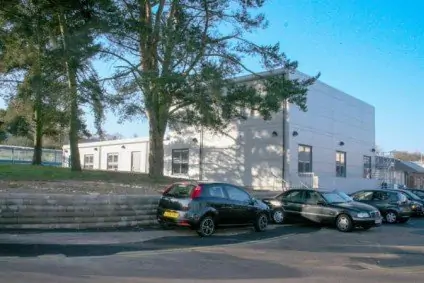
Injuries of bones and joints are assessed and treated at Royal National Orthopaedic Hospital NHS Trust in Stanmore, London. The hospital also has an outpatient centre in central London, holds a CQC rating of “Good” from 2019, and is a founder member of the National Orthopaedic Alliance.
Diagnostic tests at Stanmore
Imaging, nerve tests, and tissue analysis help assess bone, joint, and soft-tissue injuries.
- Imaging: MRI, CT, ultrasound, fluoroscopy, X-ray, nuclear medicine scans, and DXA bone density scans.
- Biopsy and tissue testing: CT-guided biopsy, histopathology, and molecular testing of bone and soft tissue.
- Nerve and pressure tests: Nerve conduction studies, EMG, and upper- or lower-limb compartment pressure testing.
- Intra-operative monitoring: Neurophysiological monitoring during surgery.
Surgery and rehabilitation, including the Precice Nail
Options include minimally invasive procedures, joint reconstruction, fracture care, and rehabilitation.
- Two-stage cartilage transplantation: For knee cartilage damage in younger, active patients. Surgeons harvest cartilage arthroscopically, culture cells for 4–6 weeks, then implant them through open surgery. The hospital has performed 1,500+ cases. Rehabilitation may take up to 12 months before full activity.
- Knee arthroscopy: Keyhole diagnosis and treatment for sports injuries, meniscal tears, accidents, and arthritis. Procedures include meniscal repair.
- Ligament repair and reconstruction: Surgery for knee ligament injuries and instability, including patellar realignment.
- Limb reconstruction: Lengthening and deformity correction for non-union fractures, bone infection, and other deformities. Fixation options include Ilizarov frames, LRS, Taylor Spatial Frames, and the Precice Nail. RNOH was the first UK centre to use the Precice Nail.
- Joint replacement: Primary and revision surgery for hip, knee, ankle, shoulder, and elbow joints. Options include cemented or uncemented fixation, patient-specific guides, and custom CAD-CAM implants.
- Hip preservation: Hip arthroscopy, pelvic and femoral osteotomies, and pelvic or acetabular reconstruction.
- Foot and ankle surgery: Arthroscopy, ankle replacement, and deformity correction for injuries, arthritis, tendon disorders, and talus cartilage defects.
- Shoulder and elbow surgery: Primary and revision replacement, instability surgery, and treatment of complex conditions, including prosthetic joint infection. Inpatient rehabilitation is available.
- Peripheral nerve surgery: Microsurgery for traumatic, obstetric, or treatment-related injuries. Procedures include nerve repair, grafting, transfer, tendon transfer, and, for plexus injuries, amputation.
- Spine surgery: RIWOspine full endoscopic surgery uses intra-operative navigation. Most patients go home the same day. Trauma and deformity surgery can also use computer navigation and neuromonitoring.
- Physiotherapy and rehabilitation: Outpatient and inpatient programmes include movement analysis and multidisciplinary therapy. Services are available at the Jubilee Rehabilitation Centre and Human Performance Institute, including weekend and out-of-hours physiotherapy.
- Orthotics: Custom braces and splints are designed and made on site. Clinics run every weekday in Stanmore and at Bolsover Street.
- Pain interventions and injections: Options include spinal cord stimulation, genicular nerve procedures, TENS, image-guided joint and spinal injections, and PRP injections for tendinopathy.
To explore an assessment or treatment plan, patients can request a consultation through Bookimed.



 The clinic is not accepting new requests
 Average answering time – 5 minutes





