Leonardo Fukushima
Oct 6, 2026
Whenever I go, receive an excellent service, have no complaints about! I did many exams and even a surgery, everyone very punctual, polite and respectful! A special thanks to dr Kawaguchi Fuhito, he was amazing!

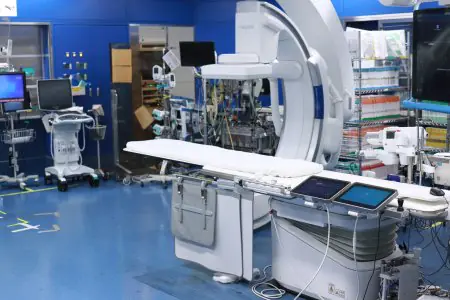
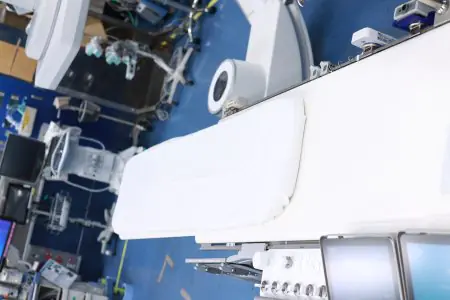
Computed tomography (CT) is available at St. Luke's International Hospital in Tokyo, Japan. It creates cross-sectional images for diagnostic assessment. A radiology specialist reads each imaging study, and the report goes to the department that requested it.
Specialist readers cover the chest, breast, neurosurgery, abdomen, pediatrics, and bones and joints. The hospital also offers second opinions on imaging studies.
Coronary CT is performed on an outpatient basis. CT-based fractional flow reserve (FFR) analysis is also available; the hospital was the first in Tokyo to introduce it.
For radiation therapy planning, the Radiology Department has one 16-slice CT scanner. The department also provides general radiography, gastrointestinal contrast studies, MRI, and ultrasound tomography.
St. Luke's holds Joint Commission International accreditation, first received in 2012 and renewed in 2024. Patients can request a consultation to learn more about this CT service.


 The clinic is not accepting new requests
 Average answering time – 5 minutes



St. Luke's International Hospital is a multi-specialty medical center in Tokyo, Japan. Dr. Rudolf Bolling Teusler founded it in 1901. The facility operates from three primary buildings. The hospital practices evidence-based medicine while respecting each patient's values. It treats both adults and children, with pediatric surgery available for patients under 16.
The hospital holds JCI (Joint Commission International) accreditation, first achieved in 2012. It also earned Magnet Recognition® for nursing quality in 2019.
In 2020, the hospital recorded more than 534,000 outpatient visits and over 158,000 admissions. A discharge survey showed 97.6% of inpatients were satisfied with their care. The facility has 520 beds.
The Breast Center coordinates breast cancer diagnosis and treatment. The team includes specialists in breast surgery, oncology, and diagnostic radiology. Patients receive systemic therapy with anti-cancer drugs and reconstructive plastic surgery when needed.
After surgery, the hospital provides follow-up care with regular check-ups and annual mammography. Patients with hereditary cancer risks can access clinical genetics support from board-certified physicians.
For lung cancer, respiratory medicine, thoracic surgery, and radiation oncology work together. Specialists use virtual bronchoscopy and lung dye methods to determine precise resection ranges. Treatment options include:
The AYA Survivor Support Center serves patients ages 15–39. It addresses physical and psychological concerns from diagnosis through long-term recovery.
The Neurology & Neurosurgery Center treats brain tumors, vascular diseases, and spinal conditions. Neurosurgeons perform functional stereotactic brain surgery and neuroendovascular therapy. The hospital also offers specialized brain check-ups to detect early signs of disease. The Neurology department manages degenerative disorders such as Alzheimer's and Parkinson's disease.
The Cardiovascular Center focuses on minimally invasive cardiac surgery (MICS) and catheter-based treatments. Surgeons perform robot-assisted valve surgery, including mitral and tricuspid valve repairs. Other cardiac procedures include:
These procedures take place in specialized units designed for rapid recovery.
The hospital uses the da Vinci Xi Surgical System for robotic prostatectomy and other minimally invasive procedures. This technology lets surgeons perform complex movements through small incisions.
Radiosurgery options include CyberKnife, Gamma Knife, and Tomotherapy for treating brain tumors without traditional surgery. For pulmonology diagnostics, the clinic uses EBUS-TBNA (ultrasound-guided needle biopsy) and cryobiopsy. The imaging department has PET-CT systems with various tracers, including Fluoroestradiol (FES) and Gallium 68.
St. Luke's International Hospital supports patients traveling from abroad through dedicated liaison services. Medical staff consult in Japanese and English for clear communication during treatment planning.
The hospital offers online consultations with pediatric oncologists and onco-hematologists for remote case reviews. International patients can access English medical questionnaires before visiting the Breast Center.
Patients choose St. Luke’s International Hospital most frequently to treat the following conditions: Neurosurgery, Cardiology, Neurology, Oncology, Pediatric Oncology.
The most common procedures in the hospital are: Medication treatment for Parkinson's disease, Medication treatment for multiple sclerosis, Brain tumor removal, Stereotaxic radiosurgery, Tomotherapy, Radiosurgery of a brain tumor, CyberKnife for brain tumor, Gamma Knife for brain tumor.
Leonardo Fukushima
マリナ
獣怪
ぴんぐり
Matt K
Shuichi Ishihara
Chika McGary
Kyoko Fujimoto
楊井得之
生田福
 The clinic is not accepting new requests Average answering time – 5 minutes



