
Immunogram in Sun Yat-sen University Cancer Center (SYSUCC)
About the clinic
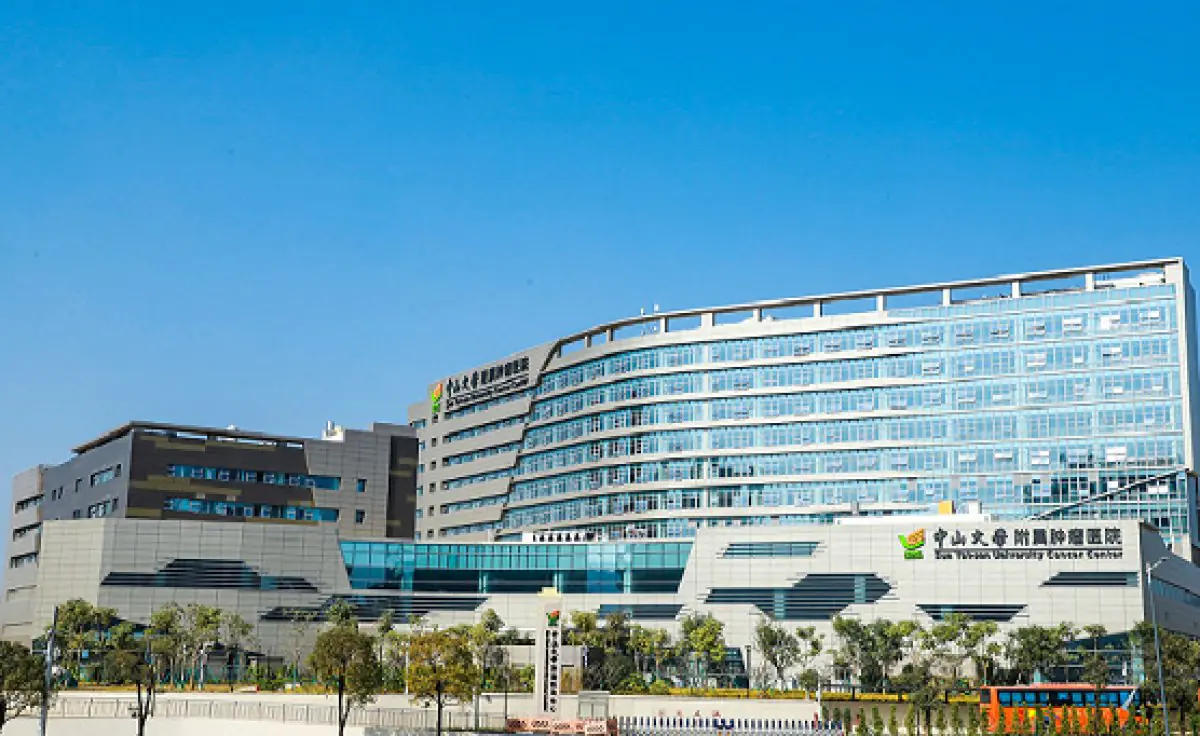
Sun Yat-sen University Cancer Center (SYSUCC) is a university hospital in Guangzhou, China. It is one of the country's largest integrated cancer centers. The center treats adults and children across 35 clinical departments. Major specialties include medical oncology, radiation oncology, and neurosurgery. The neurosurgery team performs about 1,400 procedures each year.
The center opened in 1964 as a specialized tumor hospital. In 2023, it managed over 1.84 million outpatient visits. Surgeons performed more than 45,000 operations that same year. SYSUCC runs two campuses with 2,247 ward beds and 42 operating rooms. It has been a UICC member since 2012.
The hospital uses four da Vinci robots for minimally invasive surgery. Other technologies include CyberKnife and proton-beam therapy. SYSUCC was among the first Chinese hospitals to adopt digital pathology. It also has a dedicated radionuclide production and nuclear medicine unit. International patients get support through a specialized International Medical Center.
Highlights
Get a free consultation

 The clinic is not accepting new requests
 Average answering time – 5 minutes
Treatments prices in the clinic
| treatment | Price | |
|---|---|---|
| Lymphoma chemotherapy | Price on request | |
| Chemotherapy | Price on request |
How are we doing?
hospital accreditations of quality
Sun Yat-sen University Cancer Center (SYSUCC): more details about the clinic
Sun Yat-sen University Cancer Center (SYSUCC) is a university-affiliated cancer hospital. Established in 1964, it is one of China's earliest specialized tumor centers. The hospital operates across two campuses in Guangzhou, in the Yuexiu and Huangpu districts. A third campus in Tianhe is currently in planning.
Accreditations and Clinical Volume
The center has held UICC membership since 2012. It was recognized as a Tertiary Class A Hospital in 1994. The hospital houses the State Key Laboratory of Oncology in South China. Its radiation therapy and general surgery departments hold national clinical specialty status.
SYSUCC manages a very high patient volume. In 2023, the center recorded over 1.84 million outpatient visits and 185,408 inpatient stays. The surgical team performed 45,492 procedures that year.
Oncology Specialties and Methods
The center has 35 clinical departments focused on complete cancer care. These range from prevention and screening to advanced surgical and medical treatments.
Neurosurgery and Brain Tumor Care
The neurosurgery department treats benign and malignant central nervous system tumors. The team includes 13 neurosurgeons and specialized neuro-oncologists. They see more than 2,000 new brain tumor patients each year. Key conditions treated:
- Glioma and meningioma
- Pituitary and skull base tumors
- Pediatric brain tumors
- Metastatic brain cancer
The team performs around 1,400 neurosurgical procedures annually. CyberKnife radiosurgery and proton-beam therapy are available. These allow precise radiation delivery to complex brain structures.
Hematological Oncology
The hematology department specializes in blood cancers. It was one of the first chemotherapy units for these conditions. Specialists provide CAR-T cell immunotherapy for lymphoma and leukemia. This therapy uses the patient's own immune cells to fight cancer.
For lymphoma, the center offers high-dose chemotherapy with autologous stem cell rescue. This restores healthy blood cells after intensive treatment. The team treats both Hodgkin and non-Hodgkin lymphoma subtypes.
Urology and Genitourinary Surgery
The urology department focuses on cancers of the urinary and reproductive systems. Surgeons use da Vinci robotic systems for prostate and kidney procedures. Robotic techniques mean smaller incisions and better precision than open surgery. The department covers:
- Bladder and prostate cancer
- Kidney and adrenal gland tumors
- Testicular and penile cancer
- Ureter and urethra tumors
Surgeons also perform minimally invasive laparoscopic procedures. These techniques help manage tumors while preserving organ function when possible.
Diagnostic and Treatment Technology
The center operates 42 surgery rooms and maintains 2,247 ward beds. It was among the first Chinese cancer hospitals to adopt digital pathology. This improves the accuracy of tissue analysis for diagnosis.
The nuclear medicine department provides PET/CT and SPECT imaging for tumor staging. It produces its own radionuclides for therapy. Four da Vinci robots are available across the two campuses.
Specialized diagnostic equipment includes PET-CT with Gallium 68 and Fluoromisonidazole tracers. These help identify specific tumor types and biological characteristics. The hospital also uses HIFU ablation – a non-invasive method that destroys tumors with focused ultrasound.
International Patient Services
The International Medical Center supports foreign patients. The team coordinates diagnosis and treatment plans aligned with international standards. Services begin before patients arrive in China:
- Treatment planning prior to arrival
- Translation of medical files from Chinese to English
- Full-cycle health management
- Daily treatment coordination
This department maintains continuous care between international patients and clinical teams.
Additional services
651 Dongfeng East Road, Yuexiu District, Guangzhou 510060, P. R. China

Get a free consultation
The clinic is not accepting new requests
Average answering time – 5 minutes
How it works:
- We find a medical coordinator familiar with the matter
- You get a personal offer with a step-by-step guide and the cost estimate
- We arrange your travel including appointment scheduling and flights booking
- You arrive at the hospital, we support you 24/7