
Safk Filk
Oct 1, 2026
I had a very positive experience. The team was kind, professional, and always supportive throughout the process. I felt well cared for from the beginning.
Embryo transfer at Ventus IVF Center in Nicosia, North Cyprus, is a key stage of assisted reproduction. The clinic uses time-lapse imaging and a CAP-accredited laboratory to help improve implantation chances. This procedure involves placing one or more embryos into the uterus using a soft catheter under ultrasound guidance.
The clinic uses EmbryoScope+ time-lapse imaging to monitor development 24 hours a day. This technology records every stage of growth without disturbing the embryos. AI-assisted tools then rank the embryos based on their development patterns. The final selection is a joint decision made by the physician and the embryology team. To prevent errors, the center uses chip-based identity tracking and electronic witnessing. This system follows the embryos from the culture dish to the transfer catheter.
Treatment plans are tailored to each patient by Assoc. Prof. Dr. Beril Yüksel. As an IVF specialist, Dr. Yüksel decides the best day for transfer based on embryo quality and the uterine lining. Patients may undergo a fresh transfer or a frozen embryo transfer (FET). For FET, the team monitors the natural cycle or uses hormone treatment for about 2 to 3 weeks. To reduce the risk of multiple pregnancies, the clinic often suggests transferring a single blastocyst on day five or six.
The embryology laboratory at Ventus IVF Center holds accreditation from the College of American Pathologists (CAP). It also maintains ISO 9001 and ISO 15189 certifications. The lab air is filtered through HEPA systems and monitored for volatile organic compounds (VOCs). These measures help keep the environment stable for the embryos. Laboratory Director Zafer Atayurt manages these quality protocols and the catheter loading process. Scientific Director Dr. Münevver Serdaroğulları oversees laboratory innovations to support patient outcomes.
The transfer itself takes only a few minutes and usually does not require anesthesia. A soft catheter gently places the embryo into the uterine cavity. After the procedure, patients continue supportive medications but do not need long bed rest. A pregnancy test is scheduled about 9 to 14 days later. International patients can often start their cycle monitoring at home to shorten their stay in Cyprus.
If you are considering fertility treatment, you can leave a request on Bookimed to learn more about the process.


 The clinic is not accepting new requests
 Average answering time – 5 minutes
| treatment | Price | |
|---|---|---|
| Embryo Transfer | $2204.64 | |
| Genetic test for aneuploidy up to 8 embryos | Price on request | |
| Embryo cryopreservation | Price on request | |
| Cryopreservation of sperm | Price on request | |
| Egg Cryopreservation Annual Maintenance | Price on request | |
| Testicular sperm aspiration (TESA) | Price on request |
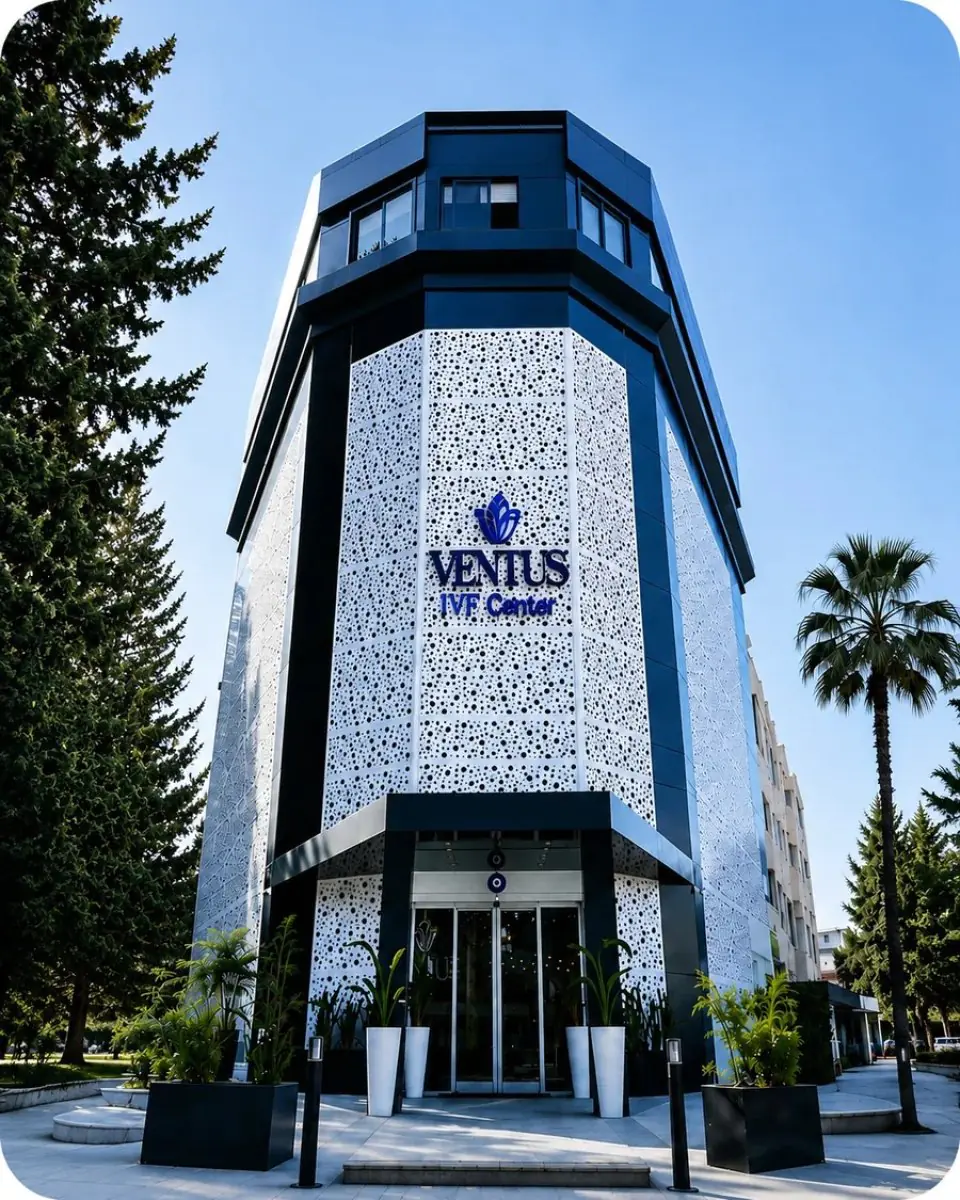
Ventus IVF Center is a private fertility clinic established in 2009 in Nicosia, Northern Cyprus. The center focuses on assisted reproductive medicine with a primary emphasis on laboratory quality and specimen safety. It serves patients from the United Kingdom, Turkey, and across Europe.
The facility maintains a CAP-accredited embryology laboratory through the College of American Pathologists. This accreditation covers patient identification, specimen labeling, and cryopreservation. The laboratory also adheres to several international standards:
To protect identity safety, the center uses electronic witnessing and chip-based identification. These systems track gametes and embryos from the culture dish to the transfer catheter. This adds verification at every step to prevent errors.
The reproductology department creates personalized protocols for IVF, ICSI, and various donation programs. Assoc. Prof. Dr. Beril Yüksel oversees treatment plans. She specializes in reproductive endocrinology and PGT applications. The center reports high success outcomes:
Scientific Director Dr. Munevver Serdarogullari co-authored research for ESHRE. Dr. Zafer Atayurt manages laboratory quality and traceability. The team also participates in next-generation research using transcriptomic and genomic data for embryo assessment.
The center uses EmbryoScope+ time-lapse imaging for continuous embryo monitoring around the clock. This lets the team record development without removing embryos from the stable incubator. HEPA filtration and strict VOC control systems protect the laboratory environment further.
Specialists use AI-assisted assessment to evaluate oocytes, sperm, and embryos. The AI ranks imaging data, but the physician and embryology team make all final transfer decisions. For sperm preparation, the lab offers microfluidic techniques to select motile sperm when appropriate.
The urology department addresses complex male factor infertility, including azoospermia (absence of sperm). Diagnostics involve hormone tests, genetic screening for Y-chromosome microdeletions, and scrotal ultrasound. When sperm production is impaired, the center offers several surgical retrieval methods:
Retrieved sperm can be used for ICSI or frozen for future cycles. The team also assesses modifiable factors such as varicocele (enlarged scrotal veins) and hormonal abnormalities. These findings help determine whether reconstruction or assisted reproduction is the best next step.
Ventus IVF Center provides dedicated support for patients traveling to Cyprus for treatment. The international department offers online consultations for preliminary assessments and medical record reviews. Staff coordinate the following logistics:
Patients can submit embryo reports or uterine ultrasound results digitally before their trip. After returning home, the clinic continues support through remote follow-up and result reviews. All documentation can be translated into the patient's language upon request.
 The clinic is not accepting new requests
Average answering time – 5 minutes