Radiotherapy for Breast Cancer in China — Get 3 Top Clinic Matches with Costs
Bookimed lists 2 radiotherapy for breast cancer clinics in China, all in Guangzhou. These clinics are rated 4.6/5 in 19 verified patient reviews on Bookimed.


Medically reviewed by
Yesim Yildirim
How Much Does Radiotherapy for breast cancer Cost in China?
Radiotherapy for breast cancer in China typically costs between $5,500 and $11,500. The total price depends on the chosen technology, city, and clinic status. Patients save around 73% compared to the US, where this treatment costs $32,000 on average. Standard medical care in China usually includes consultations, radiation sessions, and imaging.
- IMRT: Often costs 50-100% more than conventional external beam radiation.
- Advanced technologies: Proton therapy and carbon ion therapy represent the highest price tier.
- Hospital type: Private oncology centers in Shanghai and Guangzhou charge more than public hospitals.
- Administrative fees: International patients usually pay $200 to $500 for initial expert consultations.
Bookimed Expert Insight: Choosing Guangzhou offers high value due to specialized centers like Fuda Cancer Hospital. This JCI-accredited facility serves over 30,000 international patients using advanced oncology protocols. While public hospital fees are lower, private tertiary hospitals provide English-speaking staff and streamlined access. Jinshazhou Hospital offers internationally recognized radiotherapy technology with 1,200 beds for inpatient support. Patients find the best balance of cost and technology in these specialized Tier-1 city hubs.
| China | Turkey | Austria | |
|---|---|---|---|
| Radiotherapy for breast cancer | ≈ $5,500 | from $4,000 | from $6,600 |
Your Benefits and Guarantees with Bookimed
Transparent Prices & Flexible Installments
No hidden fees – just official clinic prices. Pay at the clinic for Radiotherapy for breast cancer upon arrival and use a flexible installment plan if needed.
Verified Clinics & Doctors Only
Bookimed is committed to your safety. We only work with medical institutions that maintain high international standards in Radiotherapy for breast cancer and have the necessary licenses to serve international patients worldwide.
Free 24/7 Assistance
Bookimed offers free expert assistance. A personal medical coordinator supports you before, during, and after your treatment, solving any issues. You're never alone on your Radiotherapy for breast cancer journey.

Your personal Bookimed medical coordinator
- Supports you at every stage
- Helps choose the right clinic and doctor
- Ensures quick and convenient access to information
Discover the Best Radiotherapy for breast cancer Clinics in China: 2 Verified Options and Prices


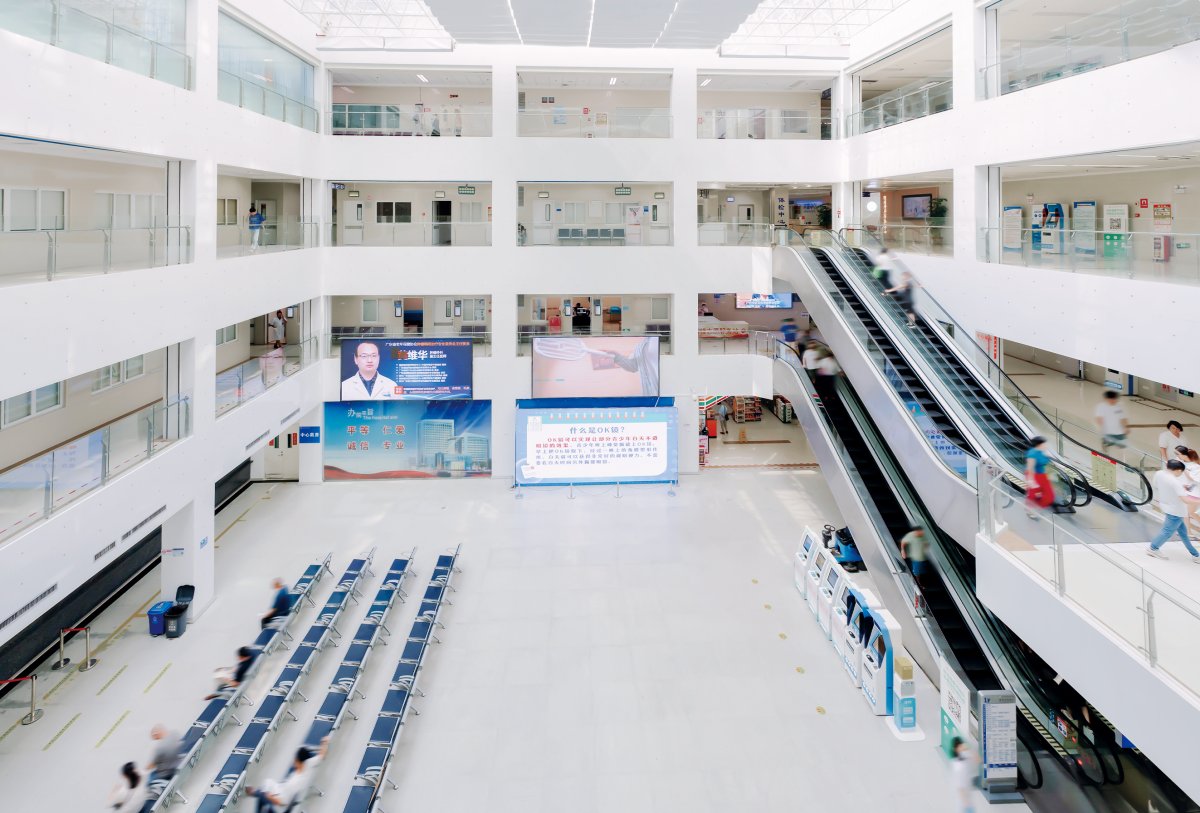
Jinshazhou Hospital of Guangzhou University of Chinese Medicine
Radiotherapy for breast cancer Overview in China
- Radiotherapy - from $8,000This therapy uses high-energy waves to destroy cancer cells, providing a non-surgical treatment with few side effects.
- Stereotaxic radiosurgery - from $10,800This therapy targets tumors with precise radiation, avoiding damage to surrounding tissues.
- Radiation therapy for brain tumor - from $6,700This therapy aims to destroy brain tumors using high-energy rays, reducing symptoms and improving survival rates.
- Radiotherapy for prostate cancer - from $10,000This therapy targets prostate tumors with radiation, annihilating cancer cells while preserving healthy tissue.
- Radiotherapy for lung cancer - from $7,000This therapy aims to kill cancer cells in the lungs using high-energy x-rays.
Day 1
- Arrival at the medical facility.
- Consultation with a radiation oncologist.
- Mammogram or ultrasound may be performed.
Day 2 - 3
- Additional tests such as MRI, CT scan if necessary.
- Discussion of treatment plan with oncologist.
- Marking the area to be treated with a special dye.
Day 4 - 5
- Start of radiotherapy treatment.
- Treatment lasts about 15-30 minutes, five days a week.
- No anesthesia is needed, the process is painless.
Week 2 - 6
- Continue radiotherapy according to the treatment plan.
- Regular consultations with oncologist to monitor progress.
- Adjustments to treatment plan if necessary.
Week 7
- End of radiotherapy treatment.
- Recovery period begins, patient can go home.
Week 8 - 12
- Rehabilitation period starts, patient can return to work.
- Light physical activities are allowed.
- Regular follow-up visits with oncologist.
Week 13 - 16
- Patient can gradually increase physical activities.
- Final results of radiotherapy become fully apparent.
Please note that the timeline and procedures may vary based on the individual patient"s condition and response to treatment.
- Bookimed deposit: $200 or €200.
- Clinic deposit: Pay a set percentage in advance.
Our Trusted Doctors
View all Doctors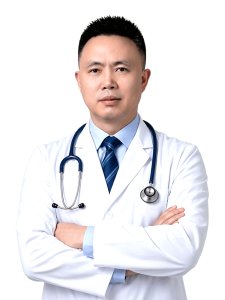
Liao Zhengyin
Chief physician and professor. Grade 1 Expert at the Cancer Center, West China Hospital, Sichuan University (ranked No. 2 in China). Completed a postdoctoral fellowship in interventional radiology at the Chinese PLA General Hospital. Leads multidisciplinary team (MDT) care for complex tumors. Expert in minimally invasive interventional oncology for liver, lung, and pancreatic cancers.
Accreditations: Council Member, WATA. Member of CACA and CMDA committees on intervention, ablation, radioactive seeds, and pain. In 2023, inaugural director member, Palliative Care Committee, Sichuan MDA. Editorial board member of the Chinese Journal of Interventional Imaging and Therapy. Editorial board member of the Chinese Journal of Pain Medicine.
Leads 2 provincial S&T projects and 2 NSFC projects. Has 40+ papers, with 30+ as first or corresponding author. Highest impact factor: 10.73. Hepatocellular carcinoma (HCC) cohort: TACE + lenvatinib vs TACE + sorafenib. OS 18.97 vs 10.77 months. PFS 10.6 vs 5.4 months. ORR 66.8% vs 33.3%.
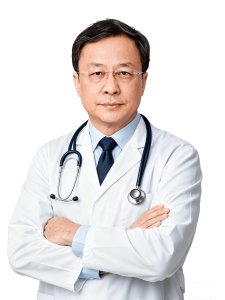
Luo Xiaoping
Professor Luo Xiaoping is a nationally recognized interventional radiologist and a leading authority in Western China. He began pioneering vascular interventions in the early 1990s. He helped found the Interventional Group at the Second Affiliated Hospital of Chongqing Medical University.
He has completed over 100,000 interventional procedures, including about 4,000 complex cases. His key skills include TACE for hepatocellular carcinoma, Budd–Chiari interventions, TIPS, and single-stage bilateral stenting for hilar biliary obstruction, with success rates near 100%. He has been a master’s supervisor since 2007. He has trained many physicians, guided complex cases at more than 40 major hospitals across Western China, and helped build interventional programs. He has published 32 papers as first or corresponding author (22 CSCD core, 4 Chinese core, 6 CSCD extended).

He Weibing
Dr. He Weibing is a pioneer of argon-helium cryoablation in China with more than 20 years of frontline practice. He was a founding member of Fuda Cancer Hospital (Guangzhou). He co-founded its Minimally Invasive Tumor Treatment Center and served as Executive Deputy Director. He also helped found the Ablation Group of the China Anti-Cancer Association. He has been the primary operator in more than 10,000 procedures.
He specializes in tumor cryoablation and is proficient in 125I seed brachytherapy, with a focus on liver and lung cancers. He proposed ten argon-helium techniques. Key co-authored data include: lung cryotherapy n=508; NSCLC n=120 (CR 25.5%, PR 41.8%, 6/12/24-month survival 64%/55%/36%); pancreatic cancer n=38 (median survival 12 months). He served on editorial boards in 2008 and 2010. He has been a national trainer for Varian and Boston Scientific since 2001.

Xiao Yueyong
Professor Xiao Yueyong is Chief Physician in the Department of Radiological Diagnosis at the Chinese PLA General Hospital. He is a leading expert in minimally invasive interventional oncology. He serves as the inaugural President of WATA (2025–). He is President of the International (2020–) and Asian (2012–) Societies of Cryotherapy. He is also Deputy Head of the NHC Expert Group on tumour ablation regulations (2009–).
He has performed over 100,000 CT/MRI‑guided minimally invasive procedures. His work covers chemical ablation, RFA, MWA, cryoablation, and NanoKnife (IRE). He introduced and advanced NanoKnife ablation in China. He led the first national standards for tumour cryoablation and NanoKnife.
Honors include the National Special Contribution Award (Lifetime Honorary). He received First Prize from the Chinese Medicine Education Association (2021). He received two Second Prizes for Military Medical Achievements (2016, 2018) and two Second Prizes from the China Anti‑Cancer Association (2019, 2022). He was named Asian Ablation Master. His research record includes 13 Chinese patents. He is the principal investigator for four NSFC projects and one MOST subject. He has published over 200 papers, with over 110 as first or corresponding author and over 40 in SCI journals. He has led over 10 ablation guidelines or consensus statements.
Video Stories from Bookimed Patients
Reviews about Bookimed: Discover Patients' Insights
All reviews
Share this content
 Anna Leonova
