Medical disclaimer
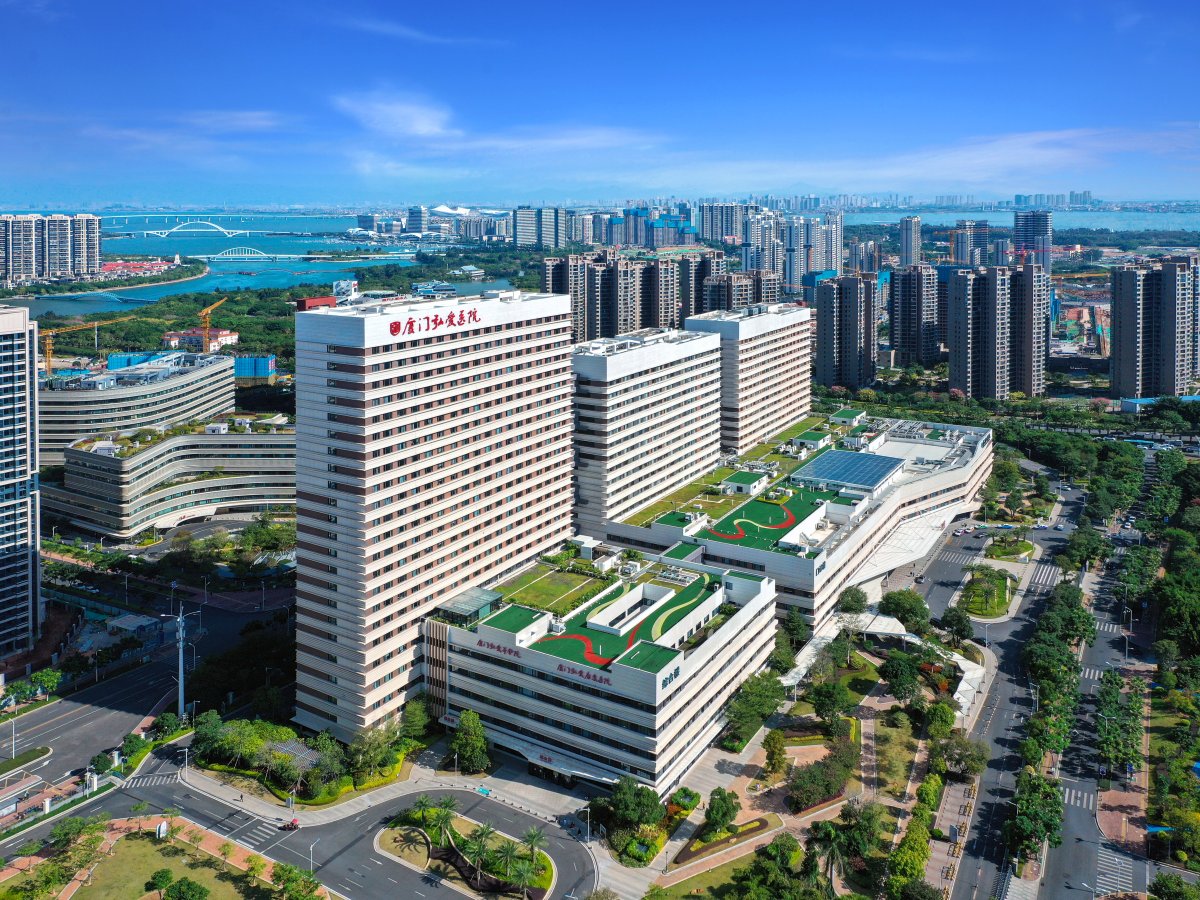
Rehabilitation for a neurological condition at Xiamen Humanity Hospital
9 min read
Prepared by Bookimed editorial team
Medical content and care coordination
Share with AI


Is this your situation?
- Adults aged 40–50 with a neurological condition
- Looking for rehab options abroad
- Travelling with a companion
- Some patients are cost-conscious and compare hospitals
- Some need a wheelchair-accessible hotel
The situation portrait
Two adults aged 40–50, one man and one woman, came to Bookimed from other regions with a neurological condition. Both asked first about rehabilitation options abroad and both sent video and medical records. Both travelled with a companion. Some patients were focused on cost and wanted to understand a daily rate before committing. One patient wanted to regain leg movement and to stand and sit independently. Another was interested in an advanced brain-stimulation approach. The clinic's quoted price across the personal offers was $300–$12,000 (historical, not today's price).
- The situation
- Both patients had a neurological condition and wanted to find out what rehabilitation was available abroad. One patient had already done home physiotherapy and hoped to regain leg movement and to stand and sit independently. Another patient was asking about an advanced brain-stimulation approach. Some patients compared hospitals in several countries and watched the price closely. One patient needed to start after a set date, and another needed an in-person visit on a fixed date.
- The treatment
- The program at the clinic varied between the two cases. One patient followed a month of daily outpatient rehabilitation, which included robot-assisted walking training and hyperbaric oxygen. Another patient had an in-person consultation and diagnostics with MRI, and robot-assisted physiotherapy was also part of the record. The clinic's quoted price across the personal offers was $300–$12,000, a historical figure rather than today's price.
What informed the decision
- Affordable rehab price (one patient)
- A daily outpatient program (one patient)
- Robotic rehab tools (one patient)
- A specialised, accredited rehab hospital (one patient)
- An invitation letter that eased the visa (one patient)
What this evidence cannot establish
- Composite of several real cases, not one person's story.
- Your own plan, price and recovery depend on your medical records and the treating team.
If you are cost-conscious and comparing hospitals
Some patients were cost-conscious. One patient compared hospitals in several countries and another looked for a cheap hotel. One patient did not want to pay for two consultations, and the consultation fee was deducted from the treatment cost. One patient also asked for a daily rate in order to calculate the total.
If you need an accessible hotel and travel support
Both patients travelled with a companion. One patient needed a wheelchair-accessible hotel and had doubts about hotel and transport access. One patient booked their own flights and hotel, while for another the clinic arranged the hotel and transfers.
If you are looking for an experimental treatment
One patient asked about an advanced brain-stimulation approach. The treatment was not offered after tests were done, and alternatives were suggested instead. This is a good reason to ask early about exactly what is available before you plan the trip.
Typical path, in days from the first inquiry
| Day 3–14 | Asking about rehab abroadBoth patients began by asking about rehab options abroad and sent video and medical records. One patient received a quick preliminary assessment. |
|---|---|
| Day 15–17 | Checking details and bookingOne patient wanted the process and costs confirmed before applying for a visa. For one patient, an in-person visit was agreed after the clinic first proposed a remote consultation. |
| Day 19–42 | Travelling with a companionBoth patients travelled with a companion. One patient had the hospital arrange the hotel and transfers, and one patient booked their own flights and hotel. |
| Day 20–43 | Rehab and diagnosticsOne patient did daily outpatient rehabilitation with robot-assisted walking training and hyperbaric oxygen. Another had an in-person consultation and diagnostics with MRI. |
| Day 27–72 | After the programOne patient finished the programme with no outcome stated. One patient planned to send the results to another hospital. |
Typical doubts and how they were resolved
The doubts were mostly practical, and each was raised by one patient. One patient was unsure about an unfamiliar hospital, and the clinic was described to them as an accredited rehab centre. Another did not want to pay extra for a remote consultation, and the fee was to be deducted from the treatment cost. One patient worried about the language barrier, and a portable translation device was mentioned. Questions about payment were answered with cash and Visa cards being accepted. One patient asked about the wheelchair access of the hotel and transport, and the hospital arranged a hotel and transfers.
How the cases differed
The two cases were different in several ways. One patient wanted a daily outpatient program to regain leg movement, and the other was asking about an advanced brain-stimulation approach. One followed a month of rehabilitation, while the other had an in-person consultation and tests. One patient finished the programme with no outcome stated. The other was told the experimental treatment was not offered and planned to send results to another hospital. The ways of arranging travel also differed.
Key takeaways
- Both patients had a neurological condition and asked about rehab abroad.
- Both travelled with a companion.
- Programs differed: a month of daily outpatient rehab for one patient, consultation and MRI for another.
- Ask early about hotel accessibility and about whether an experimental treatment is available.
- The clinic's quoted price was $300–$12,000 (historical, not today's price).
The clinic: Xiamen Humanity Hospital
- Xiamen Humanity Hospital was described to one patient as a specialised, accredited rehab hospital.
- One patient noted its robotic rehab tools and a rehab programme for spinal injury with MRI.
- The hospital issued an invitation letter for one patient and arranged a hotel and transfers for another.
The doctor: Dr. Zheng Wei Hong
- Dr. Zheng Wei Hong was the doctor named in the clinic's personal offers recorded for these cases.

What the rehabilitation after neurological injury program included
The program scope ranged from a month of daily outpatient rehabilitation to an in-person consultation with MRI diagnostics, depending on the patient.
Included
- Airport and clinic transfers: VIP transfer (premium vehicle service, all transfers between airport, hotel and clinic).
Not included
- Accommodation.
Recorded stay: 30–30 days
The clinic's quoted price: $300–$12,000
Historical quotation
$300–$12,000
Based on 2 documented cases. This is not a current clinic quotation.
Range of the clinic's personal offers recorded in these cases. The final amount paid can differ and is not shown. It is not a current price.
Included
- Airport and clinic transfers: VIP transfer (premium vehicle service, all transfers between airport, hotel and clinic).
Not included
- Accommodation.
Not confirmed
- Today's price for your own plan must be confirmed in a new written quotation.
Rehabilitation after neurological injury: risks and warning signs to discuss
General patient guidance, provided separately from the case evidence. Follow your treating team's instructions.
Possible side effects
- While in the hospital for severe TBI, the person should be monitored for infection (particularly pneumonia) and deep vein thrombosis (blood clots that can form during long periods of inactivity).
Ask the treating team how this risk applies to you and how it is managed.
- Other secondary damage can be caused by infections to the brain, low blood pressure or oxygen flow as a result of the injury, hydrocephalus , and seizures.
Ask the treating team how this risk applies to you and how it is managed.
- Increased intracranial pressure , which is usually caused by brain swelling inside the skull as a result of the injury.
Ask the treating team how this risk applies to you and how it is managed.
- depression and anxiety incontinence worry about having sex or difficulty having sex
Ask the treating team how this risk applies to you and how it is managed.
- The exercises, activities and therapy sessions you do as part of your rehabilitation are often difficult, but it will help you make progress.
Ask the treating team how this risk applies to you and how it is managed.
Recovery and aftercare
- The most rapid recovery occurs in the first 6 months after a stroke.
Follow the treating team's instructions for your own recovery.
- Most likely it will begin within 24 to 48 hours after the stroke.
Follow the treating team's instructions for your own recovery.
- After about 6 months, you should get a review of your progress.
Follow the treating team's instructions for your own recovery.
Suitability and cautions
- Compared with younger adults with the same TBI severity, older adults are more likely to have lasting symptoms.
Discuss your own suitability with the treating specialist.
- The amount and type of rehabilitation they recommend for you will depend on your needs and how much you can manage.
Discuss your own suitability with the treating specialist.
When to contact the clinic
- New neurological problems (such as slurred speech, weakness of arms, legs, or face, or loss of balance)
Contact the treating team promptly, and seek urgent local care for severe or worsening symptoms.
- Convulsions or seizures
Contact the treating team promptly, and seek urgent local care for severe or worsening symptoms.
- Decreased level of consciousness (like being hard to wake up)
Contact the treating team promptly, and seek urgent local care for severe or worsening symptoms.
- Clear fluids draining from the nose or ears
Contact the treating team promptly, and seek urgent local care for severe or worsening symptoms.
- Unequal eye pupil size or dilation
Contact the treating team promptly, and seek urgent local care for severe or worsening symptoms.
Frequently asked questions
How long did the rehab program last?
For one patient the program was a month of daily outpatient rehabilitation. The other patient had an in-person consultation and diagnostics with MRI, so the length depends on the plan agreed for your case.
Is an online consultation required before arriving?
The clinic first proposed a remote consultation to one patient but later agreed to an in-person visit on a fixed date. For one patient, the consultation fee was to be deducted from the treatment cost.
How much does it cost?
The clinic's quoted price across the personal offers was $300–$12,000. This is a historical figure and not today's price. One patient asked for a daily rate to calculate the total, so ask for a confirmed quote for your own program.
Can the clinic help with the hotel and transfers?
For one patient the hospital arranged the hotel and transfers. One patient booked their own flights and hotel. If you need a wheelchair-accessible hotel, raise it early, as one patient did.
Is the experimental treatment available?
One patient asked about an advanced brain-stimulation approach. After tests were done, it was not offered. Ask what is actually available before you decide to travel.
Discuss your own rehabilitation after neurological injury plan
Get a current, itemized program for your own situation.
Confirm the scope, doctor, tests, accommodation, transfers and aftercare. Historical amounts on this page do not set today's price.
Ask the clinic for a current, itemized quotation. Published evidence does not establish package inclusions or a current price.
Sources
This composite portrait is based on 2 paid Bookimed cases for the same clinic and need. Situation facets were extracted from the case material, depersonalized and counted; the text was written from that facet table only. Identifying details appear only as ranges or general groups, and only when at least two cases share them. Patient identifiers and personal records are not published. The price is the clinic's personal offer recorded in these cases, not a current price. Safety information is general guidance from the medical sources listed, not a description of these cases.
- 1. Xiamen Humanity Hospital – clinic profile
- 2. Dr. Zheng Wei Hong – professional profile
- 3. U.S. National Institutes of Health – Traumatic Brain Injury (TBI)
- 4. healthdirect Australia – Stroke rehabilitation
- 5. NHS – Recovering from a stroke
- 6. MedlinePlus (U.S. National Library of Medicine) – Stroke Rehabilitation
Related procedures
About the editorial team
Prepared by
Bookimed editorial teamMedical content and care coordination
Bookimed prepares evidence summaries from anonymized care records and published medical sources. The clinic and doctor are identified separately on the page.