Medical disclaimer
Talquetamab in Relapsed or Refractory Myeloma: The MonumenTAL-1 Study
12 min read
Prepared by Bookimed editorial team
Facts checked by the Bookimed editorial team based on scientific sources

Share with AI


The named clinic is an author affiliation. The study patients were not established as patients treated at that clinic.
Key takeaways
- The study followed 375 adults with relapsed or refractory multiple myeloma who received talquetamab at the recommended doses.
- The overall response rate was 74% with the once-a-week dose, 69% with the every-2-weeks dose and 67% in patients who had earlier T-cell redirection therapy.
- Cytokine release syndrome, taste changes and infections were the most common adverse events in all three groups.
- Fatal adverse events occurred in five patients (once-a-week group) and seven patients (every-2-weeks group); none were related to treatment.
- Quironsalud Madrid appears only as an author affiliation, so the study does not show that patients were treated there.
The question this study addresses
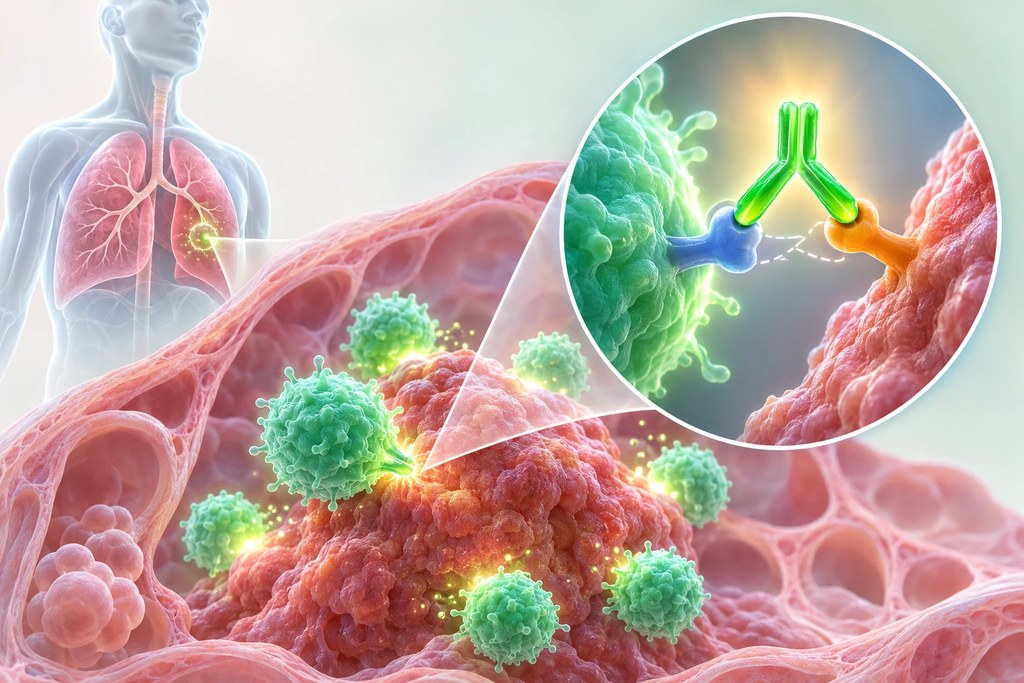
MonumenTAL-1 is a multicentre, open-label, phase 1-2 study of talquetamab, a bispecific antibody given under the skin, in adults with multiple myeloma that had returned or stopped responding. This post-hoc analysis used longer follow-up to look at safety, response and duration of response. Patients were screened between 2018 and 2023, and the study was funded by Janssen. Authors from Fundación Jiménez Díaz and Hospital Universitario Quirónsalud Madrid, both in Madrid, took part, but the abstract does not say where patients were treated. Bookimed did not run the study.
- The situation
- Adults with relapsed or refractory multiple myeloma who had at least three previous lines of therapy, with or without earlier T-cell redirection therapy (TCR).
- The treatment
- Subcutaneous talquetamab at 0·4 mg/kg once a week or 0·8 mg/kg every 2 weeks.
What this evidence cannot establish
- The abstract does not say where patients were treated, and Quironsalud Madrid appears only as an author affiliation.
- This is a post-hoc analysis funded by Janssen, and the abstract gives no duration-of-response value.
- Group results describe the study patients and are not a forecast for any individual.
Patient groups in the published study
143 patients · Published study group
No previous TCR, talquetamab once a week
- Indication
- Relapsed or refractory multiple myeloma, TCR-naive
- Treatment
- Subcutaneous talquetamab 0·4 mg/kg once a week
143 patients who had not received T-cell redirection therapy before.
Heavily pretreated adults whose myeloma had returned or stopped responding, with no earlier T-cell redirection therapy.
Talquetamab under the skin once a week. The overall response rate assessed by an independent review committee was 74% (106 of 143 patients), and cytokine release syndrome of any grade occurred in 79% (113 of 143).
Overall response rate (independent review committee)
106 / 14374%
143 patients · Study group
median 25·6 months (IQR 8·5-25·9)
Cytokine release syndrome (any grade)
113 / 14379%
143 patients · Study group
median 25·6 months (IQR 8·5-25·9)
Reported risks
- Study-wide: fatal adverse events occurred in five patients in this group; none were related to treatment.
Limits of this evidence
- Duration of response, survival and progression-free survival for this group are not stated in the abstract.
- The setting of treatment is not stated.
For a clinic assessment
- Summary of previous myeloma therapies and the response to each
- Recent blood test and imaging reports
154 patients · Published study group
No previous TCR, talquetamab every 2 weeks
- Indication
- Relapsed or refractory multiple myeloma, TCR-naive
- Treatment
- Subcutaneous talquetamab 0·8 mg/kg every 2 weeks
154 patients who had not received T-cell redirection therapy before.
Heavily pretreated adults whose myeloma had returned or stopped responding, with no earlier T-cell redirection therapy.
Talquetamab under the skin every 2 weeks. The overall response rate was 69% (107 of 154 patients), and cytokine release syndrome of any grade occurred in 75% (115 of 154).
Overall response rate (independent review committee)
107 / 15469%
154 patients · Study group
median 19·4 months (9·2-20·7)
Cytokine release syndrome (any grade)
115 / 15475%
154 patients · Study group
median 19·4 months (9·2-20·7)
Reported risks
- Study-wide: fatal adverse events occurred in seven patients in this group; none were related to treatment.
Limits of this evidence
- Duration of response is named as an aim of the analysis, but no value is given in the abstract.
- The setting of treatment is not stated.
For a clinic assessment
- Treatment history with dates and drug names
- Latest hematology and oncology reports
78 patients · Published study group
Previous TCR, talquetamab at either dose
- Indication
- Relapsed or refractory multiple myeloma, previous TCR (including BCMA-targeting therapies)
- Treatment
- Subcutaneous talquetamab at either recommended dose
78 patients who had received T-cell redirection therapy before.
Adults whose myeloma had returned or stopped responding after earlier T-cell redirection therapy, including therapies targeting BCMA.
Talquetamab under the skin at either recommended dose. The overall response rate was 67% (52 of 78 patients), and cytokine release syndrome of any grade occurred in 73% (57 of 78).
Overall response rate (independent review committee)
52 / 7867%
78 patients · Study group
median 16·8 months (7·6-18·7)
Cytokine release syndrome (any grade)
57 / 7873%
78 patients · Study group
median 16·8 months (7·6-18·7)
Reported risks
- Study-wide: no fatal adverse events occurred in this group.
Limits of this evidence
- The abstract does not say which dose each patient received, and gives no duration of response.
- The setting of treatment is not stated.
For a clinic assessment
- Records of the earlier T-cell redirection therapy, including the target and dates
- Summary of response and side effects from that therapy
Results and limits of the study
Overall response rate, assessed by an independent review committee, was 74% in the once-a-week group, 69% in the every-2-weeks group and 67% in the previous TCR group. The authors describe the response rates as high and as promising in patients with previous TCR. Follow-up differed by group, so the groups should be read separately.
No previous TCR, talquetamab once a week: Overall response rate (independent review committee)
106 / 14374%
143 patients · Study group
median 25·6 months (IQR 8·5-25·9)
No previous TCR, talquetamab once a week: Cytokine release syndrome (any grade)
113 / 14379%
143 patients · Study group
median 25·6 months (IQR 8·5-25·9)
No previous TCR, talquetamab every 2 weeks: Overall response rate (independent review committee)
107 / 15469%
154 patients · Study group
median 19·4 months (9·2-20·7)
No previous TCR, talquetamab every 2 weeks: Cytokine release syndrome (any grade)
115 / 15475%
154 patients · Study group
median 19·4 months (9·2-20·7)
Previous TCR, talquetamab at either dose: Overall response rate (independent review committee)
52 / 7867%
78 patients · Study group
median 16·8 months (7·6-18·7)
Previous TCR, talquetamab at either dose: Cytokine release syndrome (any grade)
57 / 7873%
78 patients · Study group
median 16·8 months (7·6-18·7)
Risks reported by the source
- Cytokine release syndrome, taste changes and infections were the most common adverse events in all three groups.
- The most common grade 3-4 adverse events were neutropenia, anaemia and lymphopenia.
- Fatal adverse events occurred in five patients in the once-a-week group and seven in the every-2-weeks group, and in none in the previous TCR group; none were related to treatment.
- On-target, off-tumour adverse events were common but led to few treatment discontinuations.
Limitations and unknowns
- How long responses lasted is not given in the abstract.
- Survival and progression-free survival are not stated.
- The abstract does not say where patients were treated.
- Which dose each previous-TCR patient received is not stated.
What to clarify in your treatment plan
Before booking, ask Quironsalud Madrid whether it offers talquetamab or a comparable treatment for your situation, and who would manage side effects. Ask which records the team needs and how monitoring and follow-up would be arranged. Do not assume the clinic took part in this study as a treatment site.
Quironsalud Madrid: clinic profile
- Quironsalud Madrid appears in this study as an author affiliation: two authors list Fundación Jiménez Díaz and Hospital Universitario Quirónsalud Madrid in Madrid.
- The abstract does not say where patients were treated, so this page does not claim they were treated at Quironsalud Madrid.
- The Quironsalud Madrid profile is available on Bookimed.
Safety and recovery: general information
General patient guidance, provided separately from the case evidence. Follow your treating team's instructions.
Possible side effects
- General immunotherapy side effects can include fatigue, itchy rash, diarrhea, nausea and vomiting, and lower thyroid hormone levels, and these are often described as mild.
Ask the treating team which of these to watch for and how to report them.
- Immune cells may mistakenly attack healthy tissue, which can cause inflammation and one or more side effects.
Ask how inflammation-related effects are monitored during treatment.
- Side effects of immunotherapy may be serious and even life-threatening.
Discuss the risks in detail with your oncologist before starting.
Recovery and aftercare
- Most side effects are temporary, but in rare cases they can cause long-term effects and may linger after the medicine is out of the system.
Ask how long follow-up would last after treatment.
- Treatment may go on for a long time, and side effects can occur at any point during and after it.
Ask who to contact if symptoms start after treatment ends.
Suitability and cautions
- Side effects may be more likely with a combination of immunotherapy drugs or an autoimmune disease.
Tell the clinic about any autoimmune disease and all current medicines.
- If you have an autoimmune disease, it is especially important to discuss it with your health care provider before starting treatment.
Bring your autoimmune history to the first consultation.
When to contact the clinic
- Hepatitis can cause jaundice, dark-colored urine, stomach pain on the right side, vomiting and increased bleeding or bruising.
Contact your oncology team promptly if these appear.
- Colitis can cause diarrhea, bloody, dark or tarry stools and stomach pain.
Report these symptoms to your oncology team promptly.
- Lung inflammation (pneumonitis) can cause shortness of breath and a bad cough.
Report breathing symptoms promptly.
- Your oncologist may advise you to call first about inflammatory symptoms, or to seek emergency care.
Ask your team for a clear plan on whom to call and when.
How treatment at the clinic usually goes
| 1 | Send your records to the coordinatorShare your myeloma treatment history with drug names and responses, recent blood tests and imaging reports, and any records of earlier T-cell redirection therapy. Bookimed passes them to the Quironsalud Madrid coordinator. |
|---|---|
| 2 | Clinic reviews your caseThe clinic tells you whether it can assess your case, what else it needs, and whether it offers talquetamab or a comparable treatment for your situation. |
| 3 | Treatment planThe treating team explains the proposed medicine, the dose schedule, how side effects such as cytokine release syndrome would be managed, and who is in charge of your care. |
| 4 | Treatment and monitoring at the clinicIf you go ahead, the team gives the treatment and watches for side effects. The clinic explains how long you would need to stay nearby and when you can travel. |
| 5 | Follow-up at homeYou get a written summary and a plan for blood tests and check-ups with your local oncologist. Agree in advance whom to call if symptoms start after you leave. |
What to ask Quironsalud Madrid
- Does Quironsalud Madrid offer talquetamab or a comparable treatment for relapsed or refractory multiple myeloma, and is it suitable for my treatment history?
- Did your hospital take part in MonumenTAL-1 as a treatment site, or do the authors only list it as an affiliation?
- Which dose schedule would you consider for me, once a week or every 2 weeks, and why?
- How do you manage cytokine release syndrome, taste changes and infections, and which team member would I contact?
- How would you handle my earlier therapies, including any T-cell redirection therapy or BCMA-targeting treatment?
- Which records, scans and blood tests do you need before you can give a plan?
- How long would I need to stay near the hospital, and what monitoring would continue after I go home?
- What should my local oncologist know, and how will your team share reports with them?
Ask Quironsalud Madrid about immunotherapy options for relapsed or refractory multiple myeloma
Bookimed has no published package for this treatment at this clinic yet. A Bookimed coordinator can request a personal treatment plan and price from the clinic.
Bookimed can pass your treatment history and records to the clinic coordinator. The clinic then tells you whether it can assess your case and what it needs.
Ask the clinic for a current, itemized quotation. Published evidence does not establish package inclusions or a current price.
Frequently asked questions
Who ran the MonumenTAL-1 study and where were patients treated?
The study was a multicentre study funded by Janssen, and Bookimed did not run it. The abstract does not say where patients were treated. Two authors list Fundación Jiménez Díaz and Hospital Universitario Quirónsalud Madrid in Madrid as affiliations, so Quironsalud Madrid appears as an author affiliation only. This page does not claim that any patients were treated there.
How many people were in the MonumenTAL-1 analysis?
The analysis covers 375 adults with relapsed or refractory multiple myeloma who received the recommended talquetamab doses. There were 143 in the once-a-week group, 154 in the every-2-weeks group and 78 with earlier T-cell redirection therapy. Quironsalud Madrid appears only as an author affiliation, so ask the clinic how its own experience compares.
What response rate did talquetamab show in the study?
Overall response rate, judged by an independent review committee, was 74% with the once-a-week dose, 69% with the every-2-weeks dose and 67% in patients with earlier T-cell redirection therapy. These are group results from the study. Quironsalud Madrid can explain what they may mean for your own case, but no result is guaranteed.
Can people who had earlier T-cell redirection therapy take part in these results?
Yes. The study had a separate group of 78 patients who had earlier T-cell redirection therapy, including therapies targeting BCMA. Their overall response rate was 67%. The abstract does not say which dose each of them received, so ask Quironsalud Madrid how your earlier treatment would affect its plan.
What are the most common side effects of talquetamab in this study?
In all three groups the most common adverse events were cytokine release syndrome, taste changes and infections. Cytokine release syndrome occurred in 79%, 75% and 73% of the groups, taste changes in 72%, 71% and 76%, and infections in 59%, 68% and 76%. Ask Quironsalud Madrid how it would monitor you.
Which serious side effects were reported in the study?
The most common grade 3-4 adverse events were neutropenia, anaemia and lymphopenia. Neutropenia occurred in 31%, 21% and 47% of the three groups, anaemia in 31%, 26% and 27%, and lymphopenia in 26%, 26% and 17%. Quironsalud Madrid can explain how blood counts would be checked during treatment.
Did anyone die during the study, and was it caused by talquetamab?
Fatal adverse events occurred in five patients in the once-a-week group and seven in the every-2-weeks group. None occurred in the previous T-cell redirection group. The abstract states that none were related to treatment. Quironsalud Madrid can discuss with you what risks apply to your own health situation.
Did side effects make people stop talquetamab?
The authors say on-target, off-tumour adverse events were common but led to few treatment discontinuations. The abstract gives no number for stopped treatment. Ask Quironsalud Madrid how it would manage side effects such as taste changes, and what steps it takes before considering a pause or stop.
How is talquetamab given, and how often?
In the study, talquetamab was given under the skin. The two recommended schedules were 0·4 mg/kg once a week and 0·8 mg/kg every 2 weeks. Which schedule suits you is a decision for the treating team. Quironsalud Madrid can explain its approach after reviewing your records.
Does the study say how long responses lasted?
No. The abstract names duration of response as an aim of the analysis for the every-2-weeks group, but it gives no value. It also does not give survival or progression-free survival. Ask Quironsalud Madrid what is known about how long responses last in patients like you.
Sources and scope
This page was prepared from the published abstract, the numbers checked against it, and general immunotherapy safety information from Cleveland Clinic and the National Cancer Institute. Bookimed did not run the study.
- 1. Chari et al. – Safety and activity of talquetamab in patients with relapsed or refractory multiple myeloma (MonumenTAL-1): a multicentre, open-label, phase 1-2 study.
Multicentre, open-label, phase 1-2 study, post-hoc analysis · 2025
375 adults with relapsed or refractory multiple myeloma, with or without previous T-cell redirection therapy
Follow-up: Median 25·6 months, 19·4 months and 16·8 months across the three groups
Only the abstract was used, so full methods, duration of response and treatment settings are not covered.
- 2. Cleveland Clinic
- 3. National Cancer Institute
- 4. National Cancer Institute
- 5. Quironsalud Madrid on Bookimed
Scope and limitations
- A research summary is not an individual medical recommendation.
- Group results describe the study participants, not a forecast for any one patient.
Related procedures
About the editorial team
Prepared by
Bookimed editorial teamFacts checked by the Bookimed editorial team based on scientific sources
Bookimed prepares evidence summaries from published medical sources and anonymized care records. The clinic and any doctors named on this page are identified separately in their own sections.