Medical disclaimer
Research by Uni-asia Cancer hospital's doctors: TACE plus lenvatinib
8 min read
Prepared by Bookimed editorial team
Medical content and care coordination
Share with AI


The named clinic is an author affiliation. The study patients were not established as patients treated at that clinic.
Key takeaways
- The study compared two combinations in unresectable hepatocellular carcinoma (HCC, the main type of liver cancer) with portal vein tumor thrombus (PVTT, a tumor clot in the portal vein): TACE plus lenvatinib and TACE plus sorafenib.
- Before propensity score matching, median overall survival was 16.4 months with TACE plus lenvatinib (59 patients) and 12.7 months with TACE plus sorafenib (57 patients), and the authors did not find this difference statistically significant.
- After propensity score matching, the authors report TACE plus lenvatinib as significantly superior for overall survival, progression-free survival and overall response rate.
- The abstract calls both regimens safe and well tolerated but gives no adverse event counts, and the authors say a larger randomized trial is needed.
- These are group results from a past study. They are not a forecast for any individual patient.
The question this study addresses
Doctors from West China Medical School, Sichuan University in Chengdu ran a prospective cohort study of consecutive patients from September 2017 to September 2020. It compared TACE (transarterial chemoembolization, a catheter-based liver treatment) plus lenvatinib with TACE plus sorafenib. The patients were treated elsewhere, not at Uni-asia Cancer hospital, and the abstract does not say which hospital treated them. One of the study authors, Liao Zhengyin, now practices at Uni-asia Cancer hospital according to the Bookimed profile.
- The situation
- Adults with unresectable hepatocellular carcinoma and portal vein tumor thrombus.
- The treatment
- TACE plus lenvatinib (59 patients) compared with TACE plus sorafenib (57 patients).
What this evidence cannot establish
- The patients were not treated at Uni-asia Cancer hospital, and the abstract does not name the treating hospital. This page shows research by the clinic's doctors, not the clinic's own patient series.
- The abstract does not give the number of patients after propensity score matching, so the matched figures are not shown here and should not be read as exact.
- This is a cohort study, not a randomized trial, and the authors themselves call for a larger randomized trial.
Patient groups in the published study
59 patients · Published study group
Liver cancer with portal vein clot treated with TACE plus lenvatinib
- Indication
- Unresectable hepatocellular carcinoma with portal vein tumor thrombus
- Treatment
- TACE plus lenvatinib (TACE-L)
59 adult patients treated with TACE plus lenvatinib.
The liver tumor could not be removed by surgery and had grown into the portal vein.
TACE combined with lenvatinib, a drug taken alongside the procedure. Before propensity score matching, median overall survival was 16.4 months and median progression-free survival was 8.4 months.
Median overall survival (before PSM)
16.4 months
59 patients · Study group
not stated
Median progression-free survival (before PSM)
8.4 months
59 patients · Study group
not stated
Reported risks
- Study-wide: the abstract calls both regimens safe and well tolerated but gives no adverse event counts.
Limits of this evidence
- Follow-up duration is not stated.
- Matched results are left out because the matched group size is not given.
For a clinic assessment
- Imaging reports showing the liver tumor and the portal vein involvement
- Current liver function tests and the list of medicines you take
57 patients · Published study group
Liver cancer with portal vein clot treated with TACE plus sorafenib
- Indication
- Unresectable hepatocellular carcinoma with portal vein tumor thrombus
- Treatment
- TACE plus sorafenib (TACE-S)
57 adult patients treated with TACE plus sorafenib.
The liver tumor could not be removed by surgery and had grown into the portal vein.
TACE combined with sorafenib, a drug taken alongside the procedure. Before propensity score matching, median overall survival was 12.7 months and median progression-free survival was 7.43 months.
Median overall survival (before PSM)
12.7 months
57 patients · Study group
not stated
Median progression-free survival (before PSM)
7.43 months
57 patients · Study group
not stated
Reported risks
- Study-wide: the abstract calls both regimens safe and well tolerated but gives no adverse event counts.
Limits of this evidence
- Follow-up duration is not stated.
- Matched results are left out because the matched group size is not given.
For a clinic assessment
- Imaging reports showing the liver tumor and the portal vein involvement
- Records of any earlier liver treatment or drug therapy
Results and limits of the study
Before propensity score matching, median overall survival was 16.4 months with TACE plus lenvatinib and 12.7 months with TACE plus sorafenib, and median progression-free survival was 8.4 and 7.43 months. The authors did not find these differences statistically significant. After matching, they report that TACE plus lenvatinib was significantly superior for overall survival, progression-free survival and overall response rate. They conclude that a larger randomized trial is needed.
Risks reported by the source
- Both regimens are described as safe and well tolerated, but the abstract gives no counts of adverse events.
Limitations and unknowns
- How many patients remained after propensity score matching.
- How long patients were followed.
- How often side effects occurred with each regimen.
- Which hospital treated the patients.
What to clarify in your treatment plan
Before booking, ask Uni-asia Cancer hospital whether it offers TACE with lenvatinib or another drug for your situation, and who would perform it. Ask what tests and records the team needs to review your case. Ask how the team would monitor you and manage side effects after the procedure.
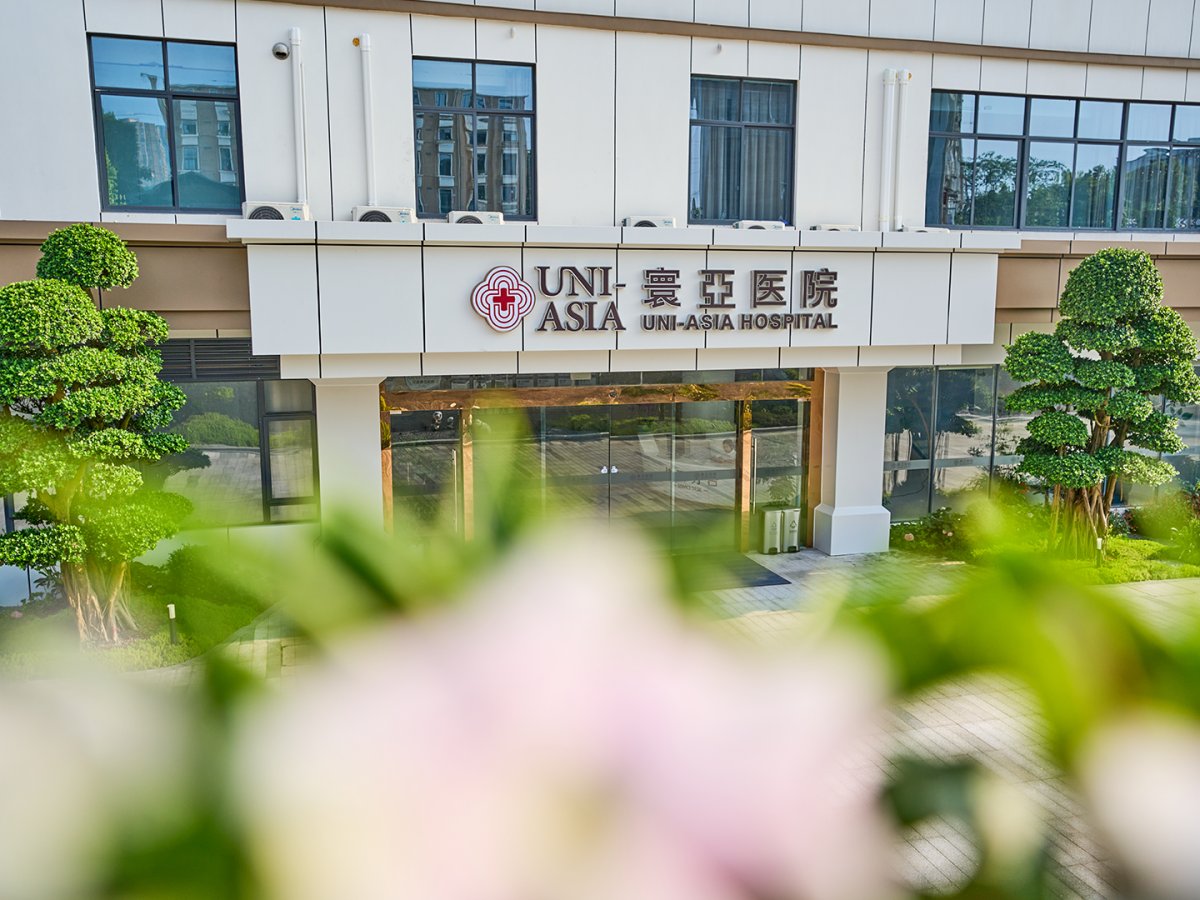
Uni-asia Cancer hospital: clinic profile
- Research by Uni-asia Cancer hospital's doctors: the study authors work at West China Medical School, Sichuan University in Chengdu, and the patients were not treated at Uni-asia Cancer hospital.
- One author, Liao Zhengyin, now practices at Uni-asia Cancer hospital according to the Bookimed profile.
- The Uni-asia Cancer hospital profile in Chengdu, China is available on Bookimed.
Liao Zhengyin: doctor profile
- Liao Zhengyin is an author of the paper, with an affiliation at the Department of Abdominal Oncology, West China Medical School, Sichuan University, Chengdu.
- The paper's subject, TACE for liver cancer, fits his field of clinical and interventional oncology.

Liao Zhengyin
Clinical oncologist, Gynecologic oncologist, Orthopedic oncologist, Neurooncologist, Oncologist/mammologist, Hematologist/oncologist, Interventional radiologist, Specialist in Internal Medicine and Critical Care Medicine
35 years of experience
Safety and recovery: general information
General patient guidance, provided separately from the case evidence. Follow your treating team's instructions.
Possible side effects
- Any procedure that places a catheter in a blood vessel may damage the vessel, cause bruising or bleeding at the puncture site, or lead to infection.
Ask the team how these risks are watched for and handled.
- Embolization material can lodge in the wrong place and may deprive normal tissue of its blood supply.
Ask how the team lowers this risk.
- The contrast material used in angiography can cause an allergic reaction.
Tell the team about any earlier contrast allergy.
- Most major complications of TACE involve infection in the liver or damage to the liver.
Ask what warning signs to watch for at home.
- Many patients have post-embolization syndrome in the days after TACE, with pain, nausea, vomiting and fever.
Ask which medicines will be given for these symptoms.
Recovery and aftercare
- Patients can often leave the hospital within 24-48 hours once pain and nausea are controlled with oral medication.
Ask what to expect in your own case.
- Many people can resume normal activities within a week.
Ask your doctor when this is realistic for you.
Suitability and cautions
- TACE is not recommended in severe liver or kidney dysfunction, abnormal blood clotting, prior surgery, or a history of stenting or blockage of the bile ducts.
Share your full history with the team so they can judge suitability.
- TACE may be most beneficial when the disease is mainly limited to the liver.
Ask whether your disease pattern fits.
When to contact the clinic
- You should contact your physician if pain suddenly changes in degree or character, if fever becomes suddenly higher, or if you notice any other unusual changes.
Ask the clinic for a contact route after discharge.
Request a personal plan from the clinic
Ask Uni-asia Cancer hospital about TACE for liver cancer with portal vein tumor thrombus
Send your imaging and liver test reports through the Bookimed coordinator. The coordinator passes them to Uni-asia Cancer hospital and asks whether chemoembolization of the liver may be an option to discuss.
Ask the clinic for a current, itemized quotation. Published evidence does not establish package inclusions or a current price.
Frequently asked questions
Who ran this study and where were the patients treated?
The study was run by doctors at West China Medical School, Sichuan University in Chengdu, and the patients were not treated at Uni-asia Cancer hospital. The abstract does not say which hospital treated them. No author lists Uni-asia as an affiliation. One author, Liao Zhengyin, now practices at Uni-asia Cancer hospital according to the Bookimed profile. Bookimed did not run the study.
Did TACE plus lenvatinib work better than TACE plus sorafenib?
After propensity score matching, the authors report that TACE plus lenvatinib was significantly superior for overall survival, progression-free survival and overall response rate. Before matching, median overall survival was 16.4 months versus 12.7 months, and the authors did not find this difference statistically significant. The matched group size is not given in the abstract, and a larger randomized trial is needed.
Are these treatments safe?
The authors describe both regimens as safe and well tolerated, but the abstract gives no adverse event counts. General sources note that TACE may cause bleeding, infection, an allergic reaction to contrast material, or post-embolization syndrome with pain, nausea, vomiting and fever. Ask the treating team how these risks apply to you.
Does this study predict my own result?
No. The figures describe groups of patients treated in a past study and are not a forecast for any one person. Your outcome depends on your own liver function, tumor extent and general health. The abstract does not state follow-up length. A doctor who reviews your records can say whether this approach is worth discussing for you.
Sources and scope
This page was prepared from the published abstract, the study details and Tier-1 medical sources on TACE. Only numbers stated in those materials are used, and Bookimed did not run the study.
- 1. Yang et al. – TACE Plus Lenvatinib Versus TACE Plus Sorafenib for Unresectable Hepatocellular Carcinoma With Portal Vein Tumor Thrombus: A Prospective Cohort Study.
Prospective cohort study with propensity score matching · 2021
Adults with unresectable HCC and portal vein tumor thrombus: 59 on TACE plus lenvatinib, 57 on TACE plus sorafenib.
Follow-up: Not stated in the abstract
Only the abstract was used, so it lacks the matched group size, follow-up length and adverse event counts.
- 2. RadiologyInfo.org (RSNA/ACR)
- 3. Uni-asia Cancer hospital on Bookimed
- 4. Liao Zhengyin on Bookimed
Scope and limitations
- A research summary is not an individual medical recommendation.
- Group results describe the study participants, not a forecast for any one patient.
Related procedures
About the editorial team

Prepared by
Bookimed editorial teamMedical content and care coordination
Bookimed prepares evidence summaries from published medical sources and anonymized care records. The clinic and any doctors named on this page are identified separately in their own sections.