Immunotherapy Program with PD-1 Inhibitor
$3,000
$2,000
/ Chief physician and professor. Grade 1 Expert at the Cancer Center, West China Hospital, Sichuan University (ranked No. 2 in China). Completed a postdoctoral fellowship in interventional radiology at the Chinese PLA General Hospital. Leads multidisciplinary team (MDT) care for complex tumors. Expert in minimally invasive interventional oncology for liver, lung, and pancreatic cancers.
Accreditations: Council Member, WATA. Member of CACA and CMDA committees on intervention, ablation, radioactive seeds, and pain. In 2023, inaugural director member, Palliative Care Committee, Sichuan MDA. Editorial board member of the Chinese Journal of Interventional Imaging and Therapy. Editorial board member of the Chinese Journal of Pain Medicine.
Leads 2 provincial S&T projects and 2 NSFC projects. Has 40+ papers, with 30+ as first or corresponding author. Highest impact factor: 10.73. Hepatocellular carcinoma (HCC) cohort: TACE + lenvatinib vs TACE + sorafenib. OS 18.97 vs 10.77 months. PFS 10.6 vs 5.4 months. ORR 66.8% vs 33.3%.
Liao Zhengyin, male, born in August 1965, is a leading figure in China's Multidisciplinary Team (MDT) approach to difficult and complex tumors. He serves as chief physician, professor, and top-tier expert at the Cancer Center of West China Hospital, Sichuan University (No. 2 in China). He holds a Doctor of Medicine (M.D.) degree from Sichuan University and completed his postdoctoral fellowship in interventional radiology at the Chinese PLA General Hospital (No. 3 in China).
Prof. Liao holds numerous prestigious academic positions, including:
Council Member of the World Ablation Therapy Association (WATA)
Member of the Committee on Minimally Invasive Therapy for Tumors, Chinese Anti-Cancer Association (CACA)
Member of the Special Committee of Interventional Medicine of Chinese Medical Doctor Association
Member of the Special Committee of Radioactive Seed of Chinese Medical Doctor Association
Member of the Special Committee of Ablation Therapies under the Special Committee of Interventional Medicine of Chinese Medical Doctor Association
Member of the 4th and 5th of the Academy of Pain Medicine of Chinese Medical Association
Deputy Group Leader of the Group of Pain Medicine of the Academy of Pain Medicine of Chinese Medical Association
Director Member of the Special Committee of Interventional Medicine of Sichuan Medical Doctor Association
Director Member of the Special Committee of Minimally-Invasive Tumour Treatment of Sichuan Anti-Cancer Association
Member of the Special Committee of Minimally-Invasive Tumour Treatment of China Anti-Cancer Association
Deputy Director Member of the Special Committee of Pain Medicine of Sichuan Medical Doctor Association
Director Member of the Interventional Medicine Committee, Sichuan Medical Association
Deputy President of the Special Committee of Interventional Medicine of Sichuan International Medical Exchange & Promotion Association
Academic leadrunner of Health Commission of Sichuan Province: Editorial Board Member of Chinese Journal of Interventional Imaging and Therapy and Chinese Journal of Pain Medicine
Responsible for two projects under Science & Technology Department of Sichuan Province, and hosted two research projects under National Natural Science Foundation of China, and undertook multiple scientific research subjects at national, provincial, and ministerial levels
He has also been a senior visiting scholar at Johns Hopkins Hospital (USA), the University of Washington Medical Center (USA), and the Singapore General Hospital (Singapore), specializing in interventional medicine.
In the tug-of-war with malignant tumours on the medical territory, there is a doctor, who traverses the innermost recesses of the human body with the guidance of imaging devices with extremely delicate and thin catheters and puncturing needles, precisely delivering the medicine of hope to the core of the lesion. He is also “the pride of the whole village” who decodes the CT scans frame by frame for the villagers under the daylight. He is the Chief Physician and Grade 1 Expert at the Center of Oncology in West China Hospital, Sichuan University, and the Director Member in the Special Committee of Interventional Medicine in the Sichuan Medical Association--Professor Liao Zhengyin.
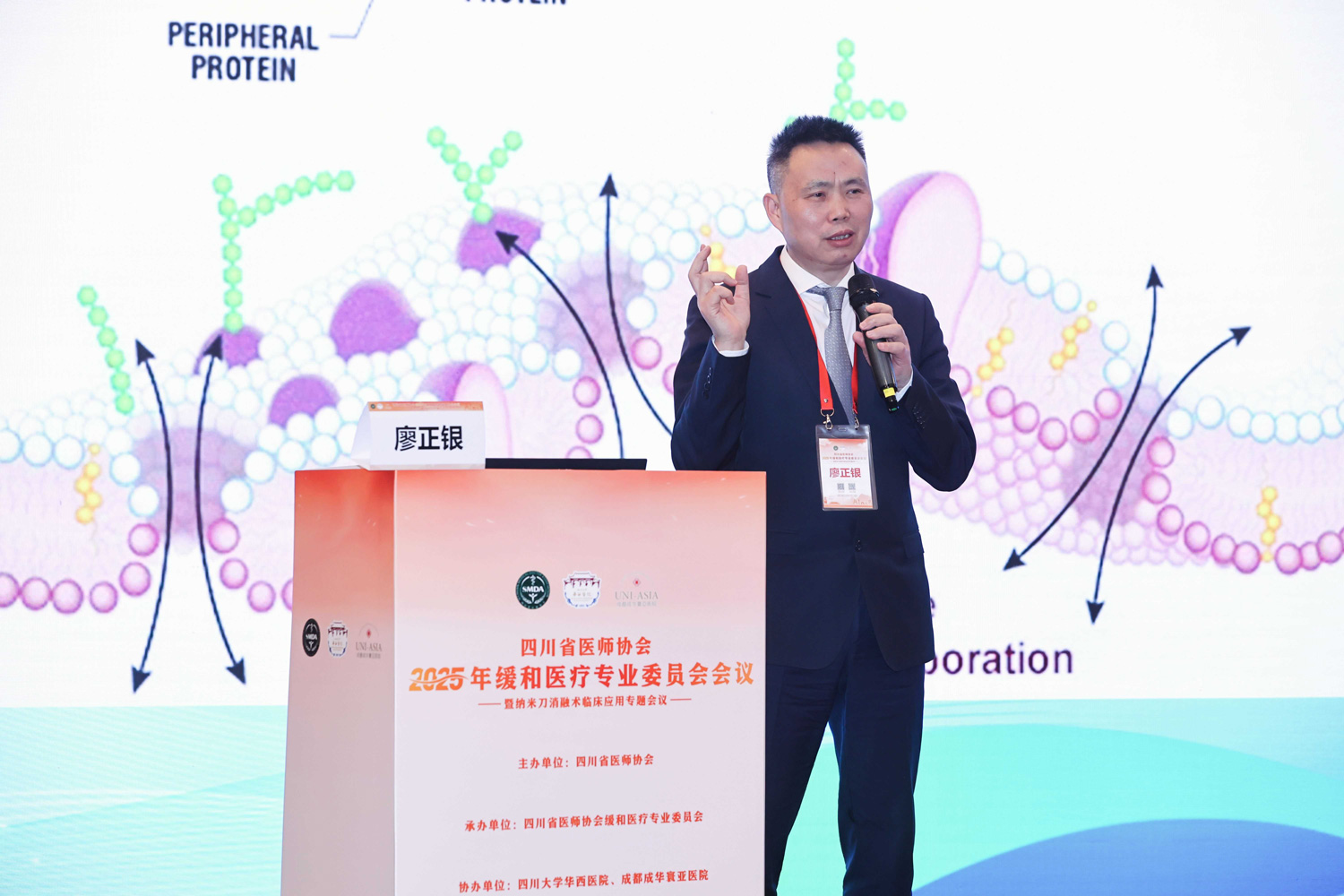 Professor Liao at the 2025 Palliative Care Professional Committee Conference and NanoKnife Ablation Clinical Application Symposium
Professor Liao Zhengyin was born into a family with a medical heritage in Rongxian County, Zigong City, Sichuan Province, whose grandfather was a Chinese medicine doctor, and whose father was a bare-foot doctor in the town. Thus the benevolence of medical workers has been inherited in his heredity. In 1985, Dr. Liao was admitted into West China University of Medical Sciences (1985-2000, now as West China Medical Center, Sichuan Univeristy, 2000 till now), and started working in the West China Hospital, Sichuan University because of excellent academic performances after graduation. Since then, Dr. Liao has begun his medical career.
During that time, the interventional medicine has just started in China. This technology which can utilise puncture or catheter to enter the human body and directly treat lesions under the guidance of imaging devices has enabled Professor Liao to have a sight of new possibilities. Prof. Liao accumulates clinical experience at daytime, and reads foreign literature at night, absorbing the most frontier knowledge. In 1998, Prof. Liao has pursued advanced studies in the discipline of interventional therapies in the Medical Center, University of Washington. In 2001, Prof. Liao was employed in the Chinese PLA General Hospital, and studied after Professor Zhang Jinshan, the first PhD. in the field of radiation medicine in China, pursuing postdoctoral studies in interventional therapies. Afterwards, he has assumed a Senior Visiting Scholar at Johns Hopkins Hospital, USA andSingapore General Hospital (SGH) respectively, bringing back the world’s attention to Southwest China.
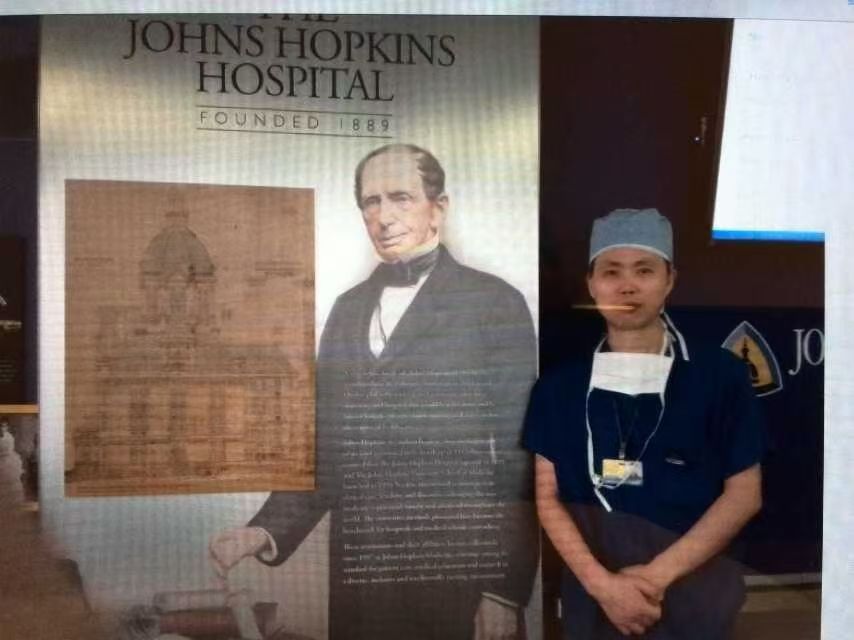 Professor Liao at Johns Hopkins Hospital
For more than three decades, Professor Liao Zhengyin has been focused on the minimally-invasive interventional therapies for the treatment of tumours. He is proficient in combining the vascular interventional therapies with non-vascular interventional therapies, coping with varied benign and malignant tumours such as lung cancer, liver cancer, pancreatic cancer, biliary duct cancer, urinary system tumour, and bone tumour, and the multiple technologies he used has been ranked in the top at home and abroad. Meanwhile, diseases including vascular malformation, hemangioma, cancer pain, and uterine leiomyoma are also amongst his scope of treatment. In 2023, Professor Liao has been elected the 1st Director Member of the Special Committee in Palliative Care of Sichuan Medical Doctor Association. It is during that time, Professor Liao has started to focus more on the symptoms control and life quality of the end-stage cancer patients.
Prof. Liao’s operating table is the last lighthouse for the many advanced cancer patients who were sentenced to “not being capable of having a surgery”. Many advanced cancer patients who were sentenced to losing surgery opportunities, have gained a renewed sight of hopes because of Professor Liao Zhengyin. A liver cancer patient has, with the company of his/her family members, sought doctors in a lot of places but failed to find a good doctor. When he/she came to Prof. Liao, Prof. Liao has produced interventional therapies solutions according to the patient’s CT outcomes. After treatment, the patient’s family members feedbacked that the patient’s conditions obviously turned better. Another liver cancer patient has gone through multiple times of interventional surgeries in other hospitals but still was not healed. Through twice interventional therapies treatments carried out by Prof. Liao, this patient has gained more than three decades of survival period till now, and currently he/she still regularly comes to the follow-up sessions with Prof. Liao in outpatient department.
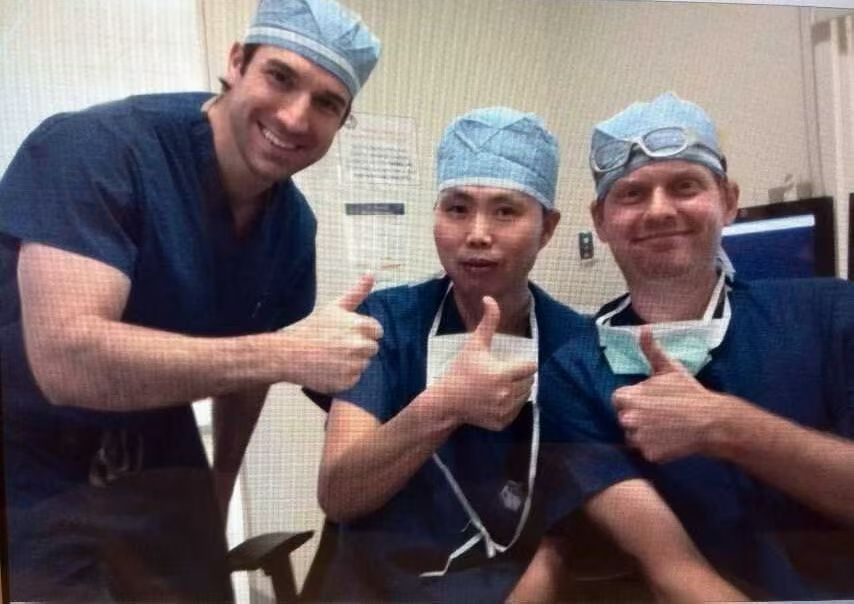 Professor Liao with his colleagues
Apart from work, Prof. Liao Zhengyin is using another way to extend his responsibility of being a medical worker. In 2021, Prof. Liao Zhengyin registered on the Douyin/TikTok platform, turning obscure knowledge of tumor interventional therapies into plain and accessible scientific popularisation short videos, receiving an accumulated more than 4.8 million total count of likes within one year. In Rongxian County where his hometown is, he returned home during Spring Festival Holidays and sat in the courtyard, explaining the CT scans for the villagers, which has received wide attention from the media. Prof. Liao said that: “It is too difficult to make an appointment for my outpatient consultations, and some patients even need to wait for one or two years.” This weighty waiting process on the part of the patients has made Prof. Liao even more persevere in the mission of “Create miracles and serve mankind”. Without being confined in the inches of his clinic room, Prof. Liao is breaking medical barriers with scientific knowledge popularisation, enabling the world-leading tumour interventional therapies knowledge to cross national borders and territories to face the whole world and reach each corner longing for life.
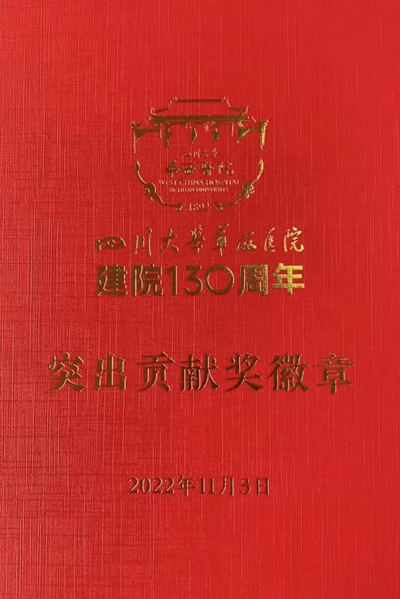 West China Hospital Outstanding Contribution Award
From the clinic room in West China Hospital to the social media platforms, and from international academic forums to the hometown courtyards, he has passed on the same belief through many different approaches: Enable the most advanced medical philosophies to reach the life that need most.
Having been engaged in the medical work for over 30 years, Prof. Liao has undertaken multiple scientific research subjects at national, provincial, and ministerial level, released over 40 academic papers, and reported on the latest achievements in the interventional medicine conferences at home and abroad. He is the Member of the Special Committee in Interventional Medicine of the Chinese Medical Doctor Association, the Member of the Special Committee in Radioactive Seed of the Chinese Medical Doctor Association, the Member of the Special Committee in Ablation Therapies of the Chinese Medical Doctor Association, and the Deputy Head of Group of the Group of Cancer Pain Medicine of the Academy of Pain Medicine of the Chinese Medical Association, the Director Member of the Special Committee in Tumour Minimally-Invasive Therapies Treatment of the Sichuan Anti-Cancer Association, Academic Leader of the Health Commission of Sichuan Province, and assumed the Editorial Board Member of Chinese Journal of Interventional Imaging and Therapy and Chinese Journal of Pain Medicine. Each title in the academic sphere has been a solemn vote for Prof. Liao’s anti-cancer treatment philosophy of “Precision, Minimally-Invasive, and Integration”.
According to statistics, Prof. Liao Zhengyin has released an accumulated of over 40 theses, and released more than 30 academic papers as the First Author and Corresponding Author (including SCI papers with high impact factors, and the highest impact factor reaches 10.73). Prof. Liao has reported on the latest achievements in the interventional medicine conferences at home and abroad. Meanwhile, Prof. Liao’s research focus broadly covers the minimally-invasive interventional therapies treatment of solid tumours including liver cancer, lung cancer, pancreatic cancer, and bone tumour, and the combined application of immunotherapy, targeted therapy, and interventional therapies. Also, Prof. Liao is the Deputy Chief Editor of two professional works.
1. ZENG Zhu, LIAO Zhengyin. Application of Immune Checkpoint Inhibitors in the Treatment of Advanced Hepatocellular Carcinoma. West China Medical Journal, 2020, 35(2): 230-235.
Prof. Liao Zhengyin assumes the Corresponding Author for this paper. This paper systematically reviews the progress on the application of immune checkpoint inhibitors (represented by PD-1/PD-L1 and CTLA-4) in the advanced hepatocellular carcinoma, covering the status quo of clinical researches and combined therapies strategies. This paper notes that though targeted therapy prolongs the total survival period of patients with hepatocellular carcinoma, the overall efficacy is still not good. However, the occurrence of immunotherapy brings in a brand-new prospect. This paper implements an inductive analysis of the existing clinical data, providing a theoretical reference for the clinical translation of the application of immune checkpoint inhibitors in the treatment of advanced hepatocellular carcinoma.
2. ZENG Zhu,YANG Biao,LIAO Zhengyin. Biomarkers in Immunotherapy-Based Precision Treatments of Digestive System Tumors. Frontiers in Oncology, 2021, Volume 11.
Professor Liao Zhengyin assumes the Corresponding Author for this paper. This paper focuses on the screening and evaluation of biomarkers in the immunotherapy of the digestive system tumours (gastric tumour, colorectal tumour, and hepatocellular carcinoma, etc.). The research notes that though the PD-L1 expression level is the potential biomarker that predicts the efficacy of immunotherapy, it is hard to effectively distinguish between responders and non-responders merely based on a single indicator. This paper also further discusses the prospect of application of a variety of biomarkers including Tumour Mutation Burden (TMB), Microsatellite Instability (MSI), and Circulating Tumour Cell DNA (ctDNA) in precise treatment, stressing the necessity and feasibility of carrying out standardised evaluation of existing biomarkers and exploring new types of biomarkers.
3. YANG Biao, LUO Jie, YANG Ting, CHEN Mingyang, GAO Yuemei, ZHANG Tian, ZHANG Yuzu, WU Hao, LIAO Zhengyin. TACE Plus Lenvatinib Versus TACE Plus Sorafenib for Unresectable Hepatocellular Carcinoma With Portal Vein Tumor Thrombus: A Prospective Cohort Study. Frontiers in Oncology, 2021, Vol 11.
Professor Liao Zhengyin is the Co-Author (ranked relatively low as a core member of the team). This prospective cohort study incorporates the patients in between September 2017 to September 2020, comparing the efficacy of the Transarterial Chemoembolization (TACE) plus Lenvatinib and the efficacy of TACE plus Sorafenib for treating unresectable hepatocellular carcinoma with portal vein tumour thrombus. Results show that through propensity score matching, the median overall survival is 18.97 months for the group of TACE plus Lenvatinib, evidently better than the 10.77 months for the group of TACE plus Sorafenib (HR 2.21; 95% CI: 1.12-4.38; p=0.022). The median progression-free survival has also been remarkably extended (10.6 months versus 5.4 months, HR 2.62; p=0.002). The Objective Response Rate (ORR) is 66.8% versus 33.3% (p=0.037). The conclusion shows that the TACE plus Lenvatinib is remarkably better than TACE plus Sorafenib in terms of overall survival, progression-free survival, and objective response rate.
4. YANG Biao, LIANG Jie, QU ZiYu, YANG FangYun, LIAO ZhengYin, GOU HongFeng. Transarterial Strategies for the Treatment of Unresectable Hepatocellular Carcinoma: A Systematic Review. PLoS ONE, 2020, 15(2): e0227475.
Professor Liao Zhengyin is one of the co-authors (ranked the 5th). This paper systematically reviews on comprehensively searching and analysing the various strategies of the transarterial treatment of unresectable hepatocellular carcinoma, including traditional Transarterial Chemoembolization (TACE), drug-eluting beads-TACE, and transarterial radioembolization, etc. This paper summarises and compares the efficacy, indications, and safety of various different technological means. This paper has been released on the platform of PLoS ONE, providing evidence-based reference for the interventional therapies and clinical decision-making in the treatment of liver cancer.
5. KAN XF, LIANG B, ZHANG XL, YU L, LUO YC, ZHOU S, LIU RB, XU GH, LI HL, LIAO ZY, et al. Transarterial Chemoembolization Plus Apatinib for Unresectable Hepatocellular Carcinoma: A Multicenter, Randomized, Open-Label, Phase III Trial. BMC Medicine, 2025, 23(1): 313.
Professor Liao Zhengyin has participated in this project as one of the co-authors. This multicenter, randomised, open-label, and Phase III Clinical Trial has evaluated the efficacy and safety of applying Transarterial Chemoembolization (TACE) Plus Apatinib in the treatment of unresectable hepatocellular carcinoma. This paper has been released in the top-class comprehensive medical journal BMC Medicine (with relatively higher impact factors), providing high-level evidence-based medical evidences for the interventional therapies combined with targeted therapy for the treatment of liver cancer.
6. Liao Zhengyin, Zhang Jinshan. Percutaneous Splenic Artery Embolization Therapy for Traumatic Splenic Rupture Experiment Study. Doctoral dissertation, China PLA General Hospital Postgrad Medical College, 2004.
Professor Liao Zhengyin is the First Author of this dissertation. This research has adopted the experimental miniature pig models to systematically observe the treatment efficacy of percutaneous splenic artery embolization therapy for traumatic splenic rupture. This research has found that the stopping time of bleeding in the group of embolization is evidently shorter than the stopping time of bleeding in the comparison group (P<0.05). Further, there were two pigs dead due to bleeding in the group without applying embolization therapy; however, in the group of embolization, there were no pigs dead. After embolization, the blood pressure within the branches of the splenic artery decreased from 168mmHg to 35mmHg, with a variance of 133mmHg. The pathological examination testifies that there were not seen infarction in the normal splenic region after embolization, and the wound surface of splenic rupture was packed with omentum and healed. The conclusion shows that interventional splenic artery embolization is an effective minimally-invasive method for treating Level II-IV splenic rupture, and it will not cause splenic infarction.
7. LI Jun, LIAO Zhengyin, YOU Xin, et al. Clinical Application of Transcatheter Arterial Injection of Spongia Gelatinosa and Iodized Oil Emulsion to Treat Hepatocellular Carcinoma with Arteriovenous Fistula. West China Medical Journal, 2009, 24(5): 1193-1195.
Professor Liao Zhengyin is a co-author of this paper. This research has incorporated 38 cases of patients with hepatocellular carcinoma complicated by severe arteriovenous fistula, discussing the feasibility and clinical values of the treatment of transcatheter arterial injection of spongia gelatinosa and iodized oil emulsion. Results show that the angiographic occlusion rate is 94.7% (36/38) after embolization, and the recanalization rate after four weeks was only 5.56% (2/36), without seeing definite adverse reactions. The survival rate of the patients after six months was 94.7%, and their survival rate after twelve months was 60.5%, and the survival rate after 24 months was 21.1%. The conclusions show that this method is safe and reliable, with high embolization rate and low recanalization rate, having a remarkable efficacy for the treatment of hepatocellular carcinoma complicated by severe arteriovenous fistula.
8.Liao Zhengyin, You Xin, Pu Ji, et al. Percutaneous Osteoplasty for the Treatment of Tumour Bone Metastasis Pain. Chinese Journal of Pain Medicine, 2011, (12):16-20.
Professor Liao Zhengyin is the First Author of this paper. This paper systematically reviews the development course and application prospect of percutaneous osteoplasty for the treatment of tumour bone metastasis pain. This paper notes that since 1987, when Galibert, et al., reported on using percutaneous vertebroplasty for the treatment of spinal hemangioma pain for the first time, this technology has been quickly promoted widely and gradually extended to the treatment of spinal metastatic carcinoma and vertebral malignant tumours. This paper has systematically analysed and concluded on the philosophies, indications, and clinical efficacy of this technology.
9. You Xin, Liao Zhengyin, Teng Haoqi. CT-guided Percutaneous Ganglion Impar Block and Neurolysis for the Treatment of Sacrococcygeal Pain. Journal of Interventional Radiology (Peking University Core Journal, CSTPCD), 2012, (8).
Professor Liao Zhengyin is the Second Author (Co-Corresponding Author) of this paper. This research has incorporated 18 cases of patients with refractory sacrococcygeal pain caused by various benign and malignant illnesses, who have gone through CT-guided ganglion impar block and neurolysis, and they have regularly come to follow-ups to evaluate their conditions of pain relief. The results show: 27.8% patients have been fully alleviated of pains after surgeries. 72.2% patients have been partially alleviated of pain. 8 cases of patients have gone through another interventional analgesic treatment after two weeks, and there have been two cases of complete pain relief after surgeries for twice. All of the patient cases have not shown severe adverse reactions. The conclusions show that the CT-guided percutaneous ganglion impar block and neurolysis for the treatment of refractory sacrococcygeal pain is safe and reliable, with definite efficacies, which is worthy of clinical promotion.
10. Xu Hongming, Yang Haijun, Guo Wenhao, You Xin, and Liao Zhengyin. The Clinical Observation of the Analgesic Effect of Percutaneous Vertebroplasty for the Spinal Metastatic Adenocarcinoma. Chinese Journal of General Practice, 2016, 14(2):330-332.
Professor Liao Zhengyin is a Corresponding Author for this paper. This research has incorporated 84 cases of patients with various spinal metastasis of primary adenocarcinoma confirmed pathologically, who later went through DSA-guided or CT-guided Percutaneous Vertebroplasty (PVP), and received an infusion of bone cement 1.5-5.0ml, with 1-6 or so operative vertebral segments. The results show that the Visual Analogue Scale (VAS) score fell from pre-operative scores of (6.48±1.77) to post-operative scores of (2.75±1.52) (P<0.01). Pre-operatively, the ratios of mild/moderate/severe pain are respectively 3/33/35 cases; post-operatively, they accordingly change to 57/11/3 cases (P<0.01). The conclusions testify that the Percutaneous Vertebroplasty (PVP) is an effective approach for the treatement of spinal metastatic adenocarcinoma, which can reduce the use of analgesic drugs and better the living abilities of patients.
11. Fu Xiaobo, Yang Biao, and Liao Zhengyin. One Case of Effective Interventional Therapies for the Treatment of Breathing Difficulty Caused by Advanced Hepatocellular Carcinoma with Hilar and Mediastinal Lymph Node Metastasis. West China Medical Journal, 2017, 32(12): 2000-2002.
Professor Liao Zhengyin is the Corresponding Author for this paper. This paper reports on a 32-year-old male patient with hepatocellular carcinoma, who, after a liver transplantation surgery plus orally taken Sorafenib, still experienced local recurrence later. After receiving Transarterial Chemoembolization (TACE) treatment, he has experienced bilateral hilar and mediastinal lymph node metastasis, showing clinical performances such as obvious dry coughs and inspiratory breathing difficulty (blood oxygen saturation fell to 85%). Professor Liao Zhengyin’s team has later implemented a bilateral bronchial artery and internal mammary artery chemoembolization surgery through hepatic arterial Transarterial Chemoembolization (TACE) combined with drug-eluting microspheres. After the surgery, the breathing difficulty symptoms of the patient were obviously alleviated. This case has shown the unique clinical value of using interventional therapies in advanced hepatocellular carcinoma combined with complicated metastasis.
12. Zhao Jian, and Liao Zhengyin. The Status Quo and Prospect of Interventional Therapies for the Treatment of Caudate Lobe Hepatocellular Carcinoma. The Chinese Journal of Interventional Imaging and Therapy, 2017, 14(8):513-516.
Professor Liao Zhengyin is the Corresponding Author of this paper. This paper reviews the latest progress on the interventional therapies for the treatment of the caudate lobe hepatocellular carcinoma inside livers. Because of the complexity of the atonomical structures of the liver caudate lobe and the diversity of the sources of blood supplies, its treatment approaches have long been controversial. This paper systematically introduces the application status quo of multiple approaches including Transarterial Chemoembolization (TACE), percutaneous ethanol injection, and catheter ablation, etc., in the treatment of caudate lobe hepatocellular carcinoma (HCC) treatment. This paper also analyses the strengths and weaknesses and indications of various technologies, providing academic references for the interventional therapies for the treatment of liver cancer in special anatomical sites.
13.Wu Zetao, Liao Zhengyin, Xie Xiaodong, and Wang Chaohua. The Clinical Application of CT-guided Percutaneous Pediculoplasty for the Treatment of Osteolytic Metastatic Tumour of the Pedicle. Journal of Practical Radiology (ISTICPKU), 2007, 23(7).
Professor Liao Zhengyin is the Second Author of this paper. This research implements CT-guided percutaneous pediculoplasty treatment for 18 cases of a total of 23 osteolytic metastatic lesions of pedicles (3 cases of thoracic vertebra, and 15 cases of lumbar vertebra). Post-operatively, all the cases of illnesses have been alleviated of pains to different degrees. There were 7 cases of bone cement leakage, amongst which one case had minor leakage of bone cement into vertebral canal, but which did not cause nerve compression symptpoms. Again, one case had radicular symptoms, which disappeard in 3 days after symptomatic treatment such as dehydration therapy. The conclusions show that this technology is a minimally-invasive, safe, and effective approach for the treatment of the pains caused by osteolytic metastatic tumour of the pedicle and the enhancement of spinal stability.
14.Liao Zhengyin, Zhang Jinshan, Xiao Yueyong, Yu Sen, and Li Jiakai. CT-guided Percutaneous Chemical Ablation Therapy for the Treatment of Abdominal Lymph Node Metastatic Lesions. The Chinese Journal of Interventional Imaging and Therapy, 2004, 1(2): 108-110.
Professor Liao Zhengyin is the First Author of this paper. This research has incorporated 15 cases of patients with abdominal carcinomatous lymph node metastasis, who went through CT-guided percutaneous puncture and an injection of mixed emulsion of ultra-liquefied iodized oil plus doxorubicin hydrochloride plus carboplatin/gemcitabine into enlarged lymph node. During the post-operative follow-up of 1-13 months, there was not any case who had intra-operative or post-operative complications, with 100% of pain relief rate, and 20% of pain disappearance rate, with obviously shrinking volume of lymph node. The conclusions show that the CT-guided percutaneous chemical ablation therapy is a feasible and effective new method for the treatment of abdominal lymph node metastatic lesions.
15.Liao Zhengyin, and Min Pengqiu. The Status Quo and Prospect of Vascular Interventional Neuroradiology. Sichuan Yixue, 2000, 21(9).
Professor Liao Zhengyin is the First Author of this paper. This paper reviews on the research progress and application conditions of vascular interventional neuroradiology, covering the scope of interventional thrombolysis for ischemic lesions, the angioplasty of vascular stenosis, and endovascular hermostasis, etc. This paper notes that the technological progress in the recent years has enabled the interventional neuroradiology to continuously expand in terms of the scope of treatment, and have daily perfect efficacy. This paper is one of the early-stage systematic reviews in this field.
16.Li Kaiming, and Liao Zhengyin. The Status Quo and Prospect of the Interventional Therapies for the Treatment of Acute Hemorrhagic Necrotising Pancreatitis. Sichuan Yixue, 2000, 21(9).
Professor Liao Zhengyin is the Second Author of this paper (being cited for 5 times). This paper systematically reviews on the status quo and development prospect of the interventional therapies for the treatment of acute hemorragic necrotising pancreatitis, discussing the application values of using interventional therapies like regional arterial infusion.
You make your payment directly at the clinic or to their official bank account.
Some clinics may require a deposit as a part of their policy.
Spread out your payments with installment options.
Earn rewards for referring friends to Bookimed.