


The hair transplant market is growing fast, on track to reach about $44.79 billion by 2033. A transplant restores growth, adds density, and gives natural-looking results that last. The biggest variable in the bill is where you have it done.
On average, a hair transplant costs about $9,000 – $12,500 in the UK and $10,000 – $15,000 in the US.
The same procedure is up to about 70% cheaper at accredited clinics abroad. FUE in Turkey starts around $2,300 – $3,200.
Quality holds up, too. Leading clinics hold certification from the International Society of Hair Restoration Surgery. The same clinics carry accreditation from the Joint Commission International, known as JCI.
Bookimed compares five best-value destinations: Turkey, Mexico, Poland, South Korea, and Thailand. See what each one costs, and how to choose the country that fits your budget and travel plans.
Key Takeaways:
- Turkey is the lowest-cost option, with FUE from $2,300 – $3,200 – up to about 70% less than the US.
- Mexico runs $3,000 – $4,100 and is the easiest hop for US patients.
- Poland costs $2,400 – $6,400 and is convenient for European travelers.
- South Korea ranges $3,900 – $8,600 as an advanced-technology hub.
- Thailand sits at $2,600 – $4,500 and pairs treatment with recovery time.
- All-inclusive packages in Turkey often bundle transfers, a hotel stay, and aftercare; other countries usually price these separately.
- Accredited quality is available across all five, with JCI-certified clinics in each destination.
Table of Contents:
- What is a Hair Transplant?
- How Much Do Hair Transplants Cost?
- Top Destinations for Hair Transplantation
- All-Inclusive Hair Transplant Packages Abroad
- How to Choose the Right Country for Your Hair Transplant
- Safety and Risks of a Hair Transplant
- Finding a Qualified Hair Restoration Specialist
- How Bookimed Finds the Best Hair Transplant
- Frequently Asked Questions
The Bookimed team has analyzed 4,500+ customer requests received on our platform. It also reviewed the service level of the hair transplant clinics listed on our website across 26 countries. Bookimed coordinators then sorted the top 5 countries for the best hair transplant experience:
What is a Hair Transplant?
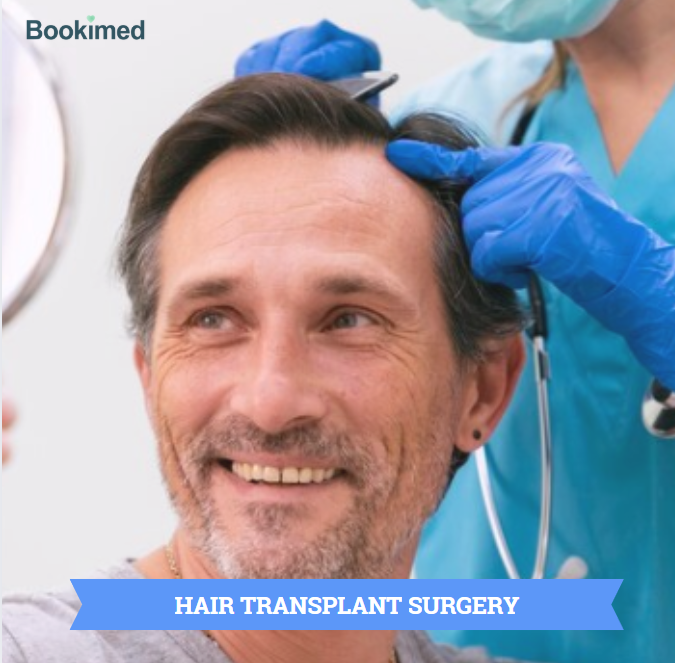
A hair transplant is a medical procedure that restores hair in areas where it has thinned or disappeared. The surgeon takes hair from thicker sections of the scalp, or another part of the body. That hair moves to the thinning or balding area.
People usually seek it for hair loss driven by genetics, illness, or aging, aiming for a fuller, denser, natural look.
The patient profile is also broadening. 95% of first-time patients start surgery between ages 20 and 35. Female surgical patients are up 16.5% over the past three years.
A transplant is not always the first step. Medical therapy such as finasteride or minoxidil is typically tried first. Surgery generally works best once hair loss has stabilized.
How does it work?
Imagine your lawn had a few bare patches where grass would not grow. It would help to move some grass from the thick areas into the bare spots. A hair transplant works a bit like that.
The doctor takes small grafts of hair-bearing scalp from the back of your head. Hair there is thicker and less likely to fall out. Those grafts move to the balding or thinning areas, so your hair looks fuller again.
What are the most popular hair transplant techniques?
Surgeons work with several extraction and implantation methods. Which one fits depends on your hair loss pattern and donor area.
| Hair transplant technique | Explanation |
|---|---|
| FUE (follicular unit extraction) | Extracts and transplants individual follicles. |
| FUT (follicular unit transplantation) | Removes a strip of hair-bearing skin for transplantation. |
| DHI (direct hair implantation) | Implants hair directly with a precision device, no pre-made holes. |
| Sapphire FUE hair transplant | Uses sapphire blades for precise, less invasive cuts. |
| Organic hair transplant | Enriches the scalp with growth factors before transplanting. |
| ARTAS robotic hair transplant | Employs robotic technology for accurate follicle extraction. |
| Unshaven hair transplant | Transplants hair without shaving, keeping a natural look. |
| Female hair transplant | Addresses female pattern baldness and enhances density. |
How Much Do Hair Transplants Cost?
Having a hair transplant abroad can save a lot without giving up quality. FUE in Turkey starts around $2,300, while a US FUT typically runs $5,000 – $10,000.
Mexico prices FUE near $3,500 – $3,800, and Thailand sits around $5,500 – $6,500. Against the highest US quotes, that is up to about 70% less.
| Procedure | Turkey | Mexico | Poland | South Korea | Thailand | UK | US |
|---|---|---|---|---|---|---|---|
| FUE Hair Transplant | $2,300 – $3,200 | $3,500 – $3,800 | $2,400 – $6,400 | $5,500 – $10,500 | $5,500 – $6,500 | $6,500 – $12,000 | $9,000 – $18,000 |
| FUT Hair Transplant | $1,000 – $2,200 | $2,500 – $4,500 | $2,800 – $5,000 | $3,800 – $6,800 | $2,800 – $5,500 | $5,500 – $9,500 | $5,000 – $10,000 |
| DHI Hair Transplant | approx. $2,800 | approx. $4,000 | approx. $6,000 | approx. $6,800 | approx. $4,500 | approx. $10,300 | approx. $5,000 |
| ARTAS Robotic | from $8,500 | from $6,000 | from $7,500 | from $6,800 | from $4,500 | from $8,500 | from $11,000 |
| Unshaven FUE | $2,300 – $3,200 | $3,500 – $3,800 | $2,400 – $6,400 | $5,500 – $10,500 | $5,500 – $6,500 | $6,500 – $12,000 | $9,000 – $18,000 |
| Per Graft Cost | ~$0.70/graft | ~$1.00/graft | ~$1.50/graft | ~$2.00/graft | ~$1.80/graft | ~$3.00/graft | ~$3.50/graft |
Transplants abroad cost less mainly because clinics there have lower overheads. Salaries, rent, and day-to-day expenses in Turkey or Mexico sit below US and UK levels. The same quality procedure therefore carries a smaller price tag.
Top Destinations for Hair Transplantation
Finding the best hair transplant often means exploring hair transplant clinics abroad, where patients can access affordable, high-quality procedures. From the best Turkish hair transplant options to the best hair implants in the world, these destinations draw patients.
Turkey

Turkey is widely recognized as the best place for a hair transplant overseas. Heavy government investment and competitive prices keep it there.
The country draws more than 1.8 million foreign patients for treatment a year. Hair restoration is among its most-requested procedures.
Why is Turkey the best hair replacement hub?
Low cost. FUE in Turkey runs about $2,300 – $3,200. That is less than South Korea at roughly $5,500 – $10,500. It is far below the US, where FUE can reach $18,000. For DHI, Turkey costs less than the UK, where prices run roughly $10,300 – $16,300.
Safety. Clinics that treat international patients need proper certification to keep safety standards high. Bookimed lists a Turkish clinic only after checking its national licence and international accreditation, under its clinic ranking policy.
A Turkish study, also published in the Aesthetic Surgery Journal, reported transplanted-hair survival of 76% to 95%, averaging 85%. Density success ran 76.9% to 95.2%, averaging 84.5%, with high patient satisfaction and no complications observed.
Fast arrangement. For patients who want to move quickly, travel to Turkey can often be arranged within a few days.
All-in-one price. Leading Turkish clinics usually bundle the procedure, transfers, accommodation, language support, and aftercare products. Patients often pay for those separately elsewhere.
Mexico

Mexico is recognized as one of the best destinations for plastic surgery and hair transplants. Each year, about 860,000 people visit Mexican clinics to enhance their appearance.
Why Mexico?
Affordable price. A US-versus-Cancun cost comparison puts FUE in Mexico at about $3,500 – $3,800. That is well below the US range of $9,000 – $18,000, and a little above Turkey at $2,300 – $3,200. Mexico stays popular with Americans for high-quality treatment at roughly 30% less than US clinics.
Convenient location. Mexican clinics in Tijuana sit right by the US border. It is about a 30-minute drive from San Diego to Tijuana. Patients can cross, have the procedure, and head home the same day.
Poland

Poland is less popular for hair transplants than Turkey or Mexico. It is also one of the most underrated locations for the best hair plantation.
Why Poland?
Best prices in Europe. Poland offers some of Europe’s most affordable hair transplants, roughly 40% below Western Europe. A FUE transplant runs about $2,400 – $6,400, cheaper than Germany at roughly $7,500 – $12,000. Accommodation and meals are affordable too, which trims the overall cost.
Top techniques. Polish clinics use the advanced ARTAS robotic system, known for strong, consistent results.
Research shows the ARTAS system detects grafts with high accuracy. Precision is 89.6% at 4 mm hair length and 97.4% at 2 mm. That helps improve follicular unit extraction results.
Cheap flights. Low-cost carriers make Poland easy to reach. A flight from the UK, Germany, or Switzerland takes just 1 – 3 hours. Airfare starts as low as $20 – $50.
Mild climate. Poland’s moderate weather supports a comfortable recovery, with no temperature extremes to slow healing.
Together, these make Poland a strong choice for affordable, high-quality care.
Thailand

Thai clinics perform around 150,000 plastic surgeries a year. That makes Thailand a leading destination for hair transplant patients. Patients from the USA, Europe, the UAE, Canada, and Australia travel there regularly.
Why head to Thailand for a hair transplant?
Experienced doctors. Thai doctors perform hair transplants at high volume, thanks to strong local demand for cosmetic surgery. Training abroad is common before they return. Reading patient reviews helps you find the right clinic in Thailand.
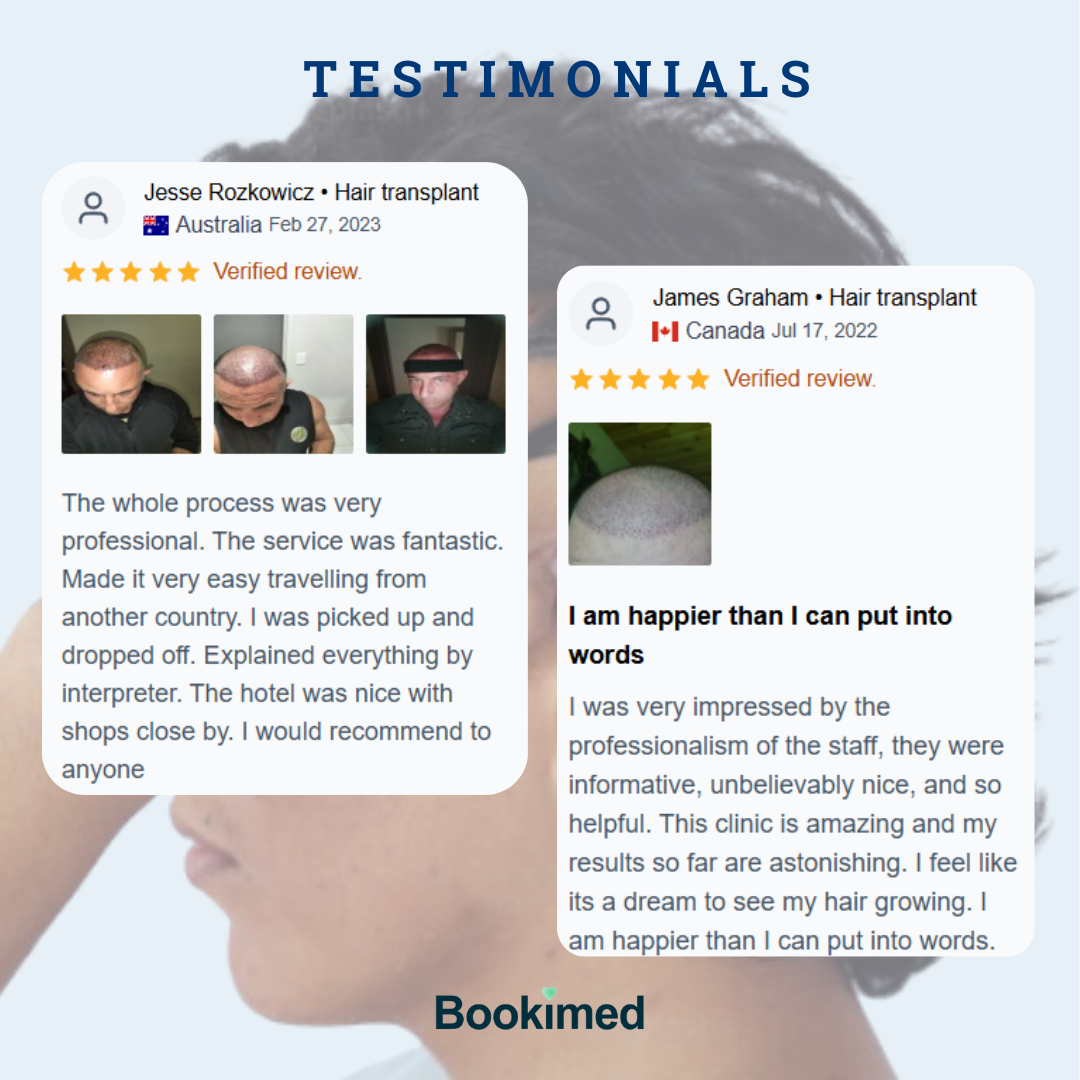
Competitive prices. FUE in Thailand runs around $5,500 – $6,500. General transplant packages start at $2,600 – $4,500. That is close to South Korea and well below the US. A Thailand-versus-US price comparison puts US FUE at $9,000 – $18,000.
Treatment during a trip. Thailand is a top resort destination. Patients can combine the procedure with recovery time on the beach or at a spa.
South Korea

South Korea is known as a top country for cosmetic surgery overseas. The country draws around 2.01 million foreign patients a year. Of those, 233,000 come for plastic surgery. As a global hub, the country offers strong quality and advanced techniques.
Why South Korea?
A capital of cosmetic surgery. South Korea’s standing in hair restoration comes from the sheer volume of surgeries and their consistent quality. Innovative techniques and advanced technology back that up.
Mid-range prices. More expensive than Turkey at $2,300 – $3,200 or India from about $1,900 for FUE, South Korea is still competitive. FUE there averages $5,500 – $10,500, below the US, where prices reach up to $18,000. That makes it a solid value for international patients.
High success rate. Korean clinics report very high success rates, so patients can expect reliable, long-lasting results.
All-Inclusive Hair Transplant Packages Abroad
All-inclusive hair transplant packages simplify your journey by bundling essential services. Clinics offer special discounts through Bookimed. That works out cheaper than booking each service separately, especially with limited-time offers.
Key inclusions in all-inclusive packages:
Most clinics build their packages from the same set of services.
Hair transplant procedure. Most packages include FUE, DHI, or FUT procedures, with roughly 2,500 to around 5,000 grafts depending on the clinic.
Accommodation. Stay in three- to five-star hotels, with 2 – 3 nights typically included.
Transfers. Airport, clinic, and hotel transfers are included, with VIP upgrades available in some locations.
Preoperative tests and medications. Blood tests, health screenings, and medications are usually covered.
Postoperative care. Follow-up consultations, special shampoos, lotions, and post-op medications.
Language support. Interpreters help with communication between the patient, the doctor, and the nurses.
Tourist activities. In some locations, you can add guided tours or resort upgrades.
Enhanced hair care treatments. Optional PRP therapy or extra products are available at some clinics.
How packages vary by country
What lands in the package changes with the destination.
Turkey offers the most complete packages with VIP services, lifetime warranties, and post-op products.
Mexico and Poland offer basic packages at lower prices with optional upgrades.
South Korea focuses on precision, with optional extras like language support.
Thailand combines treatment with vacation options and resort accommodations.
How to Choose the Right Country for Your Hair Transplant
The best country for a hair transplant matches your budget and the technique you need. How far you want to travel matters too. All five destinations have accredited clinics, so the deciding factor is rarely the price alone.
Weigh four things:
- Budget – total cost, not just the per-graft price.
- Technique availability – FUE, DHI, or ARTAS.
- Travel logistics – flight time and border access.
- Language and aftercare support – before, during, and after the trip.
| Best for | Country | What decides it |
|---|---|---|
| Lowest cost | Turkey | Lower local overheads, and packages that already include transfers, a hotel stay, and aftercare |
| Shortest trip from the US | Mexico | A 30-minute drive from San Diego to the Tijuana clinics, with no flight needed |
| Shortest trip from Europe | Poland | 1 – 3 hour flights from the UK, Germany, or Switzerland, on low-cost carriers |
| Newest technology | South Korea | ARTAS robotic and DHI available, backed by the highest volume of cosmetic surgery |
| Recovery built into the trip | Thailand | Beach and spa recovery next to the clinic, with the stay bundled into the package |

Hair transplant at SALUSS Medical Group in Antalya and Istanbul, Turkey may cost around $1,700-$4,500 USD. The clinic offers DHI and FUE techniques performed by specialist Huseyin Can Kaya with 17 years of experience and 1,100+ procedures completed.
Procedure Options
The clinic provides three main hair transplant methods:
- DHI 1-day: 3,500-4,500 grafts for around $2,000
- DHI 2-day: Up to 6,500 grafts for $3,000-$4,500
- FUE: Standard technique starting at $1,700
What's Included
The treatment package covers:
- Hair transplant procedure
- 2-4 nights hotel stay
- Airport transfers
- Post-op medications
- PRP therapy sessions
- Follow-up visits
Treatment Details
Procedures take 7-9 hours per day under local anesthesia. Doctors use hair from the back of the head or beard area. Patients see first results at 6-8 months with full growth by 12 months.
The clinic maintains a 95% graft survival rate. It provides follow-up checks at 3, 6, 9 and 12 months after treatment. Interested patients can contact SALUSS Medical Group for a personalized consultation.
Hospital certificates and accreditation of quality
Latest review
| Hair transplant | $2000 - $2500 |
The hair transplant at Adem and Havva Medical Center in Istanbul, Turkey may cost around €2,250 for a Sapphire FUE or DHI procedure. The clinic offers treatments performed by Dr Fuzun Erdogan, who has 29 years of experience and completed over 900 successful procedures. Patients receive lifetime guarantees on transplanted grafts.
Dr Erdogan specializes in hair transplantation and medical aesthetics. He pioneered aesthetic medicine in Turkey since 2004. His international training includes programs in Spain, France, Canada, and the US. The clinic holds ISO accreditation and a Patient Choice badge for hair transplants.
The center provides two advanced techniques:
- Sapphire FUE - Uses sapphire blades for precise placement of up to 100 grafts per cm²
- DHI - Employs Choi pens for immediate implantation and faster recovery (3-7 days)
A typical session transplants 4,000-4,500 grafts in 5-7 hours. The package includes:
- Pre-op blood tests
- PRP therapy
- 7-day medications
- Special shampoo for 8 weeks
- 2 nights in 5-star hotel
- VIP transfers and translator support
Patients stay 3-5 days total for procedure and recovery. The clinic offers transparent pricing with no hidden costs. A 4.8/5 rating from 198 reviews reflects their quality service. Contact the clinic to discuss your hair restoration needs.
Hospital certificates and accreditation of quality
Latest review
| Hair transplant | $2250 |
Safety and Risks of a Hair Transplant
A hair transplant is a low-risk, minimally invasive procedure when a qualified surgeon performs it at an accredited clinic.
Most side effects are minor and short-lived – some swelling, redness, or numbness around the treated area. The new hair also sheds temporarily before it regrows. Serious complications such as infection or scarring are uncommon with good technique and proper aftercare.
A peer-reviewed Aesthetic Surgery Journal study reported transplanted-hair survival of 76% to 95%. Patient satisfaction was high, with no complications observed.
To keep risks low, pick an accredited clinic and make sure a qualified surgeon leads the procedure. Follow the aftercare plan. Bookimed applies the same standards before it lists a clinic, set out in its clinic ranking policy.
Finding a Qualified Hair Restoration Specialist
Choosing the right surgeon is central to a good result. Here is what to check:
Board certification. Strong hair-restoration surgeons hold certification from an authoritative body. Examples are the American Board of Hair Restoration Surgery and the American Board of Plastic Surgery. Bookimed confirms these credentials before listing a specialist.
Experience and education. Look for surgeons trained at respected institutions such as Harvard Medical School, Johns Hopkins University or Stanford University Medical Center. Strong training programs, such as the Mayo Clinic surgical residency, are another good sign. Hands-on experience with FUE or DHI matters most for the outcome.
Who performs the surgery. Ask who actually does the procedure. In well-regulated clinics the surgeon leads the operation and supervises the team. Bookimed verifies a clinic’s national license and international accreditation before listing it.
Reviews and referrals. Check real patient feedback on trusted platforms such as Bookimed. Bookimed works only with verified specialists across countries, which supports consistent, trustworthy care.
How Bookimed Finds the Best Hair Transplant
Looking for the best country for a hair transplant? For most patients it is Turkey, with the lowest prices and the deepest pool of accredited clinics. Mexico is the closest option for US patients. Poland offers European convenience. South Korea leads on advanced technology. Thailand balances price and recovery.
Bookimed makes it easy to find the best hair transplant option for your needs. Here is how the process works:
Submit your request. Fill out the form on this page with details about your hair loss. Examples are male pattern baldness, thinning, or a receding hairline. Add any related issues and your budget.
Personalized consultation. A Bookimed medical coordinator reviews your request. You get the most suitable methods and clinics, matched with strong hair transplant surgeons.
Book your treatment. Once you pick your preferred option, you schedule the procedure and plan your visit to the clinic.
The treatment. You arrive and undergo surgery – whether FUE, FUT, or another technique – aiming for natural-looking results and minimal scarring.
Post-treatment support. Your personal coordinator stays in touch to help with questions about aftercare, grafts, or recovery.
Free assistance. Bookimed’s help is free, and you pay the same treatment cost whether you book through us or on your own.
Bookimed checks that a clinic holds the right national authorization and accreditations before listing it. You can then compare verified options with confidence.
Frequently Asked Questions
Quick answers to the questions patients ask most about having a hair transplant abroad. They cover what it costs and how to choose a safe, accredited clinic.
Which country is best for a hair transplant?
For most patients, Turkey is the best overall value. FUE runs from $2,300 – $3,200, up to about 70% less than the US. Turkey also has a deep pool of accredited clinics.
The right destination still depends on your priorities. Mexico at $3,000 – $4,100 is the easiest trip for US patients. Poland at $2,400 – $6,400 suits European travelers. South Korea at $3,900 – $8,600 is the advanced-technology hub. Thailand at $2,600 – $4,500 pairs a competitive price with recovery time.
A natural result depends more on the surgeon than on the country. Check the clinic’s accreditation, ideally JCI. Check the surgeon’s hands-on experience with your technique, such as FUE or DHI. Then read real, verified patient reviews.
Keep total cost in mind too. An all-inclusive package that bundles transfers, a hotel stay, and aftercare can beat a bare per-graft quote.
What is the cheapest country for a hair transplant?
Among the featured destinations, Turkey is the cheapest. Its hair transplant band is about $2,300 – $3,500, up to roughly 70% below typical US prices.
Cheaper does not mean lower quality when the clinic is properly accredited. Turkey’s low price mostly reflects lower local overheads – salaries, rent, and daily running costs – rather than shortcuts in care. The country also has JCI-accredited clinics.
When you compare quotes, check what each price includes. Leading Turkish clinics often bundle the procedure, airport transfers, a hotel stay, language support, and aftercare. A package that looks pricier upfront can end up cheaper once travel and extras are added.
India and Thailand are also low-cost options. Turkey still combines the lowest prices with the widest choice of accredited hair-restoration clinics.
Turkey or China for a hair transplant?
Turkey is usually the stronger choice on both price and range of options. Its hair transplant band is about $2,300 – $3,500, versus roughly $3,200 – $7,200 in China.
Turkey also has far more internationally accredited hair-restoration clinics and a mature medical-tourism system. That makes it easier to compare surgeons, read verified reviews, and book an all-inclusive package.
China can be convenient for patients already in the region and has capable clinics. For most international travelers, Turkey’s mix of lower cost, high clinic volume, and bundled services is simpler to navigate.
Whichever you pick, the clinic should hold a valid national license and international accreditation. A qualified surgeon – not only technicians – should lead the procedure. It also helps to ask how many grafts your case needs. Those checks matter far more than the country on the sign outside.
Is it safe to get a hair transplant abroad?
Yes – a hair transplant abroad is safe when you choose a properly licensed, accredited clinic. Accreditation and national approval matter far more than the destination itself.
Reputable clinics hold JCI accreditation and a valid national license. A qualified surgeon leads the operation and supervises the team.
Accredited clinics across Turkey, Mexico, Poland, South Korea, and Thailand meet these standards and report strong outcomes. Independent research in the Aesthetic Surgery Journal found high transplanted-hair survival and satisfaction rates.
Before you travel, read verified patient reviews. Ask about the specific technique and how grafts are handled. Check the aftercare plan and how the clinic manages follow-up once you are home.
A short video consultation shows how carefully a clinic answers your questions. Choosing an accredited clinic through a trusted platform such as Bookimed adds another layer of vetting.
What should I ask the clinic about technique?
Ask which extraction and implantation method the clinic uses, for example FUE, DHI, or ARTAS robotic. Then ask why that approach suits your pattern of hair loss.
Then go a step further. Ask roughly how many grafts your case needs and how that maps to the price. Cost usually tracks graft count.
Ask how grafts are extracted, kept, and implanted during the procedure. Ask how long they stay out of the body. Ask what density you can realistically expect from your donor area.
Confirm who performs each stage. In well-run clinics the surgeon leads the key steps and supervises the team, rather than delegating everything to technicians.
Finally, ask about aftercare: the washing routine, when shedding and regrowth typically happen, and the support you get at home.
Clear, specific answers are a good sign. Vague or rushed ones are a reason to keep comparing clinics.
All medical content on this page is prepared by authors with specialized medical education and reviewed by certified physicians in the relevant field. Medical review by Bulent Cihantimur , Plastic surgeon.
Last updated: October, 2026.
- Statistics: Figures are based on Bookimed’s internal database October 2026, which includes analysis of 12,450 patient requests across 2 accredited clinics in Turkey.
- Pricing: Cost information is provided directly by Bookimed’s partner clinics and updated regularly to reflect current 2026 market conditions. Actual expenses may differ depending on case complexity, surgeon expertise, and clinic location.
- Clinical Data: Treatment outcomes and patient satisfaction figures are collected from Bookimed’s verified clinic database and supported by data from peer-reviewed medical sources such as PubMed, The Lancet, JAMA, and NEJM (2023–2026).
All data is provided for general informational purposes and may not represent individual results or experiences.