Andrzej Kowalski


Atrial fibrillation Treatment in Centre of Invasive Cardiology, Electrotherapy and Angiology, GVM Carint
About the clinic
Atrial fibrillation care at the Centre of Invasive Cardiology, Electrotherapy and Angiology, GVM Carint, includes testing, catheter ablation, and rhythm-device implantation. The center is based in Kielce, Poland, with cardiology centers in five other cities; a heart check-up package may cost around $2,200. Dedicated electrophysiology labs in Zakopane and Myszków support rhythm testing and treatment.
Tests for atrial fibrillation
Cardiologist Dr. Agnieszka Czunko, MD, PhD, works with the electrotherapy team in Oświęcim and performs pacemaker, ICD, and CRT implantation. Available diagnostic options include:
- ECG and Holter monitoring: Records heart activity, including over an extended period. Holter blood pressure monitoring is also available.
- Echocardiography and transesophageal echocardiography: Ultrasound tests that create images of the heart.
- Stress testing: Checks heart function during physical activity.
- Cardiac CT and MRI: Imaging tests for the heart and coronary arteries.
- Electrophysiological examination (EPS): A catheter-based test that checks the heart’s electrical signals. It can take place immediately before ablation.
- Cardiological consultation: A specialist visit to discuss symptoms and testing.
Catheter ablation and rhythm devices
Radiofrequency catheter ablation treats irregular electrical signals in heart tissue. A catheter delivers heat to create small scars that interrupt those signals. The procedure uses local anesthesia, and the patient remains conscious. It may take from tens of minutes to several hours, excluding the EPS. The clinic reports complete arrhythmia elimination in about 90% of cases; this is not a guaranteed outcome.
Before admission, patients have a telephone consultation with a department physician about whether to pause antiplatelet, anticoagulant, or antiarrhythmic medicines. The clinic describes a short hospital stay and a recovery plan designed to avoid prolonged hospitalization.
- Pacemaker implantation: The device sits under the chest skin and connects to the heart through one or two leads. It is used for slow heart rates and certain rhythm disorders. Battery life is 5–15 years.
- ICD implantation: A defibrillator can treat dangerous ventricular rhythms and also act as a pacemaker. Its battery lasts 4–5 years, with checks every few months.
- CRT implantation: An extra lead sends impulses to the left ventricle to help coordinate heart contractions.
Electrotherapy procedures are available in dedicated clinic rooms, including a separate electrotherapy room in Oświęcim. Patients can request a consultation through Bookimed to discuss suitable testing and treatment.
Highlights
Get a free consultation
Treatments prices in the clinic
How are we doing?

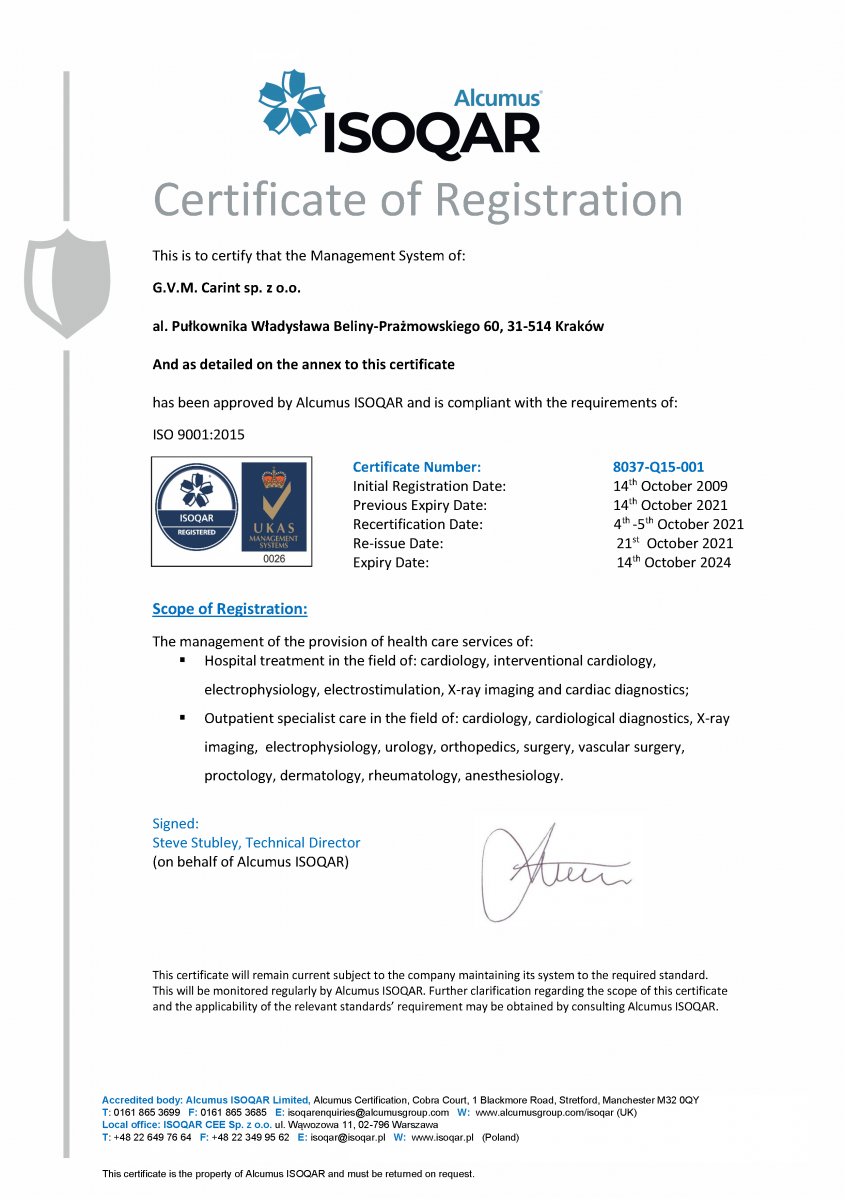
Licences

Centre of Invasive Cardiology, Electrotherapy and Angiology, GVM Carint: more details about the clinic
Centre of Invasive Cardiology, Electrotherapy and Angiology (GVM Carint) is a specialized cardiology network in Poland. Formed through a partnership between the Italian medical group Gruppo Villa Maria SPA and the Polish company Carint, the network operates cardiology centers in locations including Ostrowiec Świętokrzyski, Oświęcim, Sanok, and Myszków. The centers provide 24/7 emergency care for acute coronary syndromes, such as myocardial infarctions, as well as planned cardiac procedures.
Core Specialties and Procedures
The centers offer comprehensive cardiac care ranging from diagnostics to interventional treatments. The clinical team performs a wide variety of procedures following current medical standards designed to minimize hospital stays and facilitate recovery.
Invasive Cardiology and Diagnostics
The cardiology team addresses coronary artery conditions using advanced diagnostic and therapeutic techniques:
- Coronary angiography: An X-ray imaging test used to evaluate the size and course of coronary arteries and locate blockages.
- Angioplasty (PCI): A procedure to unblock narrowed or closed coronary arteries without open-chest surgery.
- IVUS (Intravascular Ultrasound): An imaging tool that shows the interior of coronary arteries in real time to assist in treatment planning.
- FFR (Fractional Flow Reserve): An invasive assessment used to determine the clinical significance of arterial narrowings.
Electrotherapy and Structural Heart Care
Specialists treat heart rhythm disorders and structural defects through various interventions:
- Pacemaker implantation: Used for patients with slow heart rates (bradycardia) or other rhythm disorders.
- Ablation: A procedure performed to eliminate arrhythmias by creating small scars in heart tissue to neutralize irregular electrical signals.
- ICD and CRT implantation: Includes cardioverter-defibrillators and cardiac resynchronization therapy systems.
- Percutaneous closure of heart defects: Minimally invasive treatment for defects such as ASD (atrial septal defect) or PFO (patent foramen ovale) using flexible occluders. After a successful closure, patients may be eligible for discharge as early as the next day.
Equipment and Services
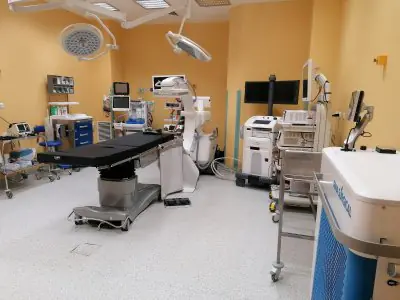
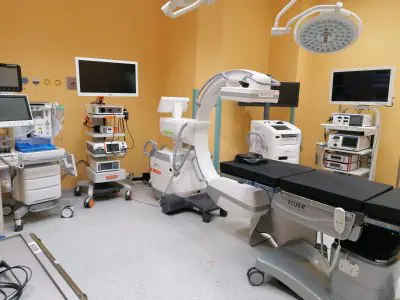
GVM Carint facilities are equipped with latest-generation angiographs for interventional radiology and cardiology. The network opened the first hybrid operating room in the Świętokrzyskie region at its Ostrowiec Świętokrzyski center. For critically ill patients, the centers provide circulatory support systems, including intra-aortic balloon pumps and temporary pacemakers.
The network also provides specialized cardiac rehabilitation programs for patients recovering from heart attacks or cardiac procedures. These programs are designed to help patients restore physical fitness and return to daily activities. Outpatient clinics support long-term care with consultations and non-invasive testing, including cardiac echo, stress tests, and Holter monitoring.
FAQ
What treatments do patients most often ask for?
Patients choose Centre of Invasive Cardiology, Electrotherapy and Angiology, GVM Carint most frequently to treat the following conditions: Urology, Cardiology, Heart Surgery.
What procedures do patients have most often?
The most common procedures in the hospital are: Holmium Laser Enucleation of the Prostate, Transluminal Arterial Angioplasty (PTA) and Stenting, Installing heart pacemaker.
Patient reviews
pomarancza pomarancza
Miroslawa G.
Rafal Adamczyk
Urszula Skowronek
Karola Szymanowskiego 13, 27-400 Ostrowiec Świętokrzyski, Poland

Get a free consultation
How it works:
- We find a medical coordinator familiar with the matter
- You get a personal offer with a step-by-step guide and the cost estimate
- We arrange your travel including appointment scheduling and flights booking
- You arrive at the hospital, we support you 24/7