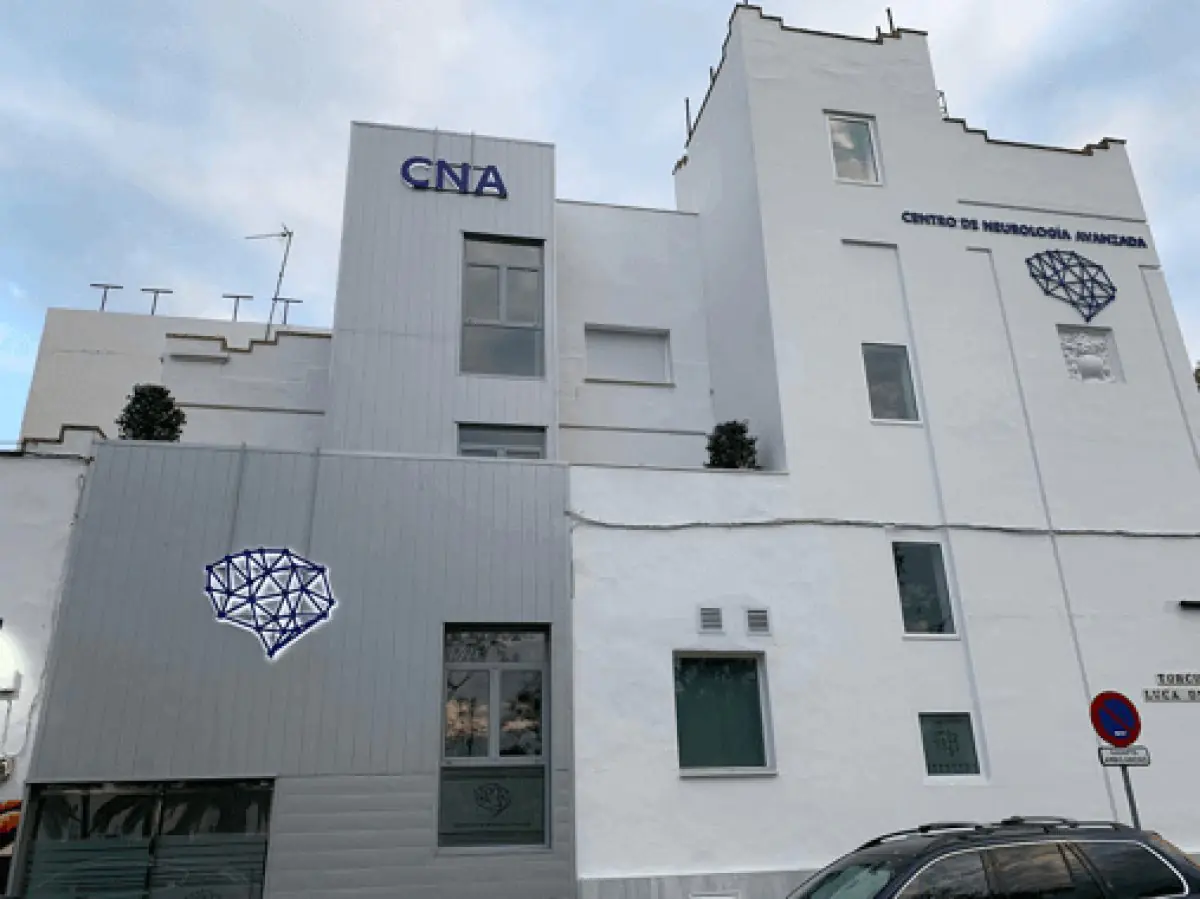
Centro de Neurología Avanzada (CNA) is a private neurology center in Sevilla, Spain. The clinic operates across multiple sites and provides multidisciplinary care for adults and children. Its medical team includes 20 doctors who specialize in neurology, neurosurgery, and psychiatry. The Sevilla facility has nine consultation rooms and four waiting areas.
Key Statistics and Recognitions
The clinic treats roughly 35,000 patients every year. Within the dedicated Sleep Unit, specialists perform over 350 videopolysomnographic studies annually. CNA holds Top Doctors recognition for its high standard of private healthcare in Spain.
Several physicians have earned individual professional awards:
- Dr. Hernando Pérez Díaz ranks among the 50 best doctors in Spain.
- Dra. Iratxe Maestro received research awards from the Sociedad Andaluza de Epilepsia.
- Dr. Pablo Clavel is recognized by Forbes as one of Spain's top 100 physicians.
CNA hosts epilepsy specialist rotations from Central America. The medical team also presents research at major events like the International Congress of Parkinson's Disease.
Neurological Care and Epilepsy Treatment
The clinic manages complex neurological conditions through specialized diagnostic and treatment pathways. The Epilepsy Unit uses prolonged video-EEG monitoring – up to 15 days – to identify seizure origins. This unit reports high surgical success rates:
- Over 85% of patients with lesion-based epilepsy become seizure-free.
- 84% of patients with mesial temporal sclerosis remain seizure-free after surgery.
- 79% of temporal lobe epilepsy patients achieve total seizure control.
For neurodegenerative diseases, CNA offers an integrated cognitive decline assessment pathway. The team uses blood biomarkers and PET amyloid imaging to diagnose early-stage Alzheimer's disease. Selected patients may receive advanced anti-amyloid therapies like Donanemab or Lecanemab.
Advanced Neurosurgery and Spine Care
The neurosurgery department focuses on vascular pathologies and tumor removal. Surgeons perform wide craniotomies to treat giant meningiomas measuring up to 8 cm. They use intraoperative neurophysiological mapping to protect brain function during these procedures.
The Spine Unit specializes in minimally invasive techniques for degenerative disc lesions. Dr. Pablo Clavel leads the Artificial Disc Replacement (ADR) program with 25 years of experience. The clinic has performed over 2,500 spine operations. More than 90% of patients report pain reduction.
Psychiatry and Pediatric Services
The Psychiatry department treats adult conditions including depression, anxiety, and personality disorders. Specialists use transcranial magnetic stimulation to treat medication-resistant depression. This non-invasive method uses magnetic pulses delivered through a coil on the head to adjust neural circuits.
Pediatric care comes from the Neurodevelopment and Learning Disorders Unit. The team includes neuropediatricians, psychologists, and speech therapists who treat emotional and behavioral disorders. This unit integrates family and school settings into each child's treatment plan.
Diagnostic Technologies
CNA provides a full range of neurological testing tools. Specialists use high-resolution Doppler sonography to assess vascular risks in stroke patients. The facility also offers electromyography (EMG) and visual evoked potentials to test nerve and brain function.
The Sleep Unit features specialized equipment for sleep disorder check-ups. Spine surgeons use microsurgical vision systems and radioscopic guidance for precise implant placement. For complex epilepsy cases, the clinic uses Sentiva devices for vagus nerve stimulation.
International Patient Services
International patients can access videoconsultations to review medical results and plan treatment. These online sessions allow initial assessments without travel. Physical attendance is only needed for imaging or instrumental studies. CNA partners with Hospital Universitario San Rafael for specialized care needs.


 The clinic is not accepting new requests
 Average answering time – 5 minutes
