Christoph Habicher
May 8, 2026
Hitech meets humanity. My son is very happy to have his therapy place here, and I would also like to say a big thank you for the great work!
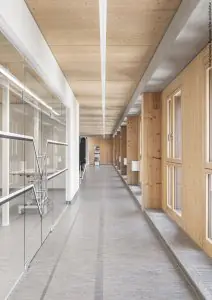
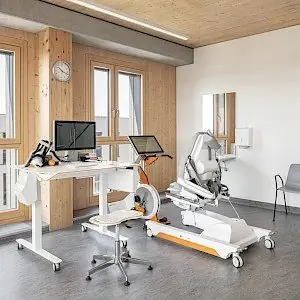
Multiple sclerosis rehabilitation at tech2people Therapiezentrum in Vienna, Austria, combines outpatient therapy with robotic and sensor-based training. An MS rehabilitation package may run around $3,100–$5,800. A 60-minute consultation may cost around $200, device-assisted therapy around $200, and conventional therapy around $90 per session.
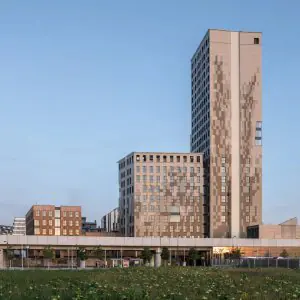
Dr. Peter Lackner, a neurological rehabilitation specialist and senior medical advisor, develops evidence-based treatment plans with therapists. The center opened in 2017 and has 700 m² of therapy space in the HoHo Next building.
The first appointment includes a medical history, status assessment, and therapy planning. Available tests include:
The outpatient program pairs tailored physiotherapy and occupational therapy to support mobility, balance, and independence. An intensive alternative runs from 2 weeks, with 3–6 therapy units each day. Its repeated practice aims to support neuroplasticity and offers an alternative to inpatient rehabilitation.
The center is beside U2 Seestadt station. Patients can leave a request on Bookimed to explore an assessment or rehabilitation plan.


 The clinic is not accepting new requests
 Average answering time – 5 minutes

tech2people Therapiezentrum is a private outpatient neurorehabilitation center in Vienna's Seestadt district. Gregor Demblin established it in 2017. The center focuses on device-assisted neurotherapy for complex injuries. It operates within the modern HoHo Next building, which offers full accessibility. Specialist teams treat both neurological and orthopaedic conditions. They help patients regain independence after surgeries or injuries.
The clinic treats several chronic and acute conditions:
Dr. Peter Lackner is the senior medical advisor and a specialist in neurological rehabilitation. He works with therapists to develop evidence-based treatment concepts. The clinic offers the Neuro Intensive Program for efficient recovery. This modular program starts from 2 weeks and includes 3–6 therapy units daily. High repetition of movements triggers neuroplasticity. This helps the brain relearn lost motor functions.
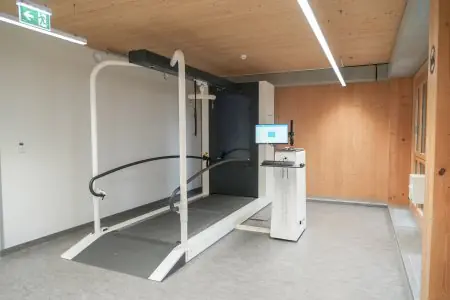
Specialists turn to robotic systems when conventional methods fall short. For spinal cord injuries, therapists use the ExsoNR exoskeleton. This battery-powered system enables safe standing and walking. Electric motors replace deficient neuromuscular functions. For stroke recovery, robot-assisted training focuses on gait. Real-time feedback and game-like elements boost patient engagement. The interprofessional team adjusts plans based on measurable progress.
Occupational therapy focuses on everyday independence. Therapists practice specific tasks like eating or dressing. They use the Myro sensor-based surface to train arm and shoulder functions. Strategies are developed to make daily life easier.
Pediatric therapy combines play with innovative rehabilitation devices. This helps children develop motor and sensory skills. The center treats children aged 2 and older. Each therapy plan is tailored to the child's goals. Relatives can also access psychosocial counseling services.
The facility uses several robotic and sensor-based platforms:
The clinic also offers transcutaneous spinal cord stimulation. This non-invasive option uses electrical stimulation to improve muscle function. Diagnostic capabilities include Electromyography (EMG) and Electroneurography. The medical team also conducts complex neurological examinations. These tests help define precise goals before therapy starts. A bone density measurement is required for robotic gait training to ensure patient safety.
The center treats international patients with a multilingual team. Therapists provide consultations in several languages:
The first appointment typically lasts 60 minutes. It includes a detailed history and status recording. The interprofessional team holds regular progress exchanges to keep treatment aligned with patient needs. The facility sits directly at the Seestadt U2 terminus, so public transport access is easy. Recent staff expansion allows for more intensive therapy slots each month.
Patients choose therapy2people Therapiezentrum most frequently to treat the following conditions: Neurology, Rehabilitation.
The most common procedures in the hospital are: Multiple sclerosis rehabilitation, Rehabilitation with "Lokomat", Occupational therapy, Spinal cord injury rehabilitation, Outpatient rehabilitation per day, Rehabilitation with Exoskeleton, Inpatient rehabilitation, Rehabilitation for children with cerebral palsy.
Christoph Habicher
Hannelore Hinterecker
Gisella
Susanne Weißl
Olga Felber
Dianna Natadze
Wolfgang Sumser
Marua Elkaheli
Edith Krystynek
Raphaela Wurm
 The clinic is not accepting new requests Average answering time – 5 minutes



