Stroke Rehabilitation Treatment in Guangzhou — Get 3 Personalized Clinic Matches


Medically reviewed by
Fahad Mawlood
How Much Does Stroke Rehabilitation Treatment Cost in Guangzhou?
| China | Turkey | Austria | |
|---|---|---|---|
| Suspension therapy | ≈ $450 | from $120 | ≈ $800 |
| Snoezelen therapy | from $3,000 | from $150 | ≈ $450 |
| Rehabilitation with space suit TheraSuit | ≈ $3,000 | ≈ $1,500 | ≈ $3,800 |
| Rehabilitation with Vector Gait System | ≈ $2,800 | from $1,300 | ≈ $9,000 |
| Rehabilitation with Re-step system | ≈ $3,500 | ≈ $3,800 | ≈ $7,500 |
Your Benefits and Guarantees with Bookimed
Transparent Prices & Flexible Installments
No hidden fees – just official clinic prices. Pay at the clinic for Stroke Rehabilitation treatment and use a flexible installment plan if needed.
Verified Clinics & Doctors Only
Bookimed is committed to your safety. We only work with medical institutions that maintain high international standards in Stroke Rehabilitation treatment and have the necessary licenses to serve international patients worldwide.
Free 24/7 Assistance
Bookimed offers free expert assistance. A personal medical coordinator supports you before, during, and after your treatment, solving any issues. You're never alone on your Stroke Rehabilitation treatment journey.

Your personal Bookimed medical coordinator
- Supports you at every stage
- Helps choose the right clinic and doctor
- Ensures quick and convenient access to information
Best Stroke Rehabilitation Hospitals in Guangzhou: 1 Verified Option and Prices

Get a Medical Assessment for Stroke Rehabilitation in China: Consult with Experienced Doctors Now
View all Doctors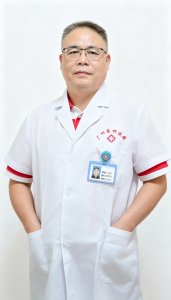
Yu Wuqiang
Dr. Yu Wuqiang provides a comprehensive, minimally invasive TCM program. It includes tailored herbal formulas based on syndrome differentiation, acupuncture, long‑term catgut embedding, fire‑needle warming, blood‑letting for stasis, and soft‑tissue release with small acupotome, blade needle, or myofascial‑release needle. He follows the rule “one formula for one disease, one strategy for one patient.” He focuses on hard‑to‑treat problems linked to long‑standing cold, chronic stasis, nerve injury, immune‑related rigidity, and stubborn chronic illness. His care aims for steady results and low recurrence.
He is trained in two academic lineages. He inherits Master Ni Haixia’s classical Yang‑supporting formula system. He has also studied the Turbid‑Toxin Theory of National TCM Master Li Diangui in a systematic way. He blends these methods to treat chronic refractory disease. From this work, he has built his own clear framework for syndrome differentiation.
Share this content
 Anna Leonova
