To homepage

How it works

Bookimed is free for patients – clinics pay us a commission, and you pay the clinic its own price with no markup. Five steps to your vocal cord injections in Thailand:

  1. Share your case

    Tell us about your voice concerns and share your latest throat exam report and scans.

  2. Get treatment plans

    Your coordinator finds clinics that match your needs and helps you choose. Your preferred clinics then send personalized treatment plans and quotes for you to compare.

  3. Plan your trip

    We set treatment dates that work for you and help arrange your flights and accommodation. If needed, we request a visa support letter from the clinic.

  4. Visit the clinic

    The clinic team performs your vocal cord injections on the agreed dates. We support you throughout your trip.

  5. Recover at home

    You can fly home 1–2 days after your injections, and your result settles over 2–4 weeks. Your coordinator stays in touch and helps arrange a follow-up if you need one.

Some clinics ask for a deposit. A $200 or €200 deposit paid through Bookimed comes off your clinic bill and is refundable up to 10 calendar days before your visit. A deposit paid to the clinic follows its own terms.

1M+ patient inquiries
32+ countries
3,234 partner clinics
12,472 certified doctors

Thailand Vocal Cord Injections overview

Cost and clinics

Typical vocal cord injection price in ThailandClinicsCities
$1,100 / ฿37,400–$1,500 / ฿51,0001 clinicBangkok

The procedure

Before the tripTime in ThailandOperation timeAnesthesiaBack to desk workFinal result
Share your medical history, allergies, and bleeding risk, and follow your doctor's medication guidance1–2 days, including 1–2 nights in hospital15–30 minutesLocal anesthesiaSame day to 2 days2–4 weeks

How much does a Vocal Cord Injections cost in Thailand?

The cost of vocal cord injections in Thailand typically ranges from $1,100 / ฿37,400 to $1,500 / ฿51,000 . Prices vary depending on the clinic, the surgeon’s experience, the injection material (such as hyaluronic acid or collagen), and whether the procedure is done under local or general anesthesia.

ThailandTurkeyAustria
Vocal Cord Injections≈ $1,100 / ฿37,400≈ $650 / ฿22,100≈ $900 / ฿30,600
Data verified by Bookimed as of November 2026, based on patient requests and official quotes from 10 clinics worldwide. Median costs are based on real invoices (2025–2026) and updated monthly. Actual prices may vary.

How to choose a Vocal Cord Injections clinic in Thailand

For vocal cord injections in Thailand, first match the doctor’s training to the technique, then confirm who will perform it, ask about licensing and accreditation, and read patient reviews.

What to check

  • Technique match

    Choose a doctor with relevant training, specialty, and qualifications for vocal cord injections so their background fits the procedure.
  • Key clinician

    Before deciding, confirm the doctor you meet will carry out the technique you need, not an assistant – ask who else will be involved.
  • Team questions

    Ask everyone involved in your care about their qualifications and raise your questions about treatment before you decide.
  • Formal checks

    Ask whether your doctor is licensed by the Medical Council of Thailand – independently confirm the doctor’s qualifications and references, and ask which recognized accreditation the hospital holds.
  • Patient reviews

    Compare comments about the doctor, care, and trip with the clinic’s references – do not rely on the score alone.

Discover Vocal Cord Injections Clinics in Thailand

Clinic NamePatient RatingAboutAccreditationsLead DoctorTechniques
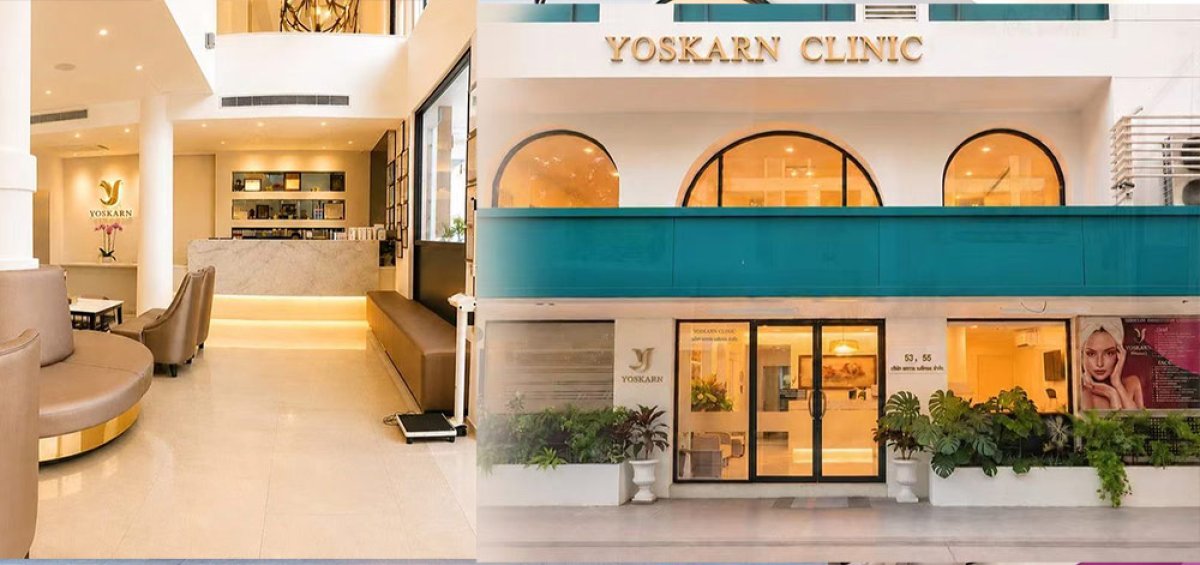
Yoskarn Clinic

Bangkok

4.4

Yoskarn Clinic brings over 40 years of specialized ENT and voice surgery experience. Its dedicated Bangkok voice center treats conditions including hoarseness and vocal cord paralysis. Injection options include fillers, fat transfer, and regenerative cell-based therapies, selected after diagnosis. Treatment time ranges from about 30 minutes to a few hours, with professional post-treatment monitoring.

———

Is a Vocal Cord Injections right for you?

Vocal cord injections in Thailand may suit you if vocal fold problems cause a breathy voice or swallowing difficulties. They add bulk to help close the gap between your vocal folds, and suitability usually depends on the cause of the gap and your health.

Vocal cord injections may suit you if:

  • You have a breathy voice linked to vocal fold paralysis, weakness, thinning, scarring, a sulcus, or bowing.
  • You have swallowing difficulty or aspiration because your vocal folds do not close fully.
  • You need temporary vocal fold medialization while waiting for nerve recovery or before permanent thyroplasty.

Consider another option or wait if:

  • You have an active infection or inflammation of the larynx. Wait until it has cleared.
  • You have suspected laryngeal cancer that has not been diagnosed. Have it diagnosed before considering injections.
  • You have a known allergy to the injectable material.
  • You have an uncontrolled bleeding disorder or unsafe anticoagulation status. Ask your doctor to assess your bleeding risk and medication status.
  • You have significant airway compromise that added bulk could worsen. Ask your doctor to assess whether injections could affect your breathing.

Alternatives include voice therapy for a nonsurgical plan or medialization laryngoplasty to close the gap with an implant. You could also ask about nerve reinnervation surgery to reconnect the vocal-cord nerve.

Before you book:

  • Prepare your laryngoscopy or stroboscopy report and laryngoscopy video, if available.
  • Prepare your voice assessment report, if available.
  • Prepare your neck or chest CT or MRI report.
  • Ask: “Could temporary injections help while I wait for nerve recovery or consider permanent thyroplasty?”
  • Ask: “How would my bleeding risk or airway compromise affect whether I can have injections?”

Bookimed helps you find clinics and pass on your records and questions. The clinic's doctor reviews them and decides whether vocal cord injections suit you.

Vocal Cord Injections recovery timeline: what to expect week by week

You can usually fly home 1–2 days after an uncomplicated awake injection, with your surgeon's approval. You may return to desk work the same day or within 2 days, though vocally demanding work may need longer voice rest. Light activity may resume within 0–1 weeks, while strenuous exertion or straining should wait for your clinician's advice. Your voice may improve immediately, with a stable result often showing after 0.5–1 month as swelling settles, depending on the injection material.

  1. Day of procedure

    You’ll be observed briefly, and your voice may sound better but strained, with mild throat discomfort. Avoid eating or drinking until numbness wears off, and avoid shouting or clearing your throat.

  2. First week

    Swelling subsides, your voice stabilizes, and swallowing often improves. If you have no airway symptoms or bleeding, you can usually fly home 1–2 days after an uncomplicated awake injection. Get your surgeon's approval, observe advised voice rest, and avoid heavy straining.

  3. Weeks 2–4

    A follow-up laryngoscopy and voice assessment are routine within 7–28 days. Your clinician may consider a touch-up injection or voice therapy.

When to contact your clinic: Seek emergency care for shortness of breath, and contact your clinic for severe trouble swallowing or a fever over 101°F.

Traveling to Thailand for a Vocal Cord Injections

Plan 1–2 days in Thailand after the procedure before flying home. US and UK passport holders may stay without a visa for up to 30 days, and a longer stay may need a medical-treatment visa.

When What happens
Before the procedure Arrival and consultation
1–2 days after Flight home

Before you fly

  • Visa. US and UK passport holders may stay in Thailand without a visa for up to 30 days. A longer stay may need a medical-treatment visa. All foreign nationals must complete the Thailand Digital Arrival Card online within 3 days before arrival.
  • Passport. The US State Department strongly recommends that your US passport be valid for at least 6 months beyond arrival. Your UK passport must have an expiry date at least 6 months after arrival and at least 1 blank page.
  • Medicines. US travelers should carry prescribed medicines in original packaging with prescriptions and check Thai legality. Some UK medicines differ in legal status abroad. Thai hospitals and pharmacies usually accept UK prescriptions.
  • Hand luggage. Bring laryngoscopy or stroboscopy reports, laryngoscopy video if available, voice assessment reports if available, neck or chest CT/MRI reports, prior neck, thyroid, or cardiothoracic surgery records, and anticoagulant and antiplatelet medication records.

Getting there and staying

  • Airports. Suvarnabhumi Airport is 25 km from downtown Bangkok. Don Mueang Airport is 23 km from the Grand Palace.
  • Flight time. Bangkok is about 9,600 km from London, with 11–12 hours of flying time, and about 13,900 km from New York, with 16–17 hours. A connection adds time.
  • Emergency. In a medical emergency, call 191 and ask for an ambulance.

When to go

  • Weather. Bangkok’s average daytime highs are about 31 °C in September–January and about 35 °C in April–May. May–October are the wettest months, with 100 mm of rain or more.
  • Season. November to April is drier and may be easier for a recovery trip, although it remains hot. May to October is harder because of heavy rain and hot weather.

Insurance and changes

  • Health insurance. US travelers cannot use Medicare or Medicaid overseas and should make sure their health insurance covers them abroad. UK travelers cannot use a UK GHIC or UK EHIC in Thailand.
  • Hospital payment. All hospitals in Thailand require a guarantee of payment before treating patients.

Flying home

  • Fit to fly. Flying home is typical after an uncomplicated awake injection without airway symptoms or bleeding, but you need clinician clearance.
  • Take home. Take a copy of your prescription because it can help doctors find the exact or similar medication.

Vocal Cord Injections in Thailand: Video Reviews from Bookimed Patients

Jamie
Bookimed made this medical trip a breeze.
Procedure: Sex reassignment surgery

Thailand Vocal Cord Injections Reviews at Bookimed: Discover Patients' Insights

View all
Anonymous • Consultation with an otolaryngologist
Jan 27, 2020
Verified review.
شكرا جزيلا ،سعيد جدا بالتواصل مع بوكيميد ، المستشفى رائع والكادر الطبي اروع .

Share this content

Updated: 11/14/2026
Authored by
Anna LeonovaAnna Leonova
Anna Leonova
Head of Content Marketing Team
A certified medical writer with 10+ years of experience, developed Bookimed’s trusted content, backed by a Master’s in Philology and medical expert interviews worldwide.
Fahad Mawlood
Fahad Mawlood
Medical Editor & Data Scientist
General practitioner. Winner of 4 scientific awards. Served in Western Asia. Former Team Leader of a medical team supporting Arabic-speaking patients. Now responsible for data processing and medical content accuracy.
Fahad Mawlood Linkedin
This page may feature information relating to various medical conditions, treatments, and healthcare services available in different countries. Please be advised that the content is provided for informational purposes only and should not be construed as medical advice or guidance. Please consult with your doctor or a qualified medical professional before starting or changing medical treatment.

FAQ about Vocal Cord Injections in Thailand

What documents are required to apply for a visa to Thailand for treatment?

Visas for travel to Thailand require a number of documents. The necessary papers can be submitted 90 days before the planned departure. The list of documents includes:

  • ID card
  • confirmation of online registration and filling out the questionnaire
  • certificate of income and availability of funds (20,000 baht per person/40,000 baht per family)
  • insurance policy for a stay in Thailand (original and copy)
  • 2 photos (4x6)
  • visa receipt
  • booking of round-trip air ticket (paid in full) and hotel
  • medical opinion about the need for treatment.

What is the level of medicine in Thailand?

Healthcare is the key development sector of the Thai government. The Thai authorities are convinced that care for the citizens' health should be an absolute priority of state policy and spend about 25 billion baht for healthcare annually.

As a result, 36,673 medical facilities provide excellent medical care in the country. 64 centers in the Kingdom have certificate of JCI (Joint Commission International), the international improver of healthcare quality and safety across the globe. The index of certificates obtained is the largest. To compare, Israel has 20 JCI-accredited facilities, and Germany — only 10 clinics of this type.

When is the best time to travel to Thailand?

The main advantage of Thai resorts is the long beach season. On the east coast and west coast the climate features are different, so take it into account when planning the trip. The best time to travel is during the cool and dry season between November and early April. A large influx of tourists is in March-May, when the air temperature is +30°C.

What should you know about Thailand before the trip?

Official name

The Kingdom of Thailand

Currency

Thai Baht (you also can pay for services in dollars)

Best period for the trip

November-early April

Language

Thai (most of medical staff speaks English fluently)

Visa

is required for a trip of 3-6 months

Time difference with Europe

7 hours

Time difference with the USA

12 hours

Capital

Bangkok

Medical tourism center

Bangkok

Popular resorts

Koh Samui, Phuket, Chiang Mai, Koh Chang, Hua Hin

What hotel service is provided here?

In the Kingdom of Thailand, hotels of different price ranges and service levels are presented. The level of Thai hotels is comparable to hotels in Tunisia, Morocco or Egypt. Most tourists choose 4 and 5 star hotels with all-inclusive meals. Such hotels have everything for a comfortable stay: varied food, a large well-groomed territory, animation for children and adults. Some hotels have their own water park, which guests can use for free. Budget travelers can afford to book an economical 3-star hotel with half board or no meals at all.

Do I need a visa?

For now, the Kingdom of Thailand requires different visa regimens for diverse states. Some foreigners can stay in the country 60 days without visa control, some of them — only 14 days.

How long you can stay in Thailand and what countries can cross the border easy read here.

Last review: 11/14/2026

Fahad Mawlood
Content meets the Bookimed Editorial Policy and is medically reviewed by

Fahad Mawlood — General practitioner. Winner of 4 scientific awards. Served in Western Asia. Former Team Leader of a medical team supporting Arabic-speaking patients. Now responsible for data processing and medical content accuracy.

Get a free consultation

Have a question about Vocal Cord Injections in Thailand?

Ask a Bookimed medical coordinator about prices, clinics, techniques or your case. Write to us in the messenger you already use.

  • Direct prices from clinics
  • Free evaluation of your medical case
  • Free personal assistance 24/7

Ask your question in a messenger

Tap a messenger to open a chat with a Bookimed medical coordinator.

Free and without obligation · Terms of use · Privacy policy

