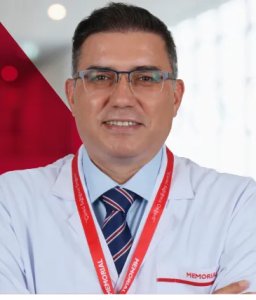
Op. Dr. Semih Özçınar is a plastic, reconstructive, and aesthetic surgeon. He earned his M.D. from Ankara University and completed his plastic surgery residency at İnönü University. He is a member of the International Society of Aesthetic Plastic Surgery (ISAPS).
His scientific work includes an oral presentation at the 2022 National Congress of the Turkish Society of Plastic, Reconstructive and Aesthetic Surgery titled "Retrospective Analysis of Regional, Free, and Local Flaps in Head and Neck Reconstruction." He also wrote a thesis on the effect of septocolumellar flap use on nasal tip projection in rhinoplasty.
He has completed training in ISAPS Live Surgery Rhinoplasty, the ISAPS World Congress 2022 in Istanbul, Bosphorus Breast Live Surgery, the 9th Rhinoplasty & Facial Aesthetics fresh cadaver course, BTS International Aesthetic in Sweden, and FABCAST meetings. His focus areas are facial aesthetics, breast surgery, body contouring, and reconstruction.