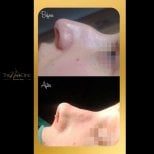
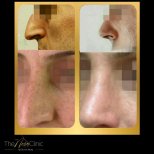
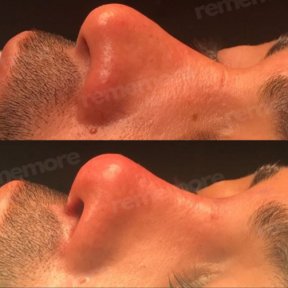
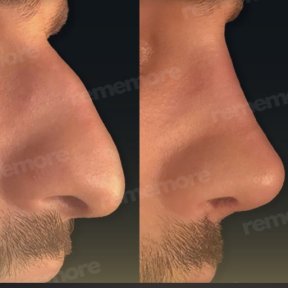
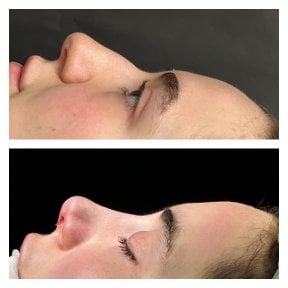
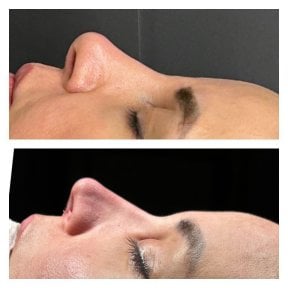
You sleep with your mouth open. You breathe through one nostril. Septoplasty is the operation that fixes that. It straightens the wall inside your nose so air moves freely again. Success is measured in airflow, not appearance, and there are no before-and-after photos to compare. That makes planning a Turkey trip different from cosmetic rhinoplasty.
Three questions decide most bookings. When can you safely fly home? What success rate is realistic? And how do you check the surgeon and hospital before you pay?
When Is It Safe to Fly Home After Septoplasty in Turkey?
Plan a few extra days in Turkey before you fly home. The reason is bleeding risk in the first days. A 4-year audit at the Royal National Throat, Nose and Ear Hospital tracked 432 day-case patients. More than 91% went home and stayed home. The small group who came back within 24 hours returned mostly for a nosebleed. That is far easier to handle in the city where you were operated on.
| Milestone | What you'll feel | Flight authorization |
|---|
| Days 1–3 |
Heavy congestion, mouth-breathing, light pink drainage |
Flying is off-limits |
| Days 4–7 |
Splint or packing removed at the clinic, typically day 7 |
Short-haul under 3 hours after in-person surgeon sign-off |
| Weeks 2–3 |
Swelling and crusting settle |
Long-haul over 6 hours cleared with hydration and compression socks |
| Months 3–6 |
Mucosa fully heals; cartilage stabilizes |
Any flight length; window for the 3–6 month follow-up |
Cabin humidity often drops below 10%, which dries the lining of the nose until crusts tear at healing tissue. Barometric changes also stress fresh sutures. General anesthesia briefly raises clotting risk, so the Royal College of Surgeons advises caution with long flights soon after surgery. ENT UK frames the first 1–2 weeks around congestion and splint removal.
Most Turkey packages cover a 1-night hospital stay plus 3–6 hotel nights. That is enough for splint removal, but tight if you face a long flight home. Ask your coordinator to extend the hotel booking to 7–10 nights when your flight runs over 6 hours.
Realistic Success Rates and Long-Term Outcomes
Sweden's national septoplasty registry tracked 11,714 patients. Of those, 59.9% reported complete relief or only mild symptoms 12 months after surgery. That figure comes from a country-wide registry, so it is a realistic benchmark to plan around.
The Swedish registry data also flags four factors that predict a stronger outcome:
- older patient age;
- clearly one-sided (unilateral) airway obstruction;
- no significant nighttime nasal obstruction;
- non-smoking status.
The complication profile is smaller than most patients expect. In a single-surgeon review of 1,506 cases, more than 94% needed no further correction. Over 96% reported no change in their sense of smell. Septal hematoma occurred in 3.7% of cases, adhesions in 2.2%, perforation in 0.6%, and heavy bleeding in 0.4%. In a Stanford cohort of 286,218 US adults, 98.9% never needed a second operation.
A 2025 State of the Art review of septoplasty ranks patient selection and diagnostic workup above surgical technique. They matter more for a lasting result. Mayo Clinic advises stopping smoking before surgery, since it raises the risk of problems and slows healing. And if your obstruction is worst at night, ask the surgeon to screen for sleep apnea and allergies first.
Pre-Op Diagnostics That Predict a Lasting Result
What makes a septoplasty last is largely decided before you reach the operating room. A systematic review of revision cases points to two things worth checking in advance. First, whether the nasal valve is also collapsing. Second, whether the front (caudal) part of the septum is fully corrected. Both show up on the right pre-op exam.
Ask the clinic to include the following in your workup:
- Nasal endoscopy: a scope exam that shows valve collapse, not just the septum;
- Rhinomanometry: an airflow measurement taken before and after surgery, which documents that your breathing actually improved;
- High-resolution or 3D nasal airway imaging for complex or revision cases;
- A review of sleep-related and allergic contributors, in line with UK GIRFT best practice.
Standard Turkey packages list preoperative tests as blood work and an ECG. A coordinator can ask the clinic to add endoscopy or rhinomanometry before you travel. Endoscopic septoplasty in Turkey already uses the scope view that helps identify valve issues during the operation.
How Do You Verify Your Turkish Surgeon and Hospital?
Three checks separate a serious Turkish clinic from a marketing storefront.
Verify the surgeon
Ask for active board certification with the Turkish ENT Board or the European Board of Otorhinolaryngology (EBEORL / FEBORL-HNS). On the Bookimed roster, Prof. Dr. Yavuz Selim Yildirim at Hisar Hospital holds the European fellowship plus FACS.
Then ask for one thing in writing. Get a clinic-signed confirmation that your named surgeon performs the whole operation personally. In some clinics the named surgeon greets you, and a different, unnamed doctor operates once you are asleep. A signed name closes that door.
Before-and-after photos will not help you here, because every incision sits inside the nose. Ask for rhinomanometry readings taken before and after surgery instead. That is the number that shows your airflow improved.
Verify the hospital
Prefer hospitals accredited by Joint Commission International (JCI) or certified to ISO standards. JCI accreditation requires documented multidisciplinary protocols and real emergency-care depth. That matters if you have asthma, a cardiac condition, or another chronic illness. Those cases need pulmonology or cardiology clearance before general anesthesia. Standard package tests do not cover that clearance.
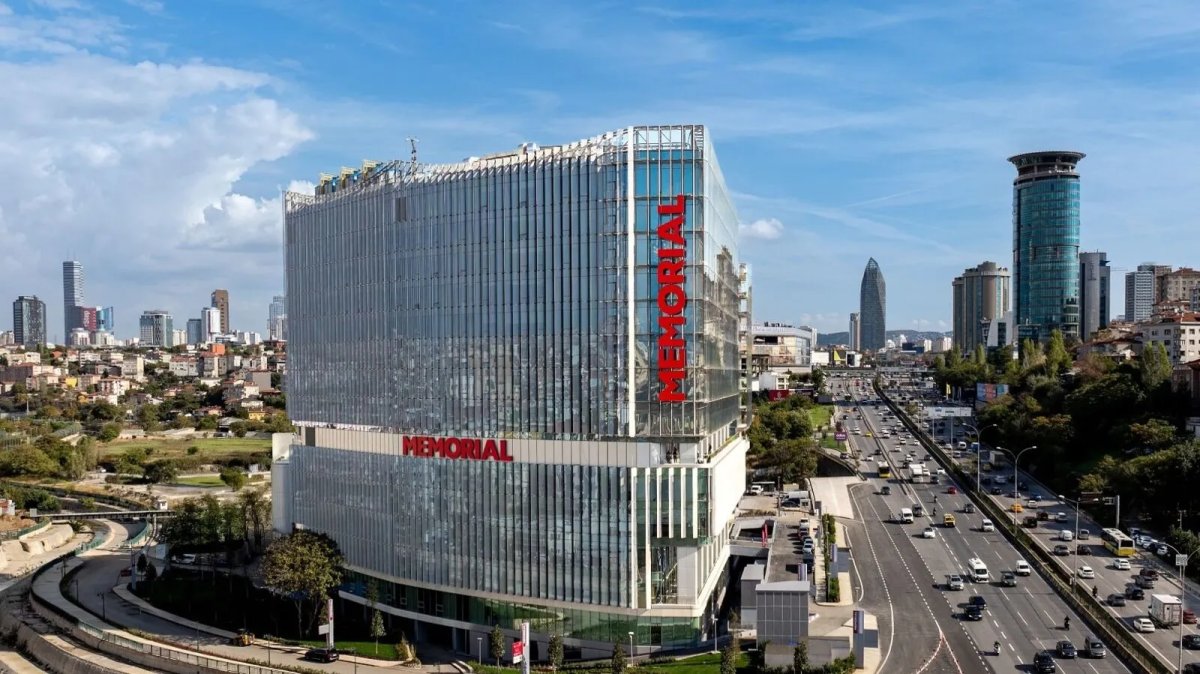
Two examples from the Bookimed roster: Memorial Şişli Hospital was the first hospital in Turkey to earn JCI accreditation. Hisar Hospital Intercontinental pairs JCI accreditation with interpreters in 15+ languages.
Verify payment and consent
Under Turkey's Regulation on International Health Tourism, licensed providers take payment through the hospital's corporate account. They must also employ at least two staff who speak a foreign language. Treat cash-only requests or limited-time discount pressure as red flags. Consent signed on Turkish-only paperwork is not legally valid. Insist on a certified medical interpreter and every document in written English.
Septoplasty Cost in Turkey Compared With Home
An all-inclusive septoplasty package in Turkey runs $2,400–$3,800. The same operation costs $8,000–$14,000 privately in the US and $3,500–$6,500 in the UK. That is a saving of roughly 70% against US private prices.
The gap says less about the surgery than about how it is billed. US clinics bill fee-for-service, so a quoted surgeon fee leaves out facility and anesthesia charges. Turkey packages fold everything into one price agreed upfront.
| Market | Typical private cost (USD) | What the price covers |
|---|
| United States |
$8,000–$14,000 |
Surgeon fee; facility and anesthesia billed separately |
| United Kingdom |
$3,500–$6,500 |
Private clinic fee billed upfront; the NHS route is free but has long waits |
| Turkey |
$2,400–$3,800 |
All-inclusive: surgery, hospital night, anesthesia, post-op medication, follow-up exam |
Septoplasty is a functional operation, so many insurers at home treat it as medically necessary. If you plan to claim part of the cost back, ask the Turkish team for a detailed discharge note. It should record the functional indication with your endoscopy and rhinomanometry findings.
Combined septorhinoplasty in Turkey adds cosmetic reshaping to the functional repair. It makes clinical sense when the outer shape of the nose is part of what blocks the airway. Ask the surgeon to confirm whether your case needs both, or the septum alone.
Your Post-Op Aftercare Kit and Medication Guide
The first two weeks come down to rinsing, protecting the healing tissue, and avoiding heat.
The daily routine
- Rinse with sterile isotonic saline 3–4 times a day, starting around day 5. Use shop-bought sprays only.
- Never mix saline at home. The salt concentration is easy to get wrong and tap water is not sterile (NHS ENT aftercare guidance).
- Ask the Turkish clinic for Naseptin or an equivalent antibacterial nasal cream before you fly home. Apply it three times daily (Frimley Health post-op protocol).
- Take paracetamol for pain as directed. Avoid aspirin and other NSAIDs while you heal.
- Sleep with your head raised on 2–3 pillows or a wedge for 14 days (Benenden Hospital aftercare guide).
- Skip hot showers, saunas, and hot drinks for the first 48 hours. Heat widens blood vessels and can restart bleeding (NHS Trust guidance).
- Do not blow your nose for 1–2 weeks. If you have to sneeze, keep your mouth wide open (Gloucestershire Hospitals NHS).
What to pack from home
- medical-grade gel ice packs for the first 48 hours;
- a wedge pillow or 2–3 firm pillows;
- front-fastening clothing (nothing that pulls over your face);
- your active prescription medications plus a written list.
Book a follow-up with your surgeon at 3–6 months, once swelling settles and cartilage stabilizes. Turkey packages typically include post-op medication and a follow-up exam in the base price. A coordinator can confirm this with the partner clinic before you travel.