


Thailand's private hospitals see an estimated three million foreign patients a year, according to a 2025 study by the ISEAS–Yusof Ishak Institute. A single dental implant costs $950–$1,500 in Thailand, based on Bookimed data. In the United States, prices start at $2,500. Dental work in Thailand also covers crowns, veneers, whitening, and implants for a whole jaw.
The gap is even wider for Canadian patients: a single implant costs $3,000–$5,300 in Canada, and All-on-4 costs $18,500–$29,500 per jaw.
Key Takeaways: Dental Work Thailand
- Single implant. Costs $950–$1,500 in Thailand, compared with at least $2,500 in the US, a saving of up to 60%.
- All-on-4. Costs $9,300–$11,300 per jaw, compared with at least $15,000 in the US, a saving of up to 35%.
- All-on-6. Costs $10,200–$12,000 per jaw, compared with at least $22,000 in the US, a saving of up to 50%.
- Porcelain crown. Costs $300–$400 per tooth, compared with at least $1,000 in the US, a saving of up to 70%.
- Veneer. Costs $200–$500 per tooth, compared with at least $500 in the US, a saving of up to 60%.
- Bone graft. Costs $300–$400, compared with at least $1,500 in the US, a saving of up to 80%.
- Tooth whitening. Costs $150–$300 a session, compared with at least $400 in the US, a saving of up to 60%.
- Trips. Implants need two trips, because the jawbone takes 3–9 months to fuse around the implant.
- Cities. Bookimed partner clinics treat dental patients in Bangkok, Phuket, and Chiang Mai.
Table of Contents
- Is It Worth Going to Thailand for Dental Work?
- How Much Does Dental Work Cost in Thailand?
- What Dental Packages in Thailand Include
- Popular Dental Procedures in Thailand
- Treatment for Common Dental Problems in Thailand
- Is Dental Work in Thailand Safe?
- Top Dental Work Destinations in Thailand
- Dental Clinics and Dentists in Thailand
- Planning Your Dental Trip to Thailand
- Dental Insurance and Paying for Treatment in Thailand
- The Bottom Line
- FAQs About Dental Work in Thailand
Is It Worth Going to Thailand for Dental Work?

US patients save about 50%–75% on dental work in Thailand, according to the Academy of General Dentistry (AGD). Put another way, the same treatment costs two to four times less than in the US. For example, a porcelain crown that costs at least $1,000 in the US costs $300–$400 at a Thai partner clinic.

Beyond the price, these are the reasons patients choose Thailand for dental work:
- Lower prices. At Bookimed partner clinics, savings run from up to 35% on All-on-4 to up to 80% on a bone graft.
- Accredited care. Hospitals and dental centers that treat foreign patients hold accreditation from the Joint Commission International (JCI). Some are also certified to ISO quality standards, set by the International Organization for Standardization.
- English-speaking staff. You can discuss the treatment plan directly with the dentist and the clinic team in English.
- Established dental tourism. Clinics that treat foreign patients run international departments and often sell treatment as a package with the hotel and airport transfers.
- Treatment combined with a trip. Between appointments, you can visit the temples of Bangkok and Chiang Mai or the Sino-Portuguese old town in Phuket.
How Much Does Dental Work Cost in Thailand?
Depending on the procedure, prices in Thailand start roughly 35%–80% below the lowest US prices. All prices are Bookimed data from partner clinics.
Thai clinics cover general, cosmetic, and restorative dentistry. This includes a smile makeover, which combines several cosmetic treatments such as veneers and whitening.

The saving is largest for a bone graft, at up to 80%. For a porcelain crown, it is up to 70%. It is smallest for All-on-4, at up to 35% below the lowest US price.
| Procedure | Thailand | United States | United Kingdom | Canada | Saving vs US, % |
|---|---|---|---|---|---|
| Single dental implant | $950–$1,500 | from $2,500 | from $1,500 | $3,000–$5,300 | up to 60 |
| All-on-4, per jaw | $9,300–$11,300 | from $15,000 | from $10,000 | $18,500–$29,500 | up to 35 |
| All-on-6, per jaw | $10,200–$12,000 | from $22,000 | from $18,000 | $18,500–$27,500 | up to 50 |
| Porcelain crown | $300–$400 | from $1,000 | from $450 | $900–$1,500 | up to 70 |
| Bone graft | $300–$400 | $1,500–$3,500 | from $600 | $650–$2,700 | up to 80 |
| Veneer, per tooth | $200–$500 | from $500 | from $400 | $950–$2,100 | up to 60 |
| Tooth whitening | $150–$300 | from $400 | from $300 | $400–$750 | up to 60 |
In dollars, the saving grows with the size of the treatment plan. All-on-4 in Thailand costs at least $3,700 less per jaw than the lowest US price.

What Dental Packages in Thailand Include
Thai clinics often sell treatment as a package with the hotel and airport transfers. Some call it an all-inclusive package, but the contents differ from clinic to clinic. A package may include:
- Accommodation. A hotel near the clinic.
- Transportation. Airport pickup and transfers between the hotel and the clinic.
- Consultations and follow-ups. The first consultation, tests before treatment, and check-ups afterward.
- Dental procedures. Single implants, All-on-4, or All-on-6, with implant brands such as Straumann or BEGO.
- Anesthesia. Local or general anesthesia, depending on the procedure.
- Medications. Pain relief and antibiotics after surgery.
- Diagnostics. Panoramic X-rays, intraoral imaging (photos of the inside of the mouth), and 3D CT scans of the jawbone.
Ask the clinic for an itemized quote in writing. For an implant, check that the price covers the implant post, the abutment (the connector that holds the crown), and the crown itself. Also check whether X-rays, the CT scan, and follow-up visits are included. A quote that lists only "implant", with no crown, leaves part of the cost out.
A Bookimed coordinator helps you compare clinic quotes and stays in touch with the clinic about your treatment plan.
Popular Dental Procedures in Thailand
Thailand had more than 16,000 dentists by 2019, and its 18 dental schools add about 600–900 graduates every year. Thai clinics offer basic care, such as fillings and tooth extractions. They also perform root canal treatment, which cleans out an infected tooth from the inside and seals it. Implants and cosmetic work are available too.
Single Dental Implants in Thailand
A dental implant is a small titanium post placed in the jawbone. It replaces a tooth root and holds a crown, a bridge, or a denture. In Thailand, an implant costs $950–$1,500.

In a study of 128 patients, 91.4% of single implants were still in place in the early healing period.
Thai clinics place implants from brands such as Straumann or BEGO. Ask the clinic what its implant warranty covers and for how long.

All-on-4 Dental Implants in Thailand
All-on-4 dental implants use four implants to hold a full arch of fixed replacement teeth. The treatment is for patients who have lost most or all teeth in a jaw. In Thailand, it costs $9,300–$11,300 per jaw.
A study followed 126 patients with 136 All-on-4 restorations. After one year, 98.2% of implants and 94.4% of the fixed teeth were still in place. For a patient, that means about 98 in every 100 implants and 94 in every 100 full-arch bridges were still working a year later – a failure is the exception. Prices for full-mouth implants in other countries are compared in a separate guide.
All-on-6 Dental Implants in Thailand
All-on-6 dental implants use six implants per jaw. They give more support, for example where the jawbone is thinner. In Thailand, the cost is $10,200–$12,000 per jaw.
A Bookimed patient shows the result of All-on-6 treatment in this video.
Bone Graft in Thailand
A bone graft adds bone to the jaw so that it can hold an implant. In Thailand, a bone graft costs $300–$400.

Guided bone regeneration (GBR) is a bone graft technique that rebuilds bone with graft material under a protective membrane. A study at a Thai university dental clinic followed 80 bone grafts and 107 implants for about six years. All of the grafts succeeded (100%), and 97.2% of the implants were still in place.
Clinics use graft materials from Geistlich, the maker of Bio-Oss, and Zimmer Biomet.
Dental Crowns in Thailand
A dental crown is a cap that covers a damaged tooth and restores its shape and strength. A porcelain crown costs $300–$400 per tooth in Thailand.

A review of 67 studies looked at metal-ceramic crowns, which are porcelain fused to a metal base. An estimated 94.7% were still in place after 5 years.
Dental Veneers in Thailand
Dental veneers are thin porcelain or composite shells bonded to the front of the teeth. They change the color or shape of teeth and can close gaps. Veneers in general cost $200–$500 per tooth in Thailand, and porcelain veneers cost $300–$400 per tooth in Thailand.
A review of veneer studies reports that more than nine in ten veneers last 10 years. Some veneers are placed without shaving the tooth and are called no-prep veneers. These had a 97.4% success rate over about 43 months on average.

Thai clinics make porcelain veneers from materials such as IPS Empress and E.max.
Tooth Whitening in Thailand
Tooth whitening lightens the color of teeth with a bleaching gel such as hydrogen peroxide. A session costs $150–$300 in Thailand. Clinics use whitening systems such as Philips Zoom.
Treatment for Common Dental Problems in Thailand
Thai dental clinics treat everyday problems, such as cavities, worn or crowded teeth, and loose teeth. They also offer cosmetic work. A dentist examines the tooth and takes X-rays before choosing the treatment.
- Cavities and tooth decay. The dentist places a tooth-colored filling, also called bonding. If the decay has reached the nerve, the tooth requires root canal treatment.
- Worn or broken teeth. A crown covers the damaged tooth and restores its shape so you can bite and chew normally.
- Yellow or stained teeth. Professional whitening at a dental clinic lightens the natural color of the teeth.
- Crowded or crooked teeth. Braces gradually move the teeth into a straighter line.
- Loose teeth. Have your gums checked by a dentist, because gum disease is a common cause. If the tooth cannot be saved, an implant or a denture can replace it. Dentures cost $350–$450 in Thailand.
- Sensitive teeth. See a dentist to find the cause before any treatment.
Book an examination first, since the treatment plan and the quote depend on what the X-rays show.
Is Dental Work in Thailand Safe?
Dental work in Thailand is safe at accredited clinics. JCI, the accreditation many Thai hospitals and dental centers hold, audits patient safety and infection control. Some centers also hold ISO quality certification.
Every dentist in Thailand must be registered with the Dental Council of Thailand. Before treatment starts, ask the clinic or your coordinator for your dentist's registration details.
Research results are reassuring. In a study that followed 10,871 implants for up to 22 years, more than 96 in every 100 were still in place after 10 years. Crowns and veneers also last: about 94 in every 100 metal-ceramic crowns were still in place after 5 years, and more than nine in ten veneers lasted 10 years.
Dental Implant Risks and Suitability
In studies of single implants, All-on-4, and implants placed after a bone graft, 91.4%–98.2% of implants were still in place at follow-up. Possible problems after implant surgery include infection and an implant that does not fuse with the bone. According to Cleveland Clinic, the risk of complications is minimal when an experienced surgeon places the implants.
Implants are not recommended for everyone. Cleveland Clinic lists conditions that increase the risk of complications or make it harder for the implant to anchor in the jawbone:
- Gum disease. An infection of the gums that is active or has not been treated.
- Diabetes. Blood sugar that is not under control.
- Bone loss. Severe loss of jawbone, which may require a bone graft first.
- Tooth decay and hygiene. Extensive tooth decay or poor daily cleaning of the teeth.
- Other conditions. Bone disorders and some autoimmune diseases, where the immune system attacks the body's own tissue.
- Tobacco use. Smoking or vaping, which can disrupt healing.
Tell the dentist about any of these at the consultation. The dentist may treat gum disease first or ask you to stop smoking before the implant. After a bone graft or implant surgery, follow the clinic's aftercare instructions. If swelling, bleeding, or pain gets worse, have it checked by a dentist. Ask the clinic what happens if an implant has to be replaced, and whether the warranty covers it.
Top Dental Work Destinations in Thailand
Bookimed partner clinics in Thailand offer dental treatment in three cities: Bangkok, Phuket, and Chiang Mai. Each city suits a different kind of trip.
Dental Clinics in Bangkok
Bangkok is the capital, with modern hospitals and the country's main international airport, Suvarnabhumi Airport (BKK). It has the widest choice of dental clinics in Bangkok.
Bangkok International Dental Center is JCI-accredited and ISO-certified, and it is an official Straumann provider. Bumrungrad International Hospital is a JCI-accredited hospital with a dental department.
Pros
- Range of services. Clinics offer everything from routine cleanings to All-on-6.
- Dentists trained abroad. Some partner dentists trained in the US, such as Dr. Preeda Pungpapong, who studied further at the University of North Carolina.
- Digital equipment. Clinics take digital X-rays. Some design crowns on a computer and make them on site, a method called CAD/CAM.
- Direct flights. Bangkok has direct flights from cities such as London, Frankfurt, Sydney, Dubai, and Tokyo.
Cons
- Traffic. Heavy traffic can make trips to the clinic long, so a hotel near the clinic saves time.
- A busy city. Recovery can feel less restful than in a smaller city.
- Daily costs. Hotels and meals may cost more than in smaller cities.
Dental Clinics in Phuket
Phuket is an island with beaches, where you can rest between appointments. Among the dental clinics in Phuket, Sea Smile MALO Dental Group is JCI-accredited and ISO-certified. It focuses on implants and full-mouth treatment.
Pros
- Beach recovery. Rest days between visits can be spent by the sea.
- Own airport. Phuket International Airport (HKT) takes international flights, so you may not need to change planes in Bangkok.
- Things to do. Island trips, snorkeling, and diving fill the days between visits. Ask the dentist first, since swimming and diving may have to wait after surgery.
Cons
- Peak season. The island is crowded at the height of the tourist season, and appointments can be harder to get.
- Climate. The weather is hot and humid.
- Rainy season. From May to October, monsoon rain and rough seas can cancel boat trips.
Dental Clinics in Chiang Mai
Chiang Mai, in northern Thailand, has a calmer pace, with temples, markets, and festivals. Among the dental clinics in Chiang Mai, Kitcha Dental Clinic is an official Straumann provider. The city is also home to Chiangmai International Dental Clinic (CIDC).
Pros
- Quiet setting. The slower pace makes recovery more restful.
- Culture. You can visit temples and the old city between appointments.
- Lower daily costs. Hotels and meals usually cost less than in Bangkok or Phuket.
Cons
- Flights. There are fewer direct international flights than to Bangkok, so most trips connect through Bangkok.
- Choice. There are fewer clinics to choose from than in Bangkok.
- Smoky season. From about February to April, smoke from crop burning can lower the air quality.
Choose Bangkok for the most clinics and flights, Phuket for a beach recovery, and Chiang Mai for a calmer stay.
Highest-rated clinics for Smile makeover

SmileBox Dental Clinic - Thonglor, Sukhumvit Branch
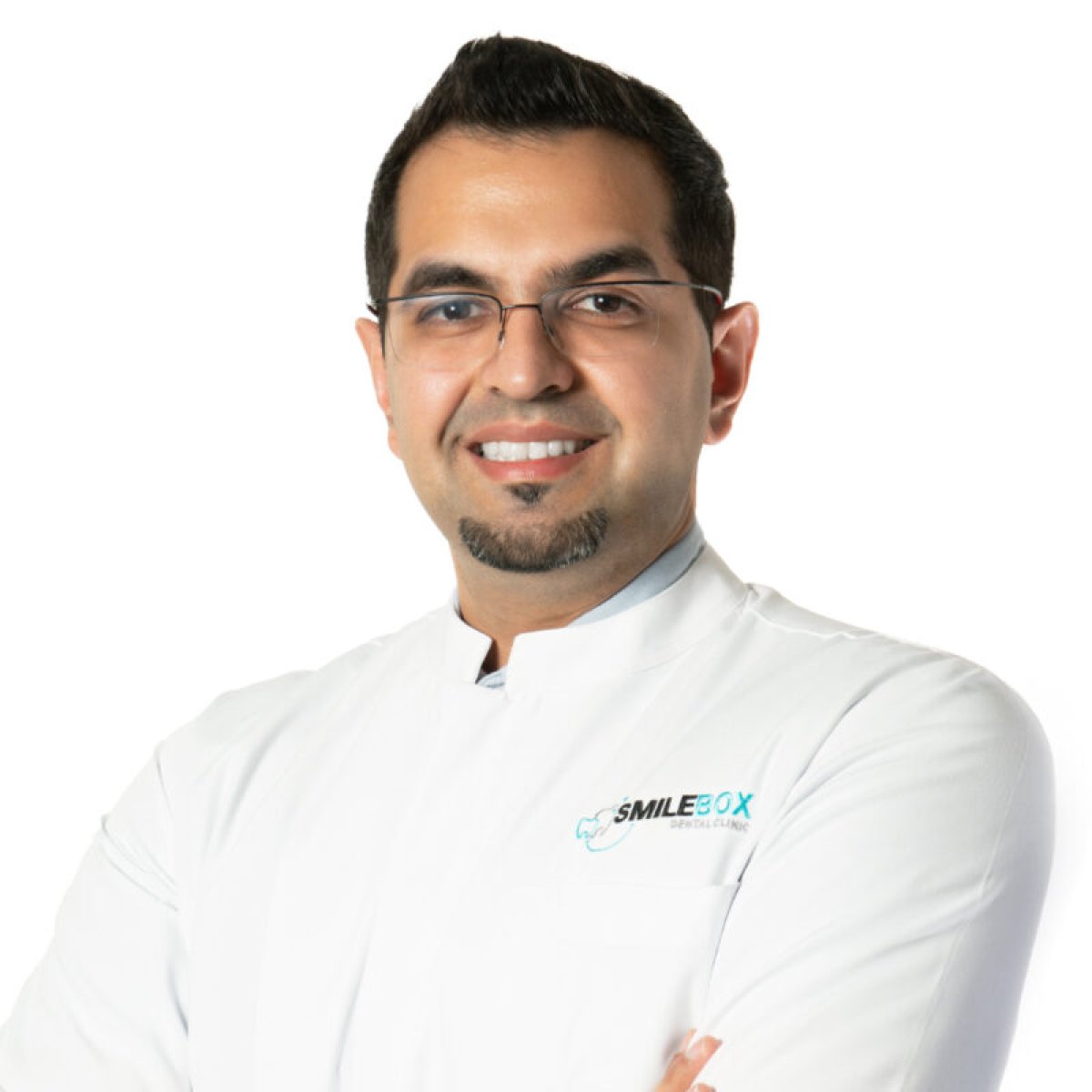
Dr. Vikram Bhatia has performed 900+ dental implant procedures over 14 years, specializing in Straumann and Neodent systems. A single implant may cost around $16,150, while All-on-4 restoration typically runs $27,500 – covering implants, fixed prosthesis, digital planning, and extractions if needed. The SHA+ certified clinic uses CBCT imaging and CAD/CAM technology for precise placement. Dr. Bhatia is an Invisalign Platinum provider and currently pursuing an MSc in Implantology.
| treatment | |
|---|---|
| Dental Implant | |
Intrarat Hospital
Intrarat Hospital offers dental implants with three international brands – Neo Biotech (Korea), Astra Tech (Sweden), and Straumann (Switzerland). The procedure may cost around 38,870 THB for a Neo Biotech implant including the crown, with higher-end options available. The clinic holds ISO 9001:2015 certification and has a 98% patient recommendation rate. Treatment includes the implant procedure, crown, and initial consultation, with personalized plans after in-person evaluation.
| treatment | |
|---|---|
| Dental Implant | $810 - $3,560 |
About Tooth Dental Clinic

About Tooth Dental Clinic is an official Straumann provider, offering Swiss-quality implants in Bangkok. A single Dentium implant with a crown costs around $1,400, while a Straumann implant may cost about $2,600. These prices typically cover the procedure, crown, and X-ray. Dr. Nisara Tanarerkchai has performed 900+ implant cases over her career. She holds a certificate in Oral Implantology from TADI. The clinic is conveniently located near the BTS station for international patients.
| treatment | |
|---|---|
| Dental Implant | $1,676 - $3,860 |
Dental Clinics and Dentists in Thailand
Dental care in Thailand is offered by two kinds of facility: dental departments inside hospitals and dedicated dental centers. Both have a cosmetic dentist on staff for veneers, whitening, and smile makeovers.
A hospital dental department works alongside the hospital's other departments. This may help if you have a heart condition or diabetes and a physician has to be involved. A dedicated dental center focuses on dentistry alone and may have its own lab for crowns and veneers.
Advanced Facilities
Bangkok International Dental Center and Chiangmai International Dental Clinic (CIDC) use 3D CT scans, digital X-rays, and intraoral cameras. Intraoral cameras are small cameras that photograph the inside of the mouth. These give the dentist a precise picture of the bone before an implant is placed.
Accredited Professionals
Among Bookimed's partner dentists are these specialists, who practice at licensed clinics and treat patients from abroad.
- Dr. Preeda Pungpapong.
 Implant dentist at Bangkok International Dental Center, with over 20 years of experience. He graduated from the Faculty of Dentistry at Chulalongkorn University in Bangkok. He trained further at the University of North Carolina in the US. He is a member of the International Implantology Team at Straumann. His work is recognized by the American Board of Prosthodontics.
- Dr. Punyada Intapibool.
 Dentist at Chiangmai International Dental Clinic, with over 20 years of experience. She holds a Doctor of Dental Surgery (DDS) degree and a Master of Science from Chiang Mai University. She works in implant dentistry and prosthodontics, the restoring and replacing of teeth.
Planning Your Dental Trip to Thailand
The number of visits depends on the treatment, and it determines how long you stay and how many flights you book.
How Long to Stay for Dental Treatment in Thailand
Crowns, veneers, and whitening can usually be done in one stay. Implants usually require two trips. It takes 3–9 months for the jawbone to fuse around the implant, according to Cleveland Clinic. The final tooth is fitted on the second trip.
Ask your dentist how many days to wait before flying after an extraction, a bone graft, or implant surgery. Plan those days into the trip.
Before you fly home, ask the clinic for:
- Your records. Your X-rays and treatment notes.
- An implant card. A card in English with the implant brand, model, size, and lot number, the manufacturer's batch code. A dentist at home can then order matching parts.
- A night guard. After veneers or a full set of crowns, ask whether you need a custom night guard. This is a mouth guard worn during sleep that protects the porcelain from teeth grinding.
- Warranty terms. What the warranty covers, and whether a repair under warranty requires a visit to the clinic.
Best Time to Visit
Thailand is a year-round destination. The cool season, from November to February, has lower temperatures and less humidity. That makes travel and recovery more comfortable.
Travel Arrangements
Most international flights land at Suvarnabhumi Airport (BKK) in Bangkok. Domestic flights connect Bangkok with Phuket and Chiang Mai.
Dental Insurance and Paying for Treatment in Thailand
In an example plan from the American Dental Association (ADA), insurance pays 80% of basic work, such as fillings, and 50% of major work, such as crowns, up to $1,500 a year. Plans may also have waiting periods and may exclude cosmetic work, such as veneers and whitening.
Treatment abroad works differently. You pay the Thai clinic yourself and claim the money back at home, and insurers usually pay a dentist abroad at out-of-network rates. Delta Dental, for example, asks for a detailed bill with the treatment, tooth number, date, and cost, in English where possible. With a $1,500 annual maximum, a plan covers only a small part of All-on-4, which costs $9,300–$11,300 per jaw in Thailand.

Ask your insurer before the trip whether it pays for treatment abroad and which documents it requires. These may include an itemized invoice in English and your X-rays.
To plan the budget before you choose a clinic:
- Written quotes. Compare quotes from two or three clinics. Each one should list consultations, procedures, materials, transport, and the hotel.
- Payment in stages. Ask whether the clinic accepts payment in installments for implants or a full mouth restoration.
Even without insurance, a porcelain crown at a Thai partner clinic costs up to 70% less than in the US.
The Bottom Line
At Bookimed partner clinics, dental work in Thailand costs from up to 35% less than the lowest US price for All-on-4 to up to 80% less for a bone graft. Crowns, veneers, and whitening fit into one stay, while implants need two trips 3–9 months apart. Choose a JCI-accredited clinic, check that your dentist is registered with the Dental Council of Thailand, and get an itemized written quote before you book.
FAQs About Dental Work in Thailand
Is dental work in Thailand safe?
Dental work in Thailand is safe at accredited clinics. Hospitals and dental centers that treat foreign patients hold Joint Commission International (JCI) accreditation. Some also hold ISO quality certification.
JCI audits patient safety and infection control against international standards. Every dentist in Thailand must be registered with the Dental Council of Thailand. Ask the clinic for your dentist's registration details and training before treatment starts.
Implant treatment has a high success rate. In a study of 126 patients, 98.2% of All-on-4 implants were still in place after one year. Implants are not recommended if you have untreated gum disease or diabetes that is not under control. Tell the dentist about your health at the consultation.
For implants, also ask which implant brand the clinic uses and what the warranty covers.
How much can I save on dental work in Thailand?
A single dental implant costs $950–$1,500 in Thailand. That is roughly 50%–80% less than in Australia. There, the same implant costs $3,100–$5,400, based on Bookimed data.
In the United States, implant prices start at $2,500. The difference in dollars grows with the size of the treatment plan. All-on-4 implants cost $9,300–$11,300 per jaw in Thailand, while US prices start at $15,000. That puts the Thai price at least $3,700 lower per jaw.
Flights and the hotel add to the total, so compare the full cost of the trip. Ask each clinic for an itemized quote that lists the implant, the abutment, and the crown separately. That way, you compare the same treatment at each clinic. A Bookimed coordinator can help you collect and compare quotes from several partner clinics.
Is Thailand a good destination for dental tourism?
Thailand suits dental patients who want lower prices, accredited clinics, and treatment combined with a trip. Partner clinics treat foreign patients in Bangkok, Phuket, and Chiang Mai.
Bangkok has the widest choice of clinics and the main international airport, Suvarnabhumi Airport (BKK). In Phuket, you can rest on the beach between appointments. Chiang Mai, in the north, has a calmer pace, with temples and markets.
Short treatments, such as whitening or a few crowns, are easy to combine with a holiday. Implants usually require two trips, several months apart. Clinics with international patient departments employ English-speaking staff and often offer packages with the hotel and transfers. A written treatment plan with the number of visits lets you book the right flights. The cool season, from November to February, has lower temperatures and less humidity. That makes travel and recovery more comfortable.
How long do I need to stay in Thailand for dental implants?
Dental implants in Thailand usually require two trips, several months apart.
On the first trip, the dentist places the implant in the jawbone. The jawbone then takes 3–9 months to fuse around the implant, according to Cleveland Clinic. On the second trip, the dentist fits the final crown, bridge, or denture. If you need a bone graft first, the plan may take longer.
The dentist tells you how many days to wait after implant surgery before flying home. The length of each trip depends on your treatment plan. Ask the clinic for the plan, then book the flights and the hotel.
Before you fly home, ask for an implant card in English that lists the implant brand, model, and size. A dentist at home can then order matching parts if a repair is needed.
Can I get a filling or cavity treatment in Thailand?
Yes, Thai dental clinics place tooth-colored fillings and treat cavities. They also perform root canal treatment when decay reaches the nerve.
The dentist first examines the tooth and takes X-rays. A small cavity is usually treated with a tooth-colored filling, also called bonding. A tooth that has lost too much structure for a filling may require a crown.
If a tooth hurts or feels sensitive, have it checked by a dentist before your trip ends. You can combine a filling with a cleaning or whitening during the same stay. The clinic gives you a written quote after the examination.
Professional whitening lightens the natural color of the teeth, and a session costs $150–$300 in Thailand. Fillings, whitening, and crowns can usually be done in one stay.
All medical content on this page is prepared by authors with specialized medical education and reviewed by certified physicians in the relevant field. Medical review by Fahad Mawlood, Medical Editor & Data Scientist.
Last updated: October, 2026.
- Statistics: Figures are based on Bookimed’s internal database October 2026, which includes analysis of 12,450 patient requests across accredited clinics in .
- Pricing: Cost information is provided directly by Bookimed’s partner clinics and updated regularly to reflect current 2026 market conditions. Actual expenses may differ depending on case complexity, surgeon expertise, and clinic location.
- Clinical Data: Treatment outcomes and patient satisfaction figures are collected from Bookimed’s verified clinic database and supported by data from peer-reviewed medical sources such as PubMed, The Lancet, JAMA, and NEJM (2023–2026).
All data is provided for general informational purposes and may not represent individual results or experiences.