Аleksandr • Polycystic kidney disease


Last updated: Sep 1, 2026
Pancreatic neuroendocrine tumors Treatment in Wiener Privatklinik (WPK)

About the clinic
Wiener Privatklinik (WPK) in Vienna provides specialized care for pancreatic neuroendocrine tumors through its Central European Cancer Center. A consultation with an oncologist may cost around $400, an MRI of one area is typically around $600, and a PET-MRI is around $1,800. This ISO-certified hospital is recognized by Newsweek as one of the world's best medical facilities from 2021 to 2026.
Diagnostic options in Vienna
The clinic uses molecular diagnostics and liquid biopsy to identify tumor markers with high accuracy. These tests help the medical team understand the genetic profile of the cancer before starting therapy. Patients have access to several imaging and diagnostic tools:
- Consultation with an oncologist to review the medical history and symptoms.
- PET-MRI for precise visualization of tumor tissues and metabolic activity.
- MRI and CT scans to determine the exact size and location of the tumor.
- Endoscopy for direct internal examination.
- Liquid biopsy to detect cancer cells or DNA in the blood.
Advanced treatment methods
Treatment plans are created during interdisciplinary tumor boards. This means specialists from different fields meet to discuss each case and build a personalized strategy. The clinic offers surgical and systemic options:
- Minimally invasive and robotic surgery. Surgeons use robotic-assisted laparoscopic techniques to remove tumors. This method helps shorten recovery time and increases surgical precision.
- Radiotherapy. Targeted radiation helps control localized tumors without the need for incisions.
- HIPEC (heated intraperitoneal chemotherapy). This technique delivers heated drugs directly into the abdomen to treat cancer that has spread to the peritoneum.
- Immunotherapy and chemotherapy. These systemic treatments help target cancer cells that have moved to other parts of the body.
The facility holds ISO 9001:2015 certification and maintains a dedicated team for international patients. To explore therapy options at Wiener Privatklinik, you can request a consultation through the Bookimed platform.
Highlights
Get a free consultation
Treatments prices in the clinic
Clinic Doctors
Clinical oncologist
Hematologist/oncologist
How are we doing?

hospital accreditations of quality


Wiener Privatklinik (WPK): more details about the clinic
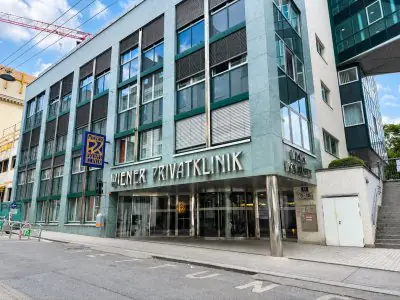
The Wiener Privatklinik (WPK) is a private hospital in the university quarter of Vienna, Austria, next to the Vienna General Hospital and the Medical University of Vienna. Founded in 1871 and led since 1995 by a group of physicians, it works with more than 300 recognised doctors across over 30 specialities, and around 45 percent of its patients come from more than 20 countries. The clinic has 145 beds, seven wards and its own operating theatres, combining hospital medicine with a hotel standard of care.
Central European Cancer Center
Oncology is the clinic's central focus. The WPK Academy Central European Cancer Center brings together surgeons, oncologists, radiation oncologists, radiologists and pathologists, and every case is discussed by an interdisciplinary tumour board before treatment begins. Care covers the full path from diagnosis to therapy, using:
- Minimally invasive and robotic surgery
- Radiotherapy
- Immunotherapy and chemotherapy
- Heated intraperitoneal chemotherapy (HIPEC) for tumours in the abdomen
The centre is especially strong in cancers of the:
- Breast, prostate and urinary tract
- Skin
- Lung
- Digestive organs
- Head and neck
- Gynaecological organs
- Bone and soft tissue
It is led by Prof. Christoph Zielinski, and its team includes cancer surgeons such as the thoracic surgeon Prof. Walter Klepetko.
Diagnosis and Early Detection
Diagnostics are gathered under one roof, so results are available quickly and without repeated appointments. Imaging includes MRI, CT, PET-CT and SPECT-CT, alongside endoscopy and molecular analysis. The clinic also offers liquid biopsy, a blood test that can detect signs of a tumour at an early stage.
Surgery and Other Specialities
Beyond oncology, the WPK covers:
- General and abdominal surgery
- Orthopaedics and traumatology
- Sports medicine
- Urology
- Gastroenterology and hepatology
- Cardiovascular medicine
- ENT
The Millesi Center at the clinic focuses on peripheral nerve surgery, using microsurgery and supermicrosurgery. An on-site radiotherapy centre is run with Amethyst, and an aeromedical centre offers pilot fitness examinations. Patients can also request an independent second opinion.
Quality and Recognition
The Wiener Privatklinik is certified to ISO 9001:2015 by Quality Austria for its quality management, patient care and safety. It has been named one of the World's Best Hospitals by Newsweek and Statista for six years running, from 2021 to 2026, and was recognised by Deloitte as one of Austria's Best Managed Companies in 2025.
International Patients
A dedicated team supports international patients with appointments, cost estimates, translation and the organisation of their stay. Information is available in several languages, and the clinic is a short distance from the city centre and airport.
FAQ
What treatments do patients most often ask for?
Patients choose Wiener Privatklinik (WPK) most frequently to treat the following conditions: Oncology, Diagnostics, Neurosurgery.
Patient reviews
View 175 reviewsAnonymous • CT scan of the whole body
Anonymous • Prostate cancer
Tetyana • Metastases in the liver
Anonymous • PET/CT
Pelikangasse 15, 1090 Wien, Austria
Get a free consultation
How it works:
- We find a medical coordinator familiar with the matter
- You get a personal offer with a step-by-step guide and the cost estimate
- We arrange your travel including appointment scheduling and flights booking
- You arrive at the hospital, we support you 24/7
Popular clinics
Patient case studies
Anonymized care journeys with documented treatment plans and historical costs.
All patient case studies →Clinical research summaries
Published research with its context and limitations.
All research summaries →